Intel to Repurchase 49% Stake in Ireland Fab for $14.2 Billion

Intel's stock rose by 5.03% as it reached a 20-day high, reflecting positive investor sentiment following a significant announcement.
The company announced a $14.2 billion repurchase of its 49% stake in the Fab 34 manufacturing facility in Ireland, which solidifies its position in the CPU market during the AI era. This strategic move follows Intel's previous sale of the stake to Apollo Global Management for $11.2 billion in 2024, indicating an improvement in the company's financial health and strategic evolution. CFO David Zinsers emphasized that this repurchase signifies a return to solid footing, demonstrating enhanced financial flexibility after a $100 billion investment in U.S. chip manufacturing.
This repurchase not only strengthens Intel's competitive advantage in the global semiconductor market but also reflects its commitment to maintaining a leading position as AI technology becomes increasingly vital. The market's reaction indicates strong confidence in Intel's future prospects.
Trade with 70% Backtested Accuracy
Analyst Views on INTC

About INTC
About the author

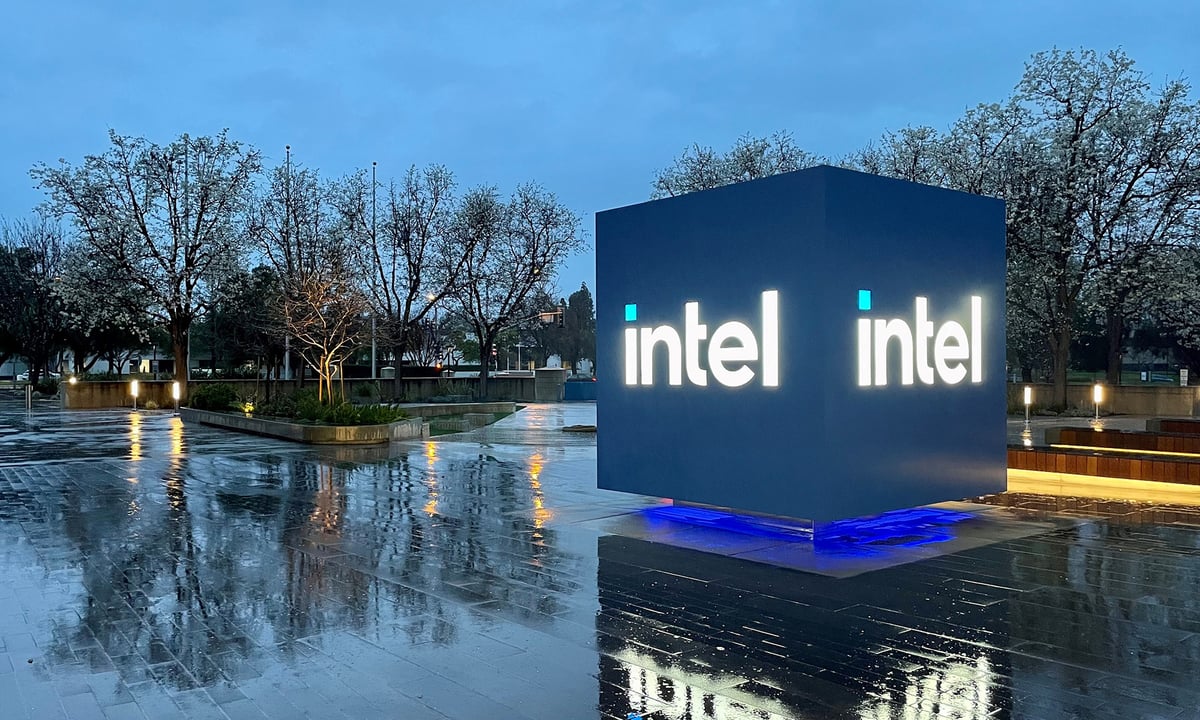
Intel Shows Significant Financial Improvement
- Financial Improvement: Intel's financial position has significantly improved compared to two years ago, reflecting the company's recovery and growth potential in the competitive market, which enhances investor confidence.
- Stock Performance: As of the afternoon of April 1, 2026, Intel's stock price rose by 4.89%, indicating a positive market reaction and optimistic expectations from investors regarding the company's future.
- Strategic Adjustments: This stock price increase is seen as a sign of successful strategic adjustments by Intel, indicating substantial progress in technology innovation and market expansion.
- Restored Market Confidence: The signs of improvement at Intel not only boost shareholder confidence but may also attract more investor attention, further driving the company's stock price upward.

Reevaluating Retirement Withdrawal Strategies

- Understanding the 4% Rule: The 4% rule suggests withdrawing 4% of savings in the first year of retirement and adjusting for inflation, theoretically allowing funds to last 30 years, but may not be safe in today's interest rate environment.
- Risk Assessment: This rule assumes a balanced portfolio of stocks and bonds, but if heavily weighted towards bonds, it may not support a 4% withdrawal rate; Morningstar indicates that a 3.9% rate may be safer by 2026.
- Personalized Withdrawal Strategy: It is recommended to develop a customized withdrawal strategy based on individual retirement age, life expectancy, investment mix, and risk tolerance rather than solely relying on the 4% rule to ensure sustainability over longer retirement periods.
- Social Security Bonus Opportunity: Many retirees overlook a potential $23,760 Social Security bonus, and by learning how to maximize these benefits, retirees could significantly enhance their income and achieve greater peace of mind in retirement.

Hidden Risks in S&P 500 Index Funds
- Tech Dominance Risk: Over the past decade, the proportion of tech stocks in the S&P 500 has surged from 12% to about one-third, exposing index funds to greater volatility risks, particularly during unstable market conditions, necessitating careful evaluation of potential losses by investors.
- Balanced Investment Option: The Invesco S&P 500 Equal Weight ETF mitigates the impact of tech stocks on fund performance through equal weighting, although it has underperformed traditional S&P 500 funds in total returns over the past decade, it has shown more stability during market volatility.
- Long-Term Investment Strategy: For investors who can withstand market fluctuations over 5 to 10 years, traditional market-cap-weighted S&P 500 funds remain a strong investment choice, especially during economic recovery periods, potentially yielding substantial returns.
- Cautious Investment Advice: While the Invesco S&P 500 Equal Weight ETF offers lower tech risk, analysts indicate that there are currently more promising investment opportunities in the market, advising investors to thoroughly research other high-return stocks before making decisions.

Smart Dividend Stock to Buy in Volatile Market
- Increased Market Volatility: The stock market has seen significant fluctuations recently, with the S&P 500 declining 4.6% in the first quarter, reflecting investor anxiety over economic conditions and geopolitical tensions, particularly concerns regarding the war in Iran.
- Target Stock Recovery: Despite facing challenges in recent years, Target has implemented a comprehensive strategic growth plan under new CEO Michael Fiddelke, resulting in a 20% stock increase this year, indicating potential for recovery.
- Attractive Valuation: Target's current trading at nearly 15 times forward earnings estimates is below industry averages, and its history of over 50 years of dividend increases attracts investors seeking stable returns, boosting market confidence.
- Strong Dividend Yield: With a dividend of $4.56 per share and a yield of 3.8%, significantly higher than the S&P 500's 1.2%, Target provides investors with a reliable source of passive income amidst market uncertainty.

Investment Strategies Amid Market Decline
- Market Status: As of now, the S&P 500 is down nearly 6% from its peak and the Nasdaq Composite has fallen about 9%, indicating a need for investors to be cautious despite not being in a market crash.
- Avoid Panic Selling: Selling investments during a market downturn can lead to greater losses, as history shows that markets can rebound quickly, making it wise to hold onto investments.
- Importance of Long-Term Investing: Analysis from Bespoke Investment Group indicates that since 1929, the average bear market for the S&P 500 lasts about nine months, while bull markets last nearly three years, suggesting that long-term holding can effectively mitigate market volatility.
- Invest in High-Quality Stocks: Focusing on financially sound companies with competitive advantages can enhance a portfolio's resilience during economic downturns, ensuring positive long-term returns.
AI Infrastructure Giants Compete for Dominance

- Nvidia's Market Dominance: Nvidia has achieved approximately 90% market share in GPUs over the past few years, leveraging its forward-thinking strategy and successful deployment of the CUDA platform to drive rapid advancements in the AI revolution, thereby solidifying its leadership in AI infrastructure.
- TSMC's Critical Role: As a key player in the AI value chain, TSMC has nearly monopolized the production of GPUs and AI ASICs due to its advanced chip manufacturing capabilities, ensuring high yields and low defect rates, making it the preferred partner for chip designers.
- Shifting Market Dynamics: While Nvidia excels in the AI space, customers are beginning to seek cheaper alternatives, which may lead to a gradual erosion of its market share, whereas TSMC benefits from the diversification of market power, enhancing its bargaining position.
- Long-Term Investment Outlook: With a significant increase in demand for data center CPUs anticipated in the coming years, TSMC is poised for substantial growth, and its smaller company size combined with changing market dynamics positions its stock for better long-term performance.
Intel Shows Significant Financial Improvement
- Financial Improvement: Intel's financial position has significantly improved compared to two years ago, reflecting the company's recovery and growth potential in the competitive market, which enhances investor confidence.
- Stock Performance: As of the afternoon of April 1, 2026, Intel's stock price rose by 4.89%, indicating a positive market reaction and optimistic expectations from investors regarding the company's future.
- Strategic Adjustments: This stock price increase is seen as a sign of successful strategic adjustments by Intel, indicating substantial progress in technology innovation and market expansion.
- Restored Market Confidence: The signs of improvement at Intel not only boost shareholder confidence but may also attract more investor attention, further driving the company's stock price upward.
Reevaluating Retirement Withdrawal Strategies
- Understanding the 4% Rule: The 4% rule suggests withdrawing 4% of savings in the first year of retirement and adjusting for inflation, theoretically allowing funds to last 30 years, but may not be safe in today's interest rate environment.
- Risk Assessment: This rule assumes a balanced portfolio of stocks and bonds, but if heavily weighted towards bonds, it may not support a 4% withdrawal rate; Morningstar indicates that a 3.9% rate may be safer by 2026.
- Personalized Withdrawal Strategy: It is recommended to develop a customized withdrawal strategy based on individual retirement age, life expectancy, investment mix, and risk tolerance rather than solely relying on the 4% rule to ensure sustainability over longer retirement periods.
- Social Security Bonus Opportunity: Many retirees overlook a potential $23,760 Social Security bonus, and by learning how to maximize these benefits, retirees could significantly enhance their income and achieve greater peace of mind in retirement.
Hidden Risks in S&P 500 Index Funds
- Tech Dominance Risk: Over the past decade, the proportion of tech stocks in the S&P 500 has surged from 12% to about one-third, exposing index funds to greater volatility risks, particularly during unstable market conditions, necessitating careful evaluation of potential losses by investors.
- Balanced Investment Option: The Invesco S&P 500 Equal Weight ETF mitigates the impact of tech stocks on fund performance through equal weighting, although it has underperformed traditional S&P 500 funds in total returns over the past decade, it has shown more stability during market volatility.
- Long-Term Investment Strategy: For investors who can withstand market fluctuations over 5 to 10 years, traditional market-cap-weighted S&P 500 funds remain a strong investment choice, especially during economic recovery periods, potentially yielding substantial returns.
- Cautious Investment Advice: While the Invesco S&P 500 Equal Weight ETF offers lower tech risk, analysts indicate that there are currently more promising investment opportunities in the market, advising investors to thoroughly research other high-return stocks before making decisions.
Smart Dividend Stock to Buy in Volatile Market
- Increased Market Volatility: The stock market has seen significant fluctuations recently, with the S&P 500 declining 4.6% in the first quarter, reflecting investor anxiety over economic conditions and geopolitical tensions, particularly concerns regarding the war in Iran.
- Target Stock Recovery: Despite facing challenges in recent years, Target has implemented a comprehensive strategic growth plan under new CEO Michael Fiddelke, resulting in a 20% stock increase this year, indicating potential for recovery.
- Attractive Valuation: Target's current trading at nearly 15 times forward earnings estimates is below industry averages, and its history of over 50 years of dividend increases attracts investors seeking stable returns, boosting market confidence.
- Strong Dividend Yield: With a dividend of $4.56 per share and a yield of 3.8%, significantly higher than the S&P 500's 1.2%, Target provides investors with a reliable source of passive income amidst market uncertainty.
Investment Strategies Amid Market Decline
- Market Status: As of now, the S&P 500 is down nearly 6% from its peak and the Nasdaq Composite has fallen about 9%, indicating a need for investors to be cautious despite not being in a market crash.
- Avoid Panic Selling: Selling investments during a market downturn can lead to greater losses, as history shows that markets can rebound quickly, making it wise to hold onto investments.
- Importance of Long-Term Investing: Analysis from Bespoke Investment Group indicates that since 1929, the average bear market for the S&P 500 lasts about nine months, while bull markets last nearly three years, suggesting that long-term holding can effectively mitigate market volatility.
- Invest in High-Quality Stocks: Focusing on financially sound companies with competitive advantages can enhance a portfolio's resilience during economic downturns, ensuring positive long-term returns.
AI Infrastructure Giants Compete for Dominance
- Nvidia's Market Dominance: Nvidia has achieved approximately 90% market share in GPUs over the past few years, leveraging its forward-thinking strategy and successful deployment of the CUDA platform to drive rapid advancements in the AI revolution, thereby solidifying its leadership in AI infrastructure.
- TSMC's Critical Role: As a key player in the AI value chain, TSMC has nearly monopolized the production of GPUs and AI ASICs due to its advanced chip manufacturing capabilities, ensuring high yields and low defect rates, making it the preferred partner for chip designers.
- Shifting Market Dynamics: While Nvidia excels in the AI space, customers are beginning to seek cheaper alternatives, which may lead to a gradual erosion of its market share, whereas TSMC benefits from the diversification of market power, enhancing its bargaining position.
- Long-Term Investment Outlook: With a significant increase in demand for data center CPUs anticipated in the coming years, TSMC is poised for substantial growth, and its smaller company size combined with changing market dynamics positions its stock for better long-term performance.