Equinox Gold Corp faces decline amid broader market weakness
Written by Emily J. Thompson, Senior Investment Analyst
Updated: Feb 27 2026
0mins
Should l Buy EQX?
Source: Benzinga
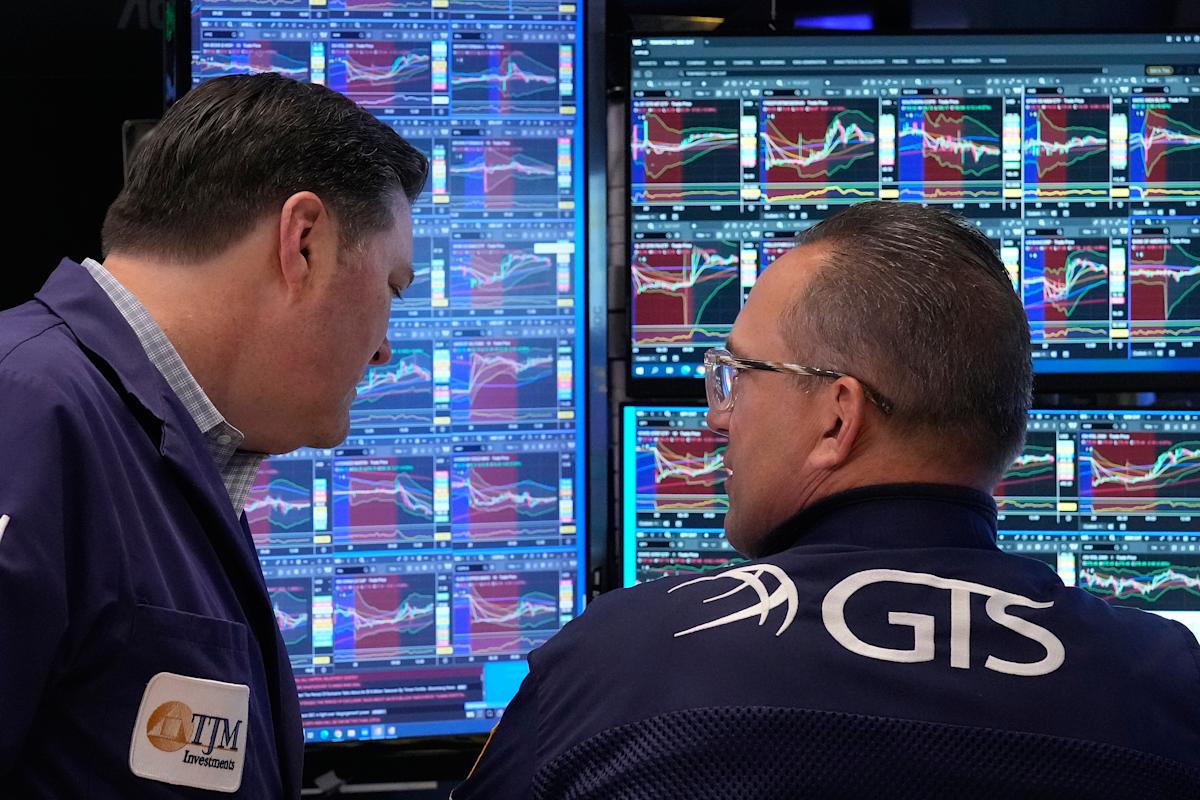
Equinox Gold Corp's stock price fell by 4.43% and hit a 20-day low, reflecting the overall downturn in the market.
The decline comes amid significant weakness in the broader market, with the Nasdaq-100 down 1.89% and the S&P 500 down 1.77%. Despite positive developments in the gold sector, such as rising gold prices and strong demand for gold as a safe-haven asset, Equinox Gold's performance is impacted by sector rotation as investors shift focus.
This situation highlights the challenges faced by junior gold companies like Equinox Gold, even as major players in the industry report strong profits and production increases. The market's current sentiment may lead to further volatility for Equinox Gold as it navigates these external pressures.
Trade with 70% Backtested Accuracy
Stop guessing "Should I Buy EQX?" and start using high-conviction signals backed by rigorous historical data.
Sign up today to access powerful investing tools and make smarter, data-driven decisions.
Analyst Views on EQX
Wall Street analysts forecast EQX stock price to rise
7 Analyst Rating
6 Buy
1 Hold
0 Sell
Strong Buy
Current: 15.390

Low
13.68
Averages
15.89
High
18.00
Current: 15.390
Low
13.68
Averages
15.89
High
18.00
About EQX
Equinox Gold Corp. is a Canadian mining company. It is focused on the gold operations in Canada and across the Americas, and a pipeline of development and expansion projects. Its operating mines include Greenstone, Valentine, Mesquite, Nicaragua Ops: Libertad; Nicaragua Ops: Limon. Its growth projects include Castle Mountain Phase 2, and Los Filos Expansion. Greenstone is a multi-million-ounce gold project located in the top-tier mining jurisdiction of Ontario, Canada, approximately 275 km northeast of Thunder Bay in Geraldton, Ontario. Mesquite is an open pit, run-of-mine heap leach gold mine located in Imperial County, California, United States of America, approximately 200 miles south of its Castle Mountain Mine, 16 miles west of the state border with Arizona and 24 miles north of the border with Mexico. Libertad Mine and Mill is located approximately 110 km east of the capital of Managua. The Limon Mine & Mill is located in western Nicaragua.
About the author

Emily J. Thompson
Emily J. Thompson, a Chartered Financial Analyst (CFA) with 12 years in investment research, graduated with honors from the Wharton School. Specializing in industrial and technology stocks, she provides in-depth analysis for Intellectia’s earnings and market brief reports.

Equinox Gold Divests Brazilian Operations to Focus on Stable Markets
- Asset Restructuring: Equinox Gold divested its Brazilian operations to CMOC Group for over $1 billion, aiming to concentrate resources in politically stable Tier 1 jurisdictions, which is expected to boost its annual output in Canada by 80%, thereby enhancing its market competitiveness.
- Debt Reduction: The asset sale allowed Equinox to retire $990 million in debt, marking an improvement in its financial structure and laying the groundwork for future dividend payments, with plans to issue its first-ever dividend of $0.015 per share per quarter in March 2026.
- Cost Management: Equinox's all-in sustaining cost (AISC) is projected between $1,775 and $1,875 per ounce; despite a decrease following the sale of Brazilian assets, the company remains vulnerable to rising diesel prices due to its large-scale open-pit mining operations, which could impact profitability.
- Competitive Edge: In contrast, Agnico Eagle Mines maintains an AISC between $1,400 and $1,550 per ounce, benefiting from efficient underground operations and low-cost hydroelectric power, which better insulates it from fuel price fluctuations, demonstrating its relative advantage in the current market environment.
See More

Geopolitical Uncertainty Drives Investment in Mining Sector
- Rising Metal Prices: Precious metals prices are on the rise due to escalating geopolitical tensions, prompting global central banks to secure safe-haven assets, benefiting Equinox Gold and Agnico Eagle Mines, although their stocks have fallen 20% and 15% respectively due to the conflict in Iran.
- Asset Transformation Strategy: Equinox Gold is shifting its mining assets to Tier 1 jurisdictions like Canada, expecting an 80% increase in annual output from its Ontario and Newfoundland mines this year, while divesting Brazilian operations for over $1 billion to retire $990 million in debt and launch a quarterly dividend of $0.015.
- Cost Comparison: Agnico Eagle Mines maintains an all-in sustaining cost (AISC) of $1,400 to $1,550 per ounce, benefiting from its underground mining operations and proximity to low-cost hydroelectric power, which insulates it from rising diesel prices.
- Investor Preference: While Equinox Gold is making strides in lowering its AISC, its sensitivity to diesel price fluctuations increases its risk, making Agnico Eagle a more attractive mining investment choice due to its low-cost structure and stable production capabilities.
See More

Three Momentum Stocks Not to Miss


- Micron Technology's Strong Performance: Micron Technology (MU) boasts an average earnings surprise of 21.7% over the last four quarters, indicating robust earnings growth potential that aligns with investor expectations for high returns.
- Equinox Gold's Impressive Growth: Equinox Gold (EQX) achieved an earnings surprise of 89.2% over the past four quarters, earning an A momentum score, reflecting its strong performance and growth potential in the mining sector.
- Construction Partners' Steady Development: Construction Partners (ROAD) recorded an earnings surprise of 85.3% over the last four quarters, also receiving an A momentum score, highlighting its significant role in infrastructure development across multiple U.S. states.
- Effectiveness of Momentum Investment Strategy: The Driehaus strategy emphasizes selecting momentum stocks based on strong earnings growth and performance above the 50-day moving average, which is considered an effective method for achieving excess returns in the current market environment.
See More

Equinox Gold Reports 20% Drop in Q1 Gold Production Amid Strategic Divestment
- Production Decline: Equinox Gold (EQX) reported preliminary Q1 gold production of 197,628 ounces, reflecting a 20% decrease from 247,000 ounces in Q4 2025, primarily due to the strategic divestment of its Brazilian operations earlier this year.
- Operational Momentum: The Greenstone and Valentine mines in Canada drove operational momentum, contributing a combined 87,402 ounces of gold, with Greenstone achieving an average mill throughput of 24,544 metric tons/day, where 51% of days exceeded its 27,000 tons/day nameplate capacity, up from 36% in Q4 2025.
- Debt Repayment and Dividend: The company used proceeds from the Brazil sale to repay $990 million of debt, paving the way for its inaugural dividend of $0.015/share last month, indicating improved financial health.
- Future Production Potential: Equinox Gold is advancing technical studies at Castle Mountain and Los Filos, which together have the potential to contribute over 450,000 ounces/year of additional production when operational, further enhancing the company's growth outlook.
See More

Equinox Gold Reports Strong Q1 Production Results
- Gold Production Surge: Equinox Gold produced 197,628 ounces of gold in Q1 2026, with 87,402 ounces from Canadian operations, demonstrating strong cash flow capabilities in the current gold price environment, which supports the implementation of its capital return program.
- Greenstone Mine Performance: The Greenstone mine achieved winter mining rates averaging 180,248 tonnes per day, with Q1 mill throughput averaging 24,544 tpd, and 51% of days exceeding nameplate capacity, indicating positive progress in asset optimization.
- Valentine Mine Expansion Plans: The Valentine mine's processing plant averaged 6,192 tpd for the quarter, reaching 90% of nameplate capacity, and plans for a Phase 2 expansion are underway, expected to increase production and extend the mine's life, further solidifying its core asset status.
- Debt Repayment and Dividend: Equinox Gold repaid $990 million in debt during the quarter through the sale of its Brazil operations and strong cash flow, and paid its first dividend of $0.015 per share on March 26, 2026, reflecting a significant improvement in the company's financial position.
See More
Equinox Gold Updates Mineral Resource Reports for Greenstone and Valentine Mines
- Significant Mineral Reserves: As of December 31, 2025, Equinox Gold reports 19 million ounces of gold in Mineral Reserves at its Greenstone and Valentine mines, showcasing a robust foundation in gold resources that is expected to support stable production over the next decade.
- Greenstone Capacity Enhancement: The Greenstone mine aims to achieve sustained milling capacity of 27,000 tonnes per day, with an anticipated average annual gold production of 320,000 ounces over the next ten years, solidifying its position as a cornerstone asset and creating long-term value for shareholders.
- Valentine Mine Expansion Plan: The Phase 2 expansion at the Valentine mine is expected to be completed in H2 2028, increasing annual production capacity to approximately 223,000 ounces of gold, thereby enhancing the mine's long-term profitability and sustainable growth potential.
- Strong Exploration Potential: The company has set a robust exploration budget of $70 to $80 million for 2026, aimed at further enhancing Mineral Reserves and Resources through ongoing exploration at both Greenstone and Valentine mines, thereby boosting future production capabilities.
See More
Equinox Gold Divests Brazilian Operations to Focus on Stable Markets
- Asset Restructuring: Equinox Gold divested its Brazilian operations to CMOC Group for over $1 billion, aiming to concentrate resources in politically stable Tier 1 jurisdictions, which is expected to boost its annual output in Canada by 80%, thereby enhancing its market competitiveness.
- Debt Reduction: The asset sale allowed Equinox to retire $990 million in debt, marking an improvement in its financial structure and laying the groundwork for future dividend payments, with plans to issue its first-ever dividend of $0.015 per share per quarter in March 2026.
- Cost Management: Equinox's all-in sustaining cost (AISC) is projected between $1,775 and $1,875 per ounce; despite a decrease following the sale of Brazilian assets, the company remains vulnerable to rising diesel prices due to its large-scale open-pit mining operations, which could impact profitability.
- Competitive Edge: In contrast, Agnico Eagle Mines maintains an AISC between $1,400 and $1,550 per ounce, benefiting from efficient underground operations and low-cost hydroelectric power, which better insulates it from fuel price fluctuations, demonstrating its relative advantage in the current market environment.
See More
Geopolitical Uncertainty Drives Investment in Mining Sector
- Rising Metal Prices: Precious metals prices are on the rise due to escalating geopolitical tensions, prompting global central banks to secure safe-haven assets, benefiting Equinox Gold and Agnico Eagle Mines, although their stocks have fallen 20% and 15% respectively due to the conflict in Iran.
- Asset Transformation Strategy: Equinox Gold is shifting its mining assets to Tier 1 jurisdictions like Canada, expecting an 80% increase in annual output from its Ontario and Newfoundland mines this year, while divesting Brazilian operations for over $1 billion to retire $990 million in debt and launch a quarterly dividend of $0.015.
- Cost Comparison: Agnico Eagle Mines maintains an all-in sustaining cost (AISC) of $1,400 to $1,550 per ounce, benefiting from its underground mining operations and proximity to low-cost hydroelectric power, which insulates it from rising diesel prices.
- Investor Preference: While Equinox Gold is making strides in lowering its AISC, its sensitivity to diesel price fluctuations increases its risk, making Agnico Eagle a more attractive mining investment choice due to its low-cost structure and stable production capabilities.
See More
Three Momentum Stocks Not to Miss
- Micron Technology's Strong Performance: Micron Technology (MU) boasts an average earnings surprise of 21.7% over the last four quarters, indicating robust earnings growth potential that aligns with investor expectations for high returns.
- Equinox Gold's Impressive Growth: Equinox Gold (EQX) achieved an earnings surprise of 89.2% over the past four quarters, earning an A momentum score, reflecting its strong performance and growth potential in the mining sector.
- Construction Partners' Steady Development: Construction Partners (ROAD) recorded an earnings surprise of 85.3% over the last four quarters, also receiving an A momentum score, highlighting its significant role in infrastructure development across multiple U.S. states.
- Effectiveness of Momentum Investment Strategy: The Driehaus strategy emphasizes selecting momentum stocks based on strong earnings growth and performance above the 50-day moving average, which is considered an effective method for achieving excess returns in the current market environment.
See More
Equinox Gold Reports 20% Drop in Q1 Gold Production Amid Strategic Divestment
- Production Decline: Equinox Gold (EQX) reported preliminary Q1 gold production of 197,628 ounces, reflecting a 20% decrease from 247,000 ounces in Q4 2025, primarily due to the strategic divestment of its Brazilian operations earlier this year.
- Operational Momentum: The Greenstone and Valentine mines in Canada drove operational momentum, contributing a combined 87,402 ounces of gold, with Greenstone achieving an average mill throughput of 24,544 metric tons/day, where 51% of days exceeded its 27,000 tons/day nameplate capacity, up from 36% in Q4 2025.
- Debt Repayment and Dividend: The company used proceeds from the Brazil sale to repay $990 million of debt, paving the way for its inaugural dividend of $0.015/share last month, indicating improved financial health.
- Future Production Potential: Equinox Gold is advancing technical studies at Castle Mountain and Los Filos, which together have the potential to contribute over 450,000 ounces/year of additional production when operational, further enhancing the company's growth outlook.
See More
Equinox Gold Reports Strong Q1 Production Results
- Gold Production Surge: Equinox Gold produced 197,628 ounces of gold in Q1 2026, with 87,402 ounces from Canadian operations, demonstrating strong cash flow capabilities in the current gold price environment, which supports the implementation of its capital return program.
- Greenstone Mine Performance: The Greenstone mine achieved winter mining rates averaging 180,248 tonnes per day, with Q1 mill throughput averaging 24,544 tpd, and 51% of days exceeding nameplate capacity, indicating positive progress in asset optimization.
- Valentine Mine Expansion Plans: The Valentine mine's processing plant averaged 6,192 tpd for the quarter, reaching 90% of nameplate capacity, and plans for a Phase 2 expansion are underway, expected to increase production and extend the mine's life, further solidifying its core asset status.
- Debt Repayment and Dividend: Equinox Gold repaid $990 million in debt during the quarter through the sale of its Brazil operations and strong cash flow, and paid its first dividend of $0.015 per share on March 26, 2026, reflecting a significant improvement in the company's financial position.
See More
Equinox Gold Updates Mineral Resource Reports for Greenstone and Valentine Mines
- Significant Mineral Reserves: As of December 31, 2025, Equinox Gold reports 19 million ounces of gold in Mineral Reserves at its Greenstone and Valentine mines, showcasing a robust foundation in gold resources that is expected to support stable production over the next decade.
- Greenstone Capacity Enhancement: The Greenstone mine aims to achieve sustained milling capacity of 27,000 tonnes per day, with an anticipated average annual gold production of 320,000 ounces over the next ten years, solidifying its position as a cornerstone asset and creating long-term value for shareholders.
- Valentine Mine Expansion Plan: The Phase 2 expansion at the Valentine mine is expected to be completed in H2 2028, increasing annual production capacity to approximately 223,000 ounces of gold, thereby enhancing the mine's long-term profitability and sustainable growth potential.
- Strong Exploration Potential: The company has set a robust exploration budget of $70 to $80 million for 2026, aimed at further enhancing Mineral Reserves and Resources through ongoing exploration at both Greenstone and Valentine mines, thereby boosting future production capabilities.
See More