Zuckerberg's Odds of Becoming Next Trillionaire Analyzed
Written by Emily J. Thompson, Senior Investment Analyst
Updated: 2 days ago
0mins
Source: CNBC
- Trillionaire Predictions: According to market data, Meta CEO Mark Zuckerberg has a 32% chance of becoming the next trillionaire, although his net worth is just under $200 billion, indicating he would need to quadruple his wealth to achieve this status.
- Market Trading Activity: The contracts related to Zuckerberg on the Kalshi platform show low trading volume, currently exceeding only $7,500, reflecting a lack of strong market expectation for him to become a trillionaire.
- Competitor Analysis: Nvidia CEO Jensen Huang is viewed as the next best contender with a 21% chance, despite his net worth being slightly above $180 billion, highlighting differing market perceptions of future wealth holders.
- Future Outlook: Despite the low current odds, an Oxfam report suggests that there could be five trillionaires within the next decade, indicating a potential optimistic sentiment regarding wealth growth in the market.
Trade with 70% Backtested Accuracy
Stop guessing "Should I Buy NVDA?" and start using high-conviction signals backed by rigorous historical data.
Sign up today to access powerful investing tools and make smarter, data-driven decisions.
Analyst Views on NVDA
Wall Street analysts forecast NVDA stock price to rise
41 Analyst Rating
39 Buy
1 Hold
1 Sell
Strong Buy
Current: 200.040

Low
200.00
Averages
264.97
High
352.00
Current: 200.040
Low
200.00
Averages
264.97
High
352.00
About NVDA
NVIDIA Corporation is an artificial intelligence (AI) infrastructure company. The Company is engaged in accelerated computing to help solve the challenging computational problems. Its segments include Compute & Networking and Graphics. The Compute & Networking segment includes its Data Center accelerated computing and networking platforms and AI solutions and software, and automotive platforms and autonomous and electric vehicle solutions, including software. The Graphics segment includes GeForce GPUs for gaming and personal computers (PCs), and Quadro/NVIDIA RTX GPUs for enterprise workstation graphics. Its technology stack includes the foundational NVIDIA CUDA development platform that runs on all NVIDIA GPUs, as well as hundreds of domain-specific software libraries, frameworks, algorithms, software development kits (SDKs), and application programming interfaces (APIs). Its platforms address four markets, which include Data Center, Gaming, Professional Visualization, and Automotive.
About the author

Emily J. Thompson
Emily J. Thompson, a Chartered Financial Analyst (CFA) with 12 years in investment research, graduated with honors from the Wharton School. Specializing in industrial and technology stocks, she provides in-depth analysis for Intellectia’s earnings and market brief reports.

Nvidia's AI Infrastructure Growth Accelerates

- Data Center Revenue Surge: Nvidia's data center revenue reached a record $75.2 billion in the first quarter of fiscal 2027, marking a 92% year-over-year increase, reflecting robust demand for its hardware and software and underscoring the company's central role in AI infrastructure development.
- Optimistic Capital Expenditure Outlook: Analysts project that hyperscaler capital spending could exceed $1 trillion by 2027, positioning Nvidia, as the dominant supplier of accelerated computing platforms, to capture a significant share of this spending, further driving company growth.
- New CPU Platform Launch: Nvidia's Vera CPU, designed for the emerging era of agentic AI, has been delivered to leading AI labs and cloud providers, optimizing integration with its GPUs and expected to accelerate growth in its data center business.
- Valuation Expansion Potential: Nvidia's current P/E ratio is well below historical levels during earlier phases of the AI revolution, and if it re-rates to between 24 and 27 times its expected fiscal 2028 EPS of $12.73, the stock price could exceed $300, implying over 50% upside from current trading levels.
See More
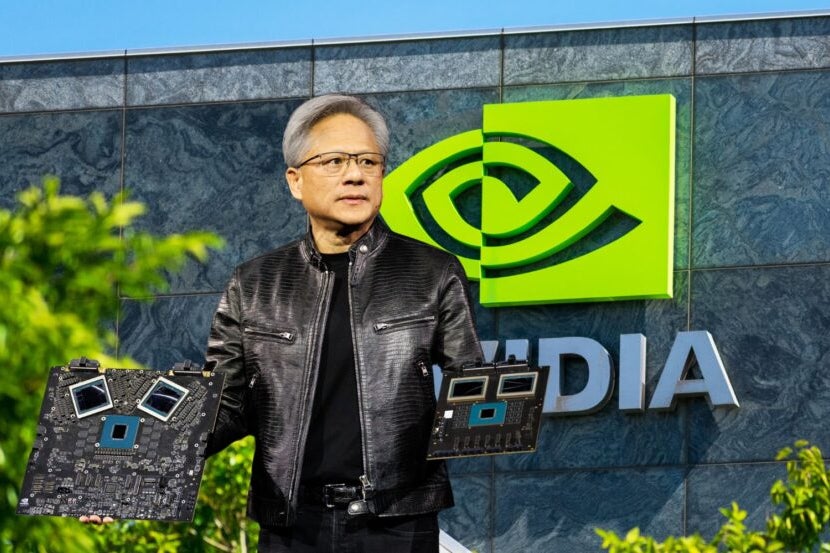
Nvidia Prioritizes U.S. National Security Over Commercial Opportunities
- National Security Priority: Nvidia CEO Jensen Huang stated at the shareholder meeting that the company would prioritize U.S. interests over commercial opportunities if they conflict with national security, emphasizing the importance of national security.
- Export Restriction Challenges: Huang noted that attempting to smuggle Nvidia chips into countries with export restrictions, such as China, would face difficulties as the company would not provide support or repairs, reinforcing its commitment to national security.
- Financial Return Commitment: Nvidia plans to return 50% of its free cash flow to investors through share repurchases and dividends over the next few years, with projected free cash flow exceeding $96 billion in fiscal 2026, showcasing strong financial execution.
- Shareholder Meeting Decisions: At the annual meeting, shareholders approved the executive compensation plan and re-elected all 10 board members, indicating strong support and trust in the company's governance.
See More

Nvidia Surpasses $5 Trillion Market Cap
- Market Cap Milestone: Nvidia has become the only company in the world with a market cap exceeding $5 trillion, reflecting its leadership in the tech industry, although its stock has only risen 7% recently, aligning with the broader market, prompting investors to carefully assess future growth potential.
- Revenue Surge: Nvidia reported an impressive 85% year-over-year revenue growth in Q1 of fiscal 2027, and even with a conservative 30% CAGR over the next five years, its annual revenue could reach $943 billion, indicating strong market demand.
- New Product Launch: The company is rolling out its latest Vera Rubin chip architecture, which delivers 35 times the inference power of the previous Blackwell architecture, while AWS has ordered 1 million Blackwell and Vera Rubin chips, showcasing robust demand in the cloud computing market.
- CPU Market Opportunity: CEO Jensen Huang has indicated a $200 billion addressable market for CPUs, with anticipated sales of $1 trillion for Blackwell and Rubin GPUs between 2026 and 2027, highlighting the company's strategic positioning in the data center sector.
See More

India's Unique Position in the Global AI Race


- Labor Force Advantage: India, with the world's second-largest workforce, is seen as lagging in the global AI race compared to the US and China; however, its low labor costs enable data collection and robot training, which is expected to drive rapid growth in related industries.
- Data Collection Market: As the robot market is projected to grow to $200 billion in the next decade, Indian companies are quickly emerging to meet contract demands from the US and China, although increased competition has halved data collection prices.
- Technological Innovation: Neocambrian AI launched a robotics data factory in Noida, aiming to collect 100 million hours of video data to enhance robot dexterity, showcasing India's potential in developing operating systems for robots.
- Market Transformation: Humyn Labs focuses on data conversion, planning to transition from data collectors to data owners, emphasizing India's significant role in the global human labor marketplace, akin to its success in the information technology sector.
See More
Micron Reports Record Gross Margin in Quarterly Earnings


- Significant Margin Increase: Micron's latest earnings report reveals a gross margin of 84.9%, a substantial rise from 39% a year ago, surpassing Nvidia's 75% and Meta's 82%, showcasing the company's strong pricing power in the memory market and reinforcing its market leadership.
- Surge in Revenue and Net Income: Micron's fiscal Q3 revenue reached $41.46 billion, up over $20 billion from the previous quarter, with net income soaring to $28.24 billion, more than doubling from the prior quarter, marking the highest performance in the company's 48-year history and reflecting a surge in demand for memory from data centers.
- Strategic Customer Agreements: Micron is entering long-term strategic customer agreements (SCAs) to maintain high margins amid rising memory prices, with the CEO stating that the floor price in these agreements will ensure margins well above previous cycle peaks, demonstrating the company's confidence in future market conditions.
- Optimistic Market Outlook: Micron projects a gross margin of approximately 86% for the fiscal fourth quarter, with executives indicating that the market will remain tight beyond 2027, further bolstering investor confidence in Micron's stock.
See More

Three Stocks to Avoid: Valuation Concerns

- SpaceX Overvaluation: Despite being a market favorite, SpaceX's $2.1 trillion valuation compared to its $18.7 billion revenue in 2025 results in a staggering price-to-sales ratio of 112, far exceeding the typical 20-30 range, indicating a potential price correction ahead.
- Palantir's Weak Growth: Palantir's stock has dropped nearly 40% from its all-time high, and while its 85% revenue growth and profitability are impressive, an 87 times forward P/E ratio remains excessive, suggesting greater downside risk for investors in the future.
- AMD's Competitive Disadvantage: AMD trades at a 73 times forward P/E ratio, and although it reported a 38% year-over-year revenue increase, it lags behind rival Nvidia, which has a superior product lineup and faster growth, diminishing AMD's investment appeal.
- Market Supply-Demand Imbalance: As SpaceX's lock-up period expires, an influx of shares is expected, which, combined with static demand, could lead to significant stock price declines, reflecting market caution towards overvalued stocks and a focus on actual financial performance.
See More
Nvidia's AI Infrastructure Growth Accelerates
- Data Center Revenue Surge: Nvidia's data center revenue reached a record $75.2 billion in the first quarter of fiscal 2027, marking a 92% year-over-year increase, reflecting robust demand for its hardware and software and underscoring the company's central role in AI infrastructure development.
- Optimistic Capital Expenditure Outlook: Analysts project that hyperscaler capital spending could exceed $1 trillion by 2027, positioning Nvidia, as the dominant supplier of accelerated computing platforms, to capture a significant share of this spending, further driving company growth.
- New CPU Platform Launch: Nvidia's Vera CPU, designed for the emerging era of agentic AI, has been delivered to leading AI labs and cloud providers, optimizing integration with its GPUs and expected to accelerate growth in its data center business.
- Valuation Expansion Potential: Nvidia's current P/E ratio is well below historical levels during earlier phases of the AI revolution, and if it re-rates to between 24 and 27 times its expected fiscal 2028 EPS of $12.73, the stock price could exceed $300, implying over 50% upside from current trading levels.
See More
Nvidia Prioritizes U.S. National Security Over Commercial Opportunities
- National Security Priority: Nvidia CEO Jensen Huang stated at the shareholder meeting that the company would prioritize U.S. interests over commercial opportunities if they conflict with national security, emphasizing the importance of national security.
- Export Restriction Challenges: Huang noted that attempting to smuggle Nvidia chips into countries with export restrictions, such as China, would face difficulties as the company would not provide support or repairs, reinforcing its commitment to national security.
- Financial Return Commitment: Nvidia plans to return 50% of its free cash flow to investors through share repurchases and dividends over the next few years, with projected free cash flow exceeding $96 billion in fiscal 2026, showcasing strong financial execution.
- Shareholder Meeting Decisions: At the annual meeting, shareholders approved the executive compensation plan and re-elected all 10 board members, indicating strong support and trust in the company's governance.
See More
Nvidia Surpasses $5 Trillion Market Cap
- Market Cap Milestone: Nvidia has become the only company in the world with a market cap exceeding $5 trillion, reflecting its leadership in the tech industry, although its stock has only risen 7% recently, aligning with the broader market, prompting investors to carefully assess future growth potential.
- Revenue Surge: Nvidia reported an impressive 85% year-over-year revenue growth in Q1 of fiscal 2027, and even with a conservative 30% CAGR over the next five years, its annual revenue could reach $943 billion, indicating strong market demand.
- New Product Launch: The company is rolling out its latest Vera Rubin chip architecture, which delivers 35 times the inference power of the previous Blackwell architecture, while AWS has ordered 1 million Blackwell and Vera Rubin chips, showcasing robust demand in the cloud computing market.
- CPU Market Opportunity: CEO Jensen Huang has indicated a $200 billion addressable market for CPUs, with anticipated sales of $1 trillion for Blackwell and Rubin GPUs between 2026 and 2027, highlighting the company's strategic positioning in the data center sector.
See More
India's Unique Position in the Global AI Race
- Labor Force Advantage: India, with the world's second-largest workforce, is seen as lagging in the global AI race compared to the US and China; however, its low labor costs enable data collection and robot training, which is expected to drive rapid growth in related industries.
- Data Collection Market: As the robot market is projected to grow to $200 billion in the next decade, Indian companies are quickly emerging to meet contract demands from the US and China, although increased competition has halved data collection prices.
- Technological Innovation: Neocambrian AI launched a robotics data factory in Noida, aiming to collect 100 million hours of video data to enhance robot dexterity, showcasing India's potential in developing operating systems for robots.
- Market Transformation: Humyn Labs focuses on data conversion, planning to transition from data collectors to data owners, emphasizing India's significant role in the global human labor marketplace, akin to its success in the information technology sector.
See More
Micron Reports Record Gross Margin in Quarterly Earnings
- Significant Margin Increase: Micron's latest earnings report reveals a gross margin of 84.9%, a substantial rise from 39% a year ago, surpassing Nvidia's 75% and Meta's 82%, showcasing the company's strong pricing power in the memory market and reinforcing its market leadership.
- Surge in Revenue and Net Income: Micron's fiscal Q3 revenue reached $41.46 billion, up over $20 billion from the previous quarter, with net income soaring to $28.24 billion, more than doubling from the prior quarter, marking the highest performance in the company's 48-year history and reflecting a surge in demand for memory from data centers.
- Strategic Customer Agreements: Micron is entering long-term strategic customer agreements (SCAs) to maintain high margins amid rising memory prices, with the CEO stating that the floor price in these agreements will ensure margins well above previous cycle peaks, demonstrating the company's confidence in future market conditions.
- Optimistic Market Outlook: Micron projects a gross margin of approximately 86% for the fiscal fourth quarter, with executives indicating that the market will remain tight beyond 2027, further bolstering investor confidence in Micron's stock.
See More
Three Stocks to Avoid: Valuation Concerns
- SpaceX Overvaluation: Despite being a market favorite, SpaceX's $2.1 trillion valuation compared to its $18.7 billion revenue in 2025 results in a staggering price-to-sales ratio of 112, far exceeding the typical 20-30 range, indicating a potential price correction ahead.
- Palantir's Weak Growth: Palantir's stock has dropped nearly 40% from its all-time high, and while its 85% revenue growth and profitability are impressive, an 87 times forward P/E ratio remains excessive, suggesting greater downside risk for investors in the future.
- AMD's Competitive Disadvantage: AMD trades at a 73 times forward P/E ratio, and although it reported a 38% year-over-year revenue increase, it lags behind rival Nvidia, which has a superior product lineup and faster growth, diminishing AMD's investment appeal.
- Market Supply-Demand Imbalance: As SpaceX's lock-up period expires, an influx of shares is expected, which, combined with static demand, could lead to significant stock price declines, reflecting market caution towards overvalued stocks and a focus on actual financial performance.
See More