Walmart's Q1 Earnings Beat Expectations, Yet Shares Decline
Written by Emily J. Thompson, Senior Investment Analyst
Updated: 3 days ago
0mins

Source: Yahoo Finance
- Significant Revenue Growth: Walmart's Q1 revenue rose 7.3% year-over-year to $177.8 billion, with e-commerce sales climbing 26%, surpassing management's guidance set three months prior, indicating strong performance in rapidly growing sectors.
- Advertising and Membership Revenue Surge: The global advertising business grew 37%, with Walmart Connect in the U.S. up 44%, and membership and other income increased by 27%, demonstrating the effectiveness of the company's strategic shift towards higher-margin businesses.
- Fuel Costs Impacting Profits: Operating income rose only 5% due to approximately $175 million in higher-than-expected fuel costs absorbed across global distribution, which hindered profit growth from keeping pace with sales growth, highlighting cost pressures on profitability.
- Cautious Consumer Sentiment: Management expressed caution regarding the overall consumer environment, noting that lower-income consumers are under financial stress, which led Walmart to maintain its full-year guidance, reflecting market concerns about future growth.
Trade with 70% Backtested Accuracy
Stop guessing "Should I Buy WMT?" and start using high-conviction signals backed by rigorous historical data.
Sign up today to access powerful investing tools and make smarter, data-driven decisions.
Analyst Views on WMT
Wall Street analysts forecast WMT stock price to rise
26 Analyst Rating
25 Buy
1 Hold
0 Sell
Strong Buy
Current: 118.540

Low
119.00
Averages
125.75
High
136.00
Current: 118.540
Low
119.00
Averages
125.75
High
136.00
About WMT
Walmart Inc. is a technology-powered omnichannel retailer. The Company is engaged in the operation of retail and wholesale stores and clubs, as well as eCommerce Websites and mobile applications, located throughout the United States (U.S.), Africa, Canada, Central America, Chile, China, India and Mexico. It operates in three reportable segments: Walmart U.S., Walmart International and Sam's Club U.S. The Walmart U.S. segment includes the Company's mass merchandising concept in the U.S., as well as eCommerce, which includes omni-channel initiatives and certain other business offerings such as advertising services. The Walmart International segment consists of the Company's operations outside of the U.S. through its subsidiaries, as well as eCommerce and omni-channel initiatives. The Sam's Club U.S. segment includes the warehouse membership clubs in the U.S., as well as samsclub.com and omni-channel initiatives.
About the author

Emily J. Thompson
Emily J. Thompson, a Chartered Financial Analyst (CFA) with 12 years in investment research, graduated with honors from the Wharton School. Specializing in industrial and technology stocks, she provides in-depth analysis for Intellectia’s earnings and market brief reports.

Sam's Club Community Engagement Triples in Two Years

- Community Growth: Sam's Club's member engagement community has surged to over 150,000 participants in just two years, indicating a strong consumer desire to shape brands rather than merely shop, thereby reinforcing Sam's Club's position as a leader in participation retail.
- Rich Interactive Activities: With 15,000 highly engaged members participating in five or more activities monthly, the community's involvement demonstrates significant engagement, as members provide feedback and testing that enhance customer satisfaction and brand loyalty for Sam's Club.
- Elevated Product Standards: Leveraging community feedback, Sam's Club successfully removed over 40 unwanted ingredients, setting a new private brand standard that ensures products do not compromise on taste, quality, or value, further enhancing brand reputation.
- Future Engagement Plans: Sam's Club is planning deeper engagement opportunities nationwide, including listening sessions and live events, aimed at enhancing consumer participation and brand loyalty through direct interaction.
See More
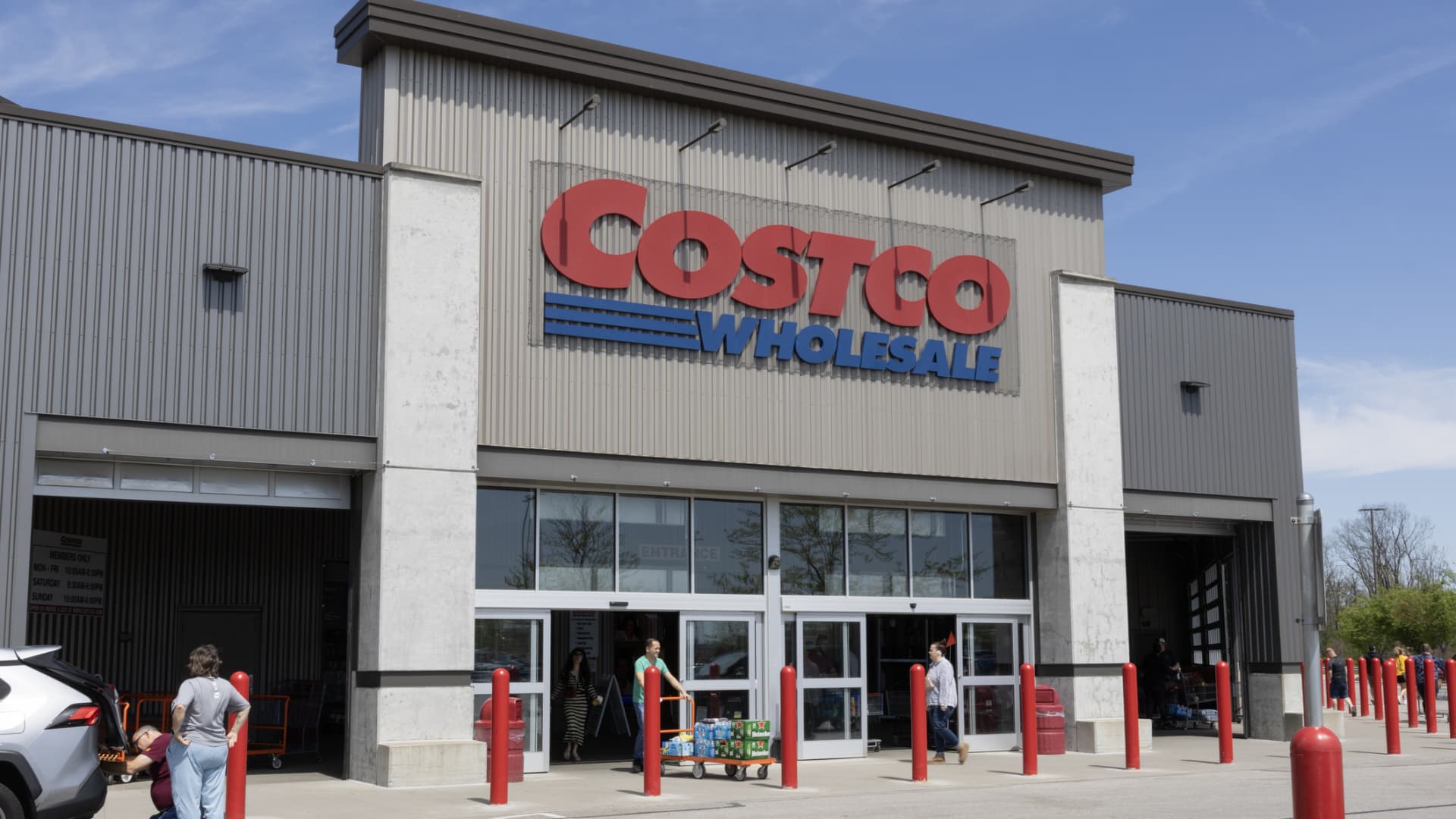
Costco Membership Growth Slows, Raising Investor Concerns
- Membership Growth Slowdown: Costco's paid membership growth rate has dropped to 4.8% over the past year, below the historical mid- to high-single-digit range of 6%-7%, raising investor concerns as high-margin membership fee income is crucial for the company's performance.
- Declining Renewal Rates: Renewal rates fell by 30 basis points in Q3 of fiscal 2025 and another 40 basis points in the following quarter, although the declines moderated in early fiscal 2026, the overall renewal rate remains below 90%, potentially impacting long-term profitability.
- Impact of Digital Transformation: The share of younger digital members has surged from 5% in 2019 to nearly 50%, which, while boosting membership revenue, has led to lower renewal rates for these new members, highlighting challenges in attracting long-term loyal customers for Costco.
- Market Environment Pressures: As lower-income consumers become more cautious with spending, the slowdown in membership growth is evident; although high gas prices may enhance membership appeal, fewer new warehouse openings limit growth potential in international markets, posing challenges for Costco's overall business.
See More

Teladoc Partners with Walmart to Expand Virtual Care Services
- Collaboration Expansion: Teladoc Health announced that its virtual care services are now available through Walmart's Better Care Services platform, aiming to enhance access to healthcare, particularly for uninsured customers.
- Service Offerings: The new partnership allows Walmart customers to access various medical services, including 24/7 care, dermatology, and nutrition services, for $89 per visit, significantly improving the healthcare experience for shoppers.
- Market Strategy: Teladoc's president, Kelly Bliss, emphasized that Walmart is a primary destination for everyday needs for millions of Americans, and integrating healthcare services into the shopping experience enhances brand penetration in the market.
- Historical Collaborations: This partnership is part of Teladoc's ongoing collaboration with Walmart, following its 2025 partnership with Amazon to offer diabetes and hypertension management programs, showcasing its strategic positioning in retail and online platforms.
See More
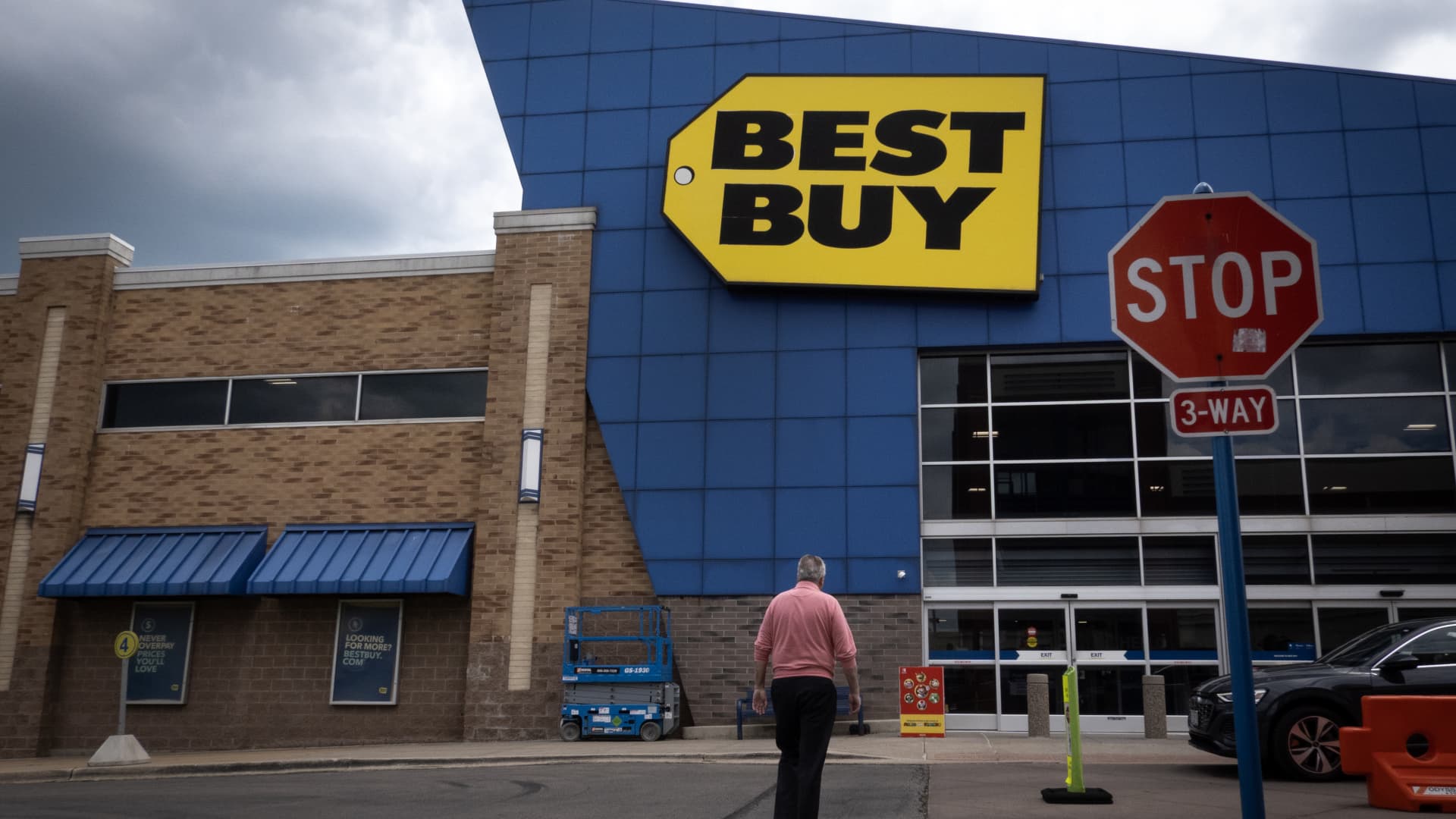
Best Buy Reports Strong Q1 Results, Exceeds Expectations

- Performance Growth: Best Buy's Q1 revenue reached $8.94 billion, a 2% increase year-over-year, surpassing market expectations of $8.83 billion, indicating positive sales growth across major product categories despite a decline in appliance sales.
- Profitability Improvement: The company reported a net income of $276 million, or $1.31 per share, significantly up from $202 million and $0.95 per share a year ago, reflecting success in expanding operating income rates and EPS growth.
- Leadership Transition: New CEO Jason Bonfig is set to take over on November 1, replacing current CEO Corie Barry, who stated that this is the right time for a leadership transition to drive sales growth and accelerate business development.
- Market Outlook: Despite challenges from higher tariffs and declining consumer confidence, Best Buy maintains its full-year revenue guidance between $41.2 billion and $42.1 billion, demonstrating confidence in future market conditions and strategic planning.
See More
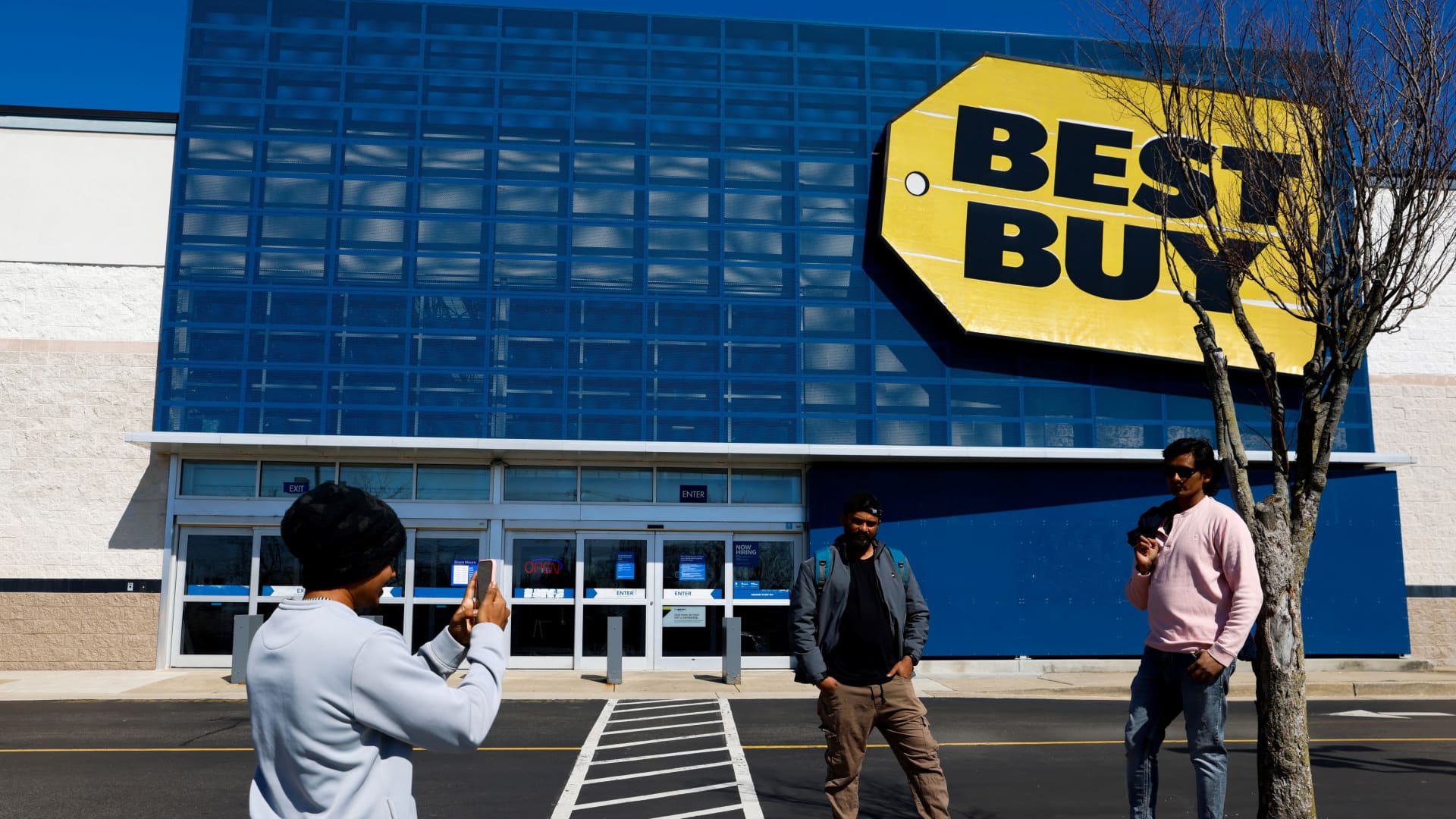
Best Buy Reports Better-Than-Expected Q1 Earnings Amid Leadership Change
- Earnings Growth Highlight: Best Buy reported first fiscal quarter revenue of $8.94 billion, a slight increase from $8.77 billion last year, exceeding market expectations of $8.83 billion, indicating positive progress in sales recovery efforts.
- Profitability Improvement: The company posted adjusted earnings per share of $1.28, surpassing analyst expectations of $1.23, with net income rising to $276 million from $202 million a year ago, reflecting improvements in cost control and operational efficiency.
- Leadership Change: Current CEO Corie Barry announced her resignation this fall, with Jason Bonfig set to take over on November 1, a leadership transition aimed at accelerating sales growth and enhancing customer experience, demonstrating the company's commitment to future development.
- Market Challenges and Opportunities: Despite facing challenges from higher tariffs and declining consumer confidence, Best Buy achieved a 2% comparable sales growth in gaming, computing, and mobile services, indicating that the company's strategic adjustments in product and service diversification are yielding results.
See More

Q1 Earnings Strong, AI Investments Continue to Surge


- Earnings Highlights: According to FactSet, 84% of S&P 500 companies exceeded earnings expectations in Q1, resulting in a year-over-year profit growth of 27.7%, indicating resilience in the economy and strong corporate profitability.
- Google Ad Revenue Growth: Alphabet reported a 19% year-over-year revenue growth in Q1, with advertising revenue increasing over 15%, suggesting that advertisers remain aggressive in their spending on Google Ads, reflecting its high cost-effectiveness even in uncertain economic conditions.
- Meta User Growth Slowdown: Meta's Q1 revenue reached $56.3 billion, surpassing expectations, but daily active user growth slowed to only 4%, the lowest in years, leading to investor concerns about future AI investments, with capital expenditures expected to rise to between $125 billion and $145 billion.
- Nvidia's Strong Performance: Nvidia reported Q1 revenue of $81.6 billion, an 85% year-over-year increase, with earnings per share of $1.87, exceeding expectations, showcasing robust growth in its data center business and projecting a continued revenue growth potential of 95% for the upcoming quarter.
See More
Sam's Club Community Engagement Triples in Two Years
- Community Growth: Sam's Club's member engagement community has surged to over 150,000 participants in just two years, indicating a strong consumer desire to shape brands rather than merely shop, thereby reinforcing Sam's Club's position as a leader in participation retail.
- Rich Interactive Activities: With 15,000 highly engaged members participating in five or more activities monthly, the community's involvement demonstrates significant engagement, as members provide feedback and testing that enhance customer satisfaction and brand loyalty for Sam's Club.
- Elevated Product Standards: Leveraging community feedback, Sam's Club successfully removed over 40 unwanted ingredients, setting a new private brand standard that ensures products do not compromise on taste, quality, or value, further enhancing brand reputation.
- Future Engagement Plans: Sam's Club is planning deeper engagement opportunities nationwide, including listening sessions and live events, aimed at enhancing consumer participation and brand loyalty through direct interaction.
See More
Costco Membership Growth Slows, Raising Investor Concerns
- Membership Growth Slowdown: Costco's paid membership growth rate has dropped to 4.8% over the past year, below the historical mid- to high-single-digit range of 6%-7%, raising investor concerns as high-margin membership fee income is crucial for the company's performance.
- Declining Renewal Rates: Renewal rates fell by 30 basis points in Q3 of fiscal 2025 and another 40 basis points in the following quarter, although the declines moderated in early fiscal 2026, the overall renewal rate remains below 90%, potentially impacting long-term profitability.
- Impact of Digital Transformation: The share of younger digital members has surged from 5% in 2019 to nearly 50%, which, while boosting membership revenue, has led to lower renewal rates for these new members, highlighting challenges in attracting long-term loyal customers for Costco.
- Market Environment Pressures: As lower-income consumers become more cautious with spending, the slowdown in membership growth is evident; although high gas prices may enhance membership appeal, fewer new warehouse openings limit growth potential in international markets, posing challenges for Costco's overall business.
See More
Teladoc Partners with Walmart to Expand Virtual Care Services
- Collaboration Expansion: Teladoc Health announced that its virtual care services are now available through Walmart's Better Care Services platform, aiming to enhance access to healthcare, particularly for uninsured customers.
- Service Offerings: The new partnership allows Walmart customers to access various medical services, including 24/7 care, dermatology, and nutrition services, for $89 per visit, significantly improving the healthcare experience for shoppers.
- Market Strategy: Teladoc's president, Kelly Bliss, emphasized that Walmart is a primary destination for everyday needs for millions of Americans, and integrating healthcare services into the shopping experience enhances brand penetration in the market.
- Historical Collaborations: This partnership is part of Teladoc's ongoing collaboration with Walmart, following its 2025 partnership with Amazon to offer diabetes and hypertension management programs, showcasing its strategic positioning in retail and online platforms.
See More
Best Buy Reports Strong Q1 Results, Exceeds Expectations
- Performance Growth: Best Buy's Q1 revenue reached $8.94 billion, a 2% increase year-over-year, surpassing market expectations of $8.83 billion, indicating positive sales growth across major product categories despite a decline in appliance sales.
- Profitability Improvement: The company reported a net income of $276 million, or $1.31 per share, significantly up from $202 million and $0.95 per share a year ago, reflecting success in expanding operating income rates and EPS growth.
- Leadership Transition: New CEO Jason Bonfig is set to take over on November 1, replacing current CEO Corie Barry, who stated that this is the right time for a leadership transition to drive sales growth and accelerate business development.
- Market Outlook: Despite challenges from higher tariffs and declining consumer confidence, Best Buy maintains its full-year revenue guidance between $41.2 billion and $42.1 billion, demonstrating confidence in future market conditions and strategic planning.
See More
Best Buy Reports Better-Than-Expected Q1 Earnings Amid Leadership Change
- Earnings Growth Highlight: Best Buy reported first fiscal quarter revenue of $8.94 billion, a slight increase from $8.77 billion last year, exceeding market expectations of $8.83 billion, indicating positive progress in sales recovery efforts.
- Profitability Improvement: The company posted adjusted earnings per share of $1.28, surpassing analyst expectations of $1.23, with net income rising to $276 million from $202 million a year ago, reflecting improvements in cost control and operational efficiency.
- Leadership Change: Current CEO Corie Barry announced her resignation this fall, with Jason Bonfig set to take over on November 1, a leadership transition aimed at accelerating sales growth and enhancing customer experience, demonstrating the company's commitment to future development.
- Market Challenges and Opportunities: Despite facing challenges from higher tariffs and declining consumer confidence, Best Buy achieved a 2% comparable sales growth in gaming, computing, and mobile services, indicating that the company's strategic adjustments in product and service diversification are yielding results.
See More
Q1 Earnings Strong, AI Investments Continue to Surge
- Earnings Highlights: According to FactSet, 84% of S&P 500 companies exceeded earnings expectations in Q1, resulting in a year-over-year profit growth of 27.7%, indicating resilience in the economy and strong corporate profitability.
- Google Ad Revenue Growth: Alphabet reported a 19% year-over-year revenue growth in Q1, with advertising revenue increasing over 15%, suggesting that advertisers remain aggressive in their spending on Google Ads, reflecting its high cost-effectiveness even in uncertain economic conditions.
- Meta User Growth Slowdown: Meta's Q1 revenue reached $56.3 billion, surpassing expectations, but daily active user growth slowed to only 4%, the lowest in years, leading to investor concerns about future AI investments, with capital expenditures expected to rise to between $125 billion and $145 billion.
- Nvidia's Strong Performance: Nvidia reported Q1 revenue of $81.6 billion, an 85% year-over-year increase, with earnings per share of $1.87, exceeding expectations, showcasing robust growth in its data center business and projecting a continued revenue growth potential of 95% for the upcoming quarter.
See More