Walmart Is Allowing Major Tech Companies to Cover AI Costs. Who Else Stands to Benefit?
Written by Emily J. Thompson, Senior Investment Analyst
Updated: 6 days ago
0mins


Should l Buy GOOG?
Source: Barron's
- Walmart's AI Strategy: Walmart is not investing heavily in artificial intelligence but is prepared to utilize AI tools developed by major tech companies.
- Collaboration with Big Tech: The retail giant is waiting to implement AI advancements that come from the significant research and development efforts of Big Tech firms.
Trade with 70% Backtested Accuracy
Stop guessing "Should I Buy GOOG?" and start using high-conviction signals backed by rigorous historical data.
Sign up today to access powerful investing tools and make smarter, data-driven decisions.
Analyst Views on GOOG
Wall Street analysts forecast GOOG stock price to rise
15 Analyst Rating
14 Buy
1 Hold
0 Sell
Strong Buy
Current: 309.370

Low
255.00
Averages
336.08
High
400.00
Current: 309.370
Low
255.00
Averages
336.08
High
400.00
About GOOG
Alphabet Inc. is a holding company. The Company's segments include Google Services, Google Cloud, and Other Bets. The Google Services segment includes products and services such as ads, Android, Chrome, devices, Google Maps, Google Play, Search, and YouTube. The Google Cloud segment includes infrastructure and platform services, collaboration tools, and other services for enterprise customers. Its Other Bets segment is engaged in the sale of healthcare-related services and Internet services. Its Google Cloud provides enterprise-ready cloud services, including Google Cloud Platform and Google Workspace. Google Cloud Platform provides access to solutions such as artificial intelligence (AI) offerings, including its AI infrastructure, Vertex AI platform, and Gemini for Google Cloud; cybersecurity, and data and analytics. Google Workspace includes cloud-based communication and collaboration tools for enterprises, such as Calendar, Gmail, Docs, Drive, and Meet.
About the author

Emily J. Thompson
Emily J. Thompson, a Chartered Financial Analyst (CFA) with 12 years in investment research, graduated with honors from the Wharton School. Specializing in industrial and technology stocks, she provides in-depth analysis for Intellectia’s earnings and market brief reports.

St George Mining Secures Strategic Land for Araxá Project

- Land Acquisition: St George Mining has entered into a binding agreement to acquire 166 hectares of industrial land for 14 million Brazilian reais (approximately A$3.8 million), laying the groundwork for its niobium-rare earths project in Brazil.
- Resource Potential Unlocking: The new land will allow the company to establish processing facilities outside the mining tenure, preventing sterilization of the orebody, which is expected to facilitate parallel advancements in resource upgrades and exploration efforts.
- Environmental Protection Measures: The company also acquired a separate 163-hectare conservation area aimed at offsetting environmental impacts and supporting operational licensing requirements, demonstrating its commitment to sustainable practices.
- Positive Market Outlook: With global niobium demand projected to grow at 6% annually, St George Mining is positioning itself to enter a tightly concentrated and strategically significant market, especially as the U.S. identifies niobium as a critical mineral.
See More

Tesla's $20 Billion Investment Reshapes Transportation Market


- Surge in Capital Expenditure: Tesla plans to invest over $20 billion in capital spending by 2026, more than double last year's expenditure, highlighting its ambitious vision for the electric vehicle market, especially as competitors scale back their investments.
- Diversified Factory Investments: Among the six new factories, three are dedicated to electric vehicle production, including a lithium refinery and a low-cost lithium iron phosphate battery factory, directly supporting EV growth and strengthening Tesla's market position.
- Autonomous Driving Vision: CEO Elon Musk clearly stated in the recent earnings call that only 1% to 5% of miles driven will be by humans in the future, indicating Tesla's leadership in autonomous driving, with expectations that Cybercab production will surpass all other models combined.
- Significant Market Potential: The Cybercab is expected to cost under $30,000 and have a significantly lower cost per mile than traditional taxis; if regulatory approval is achieved, Tesla's robotaxi could present a compelling market opportunity, further solidifying its leadership in the EV sector.
See More
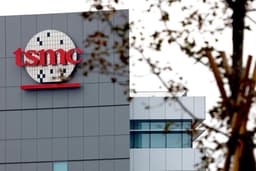
TSMC on Track to Join $3 Trillion Club

- Market Position Solidified: TSMC's current market capitalization stands at $1.9 trillion, and as the world's largest semiconductor foundry with a 71% share of the global chip market, investors could see a 58% return if it secures membership in the $3 trillion club.
- Strong Financial Performance: In Q4, TSMC reported revenue of $33.7 billion, a 26% year-over-year increase, with earnings per share rising 35% to $3.14, while gross and operating margins improved to 59.9% and 50.8%, respectively, indicating enhanced profitability during expansion.
- Future Growth Expectations: Management forecasts first-quarter revenue of $35.2 billion, representing a 38% year-over-year growth, suggesting that the company will continue to thrive amid rising demand for high-end semiconductors.
- Optimistic Industry Outlook: Annual sales of high-end semiconductors are projected to approach $1 trillion by 2026, positioning TSMC to benefit from this trend, with analysts predicting revenues of $193.9 billion and $232.8 billion in 2027 and 2028, respectively.
See More

Anthropic CEO Warns of AI Investment Risks


- Investment Risk Warning: Anthropic CEO Dario Amodei warns that even a slight miscalculation in AI investment timing could lead to bankruptcy, particularly as rivals pour hundreds of billions into data centers, highlighting the intense market competition.
- Cautious Spending Strategy: Amodei emphasizes that while powerful AI models are expected to emerge within one to two years, the timeline for revenue realization remains uncertain, potentially taking one to five years, making early massive capital commitments highly risky.
- Massive Spending Plans: Anthropic plans to invest $50 billion in U.S. AI infrastructure, focusing on data centers in Texas and New York, while competitors like Amazon, Alphabet, and Meta are budgeting significantly more at $200 billion, $185 billion, and $135 billion respectively, indicating fierce funding competition in the industry.
- Surge in Market Demand: According to the Semiconductor Industry Association, global chip sales are projected to reach $791.7 billion in 2025 and grow by 26% in 2026, indicating that AI demand is driving rapid growth across the entire sector.
See More
Alphabet's Surge in AI Spending Boosts Nvidia and Broadcom
- Capital Expenditure Outlook: Alphabet's projected capital expenditures for 2026 are between $175 billion and $185 billion, indicating a sustained increase in AI spending that will significantly benefit companies like Nvidia and Broadcom.
- Enhanced Internal Computing: Alphabet's use of TPUs to support its in-house generative AI model, Gemini, and Google DeepMind not only boosts internal computing efficiency but also strengthens its partnership with Broadcom, enhancing growth prospects for both companies.
- Cloud Platform Utilization: Google Cloud's use of TPUs for external clients suggests that while customers may hesitate to fully commit to Google's hardware, Nvidia's GPUs will still play a crucial role in the projected $175 billion to $185 billion spending, potentially increasing its market share.
- Growth Expectations Comparison: While Alphabet reported an 18% year-over-year revenue increase, Broadcom and Nvidia are expected to achieve 28% and 61% growth in their first quarters, respectively, highlighting their strong performance in the AI sector and boosting investor confidence in these stocks.
See More

Cognizant Expands Strategic Partnership with Google Cloud for AI Deployment
- Strategic Partnership Expansion: Cognizant's partnership with Google Cloud is expanded to operationalize agentic AI at enterprise scale, moving beyond platform integration to execution-focused deployment, which is expected to enhance overall operational efficiency.
- Internal Investment and Deployment: The company is investing in and deploying Google Workspace alongside Gemini Enterprise internally to enhance productivity, employee experience, and delivery velocity, thereby driving digital transformation of business processes.
- New Product Launch: Cognizant will introduce a new productivity offering that combines Gemini Enterprise and Google Workspace to help clients transition from manual workflows to AI-driven processes, particularly in collaborative content creation and supplier communications.
- Center of Excellence Establishment: The company is setting up a dedicated Gemini Enterprise Center of Excellence to support large-scale deployment of agentic AI, ensuring integration throughout the Agent Development Lifecycle from initial design to implementation and full production rollout.
See More
St George Mining Secures Strategic Land for Araxá Project
- Land Acquisition: St George Mining has entered into a binding agreement to acquire 166 hectares of industrial land for 14 million Brazilian reais (approximately A$3.8 million), laying the groundwork for its niobium-rare earths project in Brazil.
- Resource Potential Unlocking: The new land will allow the company to establish processing facilities outside the mining tenure, preventing sterilization of the orebody, which is expected to facilitate parallel advancements in resource upgrades and exploration efforts.
- Environmental Protection Measures: The company also acquired a separate 163-hectare conservation area aimed at offsetting environmental impacts and supporting operational licensing requirements, demonstrating its commitment to sustainable practices.
- Positive Market Outlook: With global niobium demand projected to grow at 6% annually, St George Mining is positioning itself to enter a tightly concentrated and strategically significant market, especially as the U.S. identifies niobium as a critical mineral.
See More
Tesla's $20 Billion Investment Reshapes Transportation Market
- Surge in Capital Expenditure: Tesla plans to invest over $20 billion in capital spending by 2026, more than double last year's expenditure, highlighting its ambitious vision for the electric vehicle market, especially as competitors scale back their investments.
- Diversified Factory Investments: Among the six new factories, three are dedicated to electric vehicle production, including a lithium refinery and a low-cost lithium iron phosphate battery factory, directly supporting EV growth and strengthening Tesla's market position.
- Autonomous Driving Vision: CEO Elon Musk clearly stated in the recent earnings call that only 1% to 5% of miles driven will be by humans in the future, indicating Tesla's leadership in autonomous driving, with expectations that Cybercab production will surpass all other models combined.
- Significant Market Potential: The Cybercab is expected to cost under $30,000 and have a significantly lower cost per mile than traditional taxis; if regulatory approval is achieved, Tesla's robotaxi could present a compelling market opportunity, further solidifying its leadership in the EV sector.
See More
TSMC on Track to Join $3 Trillion Club
- Market Position Solidified: TSMC's current market capitalization stands at $1.9 trillion, and as the world's largest semiconductor foundry with a 71% share of the global chip market, investors could see a 58% return if it secures membership in the $3 trillion club.
- Strong Financial Performance: In Q4, TSMC reported revenue of $33.7 billion, a 26% year-over-year increase, with earnings per share rising 35% to $3.14, while gross and operating margins improved to 59.9% and 50.8%, respectively, indicating enhanced profitability during expansion.
- Future Growth Expectations: Management forecasts first-quarter revenue of $35.2 billion, representing a 38% year-over-year growth, suggesting that the company will continue to thrive amid rising demand for high-end semiconductors.
- Optimistic Industry Outlook: Annual sales of high-end semiconductors are projected to approach $1 trillion by 2026, positioning TSMC to benefit from this trend, with analysts predicting revenues of $193.9 billion and $232.8 billion in 2027 and 2028, respectively.
See More
Anthropic CEO Warns of AI Investment Risks
- Investment Risk Warning: Anthropic CEO Dario Amodei warns that even a slight miscalculation in AI investment timing could lead to bankruptcy, particularly as rivals pour hundreds of billions into data centers, highlighting the intense market competition.
- Cautious Spending Strategy: Amodei emphasizes that while powerful AI models are expected to emerge within one to two years, the timeline for revenue realization remains uncertain, potentially taking one to five years, making early massive capital commitments highly risky.
- Massive Spending Plans: Anthropic plans to invest $50 billion in U.S. AI infrastructure, focusing on data centers in Texas and New York, while competitors like Amazon, Alphabet, and Meta are budgeting significantly more at $200 billion, $185 billion, and $135 billion respectively, indicating fierce funding competition in the industry.
- Surge in Market Demand: According to the Semiconductor Industry Association, global chip sales are projected to reach $791.7 billion in 2025 and grow by 26% in 2026, indicating that AI demand is driving rapid growth across the entire sector.
See More
Alphabet's Surge in AI Spending Boosts Nvidia and Broadcom
- Capital Expenditure Outlook: Alphabet's projected capital expenditures for 2026 are between $175 billion and $185 billion, indicating a sustained increase in AI spending that will significantly benefit companies like Nvidia and Broadcom.
- Enhanced Internal Computing: Alphabet's use of TPUs to support its in-house generative AI model, Gemini, and Google DeepMind not only boosts internal computing efficiency but also strengthens its partnership with Broadcom, enhancing growth prospects for both companies.
- Cloud Platform Utilization: Google Cloud's use of TPUs for external clients suggests that while customers may hesitate to fully commit to Google's hardware, Nvidia's GPUs will still play a crucial role in the projected $175 billion to $185 billion spending, potentially increasing its market share.
- Growth Expectations Comparison: While Alphabet reported an 18% year-over-year revenue increase, Broadcom and Nvidia are expected to achieve 28% and 61% growth in their first quarters, respectively, highlighting their strong performance in the AI sector and boosting investor confidence in these stocks.
See More
Cognizant Expands Strategic Partnership with Google Cloud for AI Deployment
- Strategic Partnership Expansion: Cognizant's partnership with Google Cloud is expanded to operationalize agentic AI at enterprise scale, moving beyond platform integration to execution-focused deployment, which is expected to enhance overall operational efficiency.
- Internal Investment and Deployment: The company is investing in and deploying Google Workspace alongside Gemini Enterprise internally to enhance productivity, employee experience, and delivery velocity, thereby driving digital transformation of business processes.
- New Product Launch: Cognizant will introduce a new productivity offering that combines Gemini Enterprise and Google Workspace to help clients transition from manual workflows to AI-driven processes, particularly in collaborative content creation and supplier communications.
- Center of Excellence Establishment: The company is setting up a dedicated Gemini Enterprise Center of Excellence to support large-scale deployment of agentic AI, ensuring integration throughout the Agent Development Lifecycle from initial design to implementation and full production rollout.
See More