Verdera Energy CEO to Present at Investor Summit
Written by Emily J. Thompson, Senior Investment Analyst
Updated: 4 days ago
0mins
Source: Globenewswire
- Investor Summit Participation: Janet Lee-Sheriff, CEO of Verdera Energy, will present live at the Virtual Investor Summit on June 16, 2026, from 1:00 to 1:30 pm Eastern, aimed at enhancing investor interaction and addressing real-time questions.
- One-on-One Meeting Arrangements: During the conference, investors can schedule one-on-one meetings on June 17 and 18, from 11:00 am to 2:00 pm and 11:00 am to 4:00 pm respectively, providing personalized engagement opportunities to foster investor relations.
- Company Background Overview: Verdera Energy focuses on developing in-situ recovery uranium assets in New Mexico, holding the largest land position and uranium endowment among U.S.-focused public uranium exploration companies, committed to meeting the growing domestic uranium demand.
- Community Relations Commitment: Verdera is dedicated to fostering strong community relations, emphasizing close collaboration with local communities while advancing uranium resource development to support sustainable growth in the U.S. nuclear sector.
Trade with 70% Backtested Accuracy
Stop guessing "Should I Buy V?" and start using high-conviction signals backed by rigorous historical data.
Sign up today to access powerful investing tools and make smarter, data-driven decisions.
Analyst Views on V
Wall Street analysts forecast V stock price to rise
25 Analyst Rating
23 Buy
2 Hold
0 Sell
Strong Buy
Current: 330.380

Low
330.00
Averages
406.59
High
450.00
Current: 330.380
Low
330.00
Averages
406.59
High
450.00
About V
Visa Inc. is a global payments technology company. It facilitates global commerce and money movement across more than 200 countries and territories among a global set of consumers, merchants, financial institutions and government entities through technologies. It operates through the Payment Services segment. It provides transaction processing services (primarily authorization, clearing and settlement) to its financial institution and merchant clients through VisaNet, its proprietary advanced transaction processing network. It offers a range of Visa-branded payment products that its clients, including nearly 14,500 financial institutions, use to develop and offer payment solutions or services, including credit, debit, prepaid and cash access programs for individual, business and government account holders. It also provides value-added services to its clients, including issuing solutions, acceptance solutions, risk and identity solutions, open banking solutions and advisory services.
About the author

Emily J. Thompson
Emily J. Thompson, a Chartered Financial Analyst (CFA) with 12 years in investment research, graduated with honors from the Wharton School. Specializing in industrial and technology stocks, she provides in-depth analysis for Intellectia’s earnings and market brief reports.
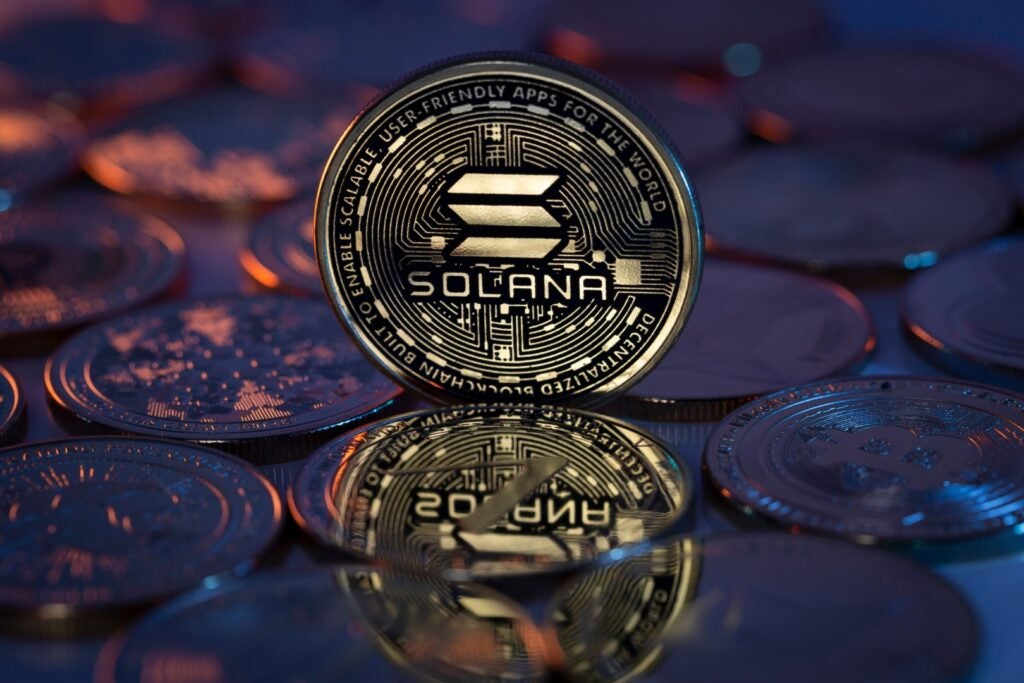
Moody's Expands Credit Ratings to Tokenized Bonds on Solana


- Expansion of Credit Ratings: Moody's has expanded its credit rating services to include tokenized bonds and fixed-income securities, directly integrating these ratings onto Solana's blockchain, which is expected to enhance investor confidence in tokenized assets and boost Solana's market appeal.
- Increased Trading Efficiency: By converting fixed-income securities into digital tokens, Moody's integration allows investors to trade 24/7 without intermediaries, significantly reducing transaction costs and simplifying the investment process, which is likely to attract more investors.
- Competitive Market Advantage: While Ethereum remains the market leader, Solana's Layer-1 blockchain offers significantly faster speeds, and Moody's support is set to further solidify Solana's competitive position in tokenized asset trading, especially with the upcoming Alpenglow upgrade.
- Future Growth Potential: Moody's backing not only strengthens Solana's prospects as a high-speed highway for blockchain transactions but also indicates its increasing importance among financial institutions, suggesting that despite this year's crypto market volatility, Solana could still have a bright future.
See More

Moody's Integrates Credit Ratings with Solana Blockchain

- Credit Rating Integration: Moody's integration of its credit ratings directly onto Solana's blockchain signifies increased confidence in tokenized assets, which is expected to enhance investor trust and usage frequency on the Solana platform.
- Trading Efficiency Boost: By tokenizing fixed-income securities, Moody's enables these assets to be traded instantly on the blockchain, reducing transaction costs and eliminating the need for intermediaries, allowing investors to trade more swiftly.
- Enhanced Market Competitiveness: While Ethereum remains the market leader, Solana's Layer-1 blockchain is significantly faster, and Moody's support may attract more financial institutions to tokenize assets on Solana, further strengthening its market position.
- Optimistic Future Outlook: Moody's integration not only serves as a vote of confidence for Solana but also indicates potential future collaborations with other blockchains like Ethereum, suggesting ongoing expansion potential for Solana in the blockchain transaction space.
See More
Klarna Partners with Bolt to Expand Mobility Payments

- Payment Integration: Klarna's partnership with Bolt integrates its payment options directly into the Bolt app, allowing users in Sweden, Germany, Finland, and Norway to pay for rides using Klarna's 'Pay in Full' or customized installment plans, enhancing user experience and increasing transaction frequency.
- Market Expansion: This collaboration extends Klarna's reach to over 200 million users, marking a strategic shift from traditional retail and e-commerce into everyday mobility payments, thereby increasing its influence in transportation services.
- User Growth Momentum: Klarna reported a 21% year-over-year increase in active users to 119 million and a 33% rise in Gross Merchandise Volume (GMV) in Q1 2026, indicating strong growth in the payments sector, which, while not materially impactful in the short term, lays a solid foundation for long-term growth.
- Competitive Landscape: As Klarna expands into mobility payments, other payment companies like Affirm and Visa are also seeking growth through travel and AI-driven commerce, highlighting the intensifying competition in the payments industry, with Klarna's initiatives poised to support its ongoing development in this space.
See More

Visa and Mastercard's Strategic Move into Stablecoins

- Surging Payment Volume: In Q1 2026, Visa and Mastercard processed a staggering $7.1 trillion in payment volume, underscoring their dominance in the global payments landscape, even as they face competition from stablecoins.
- Stablecoin Market Potential: The current market value of dollar-linked stablecoins stands at $303 billion, with Tether and USDC holding 61% and 25% market shares respectively, prompting Visa and Mastercard to plan their own stablecoin platforms to maintain competitiveness.
- Strategic Acquisitions and Partnerships: Visa and Mastercard have acquired stablecoin infrastructure companies Bridge and BVNK for $1.1 billion and $1.8 billion respectively, indicating their strategic positioning and investment in the stablecoin sector.
- Network Effects Advantage: With their robust network effects connecting consumers, merchants, and financial institutions, Visa and Mastercard are better positioned to promote stablecoin adoption, while USDT and USDC face challenges in everyday transactional settings.
See More
Visa and Mastercard Plan Joint Stablecoin Platform
- Market Share Competition: Visa and Mastercard are reportedly in talks with Stripe to launch a joint stablecoin platform, aiming to counter the 86% market share held by USDT and USDC in the $303 billion stablecoin market, thereby enhancing their competitive edge in payments.
- Surge in Payment Volume: In the first quarter of 2026, Visa and Mastercard processed a staggering $7.1 trillion in payment volume, underscoring their dominance in the global payments landscape, with the stablecoin initiative potentially boosting their market share and profits further.
- Technological Investments: Stripe acquired stablecoin infrastructure firm Bridge for $1.1 billion in 2025, while Mastercard purchased BVNK for $1.8 billion, indicating strategic moves to establish a foothold in the stablecoin sector.
- Improved Regulatory Environment: The passage of the Genius Act in July 2025 has bolstered Visa and Mastercard's confidence to operate in the stablecoin space, allowing them to leverage their network effects more effectively to drive adoption and increase market share.
See More
Analysis of Visa and Mastercard's Profit Models
- Strong Profitability: Over the past five years, Visa's average quarterly net income margin reached 51.2%, while Mastercard's was slightly lower at 45.4%, demonstrating both companies' robust earnings generation capabilities that further solidify their market dominance.
- Cost Advantage in Transactions: The operational model of Visa and Mastercard allows for virtually zero marginal cost per transaction, with Visa achieving an operating margin of 64.4% in Q2 of fiscal 2026 and Mastercard at 58.4%, indicating high profit margins under fixed cost coverage.
- Abundant Free Cash Flow: Combined, the two companies generated $5.2 billion in free cash flow during Q1 2023, enabling substantial returns to shareholders through dividends and stock buybacks, which enhances investor confidence.
- Beneficiaries of Economic Growth: Visa and Mastercard benefit from economic growth and the trend towards cashless transactions, particularly in emerging markets where digital payment penetration has significant room for improvement, expected to drive future revenue growth.
See More
Moody's Expands Credit Ratings to Tokenized Bonds on Solana
- Expansion of Credit Ratings: Moody's has expanded its credit rating services to include tokenized bonds and fixed-income securities, directly integrating these ratings onto Solana's blockchain, which is expected to enhance investor confidence in tokenized assets and boost Solana's market appeal.
- Increased Trading Efficiency: By converting fixed-income securities into digital tokens, Moody's integration allows investors to trade 24/7 without intermediaries, significantly reducing transaction costs and simplifying the investment process, which is likely to attract more investors.
- Competitive Market Advantage: While Ethereum remains the market leader, Solana's Layer-1 blockchain offers significantly faster speeds, and Moody's support is set to further solidify Solana's competitive position in tokenized asset trading, especially with the upcoming Alpenglow upgrade.
- Future Growth Potential: Moody's backing not only strengthens Solana's prospects as a high-speed highway for blockchain transactions but also indicates its increasing importance among financial institutions, suggesting that despite this year's crypto market volatility, Solana could still have a bright future.
See More
Moody's Integrates Credit Ratings with Solana Blockchain
- Credit Rating Integration: Moody's integration of its credit ratings directly onto Solana's blockchain signifies increased confidence in tokenized assets, which is expected to enhance investor trust and usage frequency on the Solana platform.
- Trading Efficiency Boost: By tokenizing fixed-income securities, Moody's enables these assets to be traded instantly on the blockchain, reducing transaction costs and eliminating the need for intermediaries, allowing investors to trade more swiftly.
- Enhanced Market Competitiveness: While Ethereum remains the market leader, Solana's Layer-1 blockchain is significantly faster, and Moody's support may attract more financial institutions to tokenize assets on Solana, further strengthening its market position.
- Optimistic Future Outlook: Moody's integration not only serves as a vote of confidence for Solana but also indicates potential future collaborations with other blockchains like Ethereum, suggesting ongoing expansion potential for Solana in the blockchain transaction space.
See More
Klarna Partners with Bolt to Expand Mobility Payments
- Payment Integration: Klarna's partnership with Bolt integrates its payment options directly into the Bolt app, allowing users in Sweden, Germany, Finland, and Norway to pay for rides using Klarna's 'Pay in Full' or customized installment plans, enhancing user experience and increasing transaction frequency.
- Market Expansion: This collaboration extends Klarna's reach to over 200 million users, marking a strategic shift from traditional retail and e-commerce into everyday mobility payments, thereby increasing its influence in transportation services.
- User Growth Momentum: Klarna reported a 21% year-over-year increase in active users to 119 million and a 33% rise in Gross Merchandise Volume (GMV) in Q1 2026, indicating strong growth in the payments sector, which, while not materially impactful in the short term, lays a solid foundation for long-term growth.
- Competitive Landscape: As Klarna expands into mobility payments, other payment companies like Affirm and Visa are also seeking growth through travel and AI-driven commerce, highlighting the intensifying competition in the payments industry, with Klarna's initiatives poised to support its ongoing development in this space.
See More
Visa and Mastercard's Strategic Move into Stablecoins
- Surging Payment Volume: In Q1 2026, Visa and Mastercard processed a staggering $7.1 trillion in payment volume, underscoring their dominance in the global payments landscape, even as they face competition from stablecoins.
- Stablecoin Market Potential: The current market value of dollar-linked stablecoins stands at $303 billion, with Tether and USDC holding 61% and 25% market shares respectively, prompting Visa and Mastercard to plan their own stablecoin platforms to maintain competitiveness.
- Strategic Acquisitions and Partnerships: Visa and Mastercard have acquired stablecoin infrastructure companies Bridge and BVNK for $1.1 billion and $1.8 billion respectively, indicating their strategic positioning and investment in the stablecoin sector.
- Network Effects Advantage: With their robust network effects connecting consumers, merchants, and financial institutions, Visa and Mastercard are better positioned to promote stablecoin adoption, while USDT and USDC face challenges in everyday transactional settings.
See More
Visa and Mastercard Plan Joint Stablecoin Platform
- Market Share Competition: Visa and Mastercard are reportedly in talks with Stripe to launch a joint stablecoin platform, aiming to counter the 86% market share held by USDT and USDC in the $303 billion stablecoin market, thereby enhancing their competitive edge in payments.
- Surge in Payment Volume: In the first quarter of 2026, Visa and Mastercard processed a staggering $7.1 trillion in payment volume, underscoring their dominance in the global payments landscape, with the stablecoin initiative potentially boosting their market share and profits further.
- Technological Investments: Stripe acquired stablecoin infrastructure firm Bridge for $1.1 billion in 2025, while Mastercard purchased BVNK for $1.8 billion, indicating strategic moves to establish a foothold in the stablecoin sector.
- Improved Regulatory Environment: The passage of the Genius Act in July 2025 has bolstered Visa and Mastercard's confidence to operate in the stablecoin space, allowing them to leverage their network effects more effectively to drive adoption and increase market share.
See More
Analysis of Visa and Mastercard's Profit Models
- Strong Profitability: Over the past five years, Visa's average quarterly net income margin reached 51.2%, while Mastercard's was slightly lower at 45.4%, demonstrating both companies' robust earnings generation capabilities that further solidify their market dominance.
- Cost Advantage in Transactions: The operational model of Visa and Mastercard allows for virtually zero marginal cost per transaction, with Visa achieving an operating margin of 64.4% in Q2 of fiscal 2026 and Mastercard at 58.4%, indicating high profit margins under fixed cost coverage.
- Abundant Free Cash Flow: Combined, the two companies generated $5.2 billion in free cash flow during Q1 2023, enabling substantial returns to shareholders through dividends and stock buybacks, which enhances investor confidence.
- Beneficiaries of Economic Growth: Visa and Mastercard benefit from economic growth and the trend towards cashless transactions, particularly in emerging markets where digital payment penetration has significant room for improvement, expected to drive future revenue growth.
See More