US Stocks Likely To Open Lower Ahead Of March Inflation Release: Expert Highlights 'Fairly Weak Returns' After 5%+ Gains In S&P 500

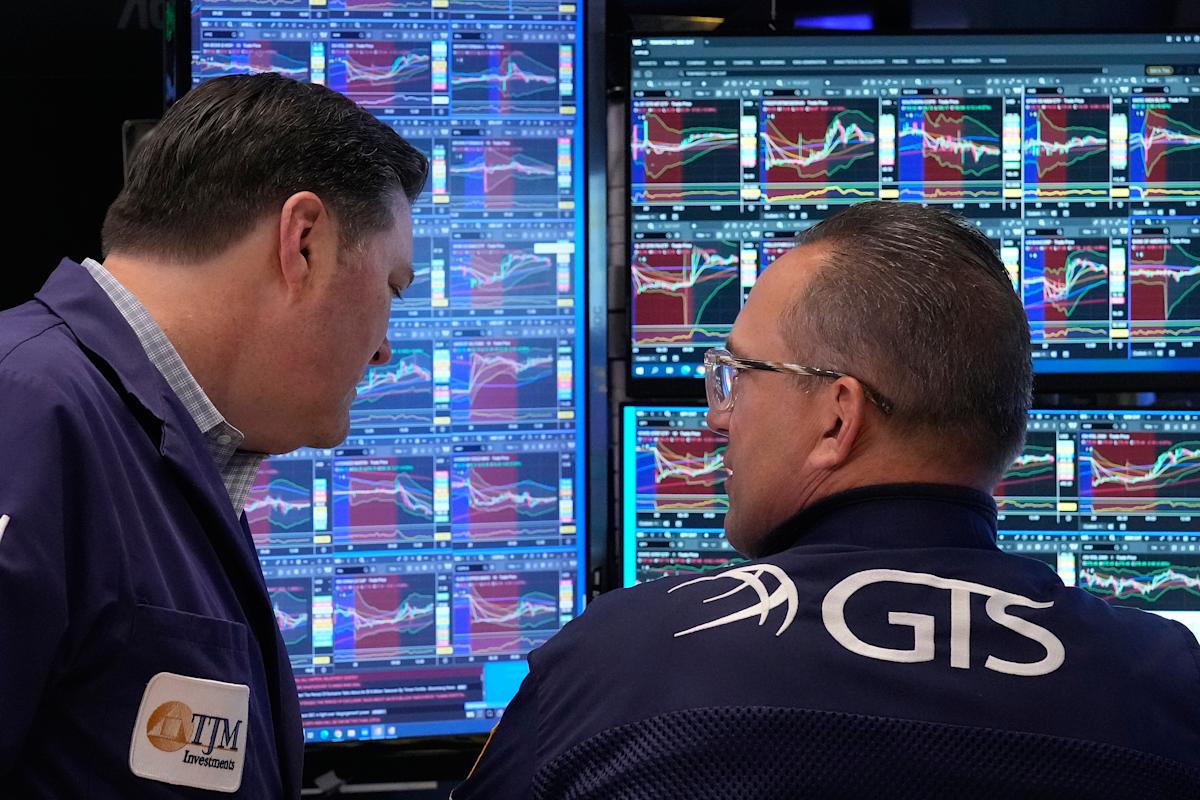
Market Reaction to Tariff Pause: U.S. stock futures declined on Thursday following a significant rally on Wednesday, attributed to President Trump's announcement of a 90-day tariff pause for non-retaliating nations, which had led to major gains in the stock market.
Upcoming Economic Indicators: Investors are closely monitoring upcoming economic data, including the Consumer Price Index and jobless claims, as Federal Reserve officials signal no immediate rush to lower interest rates amidst ongoing inflation concerns.
Trade with 70% Backtested Accuracy
Analyst Views on SPY
About the author


Ceasefire Agreement Nears Expiration, Iran Stays Firm, Market Worries About Escalation, Bitcoin Surges Despite Trends


Trump's Statements on Ceasefire Agreement: Trump emphasized that the ceasefire agreement is unlikely to be extended beyond its expiration on Wednesday night, asserting that the Strait of Hormuz will not reopen until the agreement is signed.
Iran's Position: Iran maintained its firm stance during U.S. market hours, stating that its decision not to participate in negotiations remains unchanged, while reports indicate that the Iranian delegation is set to arrive soon.
Market Reactions: The S&P and Nasdaq indices experienced slight declines, while crude oil prices saw a minor increase, reflecting market sensitivity to the U.S.-Iran situation.
Investor Focus: Investors are closely monitoring the developments surrounding the U.S.-Iran negotiations, particularly the arrival of the Iranian delegation and the potential outcomes of the talks.
CBOE Volatility Index Rises After Eight Consecutive Declines, Closing Up 2.43 Points at 19.91, Reaching a One-Week Peak

Volatility Index Movement: The volatility index has gained after experiencing eight sessions of declines.
Recent Performance: It increased by 2.43 points, reaching a level of 19.91, marking a one-week high.
Iran: No Agreement Reached for Next Round of Talks with the United States


Iran's Stance on Talks: Iran has not agreed to hold the next round of talks with the United States, as reported by Tasnim News Agency.
Trump's Expectations: Former U.S. President Trump mentioned that U.S.-Iran negotiation representatives may meet this weekend, anticipating a final agreement to end the war.
Timeline for Agreement: Trump expressed confidence that an agreement could be reached within one or two days.
Context of Negotiations: The discussions are part of ongoing efforts to resolve tensions between the U.S. and Iran.
IRAN'S TASNIM REPORTS FROM RELIABLE SOURCE: IRAN IS NOT RUSHING INTO NEGOTIATIONS

- Iran's Negotiation Stance: Iran is not in a rush to engage in negotiations, indicating a strategic approach to its diplomatic relations.
- Source of Information: The information comes from a source identified as "Iran's Tasnim," suggesting a state-affiliated perspective on the matter.
IRAN-U.S. TALKS CONCLUDE WITHOUT A DEAL REACHED


- Negotiation Status: Iran-U.S. negotiations have officially ended without reaching an agreement.
- Reporting Source: The information comes from a report by a reporter citing sources related to the negotiations.
Analysis: Vance Was Instrumental in Enabling US-Iran Discussions


U.S.-Iran Talks: U.S. Vice President Pence played a crucial role in facilitating upcoming U.S.-Iran talks set to begin in Islamabad, Pakistan, with expectations of several days of negotiations to finalize a ceasefire agreement.
Pakistan's Involvement: Pakistani officials are advocating for Pence to extend his stay in Pakistan to assist in the negotiation efforts.
Iran's Distrust: A senior official from the Gulf region revealed that Iran has minimal trust in U.S. President Trump's envoy, Witkoff, who has previously led multiple rounds of talks with Iran that were disrupted by U.S. military strikes.
Witkoff's Role: Witkoff is part of the U.S. delegation participating in the talks in Islamabad, indicating ongoing diplomatic efforts despite past tensions.
Ceasefire Agreement Nears Expiration, Iran Stays Firm, Market Worries About Escalation, Bitcoin Surges Despite Trends
Trump's Statements on Ceasefire Agreement: Trump emphasized that the ceasefire agreement is unlikely to be extended beyond its expiration on Wednesday night, asserting that the Strait of Hormuz will not reopen until the agreement is signed.
Iran's Position: Iran maintained its firm stance during U.S. market hours, stating that its decision not to participate in negotiations remains unchanged, while reports indicate that the Iranian delegation is set to arrive soon.
Market Reactions: The S&P and Nasdaq indices experienced slight declines, while crude oil prices saw a minor increase, reflecting market sensitivity to the U.S.-Iran situation.
Investor Focus: Investors are closely monitoring the developments surrounding the U.S.-Iran negotiations, particularly the arrival of the Iranian delegation and the potential outcomes of the talks.
CBOE Volatility Index Rises After Eight Consecutive Declines, Closing Up 2.43 Points at 19.91, Reaching a One-Week Peak
Volatility Index Movement: The volatility index has gained after experiencing eight sessions of declines.
Recent Performance: It increased by 2.43 points, reaching a level of 19.91, marking a one-week high.
Iran: No Agreement Reached for Next Round of Talks with the United States
Iran's Stance on Talks: Iran has not agreed to hold the next round of talks with the United States, as reported by Tasnim News Agency.
Trump's Expectations: Former U.S. President Trump mentioned that U.S.-Iran negotiation representatives may meet this weekend, anticipating a final agreement to end the war.
Timeline for Agreement: Trump expressed confidence that an agreement could be reached within one or two days.
Context of Negotiations: The discussions are part of ongoing efforts to resolve tensions between the U.S. and Iran.
IRAN'S TASNIM REPORTS FROM RELIABLE SOURCE: IRAN IS NOT RUSHING INTO NEGOTIATIONS
- Iran's Negotiation Stance: Iran is not in a rush to engage in negotiations, indicating a strategic approach to its diplomatic relations.
- Source of Information: The information comes from a source identified as "Iran's Tasnim," suggesting a state-affiliated perspective on the matter.
IRAN-U.S. TALKS CONCLUDE WITHOUT A DEAL REACHED
- Negotiation Status: Iran-U.S. negotiations have officially ended without reaching an agreement.
- Reporting Source: The information comes from a report by a reporter citing sources related to the negotiations.
Analysis: Vance Was Instrumental in Enabling US-Iran Discussions
U.S.-Iran Talks: U.S. Vice President Pence played a crucial role in facilitating upcoming U.S.-Iran talks set to begin in Islamabad, Pakistan, with expectations of several days of negotiations to finalize a ceasefire agreement.
Pakistan's Involvement: Pakistani officials are advocating for Pence to extend his stay in Pakistan to assist in the negotiation efforts.
Iran's Distrust: A senior official from the Gulf region revealed that Iran has minimal trust in U.S. President Trump's envoy, Witkoff, who has previously led multiple rounds of talks with Iran that were disrupted by U.S. military strikes.
Witkoff's Role: Witkoff is part of the U.S. delegation participating in the talks in Islamabad, indicating ongoing diplomatic efforts despite past tensions.