UK Economy Shows Signs of Stabilization in Early 2026
Written by Emily J. Thompson, Senior Investment Analyst
Updated: Mar 06 2026
0mins

Source: Benzinga
- Weak Economic Growth: The UK GDP expanded by only 0.1% in Q4 2025, indicating the fragility of the recovery after nearly two years of stagnation, which raises uncertainty for investors regarding the sustainability of growth.
- Inflation and Interest Rate Dynamics: Inflation has eased to 3.0%, down from 3.4% the previous month, allowing the Bank of England to cut interest rates by approximately 1.5 percentage points since mid-2024, although the benchmark rate remains at 3.75%, providing some relief for households and policymakers.
- Unemployment and Public Debt Pressure: The unemployment rate has risen to 5.2%, an increase of about 331,000 year-over-year, while public debt stands at 92.9% of GDP, limiting the government's fiscal flexibility and indicating ongoing economic strain.
- Sector Investment Outlook: By 2026, investment in strategic sectors such as clean energy, infrastructure, and advanced manufacturing is expected to significantly increase, with annual investment in clean energy projected to exceed £40 billion, highlighting these areas as key drivers for future economic recovery.
Trade with 70% Backtested Accuracy
Stop guessing "Should I Buy BP?" and start using high-conviction signals backed by rigorous historical data.
Sign up today to access powerful investing tools and make smarter, data-driven decisions.
Analyst Views on BP
Wall Street analysts forecast BP stock price to rise
11 Analyst Rating
5 Buy
5 Hold
1 Sell
Moderate Buy
Current: 39.330

Low
6.38
Averages
84.26
High
503.69
Current: 39.330
Low
6.38
Averages
84.26
High
503.69
About BP
BP p.l.c. is a United Kingdom-based integrated energy company. Its segments include Gas & low carbon energy, Oil production & operations, Customers & products, and Other businesses & corporate. The gas & low carbon energy comprises regions with upstream businesses that predominantly produce natural gas, gas marketing and trading activities and its solar, wind and hydrogen businesses. The oil production & operations segment comprises regions with upstream activities that predominantly produce crude oil, including bpx energy. The customers & products segment comprises its customer-focused businesses, which include convenience and retail fuels, electric vehicle (EV) charging, as well as Castrol, aviation and business-to-business (B2B) and midstream. It also includes its products businesses, refining and oil trading, as well as its bioenergy businesses. The other businesses and corporate also comprises the Company's shipping and treasury functions, and corporate activities worldwide.
About the author

Emily J. Thompson
Emily J. Thompson, a Chartered Financial Analyst (CFA) with 12 years in investment research, graduated with honors from the Wharton School. Specializing in industrial and technology stocks, she provides in-depth analysis for Intellectia’s earnings and market brief reports.
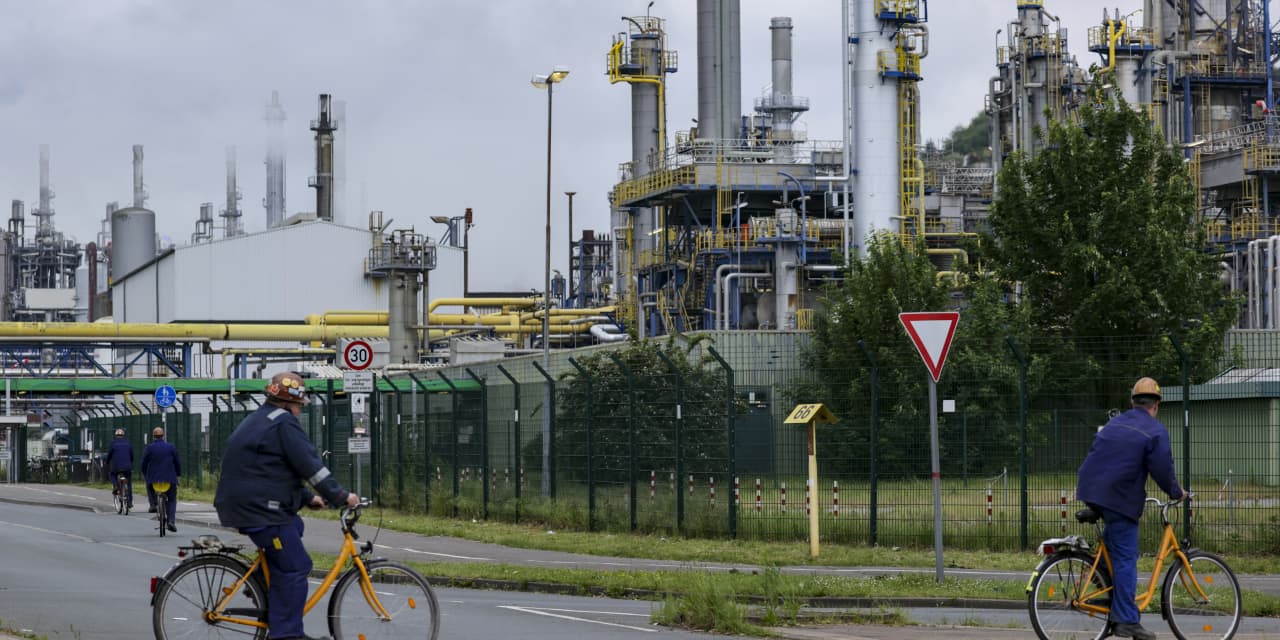
Murphy Oil Announces Major Oil Discovery Offshore Côte d'Ivoire

- Oil Discovery: Murphy Oil's Bubale-1X exploration well in Block CI-709 encountered 100 feet of net oil pay, with preliminary assessments indicating high-quality light oil, significantly enhancing the company's existing proved reserve base of 730 million barrels of oil equivalents.
- Investment Plans: The company plans to drill another well in the second half of 2026 to evaluate the reservoir's size, with exploration expenses projected between $220 million and $300 million, further driving exploration activities and replenishing production volumes.
- Market Outlook: With global oil demand expected to rise to 107.86 million barrels per day by 2027, Murphy Oil's light oil discovery positions it competitively in the market, especially since light crude typically commands higher prices.
- Production Forecast: Murphy Oil anticipates total production of 167,000 to 175,000 barrels of oil equivalent per day in 2026, providing robust support for the company's future financial performance.
See More

BP Board Investigates Governance Issues Amid Securities Fraud Claims
- Governance Investigation: Pomerantz LLP is investigating whether BP and its executives have engaged in securities fraud or other unlawful practices, indicating serious concerns about corporate governance that could undermine investor confidence.
- Board Restructuring: On May 26, 2026, BP's board unanimously decided to remove Albert Manifold from his roles as Chair and Director due to significant governance and oversight issues, highlighting vulnerabilities in the company's internal governance.
- Stock Price Reaction: Following the revelation of governance issues, BP's American Depositary Shares (ADS) fell by $1.71, or 3.85%, closing at $42.65, reflecting the market's sensitive response to corporate governance concerns.
- Potential Legal Actions: As Pomerantz LLP's investigation unfolds, investors may face the risk of class action lawsuits, which could further impact BP's market reputation and future financial performance.
See More

California Drivers Sue Gas Stations Over AI Price Inflation
- Class Action Filed: A group of California drivers has initiated a class-action lawsuit against gas station operators including Marathon Petroleum (MPC), BP, Circle K, and Walmart (WMT), accusing them of using AI tools to manipulate fuel prices, which allegedly violates California's antitrust laws.
- Price Increase Impact: The lawsuit claims that areas utilizing the AI tool have seen gas prices rise by as much as $0.30 per gallon, costing California drivers an additional $134 million annually, with prices sometimes reaching an astronomical $7 per gallon, significantly straining consumer budgets.
- Legal Basis: The complaint alleges violations of the Cartwright Act and Assembly Bill 325, which aims to combat algorithmic price-fixing, highlighting legal scrutiny over pricing transparency and fairness in the fuel market.
- Market Implications: With over 1,700 gas stations operated by the defendants in California, a successful lawsuit could have profound implications for pricing strategies across the fuel industry, prompting other companies to reassess their pricing mechanisms to mitigate legal risks.
See More

Eni-BP Joint Venture Issues Final Investment Decision for $5.1B Angola Oil Project

- Investment Decision: Azule Energy, a joint venture between Eni and BP, has made a final investment decision for the $5.1 billion Greater PAJ offshore oil project in Angola, with first oil expected in H1 2029, marking a significant milestone for the project.
- Resource Overview: The project encompasses five offshore fields—Palas, Astraea, Juno, Urano, and Dione—with total oil reserves estimated at 252 million barrels across the two blocks, highlighting the substantial resource potential of this development.
- Production Capacity and Infrastructure: The overall development plan includes 17 wells connected to a new floating production, storage, and offloading vessel with a nameplate capacity of 95,000 barrels per day and a gas export capacity of 70 million cubic feet per day, enhancing Angola's energy production capabilities.
- Partnership Dynamics: This project represents Angola's first integrated cross-block development, with partners including Norway's Equinor, Angola's oil and gas agency ANPG, and state-owned Sonangol, underscoring the importance of international collaboration in resource development.
See More

Iran Framework Agreement Drives Oil Prices Down

- Oil Price Impact: The Iran framework agreement has driven WTI crude prices down by 22% over the past month, resulting in the national average gasoline price dropping below $4 per gallon, a roughly 30% decline that will directly affect consumer spending.
- Policy Adjustments: Analyst Jason Katz argues that sustained declines in oil prices could empower the Fed to cut rates, redirecting consumer spending from fuel to discretionary categories, thereby promoting economic growth.
- Market Expectation Shift: The EIA's Short-Term Energy Outlook estimates production shut-ins averaging 10.5 million barrels per day in April, peaking near 10.8 million in May, aligning with the 12.5 million barrels flowing through the Strait of Hormuz, indicating optimistic market expectations for future oil prices.
- Inflation Pressure Relief: As oil prices continue to decline, lower costs across transportation, manufacturing, and petrochemicals may negatively impact consumer prices, easing the Fed's rate hike pressures and creating a more favorable economic environment.
See More
Small and Mid-Cap Broker Rankings Suffer Setbacks

- Increased Market Transparency: The implementation of MIFID II in January 2018 mandated separate charges for research, resulting in a decline in small and mid-cap analysts from 29 in 2007 to just 17 now, indicating a reduced demand for research services and impacting the attractiveness of small-cap investments.
- Intensified Industry Consolidation: Recent acquisitions, such as Numis Securities by Deutsche Bank and the merger of Panmure Gordon with Liberum, alongside Stifel's closure of its UK equities business by the end of 2025, reflect a trend of consolidation in the small and mid-cap market that may further weaken competitiveness.
- Narrowing Sector Coverage: In 2007, the UK SMID survey covered 18 sectors, but the latest rankings only encompass 9 sectors, with industries like Chemicals, Metals & Mining, and Transport & Logistics disappearing, highlighting a decline in market vitality and investor interest.
- Reevaluation of Research Value: Although the FCA has relaxed research payment rules, Enticknap emphasizes that the value of research must be recognized by the buy side to restore liquidity, which is crucial for attracting young talent back to the analyst profession and ensuring the revival of the London market.
See More
Murphy Oil Announces Major Oil Discovery Offshore Côte d'Ivoire
- Oil Discovery: Murphy Oil's Bubale-1X exploration well in Block CI-709 encountered 100 feet of net oil pay, with preliminary assessments indicating high-quality light oil, significantly enhancing the company's existing proved reserve base of 730 million barrels of oil equivalents.
- Investment Plans: The company plans to drill another well in the second half of 2026 to evaluate the reservoir's size, with exploration expenses projected between $220 million and $300 million, further driving exploration activities and replenishing production volumes.
- Market Outlook: With global oil demand expected to rise to 107.86 million barrels per day by 2027, Murphy Oil's light oil discovery positions it competitively in the market, especially since light crude typically commands higher prices.
- Production Forecast: Murphy Oil anticipates total production of 167,000 to 175,000 barrels of oil equivalent per day in 2026, providing robust support for the company's future financial performance.
See More
BP Board Investigates Governance Issues Amid Securities Fraud Claims
- Governance Investigation: Pomerantz LLP is investigating whether BP and its executives have engaged in securities fraud or other unlawful practices, indicating serious concerns about corporate governance that could undermine investor confidence.
- Board Restructuring: On May 26, 2026, BP's board unanimously decided to remove Albert Manifold from his roles as Chair and Director due to significant governance and oversight issues, highlighting vulnerabilities in the company's internal governance.
- Stock Price Reaction: Following the revelation of governance issues, BP's American Depositary Shares (ADS) fell by $1.71, or 3.85%, closing at $42.65, reflecting the market's sensitive response to corporate governance concerns.
- Potential Legal Actions: As Pomerantz LLP's investigation unfolds, investors may face the risk of class action lawsuits, which could further impact BP's market reputation and future financial performance.
See More
California Drivers Sue Gas Stations Over AI Price Inflation
- Class Action Filed: A group of California drivers has initiated a class-action lawsuit against gas station operators including Marathon Petroleum (MPC), BP, Circle K, and Walmart (WMT), accusing them of using AI tools to manipulate fuel prices, which allegedly violates California's antitrust laws.
- Price Increase Impact: The lawsuit claims that areas utilizing the AI tool have seen gas prices rise by as much as $0.30 per gallon, costing California drivers an additional $134 million annually, with prices sometimes reaching an astronomical $7 per gallon, significantly straining consumer budgets.
- Legal Basis: The complaint alleges violations of the Cartwright Act and Assembly Bill 325, which aims to combat algorithmic price-fixing, highlighting legal scrutiny over pricing transparency and fairness in the fuel market.
- Market Implications: With over 1,700 gas stations operated by the defendants in California, a successful lawsuit could have profound implications for pricing strategies across the fuel industry, prompting other companies to reassess their pricing mechanisms to mitigate legal risks.
See More
Eni-BP Joint Venture Issues Final Investment Decision for $5.1B Angola Oil Project
- Investment Decision: Azule Energy, a joint venture between Eni and BP, has made a final investment decision for the $5.1 billion Greater PAJ offshore oil project in Angola, with first oil expected in H1 2029, marking a significant milestone for the project.
- Resource Overview: The project encompasses five offshore fields—Palas, Astraea, Juno, Urano, and Dione—with total oil reserves estimated at 252 million barrels across the two blocks, highlighting the substantial resource potential of this development.
- Production Capacity and Infrastructure: The overall development plan includes 17 wells connected to a new floating production, storage, and offloading vessel with a nameplate capacity of 95,000 barrels per day and a gas export capacity of 70 million cubic feet per day, enhancing Angola's energy production capabilities.
- Partnership Dynamics: This project represents Angola's first integrated cross-block development, with partners including Norway's Equinor, Angola's oil and gas agency ANPG, and state-owned Sonangol, underscoring the importance of international collaboration in resource development.
See More
Iran Framework Agreement Drives Oil Prices Down
- Oil Price Impact: The Iran framework agreement has driven WTI crude prices down by 22% over the past month, resulting in the national average gasoline price dropping below $4 per gallon, a roughly 30% decline that will directly affect consumer spending.
- Policy Adjustments: Analyst Jason Katz argues that sustained declines in oil prices could empower the Fed to cut rates, redirecting consumer spending from fuel to discretionary categories, thereby promoting economic growth.
- Market Expectation Shift: The EIA's Short-Term Energy Outlook estimates production shut-ins averaging 10.5 million barrels per day in April, peaking near 10.8 million in May, aligning with the 12.5 million barrels flowing through the Strait of Hormuz, indicating optimistic market expectations for future oil prices.
- Inflation Pressure Relief: As oil prices continue to decline, lower costs across transportation, manufacturing, and petrochemicals may negatively impact consumer prices, easing the Fed's rate hike pressures and creating a more favorable economic environment.
See More
Small and Mid-Cap Broker Rankings Suffer Setbacks
- Increased Market Transparency: The implementation of MIFID II in January 2018 mandated separate charges for research, resulting in a decline in small and mid-cap analysts from 29 in 2007 to just 17 now, indicating a reduced demand for research services and impacting the attractiveness of small-cap investments.
- Intensified Industry Consolidation: Recent acquisitions, such as Numis Securities by Deutsche Bank and the merger of Panmure Gordon with Liberum, alongside Stifel's closure of its UK equities business by the end of 2025, reflect a trend of consolidation in the small and mid-cap market that may further weaken competitiveness.
- Narrowing Sector Coverage: In 2007, the UK SMID survey covered 18 sectors, but the latest rankings only encompass 9 sectors, with industries like Chemicals, Metals & Mining, and Transport & Logistics disappearing, highlighting a decline in market vitality and investor interest.
- Reevaluation of Research Value: Although the FCA has relaxed research payment rules, Enticknap emphasizes that the value of research must be recognized by the buy side to restore liquidity, which is crucial for attracting young talent back to the analyst profession and ensuring the revival of the London market.
See More