Tech Selloff Drags Down Market
Written by Emily J. Thompson, Senior Investment Analyst
Updated: Feb 03 2026
0mins


Source: CNBC
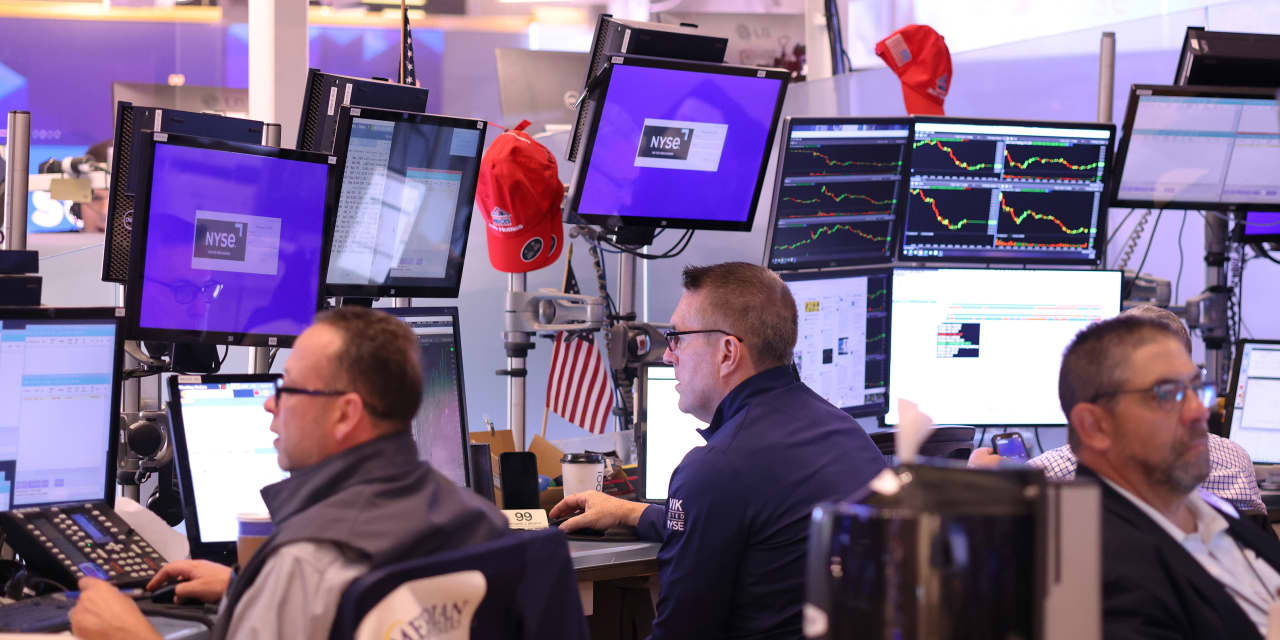
- Market Downward Pressure: On Tuesday, a selloff in technology stocks led to a decline of over 1% in the S&P 500 and approximately 2% in the Nasdaq, reflecting market uncertainty regarding the future performance of AI software companies, which in turn affected financial stocks.
- Earnings Expectations Impact: Eli Lilly's shares fell nearly 4% on Tuesday, primarily due to disappointing 2026 guidance from its competitor Novo Nordisk, causing market concerns about Lilly's upcoming earnings report and signaling potential disappointment.
- Housing Market Recovery Hopes: Housing-related stocks rallied on a report suggesting a plan to make entry-level homes more affordable, although a White House official indicated that the Trump administration is not actively considering the plan, it still highlights the potential for a housing market revival.
- Investor Focus on Earnings: After Tuesday's close, several companies including AMD, Chipotle, and Uber are set to release earnings reports, with the market closely monitoring these announcements to gauge signs of economic recovery and industry outlook.
Trade with 70% Backtested Accuracy
Stop guessing "Should I Buy AMD?" and start using high-conviction signals backed by rigorous historical data.
Sign up today to access powerful investing tools and make smarter, data-driven decisions.
Analyst Views on AMD
Wall Street analysts forecast AMD stock price to rise
33 Analyst Rating
25 Buy
8 Hold
0 Sell
Strong Buy
Current: 202.680

Low
210.00
Averages
289.13
High
377.00
Current: 202.680
Low
210.00
Averages
289.13
High
377.00
About AMD
Advanced Micro Devices, Inc. is a global semiconductor company. The Company is focused on high-performance computing, graphics and visualization technologies. Its segments include Data Center, Client and Gaming, and Embedded. Data Center segment includes artificial intelligence (AI) accelerators, microprocessors (CPUs) for servers, graphics processing units (GPUs), accelerated processing units (APUs), data processing units (DPUs), Field Programmable Gate Arrays (FPGAs), smart network interface Cards (SmartNICs) and Adaptive system-on-Chip (SoC) products for data centers. Client and Gaming segment includes CPUs, APUs, chipsets for desktops and notebooks, discrete GPUs, and semi-custom SoC products and development services. Embedded segment includes embedded CPUs, GPUs, APUs, FPGAs, system on modules (SOMs), and Adaptive SoC products. It markets and sells its products under the AMD trademark. Its products include AMD EPYC, AMD Ryzen, AMD Ryzen PRO, Virtex UltraScale+, and others.
About the author

Emily J. Thompson
Emily J. Thompson, a Chartered Financial Analyst (CFA) with 12 years in investment research, graduated with honors from the Wharton School. Specializing in industrial and technology stocks, she provides in-depth analysis for Intellectia’s earnings and market brief reports.
AMD's MI450 Release Poised to Challenge Nvidia
- Revenue Growth Forecast: AMD anticipates a 35% compound annual growth rate in revenue over the next three years, with the data center segment projected to grow at an impressive 60%, significantly enhancing its market competitiveness and attracting investor interest.
- Major Deal Secured: AMD has secured a $100 billion deal with Meta Platforms, which will purchase 6 gigawatts of custom AMD MI450 GPUs and sixth-gen EPYC CPUs, not only generating substantial revenue for AMD but also potentially leading to future share dilution.
- Profitability Improvement: In 2025, AMD's net income reached $4.3 billion, a remarkable 164% increase year-over-year, indicating the company's ability to achieve significant profit growth while controlling costs, laying a solid foundation for future stock price increases.
- Optimistic Valuation Outlook: Although AMD's P/E ratio stands at 74, its forward P/E ratio of 30 suggests that if it meets growth expectations, the stock price could reach $300 in 2026, further boosting investor confidence.
See More

Intel Shares Surge on Strong AI Demand and Leadership Changes

- Strong AI Demand: Intel CFO Dave Zinsner indicated that demand for the company's server processors remains robust and is expected to continue into next year, following over 20% unit growth last year, highlighting the rapid expansion of AI infrastructure that is driving market growth and enhancing the company's competitive position.
- Manufacturing Shortage Challenges: Despite rising demand, Intel and the broader semiconductor industry face manufacturing shortages, with some factories operating at or above full capacity, which could impact future production capabilities and market supply.
- Leadership Transition: Intel announced that Dr. Craig H. Barratt will become the new independent chair after the stockholders' meeting on May 13, 2026, replacing Frank D. Yeary, who has served as a director since 2009; Yeary provided critical guidance during a pivotal period, helping to strengthen the company's financial position and technology roadmap.
- Stock Performance Recovery: According to Benzinga Pro data, Intel shares rose 4.51% to $47.64 on Tuesday, with the stock gaining 135% over the past 12 months, reflecting market confidence in the company's future growth potential.
See More

Burry Accuses Nvidia of Mafia-like Behavior in AI Chip Market

- Antitrust Allegations: Burry accuses Nvidia of mafia-like behavior in the AI chip market, suggesting that the company may face antitrust scrutiny, indicating increasing regulatory attention on its market dominance.
- Data Center Project Dispute: Burry highlights a controversy involving a data center project linked to OpenAI, where Oracle borrowed heavily for land and hardware, but OpenAI withdrew support due to concerns over outdated chips, revealing risks associated with Nvidia's technology reliance.
- Blocking Competitors: Burry claims Nvidia paid approximately $150 million to prevent AMD from securing a contract tied to the data center buildout, an action viewed as leveraging market power to suppress competition, potentially triggering broader antitrust investigations.
- Shifting Regulatory Landscape: Burry notes that the U.S. Justice Department has been investigating Nvidia for nearly two years, although he expresses skepticism about the current administration's willingness to act, reflecting increasing regulatory pressures facing the AI infrastructure sector.
See More

Nvidia Forms Strategic Partnership with Thinking Machines Lab
- Strategic Investment: Nvidia has announced a significant investment in Thinking Machines Lab, founded by Mira Murati, aiming to enhance the customizability and general capabilities of AI systems through a multi-year strategic partnership, further solidifying its leadership in the AI sector.
- Technology Deployment: As part of the collaboration, Thinking Machines Lab has agreed to deploy at least one gigawatt of Nvidia's Vera Rubin systems, which are expected to ship in the second half of the year, showcasing Nvidia's ongoing innovation in high-performance computing.
- Product Launch: Thinking Machines Lab released its first product, Tinker, in October, which is an API that allows researchers and developers to fine-tune AI models, marking a significant advancement in AI application development.
- Funding Background: The startup raised $2 billion in July, indicating strong market confidence in its AI technology, while also providing robust support for Nvidia's investment, helping it maintain a competitive edge in the rapidly evolving AI market.
See More
AMD's AI Design Wins and GPU Deal Outlook
- AI Design Wins: AMD's victories in AI design set a solid foundation for future revenue growth, showcasing strong market potential despite fierce competition.
- GPU Deal Scale: The multi-billion dollar GPU deal with clients is expected to generate substantial cash flow, significantly enhancing AMD's market share and profitability.
- Competitive Landscape Analysis: Under pressure from competitors, AMD must continue to innovate and optimize its products to maintain its leading position in the high-performance computing market, ensuring long-term sustainable growth.
- Investor Milestone Tracking: Investors should monitor key milestones in AMD's AI and GPU sectors to assess its future market performance and financial health.
See More
Nvidia Partners with Thinking Machines for AI Development
- Deployment Commitment: Nvidia commits to deploying at least one gigawatt of next-generation Vera Rubin systems to power Thinking Machines' frontier model training and enterprise AI platforms, with deployment targeted for early next year, significantly enhancing AI application capabilities.
- Joint System Design: The agreement includes joint efforts to design training and serving systems for NVIDIA architectures, aiming to broaden access to frontier AI and open models for enterprises, research institutions, and the scientific community, thus promoting the widespread adoption of AI technology.
- Leadership Vision: Nvidia founder and CEO Jensen Huang stated that Thinking Machines has assembled a world-class team to advance the frontier of AI, indicating a strong mutual commitment to realizing an exciting vision for the future of AI.
- Company Background Pressure: Despite the promising partnership, Thinking Machines faces pressure due to a lack of clear product and business direction, with reports of employee resignations following a tense all-hands meeting, highlighting internal challenges and uncertainties.
See More
AMD's MI450 Release Poised to Challenge Nvidia
- Revenue Growth Forecast: AMD anticipates a 35% compound annual growth rate in revenue over the next three years, with the data center segment projected to grow at an impressive 60%, significantly enhancing its market competitiveness and attracting investor interest.
- Major Deal Secured: AMD has secured a $100 billion deal with Meta Platforms, which will purchase 6 gigawatts of custom AMD MI450 GPUs and sixth-gen EPYC CPUs, not only generating substantial revenue for AMD but also potentially leading to future share dilution.
- Profitability Improvement: In 2025, AMD's net income reached $4.3 billion, a remarkable 164% increase year-over-year, indicating the company's ability to achieve significant profit growth while controlling costs, laying a solid foundation for future stock price increases.
- Optimistic Valuation Outlook: Although AMD's P/E ratio stands at 74, its forward P/E ratio of 30 suggests that if it meets growth expectations, the stock price could reach $300 in 2026, further boosting investor confidence.
See More
Intel Shares Surge on Strong AI Demand and Leadership Changes
- Strong AI Demand: Intel CFO Dave Zinsner indicated that demand for the company's server processors remains robust and is expected to continue into next year, following over 20% unit growth last year, highlighting the rapid expansion of AI infrastructure that is driving market growth and enhancing the company's competitive position.
- Manufacturing Shortage Challenges: Despite rising demand, Intel and the broader semiconductor industry face manufacturing shortages, with some factories operating at or above full capacity, which could impact future production capabilities and market supply.
- Leadership Transition: Intel announced that Dr. Craig H. Barratt will become the new independent chair after the stockholders' meeting on May 13, 2026, replacing Frank D. Yeary, who has served as a director since 2009; Yeary provided critical guidance during a pivotal period, helping to strengthen the company's financial position and technology roadmap.
- Stock Performance Recovery: According to Benzinga Pro data, Intel shares rose 4.51% to $47.64 on Tuesday, with the stock gaining 135% over the past 12 months, reflecting market confidence in the company's future growth potential.
See More
Burry Accuses Nvidia of Mafia-like Behavior in AI Chip Market
- Antitrust Allegations: Burry accuses Nvidia of mafia-like behavior in the AI chip market, suggesting that the company may face antitrust scrutiny, indicating increasing regulatory attention on its market dominance.
- Data Center Project Dispute: Burry highlights a controversy involving a data center project linked to OpenAI, where Oracle borrowed heavily for land and hardware, but OpenAI withdrew support due to concerns over outdated chips, revealing risks associated with Nvidia's technology reliance.
- Blocking Competitors: Burry claims Nvidia paid approximately $150 million to prevent AMD from securing a contract tied to the data center buildout, an action viewed as leveraging market power to suppress competition, potentially triggering broader antitrust investigations.
- Shifting Regulatory Landscape: Burry notes that the U.S. Justice Department has been investigating Nvidia for nearly two years, although he expresses skepticism about the current administration's willingness to act, reflecting increasing regulatory pressures facing the AI infrastructure sector.
See More
Nvidia Forms Strategic Partnership with Thinking Machines Lab
- Strategic Investment: Nvidia has announced a significant investment in Thinking Machines Lab, founded by Mira Murati, aiming to enhance the customizability and general capabilities of AI systems through a multi-year strategic partnership, further solidifying its leadership in the AI sector.
- Technology Deployment: As part of the collaboration, Thinking Machines Lab has agreed to deploy at least one gigawatt of Nvidia's Vera Rubin systems, which are expected to ship in the second half of the year, showcasing Nvidia's ongoing innovation in high-performance computing.
- Product Launch: Thinking Machines Lab released its first product, Tinker, in October, which is an API that allows researchers and developers to fine-tune AI models, marking a significant advancement in AI application development.
- Funding Background: The startup raised $2 billion in July, indicating strong market confidence in its AI technology, while also providing robust support for Nvidia's investment, helping it maintain a competitive edge in the rapidly evolving AI market.
See More
AMD's AI Design Wins and GPU Deal Outlook
- AI Design Wins: AMD's victories in AI design set a solid foundation for future revenue growth, showcasing strong market potential despite fierce competition.
- GPU Deal Scale: The multi-billion dollar GPU deal with clients is expected to generate substantial cash flow, significantly enhancing AMD's market share and profitability.
- Competitive Landscape Analysis: Under pressure from competitors, AMD must continue to innovate and optimize its products to maintain its leading position in the high-performance computing market, ensuring long-term sustainable growth.
- Investor Milestone Tracking: Investors should monitor key milestones in AMD's AI and GPU sectors to assess its future market performance and financial health.
See More
Nvidia Partners with Thinking Machines for AI Development
- Deployment Commitment: Nvidia commits to deploying at least one gigawatt of next-generation Vera Rubin systems to power Thinking Machines' frontier model training and enterprise AI platforms, with deployment targeted for early next year, significantly enhancing AI application capabilities.
- Joint System Design: The agreement includes joint efforts to design training and serving systems for NVIDIA architectures, aiming to broaden access to frontier AI and open models for enterprises, research institutions, and the scientific community, thus promoting the widespread adoption of AI technology.
- Leadership Vision: Nvidia founder and CEO Jensen Huang stated that Thinking Machines has assembled a world-class team to advance the frontier of AI, indicating a strong mutual commitment to realizing an exciting vision for the future of AI.
- Company Background Pressure: Despite the promising partnership, Thinking Machines faces pressure due to a lack of clear product and business direction, with reports of employee resignations following a tense all-hands meeting, highlighting internal challenges and uncertainties.
See More