Stanley Black & Decker, Inc. (SWK) Q1 2026 Earnings Call Transcript
Revenue Stanley Black & Decker reported revenue of $4.2 billion for Q1 2026, which represents a 5% increase year-over-year. This growth was driven by strong demand in the Tools & Outdoor segment and favorable pricing actions.
Gross Margin The gross margin for Q1 2026 was 35%, up from 33% in the same period last year. The 2% improvement was attributed to cost-saving initiatives and operational efficiencies.
Operating Income Operating income for the quarter was $630 million, a 10% increase compared to Q1 2025. This was due to higher revenue and improved gross margins.
Net Income Net income for Q1 2026 was $450 million, up 12% year-over-year. The increase was primarily driven by higher operating income and lower interest expenses.
Earnings Per Share (EPS) Earnings per share for the quarter were $2.85, a 14% increase from $2.50 in Q1 2025. This growth was supported by higher net income and share repurchase activities.
Free Cash Flow Free cash flow for Q1 2026 was $300 million, compared to $250 million in the same period last year, reflecting a 20% increase. The improvement was due to better working capital management and higher earnings.
Trade with 70% Backtested Accuracy
Analyst Views on SWK

About SWK
About the author


UPS and Stanley Black & Decker's Turnaround Opportunities


- Industry Giants' Transformation: UPS and Stanley Black & Decker are undergoing business overhauls, and while their current financial performance is weak, both companies are achieving early success in cost-cutting and focusing on profitable segments, indicating potential for long-term investors.
- Dividend Appeal: UPS's dividend yield has risen to 6.4%, while Stanley Black & Decker's stands at 4.2%, both at historical highs, attracting income-seeking investors and reflecting market skepticism about their future growth prospects.
- Signs of Revenue Growth: Despite an overall revenue decline, UPS has seen its revenue per piece in the U.S. market increase for several consecutive quarters, indicating that the company is improving profit margins by reducing low-margin customer volumes, suggesting solid progress in its turnaround.
- Delayed Market Reaction: Although Stanley Black & Decker has improved its gross margin and reduced leverage, Wall Street remains cautious due to short-term inflation and tariff concerns, failing to recognize the potential value of these companies in a timely manner.

UPS and Stanley Black & Decker's Turnaround Prospects
- Attractive Yields: UPS currently offers a 6.4% dividend yield while Stanley Black & Decker provides a 4.2% yield, indicating that long-term investors may find these high-yield stocks appealing during market downturns, especially as both companies undergo business turnarounds.
- Early Signs of Success: UPS has seen its revenue per piece in the U.S. market increase for several consecutive quarters despite overall revenue declines, suggesting that the company is improving profit margins by reducing the volume of packages from low-margin customers, laying a foundation for future profitability.
- Cost-Cutting Strategies: Both companies are focused on slimming down and cutting costs, with Stanley Black & Decker making progress in reducing leverage; although the market remains cautious about short-term challenges, this strategy will enhance financial stability in the long run.
- Market's Tepid Response: Despite early signs of success in the turnarounds of UPS and Stanley Black & Decker, Wall Street's indifferent reaction may lead investors to miss out on capital appreciation opportunities over the next decade, particularly given both companies' strong brands and customer relationships.

Stanley Black & Decker's Business Reset Shows Promise
- Debt Reduction Success: Stanley Black & Decker has effectively reduced its net debt to adjusted EBITDA ratio from 5.1x in 2023 to a projected 2.5x by the end of 2026 through the sale of non-core assets, significantly improving its financial health and future investment capacity.
- Gross Margin Improvement: The company's gross margin has increased from 22.1% in the second half of 2022 to 32.5% in the second half of 2025, with management projecting a further rise to 35% by the second half of 2026, directly enhancing profitability and competitive positioning.
- Dividend Safety Enhanced: Despite the turnaround challenges, the cash dividend payout ratio has stabilized around 70%, supporting a 4.4% dividend yield, indicating robust dividend-paying capacity and attracting long-term investor interest.
- Ongoing Market Challenges: While significant progress has been made in the restructuring efforts, new challenges such as tariffs and inflation persist, requiring management to navigate these external pressures, leading investors to adopt a cautious stance regarding the company's future performance.

Stanley Black & Decker Resets Business Outlook Amid Challenges
- Debt Reduction Success: Stanley Black & Decker's divestiture of non-core assets is projected to lower its net debt to adjusted EBITDA ratio from 5.1x in 2023 to 2.5x by the end of 2026, significantly improving financial health and enhancing the company's ability to navigate market fluctuations.
- Margin Improvement: The company's gross margin has increased from 22.1% in the second half of 2022 to 32.5% in the second half of 2025, with expectations to reach 35% by the second half of 2026, providing robust support for future profit growth.
- Dividend Safety Enhanced: Despite experiencing earnings declines, the cash dividend payout ratio has stabilized around 70%, indicating that the attractive 4.4% dividend yield is secure in the current environment, appealing to income-seeking investors.
- Cautious Market Reaction: Although significant progress has been made in the company's restructuring efforts, new challenges such as inflation and tariffs have led investors to adopt a cautious stance regarding its future performance, reflecting a
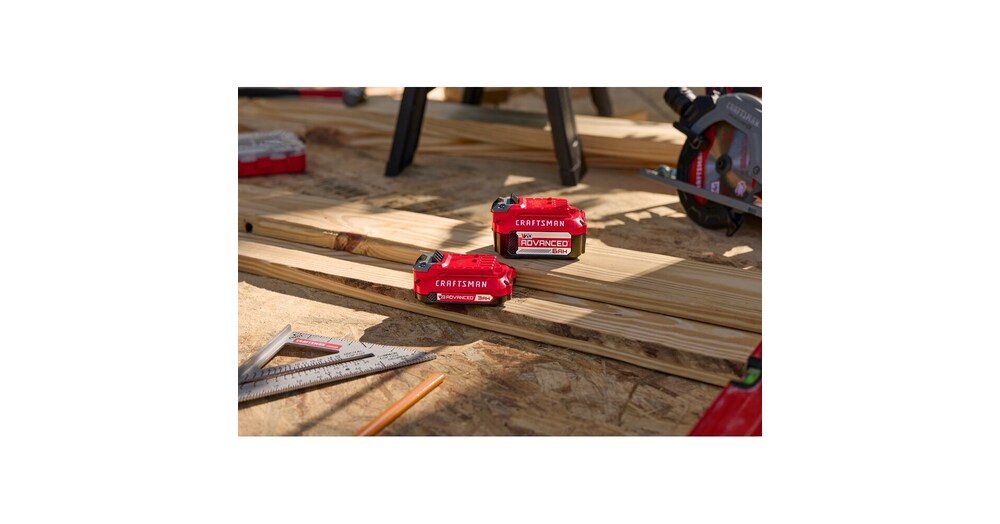
CRAFTSMAN Launches V20* ADVANCED™ Batteries for Enhanced DIY Power
- Performance Enhancement: The newly launched CRAFTSMAN V20* ADVANCED™ batteries deliver up to 3X the power and runtime, significantly boosting user efficiency for larger DIY projects, making every project achievable.
- Technological Innovation: Engineered with tabless cell technology, the new batteries run cooler during use, enhancing overall tool performance and meeting DIY enthusiasts' demands for high-performance tools.
- Marketing Promotion: CRAFTSMAN is hosting battery trade-in events at Lowe's and Ace Hardware nationwide, allowing participants to receive a $139 value V20* 3Ah ADVANCED™ battery and charger starter kit, further attracting consumer attention to the new products.
- Brand Trust: CRAFTSMAN is rated as the most trusted and recommended tool brand by DIYers, committed to empowering users at every stage of their DIY journey with innovative and expert products, solidifying its market leadership.

CRAFTSMAN Launches V20 ADVANCED Batteries for Enhanced DIY Power
- Product Launch: CRAFTSMAN has introduced the V20 ADVANCED Batteries, which provide up to 3X the power and runtime, designed to meet the demands of DIY enthusiasts tackling larger projects, thereby enhancing user efficiency and project completion rates.
- Technological Innovation: The new batteries feature tabless cell technology that allows for cooler operation during use, ensuring stability and durability of tools under heavy loads, which further strengthens CRAFTSMAN's competitive position in the market.
- Promotional Events: CRAFTSMAN is hosting battery trade-in events at Lowe's and Ace Hardware nationwide, allowing consumers to trade in qualifying batteries for a $139 value V20 3Ah battery and charger kit, promoting brand penetration in the market.
- Market Positioning: CRAFTSMAN is rated as one of the most trusted brands in DIY tools and outdoor equipment, and with its innovative and high-quality products, it further solidifies its leadership in the global tools market.
UPS and Stanley Black & Decker's Turnaround Opportunities
- Industry Giants' Transformation: UPS and Stanley Black & Decker are undergoing business overhauls, and while their current financial performance is weak, both companies are achieving early success in cost-cutting and focusing on profitable segments, indicating potential for long-term investors.
- Dividend Appeal: UPS's dividend yield has risen to 6.4%, while Stanley Black & Decker's stands at 4.2%, both at historical highs, attracting income-seeking investors and reflecting market skepticism about their future growth prospects.
- Signs of Revenue Growth: Despite an overall revenue decline, UPS has seen its revenue per piece in the U.S. market increase for several consecutive quarters, indicating that the company is improving profit margins by reducing low-margin customer volumes, suggesting solid progress in its turnaround.
- Delayed Market Reaction: Although Stanley Black & Decker has improved its gross margin and reduced leverage, Wall Street remains cautious due to short-term inflation and tariff concerns, failing to recognize the potential value of these companies in a timely manner.
UPS and Stanley Black & Decker's Turnaround Prospects
- Attractive Yields: UPS currently offers a 6.4% dividend yield while Stanley Black & Decker provides a 4.2% yield, indicating that long-term investors may find these high-yield stocks appealing during market downturns, especially as both companies undergo business turnarounds.
- Early Signs of Success: UPS has seen its revenue per piece in the U.S. market increase for several consecutive quarters despite overall revenue declines, suggesting that the company is improving profit margins by reducing the volume of packages from low-margin customers, laying a foundation for future profitability.
- Cost-Cutting Strategies: Both companies are focused on slimming down and cutting costs, with Stanley Black & Decker making progress in reducing leverage; although the market remains cautious about short-term challenges, this strategy will enhance financial stability in the long run.
- Market's Tepid Response: Despite early signs of success in the turnarounds of UPS and Stanley Black & Decker, Wall Street's indifferent reaction may lead investors to miss out on capital appreciation opportunities over the next decade, particularly given both companies' strong brands and customer relationships.
Stanley Black & Decker's Business Reset Shows Promise
- Debt Reduction Success: Stanley Black & Decker has effectively reduced its net debt to adjusted EBITDA ratio from 5.1x in 2023 to a projected 2.5x by the end of 2026 through the sale of non-core assets, significantly improving its financial health and future investment capacity.
- Gross Margin Improvement: The company's gross margin has increased from 22.1% in the second half of 2022 to 32.5% in the second half of 2025, with management projecting a further rise to 35% by the second half of 2026, directly enhancing profitability and competitive positioning.
- Dividend Safety Enhanced: Despite the turnaround challenges, the cash dividend payout ratio has stabilized around 70%, supporting a 4.4% dividend yield, indicating robust dividend-paying capacity and attracting long-term investor interest.
- Ongoing Market Challenges: While significant progress has been made in the restructuring efforts, new challenges such as tariffs and inflation persist, requiring management to navigate these external pressures, leading investors to adopt a cautious stance regarding the company's future performance.
Stanley Black & Decker Resets Business Outlook Amid Challenges
- Debt Reduction Success: Stanley Black & Decker's divestiture of non-core assets is projected to lower its net debt to adjusted EBITDA ratio from 5.1x in 2023 to 2.5x by the end of 2026, significantly improving financial health and enhancing the company's ability to navigate market fluctuations.
- Margin Improvement: The company's gross margin has increased from 22.1% in the second half of 2022 to 32.5% in the second half of 2025, with expectations to reach 35% by the second half of 2026, providing robust support for future profit growth.
- Dividend Safety Enhanced: Despite experiencing earnings declines, the cash dividend payout ratio has stabilized around 70%, indicating that the attractive 4.4% dividend yield is secure in the current environment, appealing to income-seeking investors.
- Cautious Market Reaction: Although significant progress has been made in the company's restructuring efforts, new challenges such as inflation and tariffs have led investors to adopt a cautious stance regarding its future performance, reflecting a
CRAFTSMAN Launches V20* ADVANCED™ Batteries for Enhanced DIY Power
- Performance Enhancement: The newly launched CRAFTSMAN V20* ADVANCED™ batteries deliver up to 3X the power and runtime, significantly boosting user efficiency for larger DIY projects, making every project achievable.
- Technological Innovation: Engineered with tabless cell technology, the new batteries run cooler during use, enhancing overall tool performance and meeting DIY enthusiasts' demands for high-performance tools.
- Marketing Promotion: CRAFTSMAN is hosting battery trade-in events at Lowe's and Ace Hardware nationwide, allowing participants to receive a $139 value V20* 3Ah ADVANCED™ battery and charger starter kit, further attracting consumer attention to the new products.
- Brand Trust: CRAFTSMAN is rated as the most trusted and recommended tool brand by DIYers, committed to empowering users at every stage of their DIY journey with innovative and expert products, solidifying its market leadership.
CRAFTSMAN Launches V20 ADVANCED Batteries for Enhanced DIY Power
- Product Launch: CRAFTSMAN has introduced the V20 ADVANCED Batteries, which provide up to 3X the power and runtime, designed to meet the demands of DIY enthusiasts tackling larger projects, thereby enhancing user efficiency and project completion rates.
- Technological Innovation: The new batteries feature tabless cell technology that allows for cooler operation during use, ensuring stability and durability of tools under heavy loads, which further strengthens CRAFTSMAN's competitive position in the market.
- Promotional Events: CRAFTSMAN is hosting battery trade-in events at Lowe's and Ace Hardware nationwide, allowing consumers to trade in qualifying batteries for a $139 value V20 3Ah battery and charger kit, promoting brand penetration in the market.
- Market Positioning: CRAFTSMAN is rated as one of the most trusted brands in DIY tools and outdoor equipment, and with its innovative and high-quality products, it further solidifies its leadership in the global tools market.