SpaceX Completes Record $75 Billion IPO Amid AI Spending Surge
Written by Emily J. Thompson, Senior Investment Analyst
Updated: 3 days ago
0mins

Source: Fool
- Record IPO: On June 12, SpaceX completed the largest initial public offering (IPO) in history, raising approximately $75 billion at a valuation of $1.75 trillion, more than double any previous stock market debut, indicating strong market confidence in its growth potential.
- Significant Stock Surge: By the closing bell, SpaceX's stock jumped 19%, elevating the company's market value above $2 trillion, reflecting investor optimism regarding its potential in the artificial intelligence sector and robust market demand.
- Surge in AI Spending: Amid SpaceX's IPO, the four largest tech companies are projected to spend about $725 billion on capital expenditures this year, a 77% increase from last year, highlighting the sustained strong demand for AI technologies despite high valuations and uncertain profitability.
- Divergent Market Outlook: While some analysts warn that the current high valuations and substantial losses may signal a market peak, others argue that the immense market demand and ongoing investments will drive future profit growth, prompting investors to carefully assess risks and opportunities.
Trade with 70% Backtested Accuracy
Stop guessing "Should I Buy GOOGL?" and start using high-conviction signals backed by rigorous historical data.
Sign up today to access powerful investing tools and make smarter, data-driven decisions.
Analyst Views on GOOGL
Wall Street analysts forecast GOOGL stock price to rise
33 Analyst Rating
26 Buy
7 Hold
0 Sell
Strong Buy
Current: 363.790

Low
305.00
Averages
374.25
High
400.00
Current: 363.790
Low
305.00
Averages
374.25
High
400.00
About GOOGL
Alphabet Inc. is a holding company. The Company's segments include Google Services, Google Cloud, and Other Bets. The Google Services segment includes products and services such as ads, Android, Chrome, devices, Google Maps, Google Play, Search, and YouTube. The Google Cloud segment includes infrastructure and platform services, collaboration tools, and other services for enterprise customers. Its Other Bets segment is engaged in the sale of healthcare-related services and Internet services. Its Google Cloud provides enterprise-ready cloud services, including Google Cloud Platform and Google Workspace. Google Cloud Platform provides access to solutions such as artificial intelligence (AI) offerings, including its AI infrastructure, Vertex AI platform, and Gemini for Google Cloud; cybersecurity, and data and analytics. Google Workspace includes cloud-based communication and collaboration tools for enterprises, such as Calendar, Gmail, Docs, Drive, and Meet.
About the author

Emily J. Thompson
Emily J. Thompson, a Chartered Financial Analyst (CFA) with 12 years in investment research, graduated with honors from the Wharton School. Specializing in industrial and technology stocks, she provides in-depth analysis for Intellectia’s earnings and market brief reports.

U.S.-Iran Deal: Economic Benefits Tied to Compliance

- Clear Conditions: Vice President Vance emphasized that Iran's economic benefits are contingent upon full compliance with the agreement, a stance aimed at countering criticisms that the Trump administration has made excessive concessions to Iran, reflecting a tough negotiating position from the U.S.
- Impact of Sanction Lifting: Vance noted that lifting sanctions does not represent a major concession since Iran has been selling oil despite sanctions, and this move is expected to enhance U.S. visibility into Iran's financial activities, thereby increasing strategic transparency for the U.S.
- Potential Middle East Relations: Vance stated that if Iran alters its behavior, it could lead to a transformative relationship with the Middle East, indicating the strategic significance of the agreement in reshaping regional geopolitics.
- Congressional Briefing Plans: Vance revealed that the Trump administration plans to provide a formal briefing to Congress soon, indicating confidence in executing the agreement, even suggesting that some sanctions could be temporarily lifted without congressional approval, showcasing the administration's assertive approach.
See More

U.S. Court Upholds Ohio Social Media Law Requiring Parental Consent

- Legal Implementation Progress: The U.S. 6th Circuit Court of Appeals ruled that Ohio's Social Media Parental Notification Act does not violate the First Amendment, allowing the state to implement the law in January 2024, which requires social media companies to obtain parental consent before allowing children under 16 to use their platforms, thereby enhancing online safety for children.
- Legislative Background: Passed in 2023, the law aims to address potential mental health risks posed by social media to children, reflecting a growing global concern regarding children's use of social media, particularly as countries like Australia also take similar measures.
- Legal Challenges: The tech industry trade group NetChoice attempted to block the law, arguing it was unconstitutionally vague and restricted children's access to protected content; however, the court found that the law was narrowly tailored to protect children's interests and imposed only a marginal burden.
- Social Impact: This ruling signifies an increase in regulatory scrutiny over social media companies regarding child protection, potentially prompting other states to follow suit and further driving compliance in age verification and content distribution practices within the social media industry.
See More
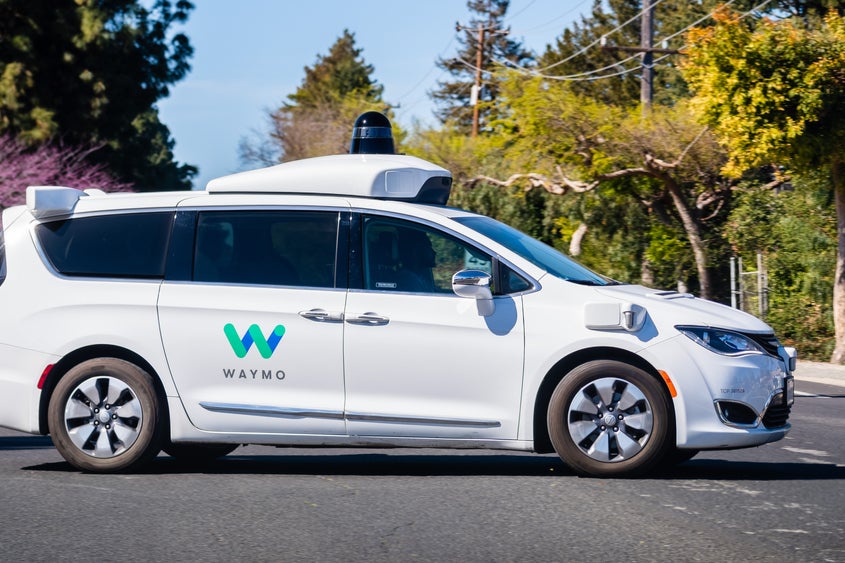
Waymo Recalls 3,900 Robotaxis to Address Software Issues

- Recall Announcement: Waymo is recalling nearly 3,900 robotaxis to address software issues, marking the company's second recall in just over a month, following 13 incidents where robotaxis entered freeway construction zones, highlighting deficiencies in its autonomous driving systems under complex conditions.
- Safety Risks: According to notices from the National Highway Traffic Safety Administration, Waymo's fifth-generation automated driving systems exhibit performance issues in construction zones, increasing the likelihood of accidents, which has compelled the company to restrict freeway operations to ensure passenger safety.
- Expansion Constraints: Waymo currently operates commercial robotaxi services in 11 U.S. markets, but the ongoing freeway issues are limiting the company's expansion velocity, particularly against the backdrop of plans to enter international markets like London and Tokyo.
- New Subscription Model: Waymo recently introduced a $29.99 monthly subscription service aimed at high-demand cities, but until the freeway issues are resolved, user experience and market confidence may be adversely affected.
See More

Waymo Recalls 3,900 Robotaxis to Address Software Issues
- Software Recall: Waymo is recalling 3,900 robotaxis in the U.S. due to incidents where vehicles entered closed construction zones, marking the company's second recall in just over a month, which raises concerns about its software performance and could impact its reputation in the autonomous driving sector.
- Freeway Operation Restrictions: While addressing the software issues, Waymo has restricted its robotaxis from operating on freeways, a precautionary measure aimed at reducing potential safety risks, although the company continues to serve riders on surface streets, ensuring ongoing business operations.
- Historical Issues Review: Waymo has faced scrutiny for previous incidents, including failures to yield to school buses in Texas and chaos during widespread power outages in San Francisco, which may affect consumer trust in its autonomous technology.
- International Expansion Plans: Despite these challenges, Waymo plans to expand its commercial robotaxi service to London and Tokyo this year and has introduced a $29.99 monthly subscription service for high-demand cities, demonstrating confidence in the market potential.
See More

SpaceX's Revenue Forecasts Show Massive Growth Potential

- Future Revenue Outlook: Goldman Sachs forecasts that by 2030, SpaceX's AI division will generate $322 billion in revenue, with total revenue reaching $474 billion, marking a significant increase from $18.7 billion in 2025, highlighting the company's immense potential and market demand in the AI sector.
- Chip Supply Chain Advantage: Nvidia supplies over 220,000 GPUs for SpaceX's data centers, playing a crucial role in a $1.2 billion monthly leasing agreement with AI startup Anthropic, further solidifying its leadership position in the AI market.
- Strategic Collaboration with Alphabet: Alphabet, an early investor in SpaceX, collaborates through a $920 million monthly compute capacity leasing agreement, leveraging its strengths in space imagery and satellite launches to advance its Project Suncatcher initiative.
- Tesla's Shared Project: Tesla benefits from a shared semiconductor project, Terafab, with SpaceX, which is expected to enhance the production efficiency of its robots and autonomous vehicles, thereby gaining a competitive edge and new revenue streams in the future.
See More

Goldman Sachs Predicts SpaceX Revenue to Soar to $474 Billion by 2030
- Revenue Surge Prediction: Goldman Sachs forecasts that SpaceX's total revenue will reach $474 billion by 2030, with $322 billion coming from its AI division, indicating significant growth potential that may attract more investor interest.
- AI Division Contribution: SpaceX's AI division generated only $18.7 billion in revenue in 2025, yet Goldman Sachs' projections suggest a remarkable increase in revenue over the next five years, reflecting the growing importance of AI technology in the aerospace sector.
- Strengthened Partnerships: Companies like Nvidia, Alphabet, and Tesla stand to benefit from SpaceX's success, with Nvidia supplying advanced chips for SpaceX's data centers and Alphabet establishing a close collaboration through leasing computing capacity, showcasing the synergistic effects within the industry.
- Chip Manufacturing Facility Development: SpaceX is building a chip manufacturing facility called Terafab, yet it is expected to continue relying on Nvidia's chips, indicating that while SpaceX is expanding its internal manufacturing capabilities, it still needs external suppliers for technological support.
See More
U.S.-Iran Deal: Economic Benefits Tied to Compliance
- Clear Conditions: Vice President Vance emphasized that Iran's economic benefits are contingent upon full compliance with the agreement, a stance aimed at countering criticisms that the Trump administration has made excessive concessions to Iran, reflecting a tough negotiating position from the U.S.
- Impact of Sanction Lifting: Vance noted that lifting sanctions does not represent a major concession since Iran has been selling oil despite sanctions, and this move is expected to enhance U.S. visibility into Iran's financial activities, thereby increasing strategic transparency for the U.S.
- Potential Middle East Relations: Vance stated that if Iran alters its behavior, it could lead to a transformative relationship with the Middle East, indicating the strategic significance of the agreement in reshaping regional geopolitics.
- Congressional Briefing Plans: Vance revealed that the Trump administration plans to provide a formal briefing to Congress soon, indicating confidence in executing the agreement, even suggesting that some sanctions could be temporarily lifted without congressional approval, showcasing the administration's assertive approach.
See More
U.S. Court Upholds Ohio Social Media Law Requiring Parental Consent
- Legal Implementation Progress: The U.S. 6th Circuit Court of Appeals ruled that Ohio's Social Media Parental Notification Act does not violate the First Amendment, allowing the state to implement the law in January 2024, which requires social media companies to obtain parental consent before allowing children under 16 to use their platforms, thereby enhancing online safety for children.
- Legislative Background: Passed in 2023, the law aims to address potential mental health risks posed by social media to children, reflecting a growing global concern regarding children's use of social media, particularly as countries like Australia also take similar measures.
- Legal Challenges: The tech industry trade group NetChoice attempted to block the law, arguing it was unconstitutionally vague and restricted children's access to protected content; however, the court found that the law was narrowly tailored to protect children's interests and imposed only a marginal burden.
- Social Impact: This ruling signifies an increase in regulatory scrutiny over social media companies regarding child protection, potentially prompting other states to follow suit and further driving compliance in age verification and content distribution practices within the social media industry.
See More
Waymo Recalls 3,900 Robotaxis to Address Software Issues
- Recall Announcement: Waymo is recalling nearly 3,900 robotaxis to address software issues, marking the company's second recall in just over a month, following 13 incidents where robotaxis entered freeway construction zones, highlighting deficiencies in its autonomous driving systems under complex conditions.
- Safety Risks: According to notices from the National Highway Traffic Safety Administration, Waymo's fifth-generation automated driving systems exhibit performance issues in construction zones, increasing the likelihood of accidents, which has compelled the company to restrict freeway operations to ensure passenger safety.
- Expansion Constraints: Waymo currently operates commercial robotaxi services in 11 U.S. markets, but the ongoing freeway issues are limiting the company's expansion velocity, particularly against the backdrop of plans to enter international markets like London and Tokyo.
- New Subscription Model: Waymo recently introduced a $29.99 monthly subscription service aimed at high-demand cities, but until the freeway issues are resolved, user experience and market confidence may be adversely affected.
See More
Waymo Recalls 3,900 Robotaxis to Address Software Issues
- Software Recall: Waymo is recalling 3,900 robotaxis in the U.S. due to incidents where vehicles entered closed construction zones, marking the company's second recall in just over a month, which raises concerns about its software performance and could impact its reputation in the autonomous driving sector.
- Freeway Operation Restrictions: While addressing the software issues, Waymo has restricted its robotaxis from operating on freeways, a precautionary measure aimed at reducing potential safety risks, although the company continues to serve riders on surface streets, ensuring ongoing business operations.
- Historical Issues Review: Waymo has faced scrutiny for previous incidents, including failures to yield to school buses in Texas and chaos during widespread power outages in San Francisco, which may affect consumer trust in its autonomous technology.
- International Expansion Plans: Despite these challenges, Waymo plans to expand its commercial robotaxi service to London and Tokyo this year and has introduced a $29.99 monthly subscription service for high-demand cities, demonstrating confidence in the market potential.
See More
SpaceX's Revenue Forecasts Show Massive Growth Potential
- Future Revenue Outlook: Goldman Sachs forecasts that by 2030, SpaceX's AI division will generate $322 billion in revenue, with total revenue reaching $474 billion, marking a significant increase from $18.7 billion in 2025, highlighting the company's immense potential and market demand in the AI sector.
- Chip Supply Chain Advantage: Nvidia supplies over 220,000 GPUs for SpaceX's data centers, playing a crucial role in a $1.2 billion monthly leasing agreement with AI startup Anthropic, further solidifying its leadership position in the AI market.
- Strategic Collaboration with Alphabet: Alphabet, an early investor in SpaceX, collaborates through a $920 million monthly compute capacity leasing agreement, leveraging its strengths in space imagery and satellite launches to advance its Project Suncatcher initiative.
- Tesla's Shared Project: Tesla benefits from a shared semiconductor project, Terafab, with SpaceX, which is expected to enhance the production efficiency of its robots and autonomous vehicles, thereby gaining a competitive edge and new revenue streams in the future.
See More
Goldman Sachs Predicts SpaceX Revenue to Soar to $474 Billion by 2030
- Revenue Surge Prediction: Goldman Sachs forecasts that SpaceX's total revenue will reach $474 billion by 2030, with $322 billion coming from its AI division, indicating significant growth potential that may attract more investor interest.
- AI Division Contribution: SpaceX's AI division generated only $18.7 billion in revenue in 2025, yet Goldman Sachs' projections suggest a remarkable increase in revenue over the next five years, reflecting the growing importance of AI technology in the aerospace sector.
- Strengthened Partnerships: Companies like Nvidia, Alphabet, and Tesla stand to benefit from SpaceX's success, with Nvidia supplying advanced chips for SpaceX's data centers and Alphabet establishing a close collaboration through leasing computing capacity, showcasing the synergistic effects within the industry.
- Chip Manufacturing Facility Development: SpaceX is building a chip manufacturing facility called Terafab, yet it is expected to continue relying on Nvidia's chips, indicating that while SpaceX is expanding its internal manufacturing capabilities, it still needs external suppliers for technological support.
See More