

Seeking Dividends? Explore Opportunities in Europe.
Written by Emily J. Thompson, Senior Investment Analyst
Updated: Feb 12 2026
0mins

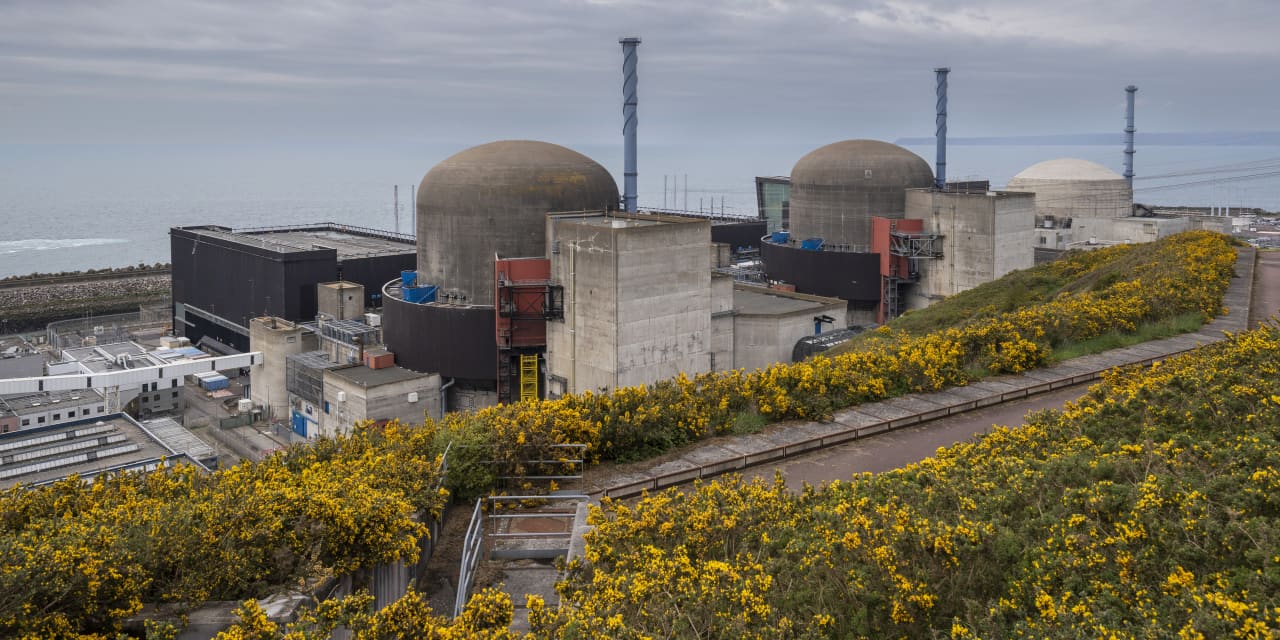
Source: Barron's
U.S. Dividend Seekers: Investors in the U.S. are encouraged to explore European markets for potential dividend opportunities.
European Market Appeal: European companies are offering attractive dividend yields, which may be appealing compared to U.S. counterparts.
Economic Factors: Factors such as currency fluctuations and economic recovery in Europe are influencing the attractiveness of these investments.
Investment Strategy: Diversifying into European dividends could enhance returns for U.S. investors seeking income.
Trade with 70% Backtested Accuracy
Stop guessing "Should I Buy EQNR?" and start using high-conviction signals backed by rigorous historical data.
Sign up today to access powerful investing tools and make smarter, data-driven decisions.
Analyst Views on EQNR
Wall Street analysts forecast EQNR stock price to fall
2 Analyst Rating
1 Buy
1 Hold
0 Sell
Moderate Buy
Current: 32.870

Low
22.00
Averages
23.89
High
25.79
Current: 32.870
Low
22.00
Averages
23.89
High
25.79
About EQNR
Equinor ASA, formerly Statoil ASA is a Norway-based international energy company. The Company’s purpose is to turn natural resources into energy. Equinor sells crude oil and delivers natural gas to the European market. It is also engaged in processing, refining, offshore wind and carbon capture and storage activities. Equinor ASA has five reporting segments: Exploration & Production Norway (E&P Norway), Exploration & Production International (E&P International), Exploration & Production USA (E&P USA), Marketing, Midstream & Processing (MMP) and Renewables (REN). The Company has several subsidiaries such as Equinor Nigeria Energy Company Ltd, Equinor Wind Power AS, Equinor International Netherlands BV and Equinor Brasil Energia Ltda.
About the author

Emily J. Thompson
Emily J. Thompson, a Chartered Financial Analyst (CFA) with 12 years in investment research, graduated with honors from the Wharton School. Specializing in industrial and technology stocks, she provides in-depth analysis for Intellectia’s earnings and market brief reports.
Equinor Approves New Subsea Gas Development at Troll Field
- Investment Commitment: Equinor and its partners have approved a new subsea gas development project at Norway's Troll field, committing over NOK 4 billion (approximately $390 million) to enhance production from this crucial European natural gas source.
- Gas Production Expectations: The TWIN project is expected to add around 11 billion cubic meters of recoverable gas, with production targeted to commence as early as 2028, significantly boosting Norway's supply capacity in the European gas market.
- Project Structure and Phases: This project involves drilling two wells in a seabed template and connecting a pipeline to existing subsea facilities, representing the third stage of the Troll Phase 3 expansion, which focuses on extracting additional gas from the Troll West reservoir.
- Resource Reserves and Market Impact: The Troll field is the largest gas-producing field on the Norwegian Continental Shelf, containing approximately 40% of Norway's remaining gas reserves, with gas from Troll alone supplying about 10% of Europe's gas demand, thereby reinforcing Norway's critical role in European energy supply.
See More

Equinor Announces 2026 Share Buyback Program Details
- Buyback Program Overview: Equinor ASA announced its second tranche of the share buyback program on May 6, 2026, with a duration from May 19 to July 20, 2026, reflecting the company's confidence in its stock value.
- Transaction Data: From June 15 to June 19, 2026, Equinor repurchased a total of 369,300 shares at an average price of NOK 319.6242 per share, indicating proactive capital management amid market fluctuations.
- Cumulative Buyback Status: To date, Equinor has repurchased a total of 1,838,368 shares under this buyback program at an average price of NOK 346.9043 per share, demonstrating the company's ongoing commitment to capital return strategies.
- Shareholding Analysis: Following these transactions, Equinor owns 67,143,549 shares, representing 2.63% of its total share capital, which not only boosts shareholder confidence but may also enhance future stock performance.
See More

Equinor Invests 4 Billion NOK in North Sea Gas Development

- Investment Scale: Equinor ASA and its partners are investing over 4 billion NOK in a new subsea development at the Troll gas field, which is expected to significantly boost gas production and strengthen its position in the European energy market.
- Partnership Structure: In the Troll West Increased Gas Recovery project, Equinor holds a 30.55% stake, while Petoro owns 55.93%, with Shell, TotalEnergies, and ConocoPhillips holding 8.19%, 3.69%, and 1.64% respectively, showcasing a strong collaborative effort.
- Production Expectations: The project is expected to contribute around 11 billion standard cubic meters of gas, ensuring sustained high production from Troll A and Kollsnes until 2030, meeting approximately 10% of Europe's gas needs.
- Production Goals: Equinor aims to produce 1.3 million barrels per day from the Norwegian continental shelf by 2035, with the project implementation designed to reduce costs through process simplification and reuse of existing infrastructure, thereby promoting job creation and value generation.
See More

Equinor Finalizes Development Plan for Ringvei Vest Subsea Project
- Project Consolidation: Equinor and its partners have finalized the development concept for Ringvei Vest, integrating seven discoveries into a single subsea project connected to the Troll B platform, which is expected to significantly enhance output from the Norwegian Continental Shelf.
- Resource Estimates: The estimated gross resources for Ringvei Vest are around 240 million barrels of oil equivalent, making this a significant addition that will help Equinor increase its daily production from the Norwegian Continental Shelf to 1.3 million barrels by 2035.
- Infrastructure Optimization: The project design includes a new compressor at the Troll B platform to expand processing capacity, while partial shore-based electrification is expected to enable low-emission production, aligning with sustainability goals.
- Decision Timeline: Although a final investment decision and production start-up timing have not been determined, partners intend to make a decision to proceed by the end of the year, ensuring a high activity level in a changing market environment.
See More
Energy Stocks Decline as NYSE Energy Sector Index Drops 0.8%

- Market Weakness: Energy stocks broadly declined on Tuesday afternoon, with the NYSE Energy Sector Index falling by 0.8%, indicating concerns over energy demand outlook that may weaken investor confidence.
- Investor Sentiment Impact: As energy price volatility increases, investor expectations for future earnings have become more cautious, potentially affecting capital expenditures and growth plans of energy companies, thereby negatively impacting overall industry performance.
- Industry Dynamics Shift: The decline in energy stocks may be linked to global economic slowdown and supply chain issues, which could lead to reduced demand and subsequently affect profitability and market valuations of energy companies.
- Uncertain Long-Term Outlook: Despite the poor short-term performance of energy stocks, the rising focus on renewable energy and clean technologies may create new investment opportunities and growth momentum for the industry in the future.
See More
Equinor Unveils Strategy to Boost Production and Shareholder Returns
- Production Increase Plan: At its 2026 Capital Markets Day, Equinor announced plans to boost oil and gas output by 150K boe/day by 2030, targeting a total production of 2.3M boe/day, which includes a rise to 1.35M boe/day from the Norwegian continental shelf, reflecting the company's positive outlook on future market demand.
- Doubling Buyback Program: The company is doubling its 2026 share buyback program to $3 billion, aimed at enhancing shareholder returns, a move that is expected to bolster investor confidence and potentially have a positive impact on the stock price.
- Dividend Growth: Equinor plans to increase its quarterly cash dividend by 5% annually starting in 2027, alongside annual share buybacks of $2 billion to $4 billion based on oil prices of $60 to $80 per barrel and European gas prices of $7 to $11 per MMBtu, which will further strengthen the company's cash flow and shareholder returns.
- Renewable Energy Goal Adjustment: The company has dropped its 2030 renewable energy capacity goal, instead forecasting a power generation increase from 5.5 TWh in 2025 to over 20 TWh, indicating a strategic shift in its energy transition approach that may impact its long-term sustainability direction.
See More
Equinor Approves New Subsea Gas Development at Troll Field
- Investment Commitment: Equinor and its partners have approved a new subsea gas development project at Norway's Troll field, committing over NOK 4 billion (approximately $390 million) to enhance production from this crucial European natural gas source.
- Gas Production Expectations: The TWIN project is expected to add around 11 billion cubic meters of recoverable gas, with production targeted to commence as early as 2028, significantly boosting Norway's supply capacity in the European gas market.
- Project Structure and Phases: This project involves drilling two wells in a seabed template and connecting a pipeline to existing subsea facilities, representing the third stage of the Troll Phase 3 expansion, which focuses on extracting additional gas from the Troll West reservoir.
- Resource Reserves and Market Impact: The Troll field is the largest gas-producing field on the Norwegian Continental Shelf, containing approximately 40% of Norway's remaining gas reserves, with gas from Troll alone supplying about 10% of Europe's gas demand, thereby reinforcing Norway's critical role in European energy supply.
See More
Equinor Announces 2026 Share Buyback Program Details
- Buyback Program Overview: Equinor ASA announced its second tranche of the share buyback program on May 6, 2026, with a duration from May 19 to July 20, 2026, reflecting the company's confidence in its stock value.
- Transaction Data: From June 15 to June 19, 2026, Equinor repurchased a total of 369,300 shares at an average price of NOK 319.6242 per share, indicating proactive capital management amid market fluctuations.
- Cumulative Buyback Status: To date, Equinor has repurchased a total of 1,838,368 shares under this buyback program at an average price of NOK 346.9043 per share, demonstrating the company's ongoing commitment to capital return strategies.
- Shareholding Analysis: Following these transactions, Equinor owns 67,143,549 shares, representing 2.63% of its total share capital, which not only boosts shareholder confidence but may also enhance future stock performance.
See More
Equinor Invests 4 Billion NOK in North Sea Gas Development
- Investment Scale: Equinor ASA and its partners are investing over 4 billion NOK in a new subsea development at the Troll gas field, which is expected to significantly boost gas production and strengthen its position in the European energy market.
- Partnership Structure: In the Troll West Increased Gas Recovery project, Equinor holds a 30.55% stake, while Petoro owns 55.93%, with Shell, TotalEnergies, and ConocoPhillips holding 8.19%, 3.69%, and 1.64% respectively, showcasing a strong collaborative effort.
- Production Expectations: The project is expected to contribute around 11 billion standard cubic meters of gas, ensuring sustained high production from Troll A and Kollsnes until 2030, meeting approximately 10% of Europe's gas needs.
- Production Goals: Equinor aims to produce 1.3 million barrels per day from the Norwegian continental shelf by 2035, with the project implementation designed to reduce costs through process simplification and reuse of existing infrastructure, thereby promoting job creation and value generation.
See More
Equinor Finalizes Development Plan for Ringvei Vest Subsea Project
- Project Consolidation: Equinor and its partners have finalized the development concept for Ringvei Vest, integrating seven discoveries into a single subsea project connected to the Troll B platform, which is expected to significantly enhance output from the Norwegian Continental Shelf.
- Resource Estimates: The estimated gross resources for Ringvei Vest are around 240 million barrels of oil equivalent, making this a significant addition that will help Equinor increase its daily production from the Norwegian Continental Shelf to 1.3 million barrels by 2035.
- Infrastructure Optimization: The project design includes a new compressor at the Troll B platform to expand processing capacity, while partial shore-based electrification is expected to enable low-emission production, aligning with sustainability goals.
- Decision Timeline: Although a final investment decision and production start-up timing have not been determined, partners intend to make a decision to proceed by the end of the year, ensuring a high activity level in a changing market environment.
See More
Energy Stocks Decline as NYSE Energy Sector Index Drops 0.8%
- Market Weakness: Energy stocks broadly declined on Tuesday afternoon, with the NYSE Energy Sector Index falling by 0.8%, indicating concerns over energy demand outlook that may weaken investor confidence.
- Investor Sentiment Impact: As energy price volatility increases, investor expectations for future earnings have become more cautious, potentially affecting capital expenditures and growth plans of energy companies, thereby negatively impacting overall industry performance.
- Industry Dynamics Shift: The decline in energy stocks may be linked to global economic slowdown and supply chain issues, which could lead to reduced demand and subsequently affect profitability and market valuations of energy companies.
- Uncertain Long-Term Outlook: Despite the poor short-term performance of energy stocks, the rising focus on renewable energy and clean technologies may create new investment opportunities and growth momentum for the industry in the future.
See More
Equinor Unveils Strategy to Boost Production and Shareholder Returns
- Production Increase Plan: At its 2026 Capital Markets Day, Equinor announced plans to boost oil and gas output by 150K boe/day by 2030, targeting a total production of 2.3M boe/day, which includes a rise to 1.35M boe/day from the Norwegian continental shelf, reflecting the company's positive outlook on future market demand.
- Doubling Buyback Program: The company is doubling its 2026 share buyback program to $3 billion, aimed at enhancing shareholder returns, a move that is expected to bolster investor confidence and potentially have a positive impact on the stock price.
- Dividend Growth: Equinor plans to increase its quarterly cash dividend by 5% annually starting in 2027, alongside annual share buybacks of $2 billion to $4 billion based on oil prices of $60 to $80 per barrel and European gas prices of $7 to $11 per MMBtu, which will further strengthen the company's cash flow and shareholder returns.
- Renewable Energy Goal Adjustment: The company has dropped its 2030 renewable energy capacity goal, instead forecasting a power generation increase from 5.5 TWh in 2025 to over 20 TWh, indicating a strategic shift in its energy transition approach that may impact its long-term sustainability direction.
See More




