

Santoli's Tuesday Market Summary: Stocks Steady as Fed Meeting Approaches, Notable Sector Rotations Observed

Market Hesitation Ahead of Fed Decision: Stocks are showing caution as they approach record highs, with the S&P 500 experiencing a 5% pullback since April, influenced by a dovish shift from the Federal Reserve and expectations of a rate cut.
Sector Rotations and Consumer Trends: Recent market activity has seen a rotation towards sectors like transports and financials, but comments from JPMorgan's CFO about fragile consumer trends led to a sell-off in banks and consumer stocks.
Contrasting Market Signals: While financial markets indicate loose monetary conditions, labor market indicators suggest tightness, creating a complex environment for the Fed as it prepares for a likely rate cut.
AI and Stock Performance Dynamics: The market is favoring certain AI stocks over others, with Nvidia struggling while Broadcom and Google gain traction; defensive stocks like consumer staples are underperforming significantly, raising questions about future investment strategies.
Trade with 70% Backtested Accuracy
Analyst Views on AVGO

About AVGO
About the author

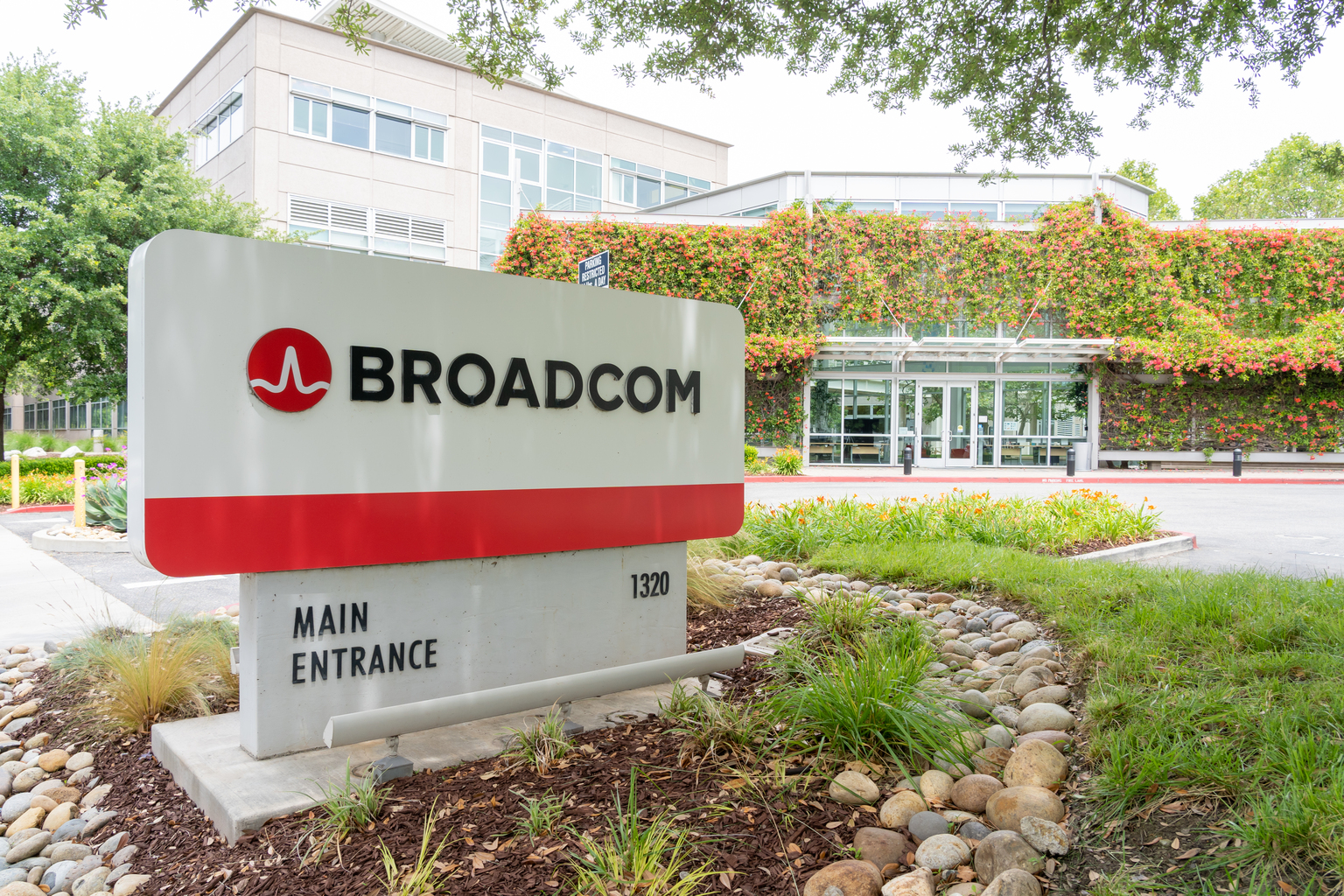
Broadcom Downgraded, Shares Slip 3% Amid Valuation Concerns

- Downgrade Impact: Erste Group downgraded Broadcom from Buy to Hold, causing a 3% drop in premarket trading, reflecting market concerns over the company's high valuation.
- Profitability Outlook: Analyst Hans Engel noted that while gross and operating margins are expected to remain high, the stock's elevated valuation already incorporates much of this positive outlook, limiting potential for further price appreciation.
- Revenue Growth Expectations: Broadcom anticipates a remarkable 89% year-over-year revenue increase in Q3 of the new fiscal year, reaching $29.4 billion, with approximately $16 billion attributed to AI semiconductors, highlighting strong performance in a rapidly growing sector.
- Market Confidence: Despite the downgrade, Engel believes that Broadcom's positive momentum will continue into the third quarter, indicating that market confidence in the company's future growth remains intact.

SpaceX Sets Record with $2.1 Trillion IPO Valuation


- Record IPO: SpaceX's initial public offering (IPO) set a historic record with an initial valuation of approximately $1.77 trillion, and as of July 2, its market cap has surged to over $2.1 trillion, reflecting strong market confidence in its future potential.
- Diversified Business Transformation: Beyond rocket launches, SpaceX is rapidly expanding its Starlink internet service and xAI artificial intelligence infrastructure, showcasing its potential as a conglomerate and attracting significant investor interest.
- Future Plans Attract Investment: SpaceX's ambitious future plans, including establishing data centers in space and enabling everyday human space travel, spark investor interest, mirroring Tesla's successful trajectory and potentially leading to long-term investment returns.
- High Valuation and Risks: Despite projected revenues of $18.7 billion in 2025, SpaceX's price-to-sales (P/S) ratio stands at 112, indicating high investment risk at current valuations, prompting investors to carefully assess its long-term investment value.

SpaceX's IPO Shows Flat Stock Performance Amidst Promising Future

- IPO Performance: SpaceX's initial public offering (IPO) set a record as the largest in history with an initial valuation of approximately $1.77 trillion, and as of July 2, its market valuation has surpassed $2.1 trillion, reflecting strong market confidence in its future prospects.
- Stock Price Volatility: Despite SpaceX's stock remaining relatively flat during its first 15 trading days, experiencing ups and downs, the underlying business potential, particularly with the rapid growth of Starlink and xAI, continues to attract investor interest.
- Business Diversification: SpaceX is transforming from a single rocket launch company into a conglomerate with successful subsidiaries, where Starlink provides internet services to remote areas and xAI boasts significant advantages in artificial intelligence infrastructure, enhancing the company's competitive position in the market.
- Investor Caution: While SpaceX's ambitious future plans are appealing, its current valuation at 112 times the projected $18.7 billion revenue for 2025 raises concerns, prompting investors to be cautious, especially before the company releases its first quarterly earnings report as a public entity.

Lattice Semiconductor Stock Rises 3%: Key Drivers Explained

- Stock Surge: Lattice Semiconductor (LSCC) shares rose 3% in morning trading, indicating a rebound in the semiconductor sector after last week's sharp selloff, reflecting a recovery in investor confidence towards the industry.
- Sector Developments: Broadcom's multi-year agreements with Apple for custom ASIC silicon through 2031 have bolstered the semiconductor sector, while UBS raised its Q3 DDR contract pricing forecast to a 32% quarter-on-quarter increase, signaling an improving supply-demand dynamic in the memory market.
- Market Volatility: Lattice Semiconductor has experienced 31 moves greater than 5% over the past year, and while today's rise is seen as significant, the market does not perceive it as fundamentally altering the company's outlook, highlighting investor uncertainty about future performance.
- Long-term Performance: Despite a 78.3% increase since the beginning of the year, Lattice shares are still trading 9.3% below their 52-week high, indicating that while investors are taking profits, there remains cautious optimism about future growth prospects.

U.S. Stocks Close Higher as Tech Shares Rebound

- Tech Stock Rebound: The Nasdaq 100 rose 1.3%, the Dow Jones Industrial Average increased by 0.3%, and the S&P 500 gained 0.8%, indicating a recovery in investor confidence towards tech stocks after significant declines last week.
- Strong Chip Performance: Shares of Nvidia (NVDA) and Broadcom (AVGO) surged, driving the Nasdaq's rebound, suggesting sustained demand in the semiconductor sector despite investor concerns over the longevity of AI demand.
- Optimistic Market Sentiment: Retail sentiment for SPY, QQQ, and DIA on Stocktwits was 'bullish' with message volumes categorized as 'normal' to 'high', reflecting a positive outlook among investors regarding market prospects.
- Major Transaction Dynamics: Lockheed Martin (LMT) entered a definitive agreement to acquire Ultra Maritime for $3.45 billion, aiming to enhance its capabilities in the rapidly evolving undersea defense market, highlighting a trend of consolidation in the defense industry.

Broadcom's AI Chip Growth Significant Despite Stock Decline

- Surge in AI Revenue: Broadcom's Q2 semiconductor revenue from AI reached $10.8 billion, marking a 143% year-over-year increase that surpassed forecasts, driven by strong demand for custom AI accelerators and networking, with expectations for Q3 AI chip revenue to exceed $16 billion, reflecting over 200% growth year-over-year, contributing to an overall revenue guidance of $29.4 billion, up 84%.
- Expanding Customer Base: Broadcom now serves six core custom chip customers, including OpenAI, Anthropic, Meta, and Alphabet, highlighting its strong market position in the AI sector, with the successful development of the Jalapeño chip further validating its business model.
- Strong Cash Flow Performance: The company generated $10.3 billion in free cash flow last quarter, representing 46% of total revenue, while also paying a quarterly dividend of $0.65, showcasing its robust cash generation capabilities; despite a trailing P/E ratio around 60, forecasted earnings suggest a drop to about 19, indicating improved profitability.
- Market Risk Analysis: Despite rapid growth, Broadcom's stock trades 24% below its 52-week high, primarily due to reliance on a few large AI customers and limited pricing power for custom chips, necessitating cautious investment; a moderate buy is recommended to mitigate potential risks.
Broadcom Downgraded, Shares Slip 3% Amid Valuation Concerns
- Downgrade Impact: Erste Group downgraded Broadcom from Buy to Hold, causing a 3% drop in premarket trading, reflecting market concerns over the company's high valuation.
- Profitability Outlook: Analyst Hans Engel noted that while gross and operating margins are expected to remain high, the stock's elevated valuation already incorporates much of this positive outlook, limiting potential for further price appreciation.
- Revenue Growth Expectations: Broadcom anticipates a remarkable 89% year-over-year revenue increase in Q3 of the new fiscal year, reaching $29.4 billion, with approximately $16 billion attributed to AI semiconductors, highlighting strong performance in a rapidly growing sector.
- Market Confidence: Despite the downgrade, Engel believes that Broadcom's positive momentum will continue into the third quarter, indicating that market confidence in the company's future growth remains intact.
SpaceX Sets Record with $2.1 Trillion IPO Valuation
- Record IPO: SpaceX's initial public offering (IPO) set a historic record with an initial valuation of approximately $1.77 trillion, and as of July 2, its market cap has surged to over $2.1 trillion, reflecting strong market confidence in its future potential.
- Diversified Business Transformation: Beyond rocket launches, SpaceX is rapidly expanding its Starlink internet service and xAI artificial intelligence infrastructure, showcasing its potential as a conglomerate and attracting significant investor interest.
- Future Plans Attract Investment: SpaceX's ambitious future plans, including establishing data centers in space and enabling everyday human space travel, spark investor interest, mirroring Tesla's successful trajectory and potentially leading to long-term investment returns.
- High Valuation and Risks: Despite projected revenues of $18.7 billion in 2025, SpaceX's price-to-sales (P/S) ratio stands at 112, indicating high investment risk at current valuations, prompting investors to carefully assess its long-term investment value.
SpaceX's IPO Shows Flat Stock Performance Amidst Promising Future
- IPO Performance: SpaceX's initial public offering (IPO) set a record as the largest in history with an initial valuation of approximately $1.77 trillion, and as of July 2, its market valuation has surpassed $2.1 trillion, reflecting strong market confidence in its future prospects.
- Stock Price Volatility: Despite SpaceX's stock remaining relatively flat during its first 15 trading days, experiencing ups and downs, the underlying business potential, particularly with the rapid growth of Starlink and xAI, continues to attract investor interest.
- Business Diversification: SpaceX is transforming from a single rocket launch company into a conglomerate with successful subsidiaries, where Starlink provides internet services to remote areas and xAI boasts significant advantages in artificial intelligence infrastructure, enhancing the company's competitive position in the market.
- Investor Caution: While SpaceX's ambitious future plans are appealing, its current valuation at 112 times the projected $18.7 billion revenue for 2025 raises concerns, prompting investors to be cautious, especially before the company releases its first quarterly earnings report as a public entity.
Lattice Semiconductor Stock Rises 3%: Key Drivers Explained
- Stock Surge: Lattice Semiconductor (LSCC) shares rose 3% in morning trading, indicating a rebound in the semiconductor sector after last week's sharp selloff, reflecting a recovery in investor confidence towards the industry.
- Sector Developments: Broadcom's multi-year agreements with Apple for custom ASIC silicon through 2031 have bolstered the semiconductor sector, while UBS raised its Q3 DDR contract pricing forecast to a 32% quarter-on-quarter increase, signaling an improving supply-demand dynamic in the memory market.
- Market Volatility: Lattice Semiconductor has experienced 31 moves greater than 5% over the past year, and while today's rise is seen as significant, the market does not perceive it as fundamentally altering the company's outlook, highlighting investor uncertainty about future performance.
- Long-term Performance: Despite a 78.3% increase since the beginning of the year, Lattice shares are still trading 9.3% below their 52-week high, indicating that while investors are taking profits, there remains cautious optimism about future growth prospects.
U.S. Stocks Close Higher as Tech Shares Rebound
- Tech Stock Rebound: The Nasdaq 100 rose 1.3%, the Dow Jones Industrial Average increased by 0.3%, and the S&P 500 gained 0.8%, indicating a recovery in investor confidence towards tech stocks after significant declines last week.
- Strong Chip Performance: Shares of Nvidia (NVDA) and Broadcom (AVGO) surged, driving the Nasdaq's rebound, suggesting sustained demand in the semiconductor sector despite investor concerns over the longevity of AI demand.
- Optimistic Market Sentiment: Retail sentiment for SPY, QQQ, and DIA on Stocktwits was 'bullish' with message volumes categorized as 'normal' to 'high', reflecting a positive outlook among investors regarding market prospects.
- Major Transaction Dynamics: Lockheed Martin (LMT) entered a definitive agreement to acquire Ultra Maritime for $3.45 billion, aiming to enhance its capabilities in the rapidly evolving undersea defense market, highlighting a trend of consolidation in the defense industry.
Broadcom's AI Chip Growth Significant Despite Stock Decline
- Surge in AI Revenue: Broadcom's Q2 semiconductor revenue from AI reached $10.8 billion, marking a 143% year-over-year increase that surpassed forecasts, driven by strong demand for custom AI accelerators and networking, with expectations for Q3 AI chip revenue to exceed $16 billion, reflecting over 200% growth year-over-year, contributing to an overall revenue guidance of $29.4 billion, up 84%.
- Expanding Customer Base: Broadcom now serves six core custom chip customers, including OpenAI, Anthropic, Meta, and Alphabet, highlighting its strong market position in the AI sector, with the successful development of the Jalapeño chip further validating its business model.
- Strong Cash Flow Performance: The company generated $10.3 billion in free cash flow last quarter, representing 46% of total revenue, while also paying a quarterly dividend of $0.65, showcasing its robust cash generation capabilities; despite a trailing P/E ratio around 60, forecasted earnings suggest a drop to about 19, indicating improved profitability.
- Market Risk Analysis: Despite rapid growth, Broadcom's stock trades 24% below its 52-week high, primarily due to reliance on a few large AI customers and limited pricing power for custom chips, necessitating cautious investment; a moderate buy is recommended to mitigate potential risks.





