QXO Inc Raises $3 Billion, Plans Major Acquisition Over $5 Billion
Written by Emily J. Thompson, Senior Investment Analyst
Updated: Jan 14 2026
0mins


Source: Yahoo Finance
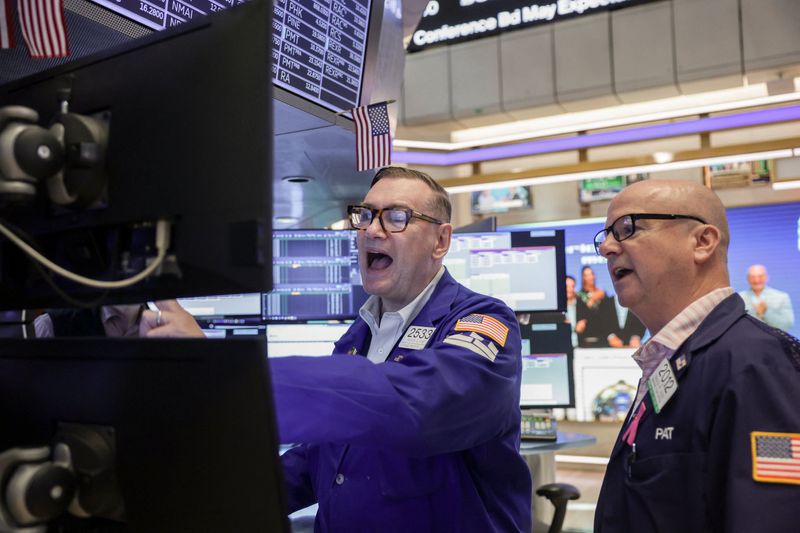
- Accelerated Acquisition Plans: Following a successful $3 billion capital raise, QXO Inc is in late-stage talks with seven potential acquisition targets, with annual revenues ranging from $1 billion to over $5 billion, indicating a strong intent to expand its business.
- Flexible Fund Utilization: This financing boosts QXO's available capital to approximately $10 billion, with analysts noting that this will enable the company to pursue larger transactions, thereby achieving a more competitive valuation in the market.
- Clear Acquisition Timeline: QXO is required to complete at least one acquisition by July 15, 2026, although the company is already prepared for a second and possibly third acquisition, reflecting its aggressive acquisition strategy.
- Optimistic Market Response: Analysts are bullish on QXO's acquisition prospects, viewing the M&A pipeline as a primary driver for stock performance, and expect effective capital deployment to further lower the company's valuation while offsetting dilution from transactions.
Trade with 70% Backtested Accuracy
Stop guessing "Should I Buy BLDR?" and start using high-conviction signals backed by rigorous historical data.
Sign up today to access powerful investing tools and make smarter, data-driven decisions.
Analyst Views on BLDR
Wall Street analysts forecast BLDR stock price to rise
14 Analyst Rating
6 Buy
7 Hold
1 Sell
Moderate Buy
Current: 76.720

Low
109.41
Averages
124.28
High
150.00
Current: 76.720
Low
109.41
Averages
124.28
High
150.00
About BLDR
Builders FirstSource, Inc. is a supplier of building products, prefabricated components, and value-added services to the professional market segment for new residential construction and repair and remodeling. It provides customers with an integrated homebuilding solution, offering manufacturing, supply, delivery and installation of a full range of structural and related building products. Its product categories include Manufactured Products; Windows, Doors and Millwork; Specialty Building Products and Services, and Lumber and Lumber Sheet Goods. It serves customers from distribution and manufacturing facilities (some of which are co-located) that produce value-added products such as roof and floor trusses, wall panels, stairs, vinyl windows, custom millwork and pre-hung doors. It also distributes dimensional lumber and lumber sheet goods, millwork, windows, interior and exterior doors, and other specialty building products. It operates in 43 states with approximately 585 locations.
About the author

Emily J. Thompson
Emily J. Thompson, a Chartered Financial Analyst (CFA) with 12 years in investment research, graduated with honors from the Wharton School. Specializing in industrial and technology stocks, she provides in-depth analysis for Intellectia’s earnings and market brief reports.

Investing in Small-Cap Stocks: Risks and Opportunities


- Builders FirstSource Performance Decline: Builders FirstSource (BLDR), with a market cap of $7.98 billion, has seen a 6.9% revenue decline over the past two years, while its earnings per share have dropped by 37.2% annually, indicating increased competition is eroding profitability; currently trading at $74.13, it has a forward P/E of 15.6x, raising investment risks.
- SiteOne Growth Challenges: SiteOne (SITE), valued at $5.02 billion, has shown no organic revenue growth in the past two years, with flat earnings per share underperforming sector averages; its stock price of $113.37 reflects a forward P/E of 25.5x, suggesting reliance on acquisitions for future expansion, making its investment outlook uncertain.
- Provident Financial Weakness: Provident Financial Services (PFS), with a market cap of $2.87 billion, has a net interest margin of only 3.4%, one of the lowest in the banking sector, and its 5.2% annual earnings per share growth over the past five years has lagged behind revenue gains; trading at $22.05, it has a forward P/B of 1x, warranting caution for investors.
- Risks in Small-Cap Investments: While the small-cap market presents opportunities, the lack of reliable analyst price targets creates a high-risk, high-reward environment, prompting investors to consider stocks with better potential to mitigate risks.
See More

U.S. Stocks Surge as Oil Prices Plunge, Boosting Market Sentiment


- Market Recovery: The S&P 500 Index rose by 1.08%, the Dow Jones Industrial Average increased by 1.31%, and the Nasdaq 100 Index climbed by 1.66%, reflecting renewed investor confidence in economic recovery, particularly amid a significant drop in oil prices.
- Oil Price Plunge: Crude oil prices fell by over 5% due to hopes for an end to the Iran conflict, which not only lowered inflation expectations but also caused the 10-year Treasury yield to drop by 10 basis points to 4.57%, providing support for the bond market.
- Semiconductor Stocks Rally: Nvidia rose more than 1% ahead of its earnings report, with Q1 sales expected to increase by 80%, drawing market attention to its production ramp-up and competitive strategies, positively impacting the overall tech sector.
- Mortgage Applications Decline: U.S. MBA mortgage applications fell by 2.3% for the week ending May 1, with the purchase mortgage sub-index down 4.1%, indicating pressure on the housing market from high interest rates, as the average 30-year fixed mortgage rate rose to 6.56%.
See More
Vanguard Mid-Cap ETF's Market Role and Performance

- Asset Size and Expense Ratio: Vanguard Mid-Cap ETF (VO) manages $94 billion in assets with a low expense ratio of 0.04%, tracking over 300 U.S. companies with market caps between $2 billion and $20 billion, effectively filling the gap in mid-cap market exposure and offering diversified investment options.
- Historical Return Comparison: Over the past decade, VO returned 195% compared to SPDR S&P 500 ETF (SPY)'s 257%, and while VO has underperformed during the AI-driven mega-cap rally, its higher economic sensitivity (beta of 1.49) provides investors with a risk management advantage.
- Investment Strategy and Yield: By holding hundreds of mature, profitable mid-cap companies, VO offers a distribution yield of approximately 1.5%, and although its yield is relatively modest, its growth potential and ability to smooth market volatility make it an effective addition to investment portfolios.
- Market Allocation Recommendation: Investors are advised to allocate 10% to 15% of their equity portfolios to VO, corresponding to $30,000 to $45,000 within a standard $300,000 equity portfolio, to achieve explicit exposure to the mid-cap market, despite its underperformance relative to large caps over the past decade, its structural diversification benefits remain significant.
See More

US Stocks Retreat as Tech Rally Falters

- Market Retreat: The S&P 500 index fell by 0.68% and the Nasdaq 100 by 0.95%, both hitting 1.5-week lows, indicating a weakening confidence in tech stocks that could affect investor sentiment and future capital flows.
- Rising Bond Yields: The 10-year T-note yield climbed to a 16-month high of 4.69%, intensifying concerns over rising inflation that may prompt the Fed to pursue tighter monetary policy, thereby impacting stock market performance.
- Supportive Economic Data: April pending home sales rose by 1.4% month-over-month, surpassing expectations of 1.0%, demonstrating resilience in the housing market that could provide some support for stocks, despite overall market pressures.
- Oil Price Volatility: WTI crude oil prices dropped over 1% today due to geopolitical factors, with market concerns about future supply tightness intensifying, potentially affecting stock performance in related sectors, particularly airlines and mining stocks.
See More

U.S. Stocks Decline as Tech Rally Falters
- Market Decline: The S&P 500 index fell by 0.35%, the Dow Jones Industrial Average by 0.19%, and the Nasdaq 100 by 0.45%, indicating a market reaction to the pullback in tech stocks after reaching record highs last week.
- Rising Bond Yields: The 10-year Treasury note yield rose to a 15-month high of 4.66%, triggering risk-off sentiment in the market and leading to long liquidations in stocks, which exacerbates investor concerns about future economic growth.
- Oil Price Volatility: WTI crude oil prices dropped following President Trump's cancellation of a military strike on Iran, despite the IEA reporting a decline in global oil inventories by about 4 million bpd, with the market expected to remain severely undersupplied even if the conflict ends.
- Earnings Performance: So far, 83% of the 454 S&P 500 companies have beaten earnings estimates, with Q1 earnings projected to rise by 12% year-over-year, but excluding the tech sector, the increase is only 3%, highlighting the fragility of the overall economic recovery.
See More

Builders FirstSource Announces Leadership Transition with COO Retirement
- Executive Retirement Plan: Builders FirstSource announced that COO Steve Herron will retire at the end of 2026 as part of a planned leadership transition, aimed at ensuring a smooth management handover to maintain business continuity.
- New COO Appointment: The company appointed Mike Hiller as COO-designate to succeed Herron; Hiller, who previously served as Chief Talent Officer and President of the Central Division post-merger with BMC Stock Holdings, reflects the company's commitment to internal talent development.
- HR Executive Change: Coley O’Brien has been named Chief Human Resources Officer, joining from Wendy's where he was Chief People Officer, bringing extensive HR management experience that will enhance the company's talent management and corporate culture.
- Future Outlook: This executive transition aligns with Builders FirstSource's projected adjusted EBITDA of $1.1 billion to $1.5 billion for 2026, indicating that the company remains focused on achieving financial growth and market expansion during the leadership change.
See More
Investing in Small-Cap Stocks: Risks and Opportunities
- Builders FirstSource Performance Decline: Builders FirstSource (BLDR), with a market cap of $7.98 billion, has seen a 6.9% revenue decline over the past two years, while its earnings per share have dropped by 37.2% annually, indicating increased competition is eroding profitability; currently trading at $74.13, it has a forward P/E of 15.6x, raising investment risks.
- SiteOne Growth Challenges: SiteOne (SITE), valued at $5.02 billion, has shown no organic revenue growth in the past two years, with flat earnings per share underperforming sector averages; its stock price of $113.37 reflects a forward P/E of 25.5x, suggesting reliance on acquisitions for future expansion, making its investment outlook uncertain.
- Provident Financial Weakness: Provident Financial Services (PFS), with a market cap of $2.87 billion, has a net interest margin of only 3.4%, one of the lowest in the banking sector, and its 5.2% annual earnings per share growth over the past five years has lagged behind revenue gains; trading at $22.05, it has a forward P/B of 1x, warranting caution for investors.
- Risks in Small-Cap Investments: While the small-cap market presents opportunities, the lack of reliable analyst price targets creates a high-risk, high-reward environment, prompting investors to consider stocks with better potential to mitigate risks.
See More
U.S. Stocks Surge as Oil Prices Plunge, Boosting Market Sentiment
- Market Recovery: The S&P 500 Index rose by 1.08%, the Dow Jones Industrial Average increased by 1.31%, and the Nasdaq 100 Index climbed by 1.66%, reflecting renewed investor confidence in economic recovery, particularly amid a significant drop in oil prices.
- Oil Price Plunge: Crude oil prices fell by over 5% due to hopes for an end to the Iran conflict, which not only lowered inflation expectations but also caused the 10-year Treasury yield to drop by 10 basis points to 4.57%, providing support for the bond market.
- Semiconductor Stocks Rally: Nvidia rose more than 1% ahead of its earnings report, with Q1 sales expected to increase by 80%, drawing market attention to its production ramp-up and competitive strategies, positively impacting the overall tech sector.
- Mortgage Applications Decline: U.S. MBA mortgage applications fell by 2.3% for the week ending May 1, with the purchase mortgage sub-index down 4.1%, indicating pressure on the housing market from high interest rates, as the average 30-year fixed mortgage rate rose to 6.56%.
See More
Vanguard Mid-Cap ETF's Market Role and Performance
- Asset Size and Expense Ratio: Vanguard Mid-Cap ETF (VO) manages $94 billion in assets with a low expense ratio of 0.04%, tracking over 300 U.S. companies with market caps between $2 billion and $20 billion, effectively filling the gap in mid-cap market exposure and offering diversified investment options.
- Historical Return Comparison: Over the past decade, VO returned 195% compared to SPDR S&P 500 ETF (SPY)'s 257%, and while VO has underperformed during the AI-driven mega-cap rally, its higher economic sensitivity (beta of 1.49) provides investors with a risk management advantage.
- Investment Strategy and Yield: By holding hundreds of mature, profitable mid-cap companies, VO offers a distribution yield of approximately 1.5%, and although its yield is relatively modest, its growth potential and ability to smooth market volatility make it an effective addition to investment portfolios.
- Market Allocation Recommendation: Investors are advised to allocate 10% to 15% of their equity portfolios to VO, corresponding to $30,000 to $45,000 within a standard $300,000 equity portfolio, to achieve explicit exposure to the mid-cap market, despite its underperformance relative to large caps over the past decade, its structural diversification benefits remain significant.
See More
US Stocks Retreat as Tech Rally Falters
- Market Retreat: The S&P 500 index fell by 0.68% and the Nasdaq 100 by 0.95%, both hitting 1.5-week lows, indicating a weakening confidence in tech stocks that could affect investor sentiment and future capital flows.
- Rising Bond Yields: The 10-year T-note yield climbed to a 16-month high of 4.69%, intensifying concerns over rising inflation that may prompt the Fed to pursue tighter monetary policy, thereby impacting stock market performance.
- Supportive Economic Data: April pending home sales rose by 1.4% month-over-month, surpassing expectations of 1.0%, demonstrating resilience in the housing market that could provide some support for stocks, despite overall market pressures.
- Oil Price Volatility: WTI crude oil prices dropped over 1% today due to geopolitical factors, with market concerns about future supply tightness intensifying, potentially affecting stock performance in related sectors, particularly airlines and mining stocks.
See More
U.S. Stocks Decline as Tech Rally Falters
- Market Decline: The S&P 500 index fell by 0.35%, the Dow Jones Industrial Average by 0.19%, and the Nasdaq 100 by 0.45%, indicating a market reaction to the pullback in tech stocks after reaching record highs last week.
- Rising Bond Yields: The 10-year Treasury note yield rose to a 15-month high of 4.66%, triggering risk-off sentiment in the market and leading to long liquidations in stocks, which exacerbates investor concerns about future economic growth.
- Oil Price Volatility: WTI crude oil prices dropped following President Trump's cancellation of a military strike on Iran, despite the IEA reporting a decline in global oil inventories by about 4 million bpd, with the market expected to remain severely undersupplied even if the conflict ends.
- Earnings Performance: So far, 83% of the 454 S&P 500 companies have beaten earnings estimates, with Q1 earnings projected to rise by 12% year-over-year, but excluding the tech sector, the increase is only 3%, highlighting the fragility of the overall economic recovery.
See More
Builders FirstSource Announces Leadership Transition with COO Retirement
- Executive Retirement Plan: Builders FirstSource announced that COO Steve Herron will retire at the end of 2026 as part of a planned leadership transition, aimed at ensuring a smooth management handover to maintain business continuity.
- New COO Appointment: The company appointed Mike Hiller as COO-designate to succeed Herron; Hiller, who previously served as Chief Talent Officer and President of the Central Division post-merger with BMC Stock Holdings, reflects the company's commitment to internal talent development.
- HR Executive Change: Coley O’Brien has been named Chief Human Resources Officer, joining from Wendy's where he was Chief People Officer, bringing extensive HR management experience that will enhance the company's talent management and corporate culture.
- Future Outlook: This executive transition aligns with Builders FirstSource's projected adjusted EBITDA of $1.1 billion to $1.5 billion for 2026, indicating that the company remains focused on achieving financial growth and market expansion during the leadership change.
See More