

QQEW, MU, MRNA, KDP: Large Outflows Detected at ETF
Written by Emily J. Thompson, Senior Investment Analyst
Updated: May 16 2024
0mins


Source: NASDAQ.COM
- Stock Analysis: The article discusses the stock performance of QQEW, highlighting its 52-week range from $97.5545 to $124.84 per share and the last trade price at $122.90.
- ETF Trading: It explains that exchange-traded funds (ETFs) are traded like stocks, with investors buying and selling "units" instead of shares. These units can be created or destroyed based on investor demand.
- Shares Outstanding Data: Weekly monitoring of shares outstanding data helps track ETFs experiencing significant inflows (new units created) or outflows (old units destroyed), impacting the underlying holdings of the ETFs.
- Impact of Flows: Creation of new units requires purchasing underlying holdings, while destruction involves selling them, affecting the individual components held within ETFs.
- Disclaimer: The views expressed in the article are those of the author and may not necessarily reflect those of Nasdaq, Inc.
Trade with 70% Backtested Accuracy
Stop guessing "Should I Buy MU?" and start using high-conviction signals backed by rigorous historical data.
Sign up today to access powerful investing tools and make smarter, data-driven decisions.
Analyst Views on MU
Wall Street analysts forecast MU stock price to fall
26 Analyst Rating
24 Buy
2 Hold
0 Sell
Strong Buy
Current: 975.560

Low
235.00
Averages
336.12
High
500.00
Current: 975.560
Low
235.00
Averages
336.12
High
500.00
About MU
Micron Technology, Inc. provides memory and storage solutions. The Company delivers a portfolio of high-performance dynamic random-access memory (DRAM), NAND, and NOR memory and storage products through its Micron and Crucial brands. The Company's products enable advancing in artificial intelligence (AI) and compute-intensive applications. Its segments include Cloud Memory Business Unit (CMBU), Core Data Center Business Unit (CDBU), Mobile and Client Business Unit (MCBU) and Automotive and Embedded Business Unit (AEBU). CMBU is focused on memory solutions for large hyperscale cloud customers, and high bandwidth memory (HBM) for all data center customers. CDBU is focused on memory solutions for mid-tier cloud, enterprise, and OEM data center customers and storage solutions for all data center customers. MCBU is focused on memory and storage solutions for mobile and client segments. AEBU is focused on memory and storage solutions for the automotive, industrial, and consumer segments.
About the author

Emily J. Thompson
Emily J. Thompson, a Chartered Financial Analyst (CFA) with 12 years in investment research, graduated with honors from the Wharton School. Specializing in industrial and technology stocks, she provides in-depth analysis for Intellectia’s earnings and market brief reports.
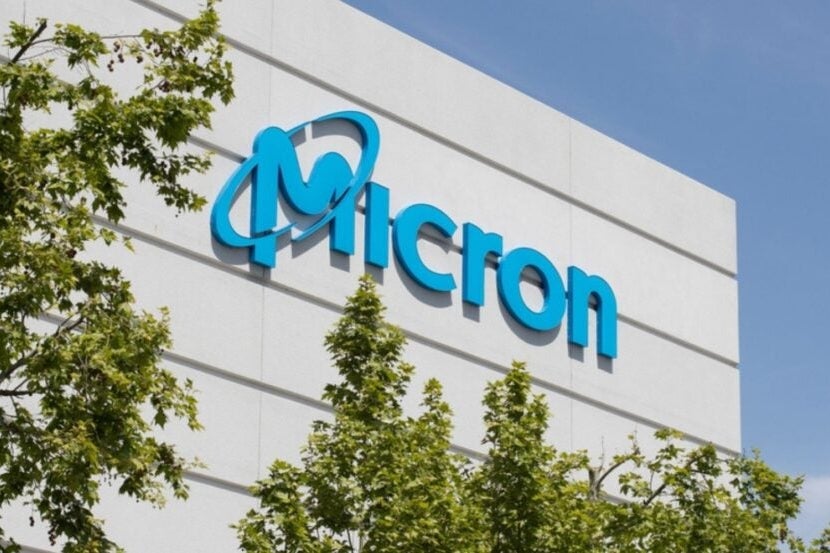
Micron Technologies Signs Strategic Customer Agreements Amid Industry Challenges

- Earnings Surprise: Micron Technologies reported a fivefold year-over-year revenue increase in its latest earnings report, achieving record profitability, which underscores its strong position in the memory chip market despite fierce competition.
- Strategic Customer Agreements: The company signed long-term agreements with 16 customers, covering about 20% of its DRAM and one-third of its NAND volume, ensuring predictable demand and pricing stability over the next three to five years, with a total contract value expected to reach $100 billion.
- Intensifying Industry Competition: SK Hynix and Samsung plan to invest approximately 2,000 trillion won (about $1.3 trillion) in new facilities over the next decade, which could pressure Micron's market share and pricing power, impacting its profitability.
- Cautious Future Outlook: While Micron's management expresses confidence in capital expenditures and R&D investments, the long construction timelines for new facilities suggest that market equilibrium may shift by the end of the decade, posing significant challenges to Micron's earnings cycle.
See More

SK Hynix and Samsung Invest $2 Trillion to Expand Memory Production
- Expansion Investment: SK Hynix and Samsung have pledged over $2 trillion to double memory chip production capacity over the next five years, aiming to address the ongoing shortage and tremendous demand, which could pressure Micron Technology's market share.
- Market Share Comparison: Samsung and SK Hynix control 67% of the global dynamic random-access memory (DRAM) market and 47% of the NAND flash market, while Micron holds only 22% and 13%, making the expansion of these Korean giants a direct threat to Micron.
- Price Pressure Outlook: Analysts are concerned that the new capacity could lead to oversupply, negatively impacting memory prices, especially as Micron relies on high memory prices to drive its earnings growth.
- Long-Term Growth Potential: Despite short-term challenges, the structural growth of the memory market driven by AI, with high-bandwidth memory demand expected to rise at an annual rate of 42%, may provide Micron with sustained growth opportunities, alleviating investor concerns.
See More

Palantir Stock Rebounds Amid AI Software Market Recovery


- Stock Rebound: After significant sell-offs in June, Palantir's stock has rebounded approximately 11% in July, indicating a renewed investor interest in AI software, which may signal a recovery in market confidence.
- Contract Risk: Palantir's contract with the UK's National Health Service (NHS) is set to expire early next year, and the UK Parliament's Science Committee expressed disfavor towards renewal last month, heightening concerns over the $440 million contract's future.
- Investor Dynamics: Notable investor Michael Burry has reduced his short position against Palantir, with news emerging at the end of June, which may have positively influenced the stock's rebound and reflects an improved market sentiment towards the company.
- Analyst Rating Upgrade: DA Davidson upgraded Palantir's rating from neutral to buy on July 2, raising its one-year price target from $165 to $175, indicating analysts' confidence in the company's future growth prospects.
See More

Palantir Stock Rebounds Amid Ongoing Challenges
- Stock Volatility: Palantir experienced significant sell-offs in June, with its stock price declining as investors shifted focus from AI software to hardware, resulting in a drop in its valuation and reflecting weakened market confidence in AI software companies.
- Contract Renewal Risks: The company's contract with the UK's National Health Service (NHS) is set to expire early next year, and the UK Parliament's Science Committee expressed disfavor towards renewal last month, with the contract valued at approximately $440 million, potentially impacting future revenues negatively.
- Investor Sentiment Shift: Despite facing pressures, Palantir's stock rebounded by about 11% in July, partly due to renowned investor Michael Burry reducing his short position against the company, indicating a recovery in market confidence regarding its future prospects.
- Analyst Rating Upgrade: DA Davidson upgraded Palantir's rating from neutral to buy on July 2, raising its one-year price target from $165 to $175 per share, which could further drive stock price increases due to positive analyst coverage.
See More

Fiserv Discusses Sale of Payments Business with Major Banks
- Stock Surge: Fiserv shares rallied over 5% after The Wall Street Journal reported discussions with major banks like JPMorgan and Bank of America regarding the sale of its payments infrastructure business, potentially leading to strategic restructuring and enhanced market competitiveness.
- Acquisition Deal: Vertex Pharmaceuticals announced a $10 billion acquisition of Crinetics Pharmaceuticals to expand its product line in rare hormonal disease treatments, although Vertex shares dipped nearly 1%, this deal is expected to strengthen its market position.
- Stock Upgrade: First Solar's stock rose nearly 3% after Deutsche Bank upgraded its rating from neutral to buy, with analysts citing potential trade policy shifts as a reason for investors to buy the dip, boosting market confidence.
- EV Stock Decline: Rivian shares tumbled 9% despite revenue and delivery guidance exceeding market expectations, as the company announced a plan to sell 75 million new shares for a significant capital raise, negatively impacting investor sentiment.
See More

Memory Market ETF Surges Over 100% in Value
- ETF Performance: Since its launch on April 2, the DRAM – Roundhill Memory ETF has more than doubled in value, currently priced at $64.76 with a daily increase of 6.81%, reflecting strong demand in the memory market and investor confidence.
- Market Dominance: The ETF's holdings are dominated by three major DRAM manufacturers—Micron, SK Hynix, and Samsung—accounting for over 73% of the portfolio, indicating their leading position and strong revenue growth potential in the memory sector.
- Long-Term Contracts: For the first time, the three manufacturers have signed three to five-year contracts for HBM, marking a significant shift from short-term deals, which should help reduce cyclicality and enhance revenue visibility in the industry.
- International Investment Opportunities: The DRAM ETF provides exposure to international memory markets, particularly with companies like SK Hynix and Kioxia, the latter collaborating with Sandisk on high-bandwidth flash development, thereby enhancing the portfolio's diversity and growth potential.
See More
Micron Technologies Signs Strategic Customer Agreements Amid Industry Challenges
- Earnings Surprise: Micron Technologies reported a fivefold year-over-year revenue increase in its latest earnings report, achieving record profitability, which underscores its strong position in the memory chip market despite fierce competition.
- Strategic Customer Agreements: The company signed long-term agreements with 16 customers, covering about 20% of its DRAM and one-third of its NAND volume, ensuring predictable demand and pricing stability over the next three to five years, with a total contract value expected to reach $100 billion.
- Intensifying Industry Competition: SK Hynix and Samsung plan to invest approximately 2,000 trillion won (about $1.3 trillion) in new facilities over the next decade, which could pressure Micron's market share and pricing power, impacting its profitability.
- Cautious Future Outlook: While Micron's management expresses confidence in capital expenditures and R&D investments, the long construction timelines for new facilities suggest that market equilibrium may shift by the end of the decade, posing significant challenges to Micron's earnings cycle.
See More
SK Hynix and Samsung Invest $2 Trillion to Expand Memory Production
- Expansion Investment: SK Hynix and Samsung have pledged over $2 trillion to double memory chip production capacity over the next five years, aiming to address the ongoing shortage and tremendous demand, which could pressure Micron Technology's market share.
- Market Share Comparison: Samsung and SK Hynix control 67% of the global dynamic random-access memory (DRAM) market and 47% of the NAND flash market, while Micron holds only 22% and 13%, making the expansion of these Korean giants a direct threat to Micron.
- Price Pressure Outlook: Analysts are concerned that the new capacity could lead to oversupply, negatively impacting memory prices, especially as Micron relies on high memory prices to drive its earnings growth.
- Long-Term Growth Potential: Despite short-term challenges, the structural growth of the memory market driven by AI, with high-bandwidth memory demand expected to rise at an annual rate of 42%, may provide Micron with sustained growth opportunities, alleviating investor concerns.
See More
Palantir Stock Rebounds Amid AI Software Market Recovery
- Stock Rebound: After significant sell-offs in June, Palantir's stock has rebounded approximately 11% in July, indicating a renewed investor interest in AI software, which may signal a recovery in market confidence.
- Contract Risk: Palantir's contract with the UK's National Health Service (NHS) is set to expire early next year, and the UK Parliament's Science Committee expressed disfavor towards renewal last month, heightening concerns over the $440 million contract's future.
- Investor Dynamics: Notable investor Michael Burry has reduced his short position against Palantir, with news emerging at the end of June, which may have positively influenced the stock's rebound and reflects an improved market sentiment towards the company.
- Analyst Rating Upgrade: DA Davidson upgraded Palantir's rating from neutral to buy on July 2, raising its one-year price target from $165 to $175, indicating analysts' confidence in the company's future growth prospects.
See More
Palantir Stock Rebounds Amid Ongoing Challenges
- Stock Volatility: Palantir experienced significant sell-offs in June, with its stock price declining as investors shifted focus from AI software to hardware, resulting in a drop in its valuation and reflecting weakened market confidence in AI software companies.
- Contract Renewal Risks: The company's contract with the UK's National Health Service (NHS) is set to expire early next year, and the UK Parliament's Science Committee expressed disfavor towards renewal last month, with the contract valued at approximately $440 million, potentially impacting future revenues negatively.
- Investor Sentiment Shift: Despite facing pressures, Palantir's stock rebounded by about 11% in July, partly due to renowned investor Michael Burry reducing his short position against the company, indicating a recovery in market confidence regarding its future prospects.
- Analyst Rating Upgrade: DA Davidson upgraded Palantir's rating from neutral to buy on July 2, raising its one-year price target from $165 to $175 per share, which could further drive stock price increases due to positive analyst coverage.
See More
Fiserv Discusses Sale of Payments Business with Major Banks
- Stock Surge: Fiserv shares rallied over 5% after The Wall Street Journal reported discussions with major banks like JPMorgan and Bank of America regarding the sale of its payments infrastructure business, potentially leading to strategic restructuring and enhanced market competitiveness.
- Acquisition Deal: Vertex Pharmaceuticals announced a $10 billion acquisition of Crinetics Pharmaceuticals to expand its product line in rare hormonal disease treatments, although Vertex shares dipped nearly 1%, this deal is expected to strengthen its market position.
- Stock Upgrade: First Solar's stock rose nearly 3% after Deutsche Bank upgraded its rating from neutral to buy, with analysts citing potential trade policy shifts as a reason for investors to buy the dip, boosting market confidence.
- EV Stock Decline: Rivian shares tumbled 9% despite revenue and delivery guidance exceeding market expectations, as the company announced a plan to sell 75 million new shares for a significant capital raise, negatively impacting investor sentiment.
See More
Memory Market ETF Surges Over 100% in Value
- ETF Performance: Since its launch on April 2, the DRAM – Roundhill Memory ETF has more than doubled in value, currently priced at $64.76 with a daily increase of 6.81%, reflecting strong demand in the memory market and investor confidence.
- Market Dominance: The ETF's holdings are dominated by three major DRAM manufacturers—Micron, SK Hynix, and Samsung—accounting for over 73% of the portfolio, indicating their leading position and strong revenue growth potential in the memory sector.
- Long-Term Contracts: For the first time, the three manufacturers have signed three to five-year contracts for HBM, marking a significant shift from short-term deals, which should help reduce cyclicality and enhance revenue visibility in the industry.
- International Investment Opportunities: The DRAM ETF provides exposure to international memory markets, particularly with companies like SK Hynix and Kioxia, the latter collaborating with Sandisk on high-bandwidth flash development, thereby enhancing the portfolio's diversity and growth potential.
See More





