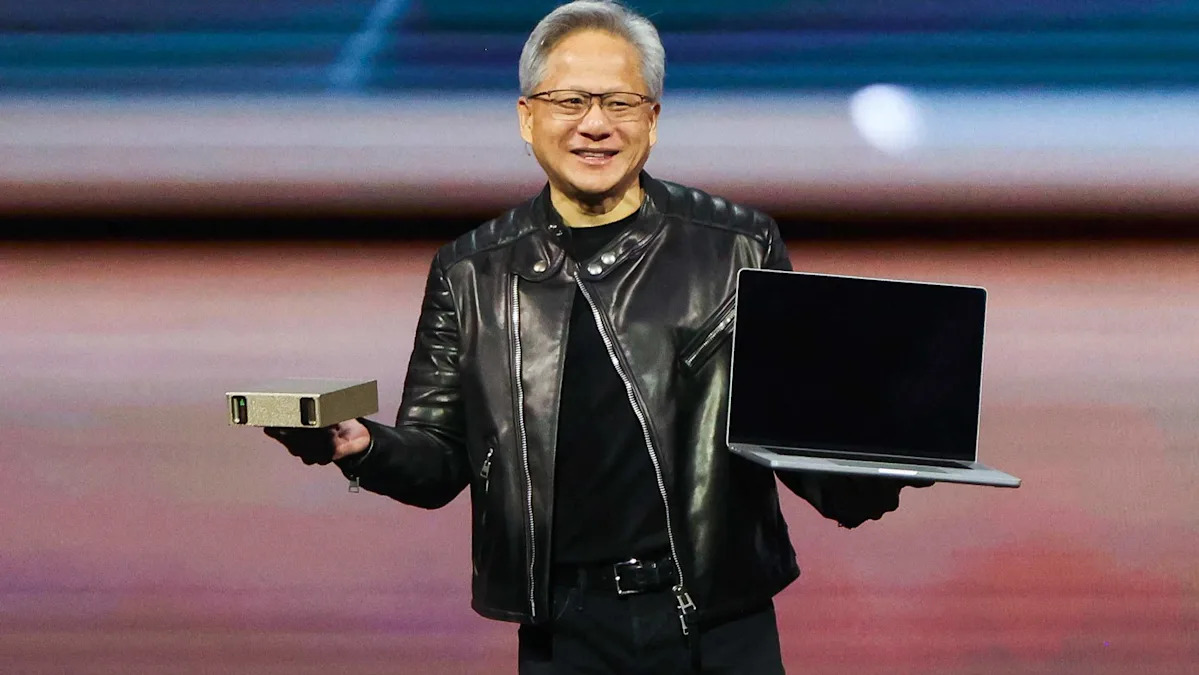
Nvidia Resumes H200 Chip Production for China Market
Written by Emily J. Thompson, Senior Investment Analyst
Updated: 1 day ago
0mins
Should l Buy NVDA?
Source: NASDAQ.COM
- Market Resumption: After nearly a year of negotiations, Nvidia has officially restarted production of its H200 chips, which is expected to unlock over $50 billion in opportunities in the Chinese market, significantly enhancing the company's competitiveness in the global AI chip sector.
- Increased Sales Orders: CEO Jensen Huang announced at the GTC conference that Nvidia has received purchase orders from multiple customers in China, indicating that the company's supply chain is getting back on track, with future sales poised for substantial growth.
- New Product Development: Nvidia is developing a revised version of its Groq AI inference accelerator for Chinese customers, leveraging the $20 billion acquisition of inference chip assets last year, which will bolster its competitive edge in AI inference applications.
- Optimistic Financial Outlook: Analysts project Nvidia's revenue to reach $368 billion over the next year, a 70% increase from last year, and successful sales in China could further elevate this forecast, reflecting the company's robust growth potential.
Trade with 70% Backtested Accuracy
Stop guessing "Should I Buy NVDA?" and start using high-conviction signals backed by rigorous historical data.
Sign up today to access powerful investing tools and make smarter, data-driven decisions.
Analyst Views on NVDA
Wall Street analysts forecast NVDA stock price to rise
41 Analyst Rating
39 Buy
1 Hold
1 Sell
Strong Buy
Current: 180.400

Low
200.00
Averages
264.97
High
352.00
Current: 180.400
Low
200.00
Averages
264.97
High
352.00
About NVDA
NVIDIA Corporation is a full-stack computing infrastructure company. The Company is engaged in accelerated computing to help solve the challenging computational problems. The Company’s segments include Compute & Networking and Graphics. The Compute & Networking segment includes its Data Center accelerated computing platforms and artificial intelligence (AI) solutions and software; networking; automotive platforms and autonomous and electric vehicle solutions; Jetson for robotics and other embedded platforms, and DGX Cloud computing services. The Graphics segment includes GeForce GPUs for gaming and PCs, the GeForce NOW game streaming service and related infrastructure, and solutions for gaming platforms; Quadro/NVIDIA RTX GPUs for enterprise workstation graphics; virtual GPU software for cloud-based visual and virtual computing; automotive platforms for infotainment systems, and Omniverse Enterprise software for building and operating industrial AI and digital twin applications.
About the author

Emily J. Thompson
Emily J. Thompson, a Chartered Financial Analyst (CFA) with 12 years in investment research, graduated with honors from the Wharton School. Specializing in industrial and technology stocks, she provides in-depth analysis for Intellectia’s earnings and market brief reports.

Nvidia's Future Growth Potential Analysis

- Technological Innovation: Nvidia's new Rubin GPU architecture reduces inference token costs by 10 times and requires four times fewer GPUs for AI training, which is expected to drive revenue growth and solidify its market dominance.
- Market Demand: Despite not including sales to China in its Q1 guidance, Nvidia achieved a 73% revenue growth in Q1 FY 2026, with a projected 77% growth for Q2, indicating strong demand for its products.
- Data Center Investment: The big four AI hyperscalers are projected to spend around $650 billion on AI data centers, while Nvidia anticipates global data center capital expenditures reaching $3 trillion to $4 trillion by 2030, signaling significant future market opportunities.
- Stock Valuation: Although Nvidia's stock trades at a forward P/E of 21.8, slightly above the S&P 500's 21.2, the market remains optimistic about its growth prospects, suggesting that investors should seize the current buying opportunity.
See More
Nvidia's Next-Gen AI Chips Set to Drive Revenue Surge
- Strong Market Demand: Nvidia's GPUs dominate the data center market, with current demand significantly outstripping supply, driving substantial revenue and earnings growth, with total revenue expected to reach $367.7 billion in fiscal 2027, reflecting a 70% growth rate.
- Architectural Advantages: The next-generation AI chips based on the Vera Rubin architecture are set to ship in the second half of the year, offering substantial improvements in performance and cost compared to the existing Blackwell architecture, with a projected 75% reduction in GPUs needed per AI training workload.
- Cost Reduction Effects: The Vera Rubin platform is expected to lower inference token costs by up to 90%, making AI usage more affordable and promoting wider adoption, while also improving profit margins for AI companies, enhancing their capacity for infrastructure investment.
- Significant Stock Potential: Analysts predict Nvidia's stock could rise by 120% to 269% over the next two years, potentially valuing the company between $9.6 trillion and $16.2 trillion, indicating a robust market outlook and investment appeal.
See More
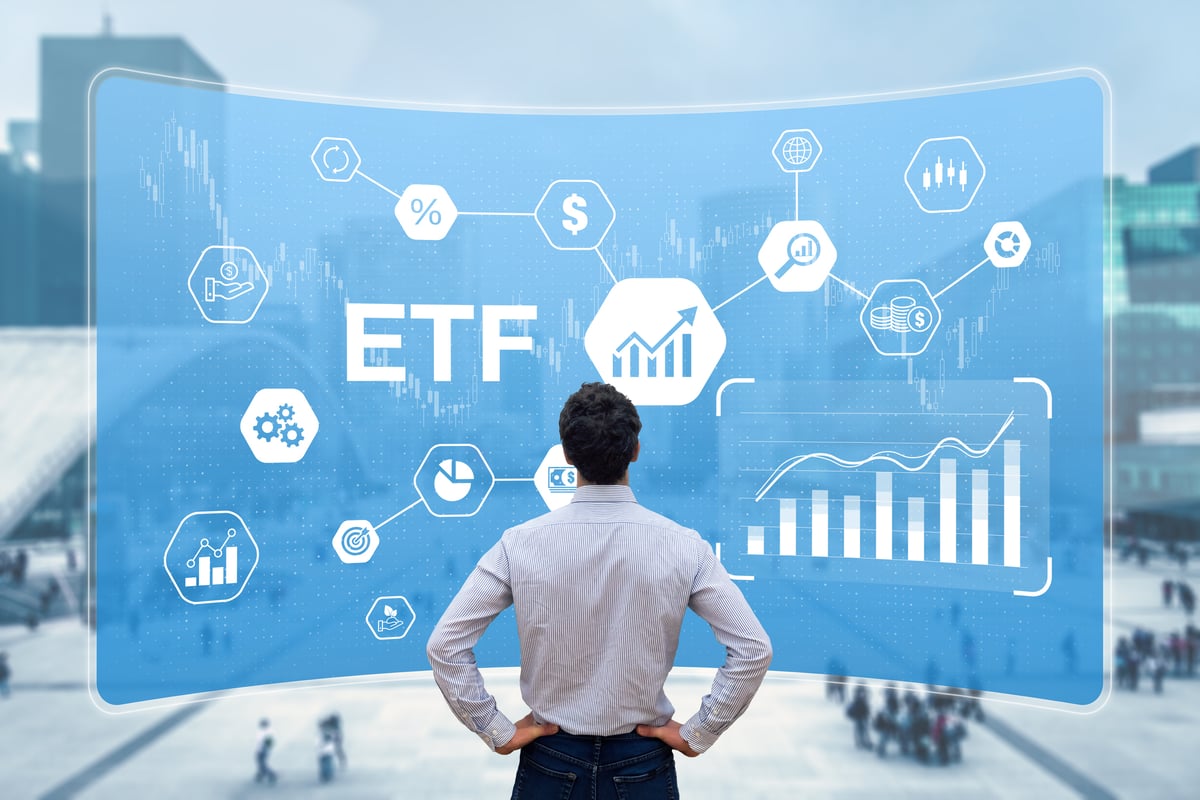
Analysis of Invesco Equal Weight ETF Market Performance
- Underperformance: The Invesco S&P 500 Equal Weight ETF has lagged behind traditional S&P 500 index funds, raising concerns about its slightly higher expense ratio and diminishing its appeal to investors.
- Impact of Market Volatility: The performance of the Invesco ETF is negatively affected when large-cap tech stocks like Nvidia dominate the market, as the ETF's rebalancing keeps its stake in such stocks low, preventing it from capitalizing on their gains.
- Rebalancing Strategy Advantage: In volatile market conditions, the equal-weight ETF's strategy of selling short-term winners and reallocating to underperformers can yield better returns during market recoveries, enhancing the effectiveness of its investment approach.
- Diversification Value: Despite its underwhelming performance, the Invesco ETF still offers valuable diversification in a portfolio heavily weighted towards tech stocks, and it is likely to see larger gains if a tech sector pullback occurs.
See More

Invesco ETF Underperforms Amid Market Dynamics
- Underperformance: The Invesco S&P 500 Equal Weight ETF, designed to capitalize on potentially superior returns from smaller companies, has underperformed the S&P 500 index, highlighting its disadvantage amid strong performances from large-cap stocks.
- Weighting Disparity Impact: With Nvidia representing over 7% of the S&P 500 but only 0.2% of the Invesco ETF, the ETF has missed out on gains from large tech stocks like Nvidia, limiting its overall returns.
- Market Condition Adaptability: Equal-weight ETFs tend to perform better in volatile market conditions, yet the current strong performance of tech stocks continues to place the Invesco ETF at a relative disadvantage, necessitating investor awareness of market dynamics.
- Investment Strategy Consideration: Although the Invesco ETF has not met performance expectations, it still plays a crucial role in diversifying investment portfolios, particularly in an environment heavily weighted towards technology stocks, offering a more cautious investment approach.
See More

Meta Begins Rollout of AI Content Enforcement Systems


- AI System Deployment: Meta is initiating a multi-year rollout of advanced AI systems aimed at handling content enforcement tasks, thereby reducing reliance on third-party vendors and enhancing operational efficiency while cutting costs.
- Content Review Optimization: The new systems will focus on repetitive content reviews, particularly in managing graphic content and adapting to evolving illicit activities, which is expected to improve the accuracy of violation detection and reduce over-enforcement errors.
- Human-AI Collaboration: While AI will take on more review responsibilities, Meta will retain human reviewers for complex decisions, ensuring high-impact judgments in law enforcement and account disablement cases, highlighting the strategic value of human oversight.
- Digital Assistant Launch: Meta has also introduced a new digital support assistant that users can access via Facebook and Instagram to address various account-related issues, further enhancing user experience and strengthening the platform's service capabilities.
See More

US Stocks Decline Amid Surge in Energy Prices


- Market Decline: The S&P 500 index fell by 0.66%, the Dow Jones Industrial Average by 0.57%, and the Nasdaq 100 by 0.80%, all reaching 3.75-month lows, indicating market concerns over inflation and economic slowdown due to the Middle East conflict.
- Surge in Energy Prices: European natural gas prices surged over 24% to a three-year high after Qatar reported extensive damage at its largest gas export facility, exacerbating fears of supply disruptions that could further elevate global inflation.
- Rising Bond Yields: The 10-year Treasury note yield jumped to a 6.75-month high of 4.32% as stronger-than-expected US economic data indicated labor market resilience, increasing expectations for future rate hikes and adding pressure on the stock market.
- International Market Weakness: Overseas stock markets fell sharply, with the Euro Stoxx 50 hitting a 1.5-week low and China's Shanghai Composite dropping to a 2.5-month low, reflecting heightened risks of global economic slowdown impacting investor sentiment.
See More
Nvidia's Future Growth Potential Analysis
- Technological Innovation: Nvidia's new Rubin GPU architecture reduces inference token costs by 10 times and requires four times fewer GPUs for AI training, which is expected to drive revenue growth and solidify its market dominance.
- Market Demand: Despite not including sales to China in its Q1 guidance, Nvidia achieved a 73% revenue growth in Q1 FY 2026, with a projected 77% growth for Q2, indicating strong demand for its products.
- Data Center Investment: The big four AI hyperscalers are projected to spend around $650 billion on AI data centers, while Nvidia anticipates global data center capital expenditures reaching $3 trillion to $4 trillion by 2030, signaling significant future market opportunities.
- Stock Valuation: Although Nvidia's stock trades at a forward P/E of 21.8, slightly above the S&P 500's 21.2, the market remains optimistic about its growth prospects, suggesting that investors should seize the current buying opportunity.
See More
Nvidia's Next-Gen AI Chips Set to Drive Revenue Surge
- Strong Market Demand: Nvidia's GPUs dominate the data center market, with current demand significantly outstripping supply, driving substantial revenue and earnings growth, with total revenue expected to reach $367.7 billion in fiscal 2027, reflecting a 70% growth rate.
- Architectural Advantages: The next-generation AI chips based on the Vera Rubin architecture are set to ship in the second half of the year, offering substantial improvements in performance and cost compared to the existing Blackwell architecture, with a projected 75% reduction in GPUs needed per AI training workload.
- Cost Reduction Effects: The Vera Rubin platform is expected to lower inference token costs by up to 90%, making AI usage more affordable and promoting wider adoption, while also improving profit margins for AI companies, enhancing their capacity for infrastructure investment.
- Significant Stock Potential: Analysts predict Nvidia's stock could rise by 120% to 269% over the next two years, potentially valuing the company between $9.6 trillion and $16.2 trillion, indicating a robust market outlook and investment appeal.
See More
Analysis of Invesco Equal Weight ETF Market Performance
- Underperformance: The Invesco S&P 500 Equal Weight ETF has lagged behind traditional S&P 500 index funds, raising concerns about its slightly higher expense ratio and diminishing its appeal to investors.
- Impact of Market Volatility: The performance of the Invesco ETF is negatively affected when large-cap tech stocks like Nvidia dominate the market, as the ETF's rebalancing keeps its stake in such stocks low, preventing it from capitalizing on their gains.
- Rebalancing Strategy Advantage: In volatile market conditions, the equal-weight ETF's strategy of selling short-term winners and reallocating to underperformers can yield better returns during market recoveries, enhancing the effectiveness of its investment approach.
- Diversification Value: Despite its underwhelming performance, the Invesco ETF still offers valuable diversification in a portfolio heavily weighted towards tech stocks, and it is likely to see larger gains if a tech sector pullback occurs.
See More
Invesco ETF Underperforms Amid Market Dynamics
- Underperformance: The Invesco S&P 500 Equal Weight ETF, designed to capitalize on potentially superior returns from smaller companies, has underperformed the S&P 500 index, highlighting its disadvantage amid strong performances from large-cap stocks.
- Weighting Disparity Impact: With Nvidia representing over 7% of the S&P 500 but only 0.2% of the Invesco ETF, the ETF has missed out on gains from large tech stocks like Nvidia, limiting its overall returns.
- Market Condition Adaptability: Equal-weight ETFs tend to perform better in volatile market conditions, yet the current strong performance of tech stocks continues to place the Invesco ETF at a relative disadvantage, necessitating investor awareness of market dynamics.
- Investment Strategy Consideration: Although the Invesco ETF has not met performance expectations, it still plays a crucial role in diversifying investment portfolios, particularly in an environment heavily weighted towards technology stocks, offering a more cautious investment approach.
See More
Meta Begins Rollout of AI Content Enforcement Systems
- AI System Deployment: Meta is initiating a multi-year rollout of advanced AI systems aimed at handling content enforcement tasks, thereby reducing reliance on third-party vendors and enhancing operational efficiency while cutting costs.
- Content Review Optimization: The new systems will focus on repetitive content reviews, particularly in managing graphic content and adapting to evolving illicit activities, which is expected to improve the accuracy of violation detection and reduce over-enforcement errors.
- Human-AI Collaboration: While AI will take on more review responsibilities, Meta will retain human reviewers for complex decisions, ensuring high-impact judgments in law enforcement and account disablement cases, highlighting the strategic value of human oversight.
- Digital Assistant Launch: Meta has also introduced a new digital support assistant that users can access via Facebook and Instagram to address various account-related issues, further enhancing user experience and strengthening the platform's service capabilities.
See More
US Stocks Decline Amid Surge in Energy Prices
- Market Decline: The S&P 500 index fell by 0.66%, the Dow Jones Industrial Average by 0.57%, and the Nasdaq 100 by 0.80%, all reaching 3.75-month lows, indicating market concerns over inflation and economic slowdown due to the Middle East conflict.
- Surge in Energy Prices: European natural gas prices surged over 24% to a three-year high after Qatar reported extensive damage at its largest gas export facility, exacerbating fears of supply disruptions that could further elevate global inflation.
- Rising Bond Yields: The 10-year Treasury note yield jumped to a 6.75-month high of 4.32% as stronger-than-expected US economic data indicated labor market resilience, increasing expectations for future rate hikes and adding pressure on the stock market.
- International Market Weakness: Overseas stock markets fell sharply, with the Euro Stoxx 50 hitting a 1.5-week low and China's Shanghai Composite dropping to a 2.5-month low, reflecting heightened risks of global economic slowdown impacting investor sentiment.
See More