NVIDIA & Microsoft Unlock RTX Neural Shaders For Next-Gen Graphics: Details
Written by Emily J. Thompson, Senior Investment Analyst
Updated: Mar 13 2025
0mins


Source: Benzinga
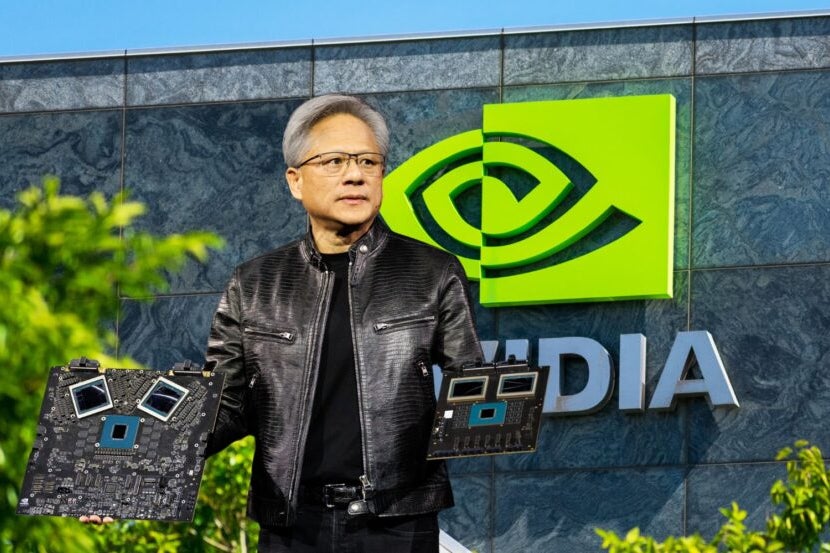
NVIDIA and Microsoft Collaboration: NVIDIA has partnered with Microsoft to introduce neural shading support in the upcoming Microsoft DirectX preview, enhancing graphics programming by integrating AI with traditional rendering techniques, which improves frame rates and image quality while reducing resource consumption.
Upgrades to NVIDIA RTX Kit: NVIDIA announced significant upgrades to its RTX Kit for game developers, including support for Unreal Engine 5 and enhancements for RTX Mega Geometry and RTX Hair features, aimed at providing richer gaming experiences.
Trade with 70% Backtested Accuracy
Stop guessing "Should I Buy NVDA?" and start using high-conviction signals backed by rigorous historical data.
Sign up today to access powerful investing tools and make smarter, data-driven decisions.
Analyst Views on NVDA
Wall Street analysts forecast NVDA stock price to rise
41 Analyst Rating
39 Buy
1 Hold
1 Sell
Strong Buy
Current: 197.580

Low
200.00
Averages
264.97
High
352.00
Current: 197.580
Low
200.00
Averages
264.97
High
352.00
About NVDA
NVIDIA Corporation is an artificial intelligence (AI) infrastructure company. The Company is engaged in accelerated computing to help solve the challenging computational problems. Its segments include Compute & Networking and Graphics. The Compute & Networking segment includes its Data Center accelerated computing and networking platforms and AI solutions and software, and automotive platforms and autonomous and electric vehicle solutions, including software. The Graphics segment includes GeForce GPUs for gaming and personal computers (PCs), and Quadro/NVIDIA RTX GPUs for enterprise workstation graphics. Its technology stack includes the foundational NVIDIA CUDA development platform that runs on all NVIDIA GPUs, as well as hundreds of domain-specific software libraries, frameworks, algorithms, software development kits (SDKs), and application programming interfaces (APIs). Its platforms address four markets, which include Data Center, Gaming, Professional Visualization, and Automotive.
About the author

Emily J. Thompson
Emily J. Thompson, a Chartered Financial Analyst (CFA) with 12 years in investment research, graduated with honors from the Wharton School. Specializing in industrial and technology stocks, she provides in-depth analysis for Intellectia’s earnings and market brief reports.
Foxconn Reports 39.8% Revenue Growth in Q2 Driven by AI Demand

- Significant Revenue Growth: Foxconn reported second-quarter revenue of T$2.513 trillion (approximately $78.71 billion), marking a 39.8% year-on-year increase that surpassed market expectations, indicating strong demand for AI products.
- AI Product Boost: The cloud and networking products division experienced robust growth driven by AI demand, while smart consumer electronics, including iPhones, also showed 'significant' growth, further solidifying the company's market position.
- Record June Performance: Foxconn's revenue in June alone rose 52.1% year-on-year to T$821.8 billion, setting a record for that month and reflecting strong market demand for its products.
- Cautious Future Outlook: Although the company anticipates continued revenue growth in the third quarter, it emphasizes the need to monitor the impact of volatile global political and economic conditions on its business, highlighting uncertainty in future markets.
See More

Dow Jones Index Gains 8.9% in First Half of 2026
- Strong Dow Performance: The Dow Jones Industrial Average gained 8.9% in the first half of 2026, marking its best performance since 2021, indicating a robust recovery in the U.S. stock market that may attract more investor interest.
- ETF Investment Opportunity: The SPDR Dow Jones Industrial Average ETF (DIA) offers exposure to these 30 blue-chip stocks, boasting an annualized return of 22.5% over the past year, while maintaining a low expense ratio of 0.16%, though investors should be cautious of its concentration risk.
- Market Comparison Analysis: Compared to the S&P 500 and Nasdaq-100, DIA's portfolio is concentrated in 30 stocks, lacking diversification, which could expose investors to greater risks during market volatility, especially given the strong performance of tech stocks.
- Cautious Investment Advice: While the Dow is often viewed as a barometer of the U.S. stock market, analysts suggest that investors should consider a broader portfolio when selecting ETFs, particularly those with greater long-term growth potential, as DIA is not recommended as the best choice.
See More

Market Sees Best Quarter in Six Years


- Market Performance: The S&P 500 rose 14% and the Nasdaq-100 surged 26%, indicating a robust market recovery driven by advancements in artificial intelligence, which could attract more capital inflows and bolster investor confidence.
- Axon Enterprise Growth: In Q1 2026, Axon reported a 34% year-over-year revenue increase, with SaaS revenue up 35%, reflecting strong demand for its products in U.S. law enforcement, which is expected to further enhance profitability.
- Dutch Bros Expansion Plans: Dutch Bros aims to increase its store count from 1,000 to 2,029 by 2029, which could significantly boost revenue, while same-store sales grew 8.4% in Q1, showcasing its strong performance in a competitive coffee market.
- MercadoLibre Sustained Growth: MercadoLibre achieved a 49% year-over-year revenue increase in Q1 2026, with total payment volume rising 50%, underscoring its dominant position in Latin America's e-commerce and fintech sectors, indicating substantial future growth potential.
See More

Impact of SoFi's Bank Charter Transformation

- Business Transformation: SoFi's acquisition of a national bank charter in 2022 fundamentally changed its funding model, shifting from reliance on expensive securitized debt to more cost-effective deposit funding, significantly enhancing the company's financial flexibility.
- Deposit Growth: As of Q1 2026, SoFi's total deposits reached $40.2 billion, a dramatic increase from $1.2 billion four years prior, indicating strong demand for its tech-enabled platform and bolstering the company's competitive position in the market.
- Surge in Net Interest Income: In 2025, SoFi's net interest income skyrocketed from $252 million in 2021 to over $2.2 billion, a staggering 781% increase, supported by deposits constituting 94% of total liabilities, providing a stable revenue stream for the company.
- Future Outlook: Management anticipates adjusted earnings per share to grow at a compound annual rate of 40% over the next three years, suggesting that with the backing of its national bank charter, SoFi is poised for sustainable profit growth, attracting the attention of long-term investors.
See More

Vanguard Research Bullish on U.S. Economic Outlook
- GDP Growth Forecast: Vanguard's research projects a 3% growth in U.S. GDP by 2027, which is likely to positively impact U.S. stocks, especially with core inflation expected to drop to 2.7%, potentially boosting bond prices.
- Value Stock Investment Opportunity: The research highlights that U.S. value stocks could be a good investment, as these companies stand to benefit from AI productivity gains without incurring the upfront costs associated with AI data centers and capital expenditures.
- Vanguard U.S. Value Factor ETF Performance: The Vanguard U.S. Value Factor ETF (VFVA) holds 649 stocks and achieved a 28.1% return over the past year, showcasing its competitive edge with significant sector diversification in financials, consumer discretionary, and healthcare.
- Bond Market Outlook: The Vanguard Total Bond Market ETF (BND) has delivered an average annual return of 3.1% since its inception in 2007, and although it only returned 0.1% over the past five years, a potential decline in inflation and interest rates could improve future investment prospects.
See More

Investment Analysis of Vanguard Total Stock Market ETF
- Return on Investment: The Vanguard Total Stock Market ETF has delivered an average annual return of 15.1% over the past decade, allowing investors who contribute $500 monthly to potentially grow their investment to $621,995 after 20 years, highlighting the value of long-term investing.
- Diversified Portfolio: This ETF includes 3,484 U.S. stocks across large, mid, and small-cap companies, providing broader market exposure than the S&P 500, which reduces individual stock risk and enhances investor security.
- Long-Term Performance Expectations: While the past decade has shown exceptional returns, the ETF's annualized return since its inception in 2001 is 9.53%, prompting investors to approach future return expectations with caution to avoid overly optimistic investment decisions.
- Investment Strategy Recommendation: Although the Vanguard Total Stock Market ETF is not currently recommended by some analysts as a top investment choice, its low cost and extensive market coverage still make it an effective tool for long-term investors looking to build wealth, aligning with a prudent investment strategy.
See More
Foxconn Reports 39.8% Revenue Growth in Q2 Driven by AI Demand
- Significant Revenue Growth: Foxconn reported second-quarter revenue of T$2.513 trillion (approximately $78.71 billion), marking a 39.8% year-on-year increase that surpassed market expectations, indicating strong demand for AI products.
- AI Product Boost: The cloud and networking products division experienced robust growth driven by AI demand, while smart consumer electronics, including iPhones, also showed 'significant' growth, further solidifying the company's market position.
- Record June Performance: Foxconn's revenue in June alone rose 52.1% year-on-year to T$821.8 billion, setting a record for that month and reflecting strong market demand for its products.
- Cautious Future Outlook: Although the company anticipates continued revenue growth in the third quarter, it emphasizes the need to monitor the impact of volatile global political and economic conditions on its business, highlighting uncertainty in future markets.
See More
Dow Jones Index Gains 8.9% in First Half of 2026
- Strong Dow Performance: The Dow Jones Industrial Average gained 8.9% in the first half of 2026, marking its best performance since 2021, indicating a robust recovery in the U.S. stock market that may attract more investor interest.
- ETF Investment Opportunity: The SPDR Dow Jones Industrial Average ETF (DIA) offers exposure to these 30 blue-chip stocks, boasting an annualized return of 22.5% over the past year, while maintaining a low expense ratio of 0.16%, though investors should be cautious of its concentration risk.
- Market Comparison Analysis: Compared to the S&P 500 and Nasdaq-100, DIA's portfolio is concentrated in 30 stocks, lacking diversification, which could expose investors to greater risks during market volatility, especially given the strong performance of tech stocks.
- Cautious Investment Advice: While the Dow is often viewed as a barometer of the U.S. stock market, analysts suggest that investors should consider a broader portfolio when selecting ETFs, particularly those with greater long-term growth potential, as DIA is not recommended as the best choice.
See More
Market Sees Best Quarter in Six Years
- Market Performance: The S&P 500 rose 14% and the Nasdaq-100 surged 26%, indicating a robust market recovery driven by advancements in artificial intelligence, which could attract more capital inflows and bolster investor confidence.
- Axon Enterprise Growth: In Q1 2026, Axon reported a 34% year-over-year revenue increase, with SaaS revenue up 35%, reflecting strong demand for its products in U.S. law enforcement, which is expected to further enhance profitability.
- Dutch Bros Expansion Plans: Dutch Bros aims to increase its store count from 1,000 to 2,029 by 2029, which could significantly boost revenue, while same-store sales grew 8.4% in Q1, showcasing its strong performance in a competitive coffee market.
- MercadoLibre Sustained Growth: MercadoLibre achieved a 49% year-over-year revenue increase in Q1 2026, with total payment volume rising 50%, underscoring its dominant position in Latin America's e-commerce and fintech sectors, indicating substantial future growth potential.
See More
Impact of SoFi's Bank Charter Transformation
- Business Transformation: SoFi's acquisition of a national bank charter in 2022 fundamentally changed its funding model, shifting from reliance on expensive securitized debt to more cost-effective deposit funding, significantly enhancing the company's financial flexibility.
- Deposit Growth: As of Q1 2026, SoFi's total deposits reached $40.2 billion, a dramatic increase from $1.2 billion four years prior, indicating strong demand for its tech-enabled platform and bolstering the company's competitive position in the market.
- Surge in Net Interest Income: In 2025, SoFi's net interest income skyrocketed from $252 million in 2021 to over $2.2 billion, a staggering 781% increase, supported by deposits constituting 94% of total liabilities, providing a stable revenue stream for the company.
- Future Outlook: Management anticipates adjusted earnings per share to grow at a compound annual rate of 40% over the next three years, suggesting that with the backing of its national bank charter, SoFi is poised for sustainable profit growth, attracting the attention of long-term investors.
See More
Vanguard Research Bullish on U.S. Economic Outlook
- GDP Growth Forecast: Vanguard's research projects a 3% growth in U.S. GDP by 2027, which is likely to positively impact U.S. stocks, especially with core inflation expected to drop to 2.7%, potentially boosting bond prices.
- Value Stock Investment Opportunity: The research highlights that U.S. value stocks could be a good investment, as these companies stand to benefit from AI productivity gains without incurring the upfront costs associated with AI data centers and capital expenditures.
- Vanguard U.S. Value Factor ETF Performance: The Vanguard U.S. Value Factor ETF (VFVA) holds 649 stocks and achieved a 28.1% return over the past year, showcasing its competitive edge with significant sector diversification in financials, consumer discretionary, and healthcare.
- Bond Market Outlook: The Vanguard Total Bond Market ETF (BND) has delivered an average annual return of 3.1% since its inception in 2007, and although it only returned 0.1% over the past five years, a potential decline in inflation and interest rates could improve future investment prospects.
See More
Investment Analysis of Vanguard Total Stock Market ETF
- Return on Investment: The Vanguard Total Stock Market ETF has delivered an average annual return of 15.1% over the past decade, allowing investors who contribute $500 monthly to potentially grow their investment to $621,995 after 20 years, highlighting the value of long-term investing.
- Diversified Portfolio: This ETF includes 3,484 U.S. stocks across large, mid, and small-cap companies, providing broader market exposure than the S&P 500, which reduces individual stock risk and enhances investor security.
- Long-Term Performance Expectations: While the past decade has shown exceptional returns, the ETF's annualized return since its inception in 2001 is 9.53%, prompting investors to approach future return expectations with caution to avoid overly optimistic investment decisions.
- Investment Strategy Recommendation: Although the Vanguard Total Stock Market ETF is not currently recommended by some analysts as a top investment choice, its low cost and extensive market coverage still make it an effective tool for long-term investors looking to build wealth, aligning with a prudent investment strategy.
See More