Novelis Restarts Production at Key New York Facility for Ford
Written by Emily J. Thompson, Senior Investment Analyst
Updated: Jun 10 2026
0mins
Source: Newsfilter
- Production Resumption: Novelis announced on Wednesday that it has restarted operations at its Oswego, New York facility, which is critical for Ford's F-150 pickup line, after months of downtime due to two fires, helping to alleviate pressure on Ford's lowered 2025 profit forecast caused by aluminum supply bottlenecks.
- Customer Collaboration: Novelis stated it is working closely with customers to ramp up supply, particularly Ford, which is a major consumer as its F-series trucks predominantly use aluminum bodies, meaning the resumption of production will directly impact Ford's production capacity and market supply.
- Financial Impact: The supply bottlenecks caused by the fires have led Ford to flag charges of up to $2 billion, while Novelis reported a loss of approximately $437 million in the fourth quarter, highlighting the vulnerability of the aluminum supply chain and its significant impact on automakers.
- Global Production Adjustments: During the downtime of the New York plant, Novelis relied on its facilities in South Korea and Europe to compensate for production losses, a strategy that alleviated short-term pressures but also underscored the complexity of global supply chains and the degree of reliance on a single facility.
Trade with 70% Backtested Accuracy
Stop guessing "Should I Buy F?" and start using high-conviction signals backed by rigorous historical data.
Sign up today to access powerful investing tools and make smarter, data-driven decisions.
Analyst Views on F
Wall Street analysts forecast F stock price to fall
14 Analyst Rating
3 Buy
10 Hold
1 Sell
Hold
Current: 13.960

Low
11.00
Averages
13.65
High
16.00
Current: 13.960
Low
11.00
Averages
13.65
High
16.00
About F
Ford Motor Company develops and delivers Ford trucks, sport utility vehicles, commercial vans and cars, and Lincoln luxury vehicles, along with connected services, including BlueCruise (ADAS) and security. The Company's segments include Ford Blue, Ford Model e, Ford Pro, and Ford Credit. The Ford Blue segment primarily includes the sale of Ford and Lincoln internal combustion engine (ICE) and hybrid vehicles, service parts, accessories, and digital services for retail customers. The Ford Model e segment primarily includes the sale of its electric vehicles, service parts, accessories, and digital services for retail customers. The Ford Pro segment primarily includes the sale of Ford and Lincoln vehicles, service parts, accessories, and services for commercial, government, and rental customers. The Ford Credit segment consists of the Ford Credit business on a consolidated basis, which is primarily vehicle-related financing and leasing activities. Its vehicle brands are Ford and Lincoln.
About the author

Emily J. Thompson
Emily J. Thompson, a Chartered Financial Analyst (CFA) with 12 years in investment research, graduated with honors from the Wharton School. Specializing in industrial and technology stocks, she provides in-depth analysis for Intellectia’s earnings and market brief reports.

Ford Faces $2 Billion Loss Due to Aluminum Supply Disruption
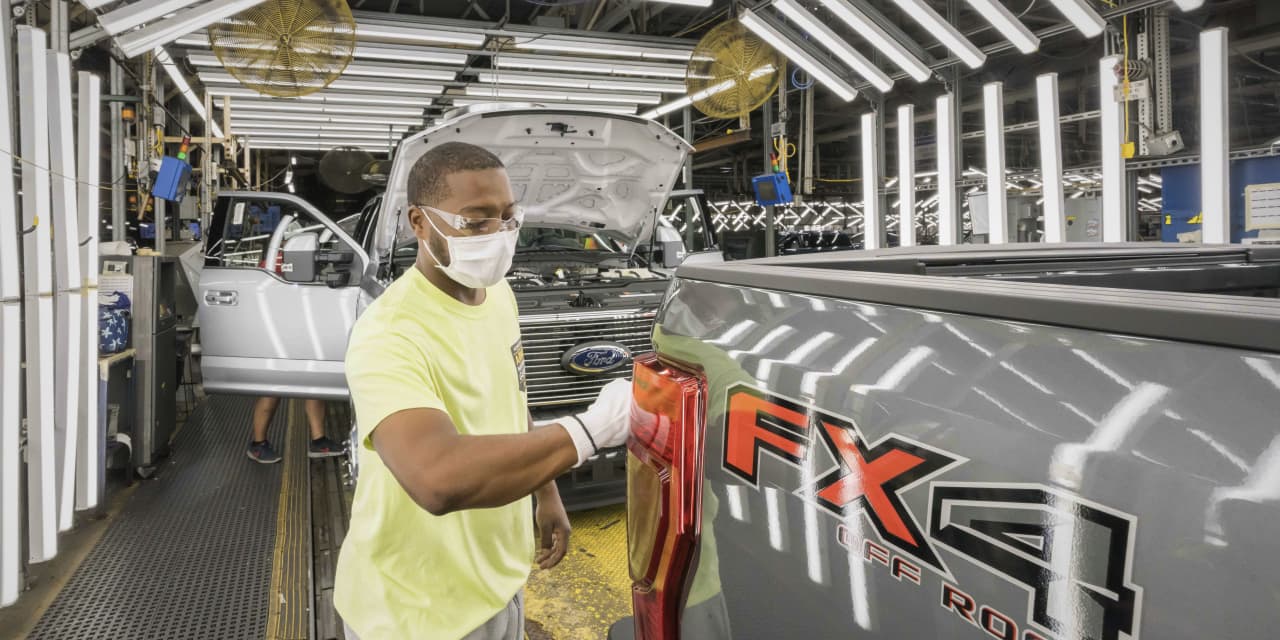
- Aluminum Supply Disruption: Ford's inventory of F-Series trucks has been severely impacted due to two fires at Novelis' aluminum production facility in New York, leading to an estimated loss of up to $2 billion and forcing the company to lower its 2025 profit forecast.
- Sales Decline: The sales of Ford's F-Series declined by 13% in May and are down 15% year-to-date, with inventory dropping to approximately 183,900 units at the end of May, a 16% decrease from the previous year, posing challenges to the company's profitability.
- Production Recovery: Novelis has restarted production at its New York facility and is working closely with customers to accelerate the supply of aluminum products, which is critical for Ford as it approaches a popular selling season.
- Future Outlook: Despite the challenges, Ford expects to recover about half of the EBIT losses by 2026, with analysts predicting adjusted EBIT to range between $8.5 billion and $10.5 billion, indicating the company's potential for recovery amidst adversity.
See More
EV Demand Rebounds, Ford Seizes Opportunity

- EV Sales Rebound: In May, U.S. EV sales surpassed 85,000 units despite the absence of federal tax credits, indicating a significant recovery since last year's third quarter, which may present new growth opportunities for EV manufacturers.
- Average Transaction Price Decline: The average transaction price for EVs fell to $54,532 in May, a 4% decrease from the previous year, suggesting that manufacturers are working to reduce costs despite rising demand, which could impact future pricing strategies.
- Increased Incentive Spending: Automakers allocated approximately 14% of an EV's ATP to incentives, equating to about $7,600 per vehicle, which is double the industry average and may pressure profit margins, warranting close investor scrutiny.
- Ford's Strategic Shift: Ford plans to launch a new midsize EV platform in 2027, and despite a 58% decline in EV sales year-to-date, the rebound in market demand offers hope for future profitability, highlighting the company's potential in the EV sector.
See More
BYD Considers Entering Formula 1 Racing

- Brand Expansion Plan: BYD is interested in entering the F1 circuit to enhance its brand presence outside China, although becoming the first Chinese F1 team could cost hundreds of millions, significantly impacting its financials.
- Market Potential Analysis: With 221.1 million F1 fans in China and BYD being the world's largest EV maker, a successful entry into F1 could greatly aid its international market expansion.
- Sponsorship Strategy Advantage: By sponsoring a midfield or back-of-the-pack team, BYD could participate in F1 at a lower cost, avoiding hefty infrastructure investments and technical compliance requirements, thus reducing risk while increasing brand visibility.
- Competition and Challenges: While sponsorship may be a lower-risk option, BYD's status as an OEM could conflict with existing F1 auto manufacturers, potentially affecting its brand positioning and technical showcase in the sport.
See More

Ford Enters Battery Storage Market with New Subsidiary
- New Business Launch: Ford has officially launched Ford Energy, a subsidiary focused on providing large-scale battery storage systems for data centers and the electric grid, marking a significant entry into the rapidly growing AI infrastructure market.
- Stock Price Fluctuation: Following the announcement of the new business, Ford's stock price surged above $17 but has since retreated to around $14, indicating mixed short-term market reactions that investors should consider carefully.
- Growing Market Demand: As the construction of new data centers accelerates, the demand for battery storage is skyrocketing, with Ford planning to produce at least 20 gigawatts of battery storage capacity annually to capitalize on this trend.
- Long-Term Investment Opportunity: While Ford Energy may not deliver immediate profits, Cramer believes that it will make Ford a more attractive investment in the long run, especially as oil prices and interest rates are expected to decline.
See More

Stellantis Faces Major Turnaround Challenges

- Stock Performance Divergence: Over the past three years, GM's stock surged 124%, Ford's gained a mere 4%, while Stellantis plummeted nearly 60%, highlighting significant differences in market performance that reflect each company's operational strategies and market acceptance.
- Recall Cost Pressure: Ford led the U.S. automotive industry in 2025 with 153 recalls, while Stellantis followed with 53; however, 80% of Ford's recalls were resolved via over-the-air software updates, minimizing repair costs, whereas Stellantis faced staggering warranty expenses of $7.4 billion, indicating quality control challenges.
- Warranty Expense Comparison: Stellantis's warranty costs accounted for 4.4% of total revenue, significantly exceeding the historical industry norm of 2% to 3%, while Ford's ratio stood at 3.1%, showing an upward trend, yet Ford's improvement in warranty claims reflects its commitment to quality management.
- Future Growth Potential: Stellantis plans to invest $70 billion over the next decade for a comprehensive product overhaul, with approximately 60% allocated to North America, aiming to launch 11 new models and achieve a 35% sales increase in the region, which could enhance market share and profitability if successful.
See More

Stellantis Faces Rising Recall Costs Amid Turnaround Efforts
- Recall Volume Analysis: Stellantis reported 53 recalls in the U.S. for 2025, significantly lower than Ford's 153, yet its recall costs soared to $7.4 billion, highlighting major quality control challenges.
- Warranty Cost Comparison: Stellantis's warranty expenses accounted for 4.4% of total revenue, well above the historical industry norm of 2% to 3%, which not only impacts profitability but also reflects its competitive disadvantage in the market.
- Turnaround Plan: Stellantis is executing a $70 billion turnaround plan aimed at launching 11 new models to boost sales volume in North America by 35%, which is crucial for regaining market share and improving financial health.
- Quality Improvement Strategy: Executives emphasize that enhancing product quality is central to their North American strategy, and if successful, Stellantis could lower warranty costs in the coming years, thereby improving overall financial performance.
See More
Ford Faces $2 Billion Loss Due to Aluminum Supply Disruption
- Aluminum Supply Disruption: Ford's inventory of F-Series trucks has been severely impacted due to two fires at Novelis' aluminum production facility in New York, leading to an estimated loss of up to $2 billion and forcing the company to lower its 2025 profit forecast.
- Sales Decline: The sales of Ford's F-Series declined by 13% in May and are down 15% year-to-date, with inventory dropping to approximately 183,900 units at the end of May, a 16% decrease from the previous year, posing challenges to the company's profitability.
- Production Recovery: Novelis has restarted production at its New York facility and is working closely with customers to accelerate the supply of aluminum products, which is critical for Ford as it approaches a popular selling season.
- Future Outlook: Despite the challenges, Ford expects to recover about half of the EBIT losses by 2026, with analysts predicting adjusted EBIT to range between $8.5 billion and $10.5 billion, indicating the company's potential for recovery amidst adversity.
See More
EV Demand Rebounds, Ford Seizes Opportunity
- EV Sales Rebound: In May, U.S. EV sales surpassed 85,000 units despite the absence of federal tax credits, indicating a significant recovery since last year's third quarter, which may present new growth opportunities for EV manufacturers.
- Average Transaction Price Decline: The average transaction price for EVs fell to $54,532 in May, a 4% decrease from the previous year, suggesting that manufacturers are working to reduce costs despite rising demand, which could impact future pricing strategies.
- Increased Incentive Spending: Automakers allocated approximately 14% of an EV's ATP to incentives, equating to about $7,600 per vehicle, which is double the industry average and may pressure profit margins, warranting close investor scrutiny.
- Ford's Strategic Shift: Ford plans to launch a new midsize EV platform in 2027, and despite a 58% decline in EV sales year-to-date, the rebound in market demand offers hope for future profitability, highlighting the company's potential in the EV sector.
See More
BYD Considers Entering Formula 1 Racing
- Brand Expansion Plan: BYD is interested in entering the F1 circuit to enhance its brand presence outside China, although becoming the first Chinese F1 team could cost hundreds of millions, significantly impacting its financials.
- Market Potential Analysis: With 221.1 million F1 fans in China and BYD being the world's largest EV maker, a successful entry into F1 could greatly aid its international market expansion.
- Sponsorship Strategy Advantage: By sponsoring a midfield or back-of-the-pack team, BYD could participate in F1 at a lower cost, avoiding hefty infrastructure investments and technical compliance requirements, thus reducing risk while increasing brand visibility.
- Competition and Challenges: While sponsorship may be a lower-risk option, BYD's status as an OEM could conflict with existing F1 auto manufacturers, potentially affecting its brand positioning and technical showcase in the sport.
See More
Ford Enters Battery Storage Market with New Subsidiary
- New Business Launch: Ford has officially launched Ford Energy, a subsidiary focused on providing large-scale battery storage systems for data centers and the electric grid, marking a significant entry into the rapidly growing AI infrastructure market.
- Stock Price Fluctuation: Following the announcement of the new business, Ford's stock price surged above $17 but has since retreated to around $14, indicating mixed short-term market reactions that investors should consider carefully.
- Growing Market Demand: As the construction of new data centers accelerates, the demand for battery storage is skyrocketing, with Ford planning to produce at least 20 gigawatts of battery storage capacity annually to capitalize on this trend.
- Long-Term Investment Opportunity: While Ford Energy may not deliver immediate profits, Cramer believes that it will make Ford a more attractive investment in the long run, especially as oil prices and interest rates are expected to decline.
See More
Stellantis Faces Major Turnaround Challenges
- Stock Performance Divergence: Over the past three years, GM's stock surged 124%, Ford's gained a mere 4%, while Stellantis plummeted nearly 60%, highlighting significant differences in market performance that reflect each company's operational strategies and market acceptance.
- Recall Cost Pressure: Ford led the U.S. automotive industry in 2025 with 153 recalls, while Stellantis followed with 53; however, 80% of Ford's recalls were resolved via over-the-air software updates, minimizing repair costs, whereas Stellantis faced staggering warranty expenses of $7.4 billion, indicating quality control challenges.
- Warranty Expense Comparison: Stellantis's warranty costs accounted for 4.4% of total revenue, significantly exceeding the historical industry norm of 2% to 3%, while Ford's ratio stood at 3.1%, showing an upward trend, yet Ford's improvement in warranty claims reflects its commitment to quality management.
- Future Growth Potential: Stellantis plans to invest $70 billion over the next decade for a comprehensive product overhaul, with approximately 60% allocated to North America, aiming to launch 11 new models and achieve a 35% sales increase in the region, which could enhance market share and profitability if successful.
See More
Stellantis Faces Rising Recall Costs Amid Turnaround Efforts
- Recall Volume Analysis: Stellantis reported 53 recalls in the U.S. for 2025, significantly lower than Ford's 153, yet its recall costs soared to $7.4 billion, highlighting major quality control challenges.
- Warranty Cost Comparison: Stellantis's warranty expenses accounted for 4.4% of total revenue, well above the historical industry norm of 2% to 3%, which not only impacts profitability but also reflects its competitive disadvantage in the market.
- Turnaround Plan: Stellantis is executing a $70 billion turnaround plan aimed at launching 11 new models to boost sales volume in North America by 35%, which is crucial for regaining market share and improving financial health.
- Quality Improvement Strategy: Executives emphasize that enhancing product quality is central to their North American strategy, and if successful, Stellantis could lower warranty costs in the coming years, thereby improving overall financial performance.
See More