Korean Air Plans to Purchase 103 Aircraft from Boeing
Written by Emily J. Thompson, Senior Investment Analyst
Updated: Mar 26 2026
0mins
Source: seekingalpha
- Large Order Scale: Korean Air intends to purchase 103 aircraft from Boeing between 2026 and 2039, including 20 777-9s, 25 787-10s, 50 737-10 narrowbodies, and 8 777-8 freighters, with an estimated total deal value of approximately $36.2 billion, reflecting the company's strong confidence in the future aviation market.
- Diverse Aircraft Selection: The order includes a variety of aircraft types, featuring long-haul capable 777 series alongside efficient 787 and 737 models, aimed at enhancing operational flexibility and meeting diverse market demands, thereby strengthening Korean Air's competitive position.
- Optimistic Market Outlook: As global air travel demand recovers, this large-scale procurement plan not only reflects Korean Air's optimistic expectations for future markets but may also drive Boeing's sales growth over the next decade, further solidifying its leadership in the aerospace manufacturing industry.
- Strategic Investment Decision: Through this purchase, Korean Air takes a significant step in modernizing its fleet to improve fuel efficiency and reduce operating costs, while also demonstrating its long-term strategy to enhance customer experience and expand market share.
Trade with 70% Backtested Accuracy
Stop guessing "Should I Buy BA?" and start using high-conviction signals backed by rigorous historical data.
Sign up today to access powerful investing tools and make smarter, data-driven decisions.
Analyst Views on BA
Wall Street analysts forecast BA stock price to rise
16 Analyst Rating
14 Buy
1 Hold
1 Sell
Strong Buy
Current: 217.700

Low
150.00
Averages
269.14
High
298.00
Current: 217.700
Low
150.00
Averages
269.14
High
298.00
About BA
The Boeing Company is an aerospace company. Its segments include Commercial Airplanes (BCA), Defense, Space & Security (BDS), and Global Services (BGS). Its BCA segment develops, produces and markets commercial jet aircraft principally for the commercial airline industry worldwide. Its family of commercial jet aircraft in production includes the 737 narrow-body model and the 767, 777 and 787 wide-body models. Its BDS segment is engaged in the research, development, production and modification of manned and unmanned military aircraft and weapons systems for strike, surveillance and mobility. Its BGS segment provides services to its commercial and defense customers worldwide. It sustains aerospace platforms and systems with a range of products and services, including supply chain and logistics management, engineering, maintenance and modifications, upgrades and conversions, spare parts, pilot and maintenance training systems and services, technical and maintenance documents, and others.
About the author

Emily J. Thompson
Emily J. Thompson, a Chartered Financial Analyst (CFA) with 12 years in investment research, graduated with honors from the Wharton School. Specializing in industrial and technology stocks, she provides in-depth analysis for Intellectia’s earnings and market brief reports.

Honeywell Aerospace Forecasts Earnings Growth Post-Separation


- Operational Independence: Honeywell Aerospace CEO Jim Currier emphasizes that post-separation, the company will focus on a single strategy, targeting annual revenues of at least $6.5 billion and free cash flow of at least $4 billion by 2030, indicating strong growth potential.
- Profitability Goals: As a standalone entity, Honeywell Aerospace anticipates adjusted EBIT of $4.65 billion to $4.75 billion in 2026, with second-half free cash flow projected between $1 billion and $1.5 billion, reflecting robust performance in the aviation and defense sectors.
- Strong Market Demand: Currier highlights significant growth opportunities in commercial transport and defense, asserting that Honeywell Aerospace's technological and product advantages will help it stand out in a competitive market, particularly with record backlogs from Airbus and Boeing.
- Supply Chain Challenges Addressed: Despite facing supplier issues in Q1, Currier assures that these challenges have been resolved, and management will work to communicate supply chain stability to investors, aiming to bolster market confidence.
See More
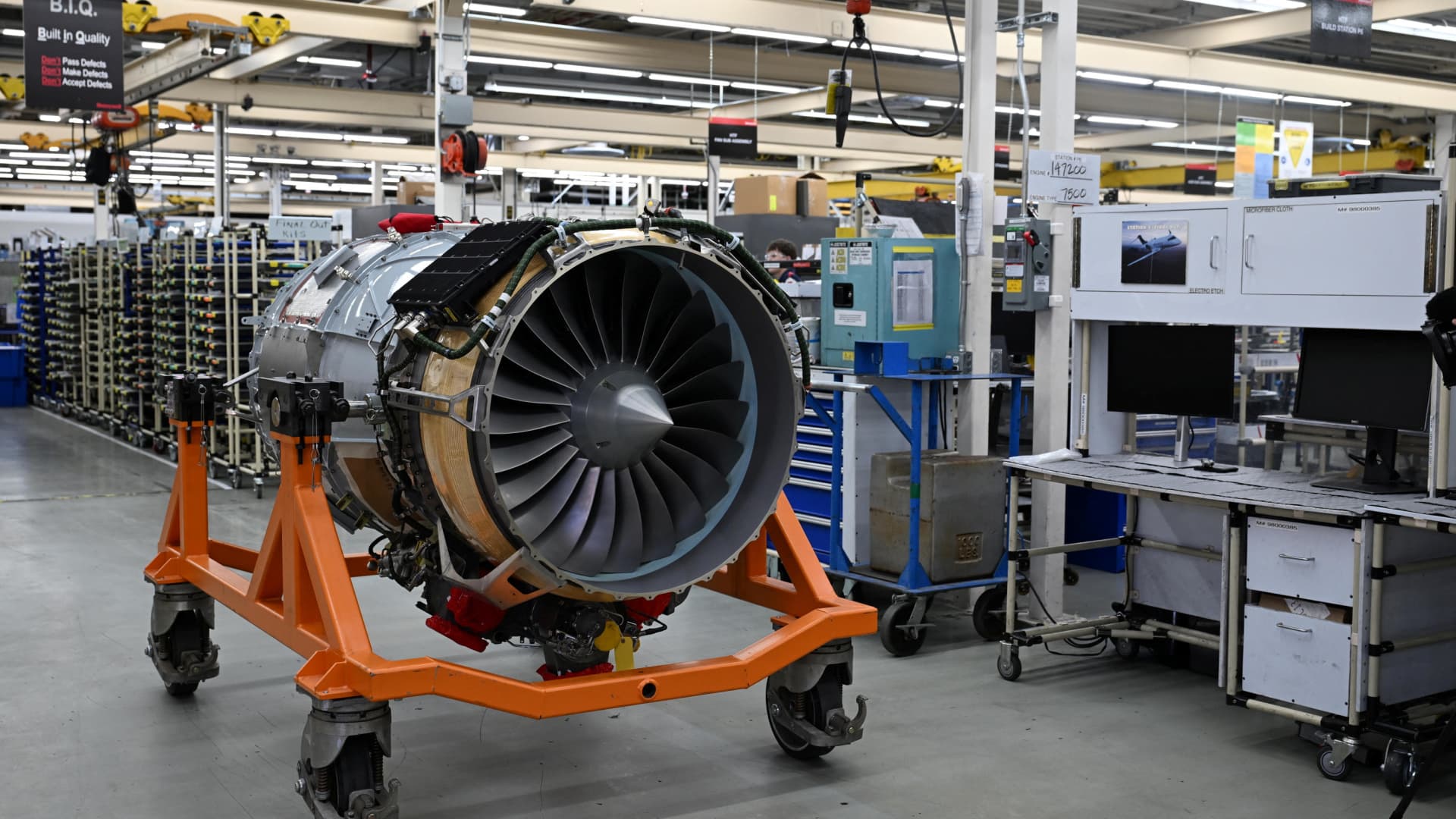
Honeywell Aerospace Set for Spin-Off to Unlock Growth Potential
- Clear Independence Strategy: Honeywell Aerospace is set to spin off this month, with CEO Jim Currier emphasizing that focusing on a single strategy will enhance the company's competitiveness in the commercial aviation and defense markets, expecting adjusted EBIT of $4.65 to $4.75 billion in 2026.
- Financial Goals Established: As a standalone entity, Honeywell Aerospace aims for annual earnings of at least $6.5 billion by 2030, with projected free cash flow of $1 to $1.5 billion in the second half of the year, indicating strong financial growth potential.
- Significant Market Opportunities: Currier highlighted that the commercial transport and defense sectors are the company's largest growth areas, with record backlog orders from Airbus and Boeing, reflecting robust market demand.
- Supply Chain Challenges Addressed: Despite facing supplier issues in Q1, Honeywell Aerospace has resolved these challenges, and management is focused on converting skepticism in the aerospace sector into confidence, showcasing its potential in future markets.
See More

Analysis of IWV ETF's 52-Week Highs and Lows

- 52-Week Price Range: The IWV ETF has a 52-week low of $336.27 and a high of $431.32, with the last trade at $428.95, indicating stability near its high, which may attract investor interest in price fluctuations.
- Technical Analysis Tool: Comparing the recent share price to the 200-day moving average can provide valuable insights for investors, helping to assess market trends and potential buying opportunities.
- ETF Trading Mechanism: ETFs trade similarly to stocks, where investors are buying and selling 'units' that can be created or destroyed based on investor demand, impacting liquidity and market performance.
- Inflows and Outflows Monitoring: Weekly monitoring of changes in shares outstanding helps identify ETFs experiencing notable inflows (new units created) or outflows (old units destroyed), allowing assessment of their impact on underlying assets and market sentiment.
See More

AI Momentum Drives Wall Street to New Heights


- Market Milestones: The S&P 500 reached another record close as traders absorbed tech headlines from the Computex conference in Taipei, reflecting strong investor confidence in the AI sector and signaling a potential influx of capital into major tech firms.
- Nvidia's Influence: CEO Jensen Huang's announcement of new PC processors developed with Microsoft at the conference led to a 32% surge in Marvell's stock, highlighting Huang's market influence and the potential for guiding future tech investments.
- Geopolitical Risks: Despite ongoing optimism in the AI space, geopolitical tensions, particularly the unresolved conflict between the U.S. and Iran, pose a risk to market sentiment, necessitating vigilance among investors.
- Oil Price Fluctuations: West Texas Intermediate futures rose over 1% to $94.81 per barrel due to potential disruptions in the Strait of Hormuz, indicating market sensitivity to geopolitical risks that could impact future energy investment strategies.
See More

Applied Aerospace & Defense Raises $650 Million in IPO Amid Geopolitical Tensions


- Fundraising Achievement: Applied Aerospace & Defense successfully raised $650 million in its U.S. IPO by pricing shares at $20 each, indicating strong investor interest in defense technology firms amid current geopolitical tensions.
- Share Sales Details: The company sold 32.5 million shares with an indicated price range of $18 to $21, reflecting positive market expectations regarding its valuation, particularly in light of the escalating U.S.-Iran conflict.
- Industry Context: Defense technology firms are flocking to the IPO market, leveraging heightened investor interest driven by geopolitical issues, and accelerating their listing plans to capture higher market valuations and attention.
- Strategic Merger: Applied Aerospace & Defense was formed through the merger of Applied Aerospace, founded in 1954, and PCX Aerosystems, established in 1900, by Greenbriar Equity Group, showcasing its strong foundation in the aerospace and defense sectors.
See More

Market Rises but Some Stocks Remain Undervalued

- Market Divergence: While the overall market continues to rise, many stocks remain in the red year-to-date, indicating a divergence that investors should monitor for potential opportunities.
- Undervalued Stock Insight: Toast (TOST) is highlighted as a stock under pressure due to the software sell-off in 2026, with its current valuation appearing attractive, potentially offering a rebound opportunity for investors.
- Investor Focus: As market sentiment shifts, many undervalued stocks may attract investor attention, making it crucial to seek value investment opportunities in the current economic climate.
- Video Content Preview: The video will delve into four stocks perceived as undervalued by the market, aiding investors in identifying potential investment opportunities and encouraging subscriptions for more market insights.
See More
Honeywell Aerospace Forecasts Earnings Growth Post-Separation
- Operational Independence: Honeywell Aerospace CEO Jim Currier emphasizes that post-separation, the company will focus on a single strategy, targeting annual revenues of at least $6.5 billion and free cash flow of at least $4 billion by 2030, indicating strong growth potential.
- Profitability Goals: As a standalone entity, Honeywell Aerospace anticipates adjusted EBIT of $4.65 billion to $4.75 billion in 2026, with second-half free cash flow projected between $1 billion and $1.5 billion, reflecting robust performance in the aviation and defense sectors.
- Strong Market Demand: Currier highlights significant growth opportunities in commercial transport and defense, asserting that Honeywell Aerospace's technological and product advantages will help it stand out in a competitive market, particularly with record backlogs from Airbus and Boeing.
- Supply Chain Challenges Addressed: Despite facing supplier issues in Q1, Currier assures that these challenges have been resolved, and management will work to communicate supply chain stability to investors, aiming to bolster market confidence.
See More
Honeywell Aerospace Set for Spin-Off to Unlock Growth Potential
- Clear Independence Strategy: Honeywell Aerospace is set to spin off this month, with CEO Jim Currier emphasizing that focusing on a single strategy will enhance the company's competitiveness in the commercial aviation and defense markets, expecting adjusted EBIT of $4.65 to $4.75 billion in 2026.
- Financial Goals Established: As a standalone entity, Honeywell Aerospace aims for annual earnings of at least $6.5 billion by 2030, with projected free cash flow of $1 to $1.5 billion in the second half of the year, indicating strong financial growth potential.
- Significant Market Opportunities: Currier highlighted that the commercial transport and defense sectors are the company's largest growth areas, with record backlog orders from Airbus and Boeing, reflecting robust market demand.
- Supply Chain Challenges Addressed: Despite facing supplier issues in Q1, Honeywell Aerospace has resolved these challenges, and management is focused on converting skepticism in the aerospace sector into confidence, showcasing its potential in future markets.
See More
Analysis of IWV ETF's 52-Week Highs and Lows
- 52-Week Price Range: The IWV ETF has a 52-week low of $336.27 and a high of $431.32, with the last trade at $428.95, indicating stability near its high, which may attract investor interest in price fluctuations.
- Technical Analysis Tool: Comparing the recent share price to the 200-day moving average can provide valuable insights for investors, helping to assess market trends and potential buying opportunities.
- ETF Trading Mechanism: ETFs trade similarly to stocks, where investors are buying and selling 'units' that can be created or destroyed based on investor demand, impacting liquidity and market performance.
- Inflows and Outflows Monitoring: Weekly monitoring of changes in shares outstanding helps identify ETFs experiencing notable inflows (new units created) or outflows (old units destroyed), allowing assessment of their impact on underlying assets and market sentiment.
See More
AI Momentum Drives Wall Street to New Heights
- Market Milestones: The S&P 500 reached another record close as traders absorbed tech headlines from the Computex conference in Taipei, reflecting strong investor confidence in the AI sector and signaling a potential influx of capital into major tech firms.
- Nvidia's Influence: CEO Jensen Huang's announcement of new PC processors developed with Microsoft at the conference led to a 32% surge in Marvell's stock, highlighting Huang's market influence and the potential for guiding future tech investments.
- Geopolitical Risks: Despite ongoing optimism in the AI space, geopolitical tensions, particularly the unresolved conflict between the U.S. and Iran, pose a risk to market sentiment, necessitating vigilance among investors.
- Oil Price Fluctuations: West Texas Intermediate futures rose over 1% to $94.81 per barrel due to potential disruptions in the Strait of Hormuz, indicating market sensitivity to geopolitical risks that could impact future energy investment strategies.
See More
Applied Aerospace & Defense Raises $650 Million in IPO Amid Geopolitical Tensions
- Fundraising Achievement: Applied Aerospace & Defense successfully raised $650 million in its U.S. IPO by pricing shares at $20 each, indicating strong investor interest in defense technology firms amid current geopolitical tensions.
- Share Sales Details: The company sold 32.5 million shares with an indicated price range of $18 to $21, reflecting positive market expectations regarding its valuation, particularly in light of the escalating U.S.-Iran conflict.
- Industry Context: Defense technology firms are flocking to the IPO market, leveraging heightened investor interest driven by geopolitical issues, and accelerating their listing plans to capture higher market valuations and attention.
- Strategic Merger: Applied Aerospace & Defense was formed through the merger of Applied Aerospace, founded in 1954, and PCX Aerosystems, established in 1900, by Greenbriar Equity Group, showcasing its strong foundation in the aerospace and defense sectors.
See More
Market Rises but Some Stocks Remain Undervalued
- Market Divergence: While the overall market continues to rise, many stocks remain in the red year-to-date, indicating a divergence that investors should monitor for potential opportunities.
- Undervalued Stock Insight: Toast (TOST) is highlighted as a stock under pressure due to the software sell-off in 2026, with its current valuation appearing attractive, potentially offering a rebound opportunity for investors.
- Investor Focus: As market sentiment shifts, many undervalued stocks may attract investor attention, making it crucial to seek value investment opportunities in the current economic climate.
- Video Content Preview: The video will delve into four stocks perceived as undervalued by the market, aiding investors in identifying potential investment opportunities and encouraging subscriptions for more market insights.
See More