Is First Trust Large Cap Core AlphaDEX ETF (FEX) a Strong ETF Right Now?
Written by Emily J. Thompson, Senior Investment Analyst
Updated: Jun 12 2024
0mins


Source: NASDAQ.COM
- First Trust Large Cap Core AlphaDEX ETF (FEX): Launched in 2007, this smart beta ETF offers exposure to the Large Cap Blend category of the market.
- Smart Beta ETFs: These ETFs track non-cap weighted strategies based on specific fundamental characteristics for potential outperformance.
- Fund Sponsor & Index: Sponsored by First Trust Advisors, FEX seeks to match the Nasdaq AlphaDEX Large Cap Core Index's performance.
- Cost & Other Expenses: FEX has an expense ratio of 0.60% and a 12-month trailing dividend yield of 1.20%.
- Sector Exposure and Top Holdings: The fund has significant allocations to Industrials, Financials, and Information Technology sectors, with top holdings including Super Micro Computer, Nvidia Corporation, and Deckers Outdoor Corporation.
Trade with 70% Backtested Accuracy
Stop guessing "Should I Buy DECK?" and start using high-conviction signals backed by rigorous historical data.
Sign up today to access powerful investing tools and make smarter, data-driven decisions.
Analyst Views on DECK
Wall Street analysts forecast DECK stock price to rise
20 Analyst Rating
8 Buy
9 Hold
3 Sell
Hold
Current: 105.670

Low
90.00
Averages
124.00
High
161.00
Current: 105.670
Low
90.00
Averages
124.00
High
161.00
About DECK
Deckers Outdoor Corporation designs, markets, and distributes footwear, apparel, and accessories developed for both everyday casual lifestyle use and high-performance activities. Its segments include UGG brand, HOKA brand and Other brands. The UGG brand segment provides premium footwear, apparel and accessories. The HOKA brand segment’s products include running, trail, hiking, fitness, and lifestyle footwear offerings, as well as select apparel and accessories. Its Other brands segment consists of Teva brand, AHNU brand, and Koolaburra brand. Its Teva brand includes a variety of footwear options, from classic sandals and shoes to boots. The Koolaburra brand is a casual footwear fashion line that uses plush materials. Its AHNU brand’s footwear products fuse high-performance technology for everyday wear. Its portfolio of brands includes UGG, HOKA, Teva, and AHNU. It sells its products through domestic and international retailers and international distributors in its wholesale channel.
About the author

Emily J. Thompson
Emily J. Thompson, a Chartered Financial Analyst (CFA) with 12 years in investment research, graduated with honors from the Wharton School. Specializing in industrial and technology stocks, she provides in-depth analysis for Intellectia’s earnings and market brief reports.

Nike's Earnings Report Indicates Business Stabilization


- Revenue Performance: Nike's fourth-quarter revenue reached $11 billion, down 1% year-over-year but slightly exceeding market expectations of $10.85 billion, indicating some market resilience amid challenges.
- Gross Margin Stabilization: Although gross margin fell by 10 basis points to 40.2% due to tariff issues, the stabilization after several quarters of decline suggests potential for future growth.
- Reduced Advertising Spend: Nike's selling, general, and administrative expenses decreased by 2% to $4.08 billion in the fourth quarter, reflecting a cautious approach to advertising spending, although future demand creation expenses are expected to rise due to World Cup investments.
- Wholesale Revenue Growth: Nike's wholesale revenue in North America increased by 10%, and Foot Locker's comparable sales and revenue achieved positive growth for the first time in four years, indicating improved relationships with wholesale partners that may lay the groundwork for future sales growth.
See More
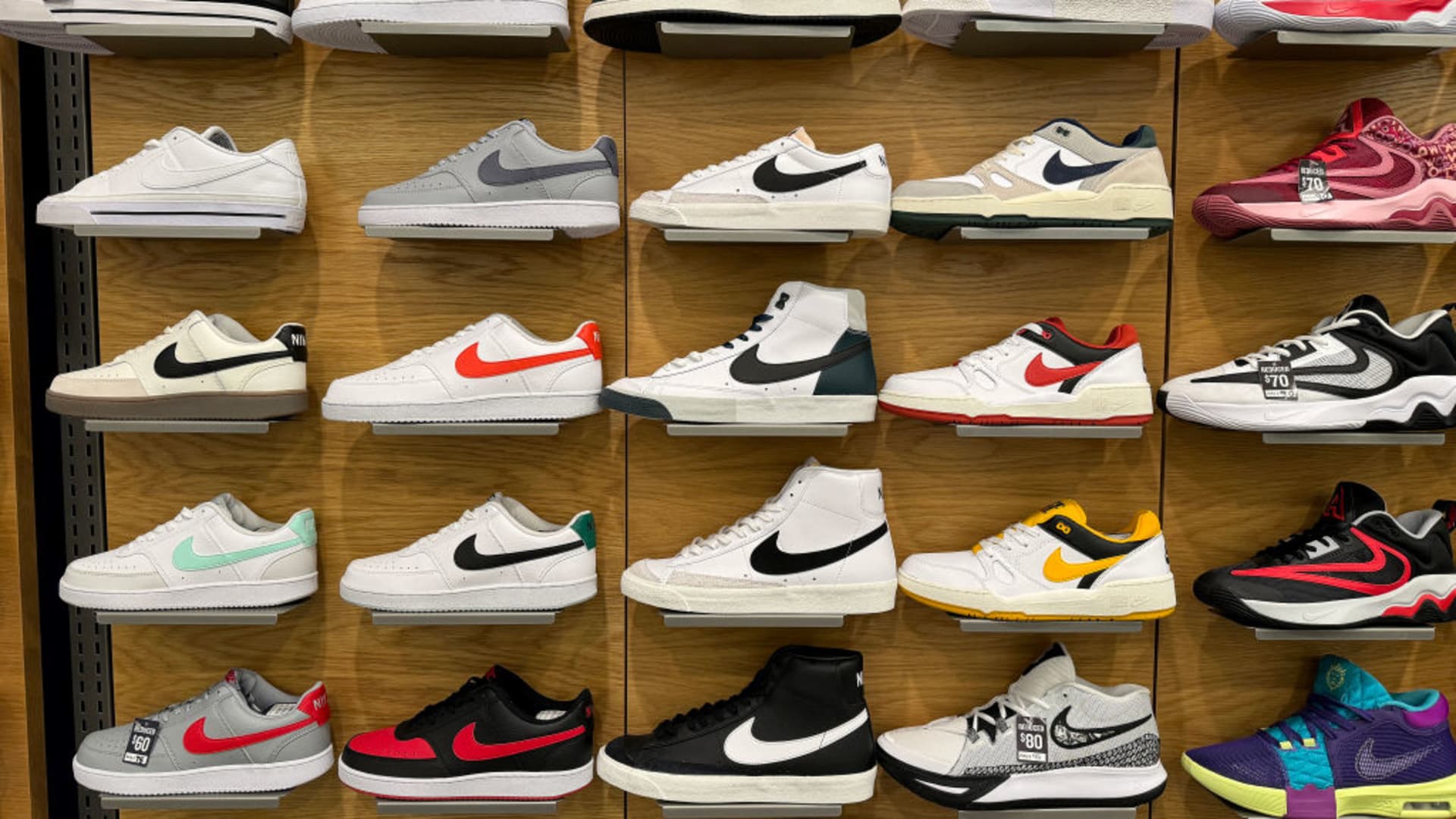
Nike's Quarterly Performance Mediocre, Stock Rebounds
- Slight Revenue Decline: Nike's Q4 revenue fell 1% year-over-year to $11 billion, slightly exceeding estimates of $10.85 billion, indicating ongoing challenges in a volatile macro environment and a dim outlook for future growth.
- Gross Margin Stabilization: With a one-time windfall of $986 million, Nike's gross margin dipped 10 basis points to 40.2%, suggesting that after several quarters of steep declines, this key metric is stabilizing, potentially laying the groundwork for future profitability.
- Reduced Advertising Spend: The company's selling, general, and administrative expenses decreased by 2% to $4.08 billion in Q4, reflecting a contraction in advertising spending, which may impact brand visibility but helps improve short-term financial health.
- Wholesale Sales Recovery: Nike's wholesale revenue in North America rose by 10%, and Foot Locker reported positive comparable sales and revenue for the first time, indicating that efforts to repair relationships with wholesale partners are paying off and may support future sales growth.
See More
Deckers Stock Declines as Analysts Eye Earnings Report
- Stock Performance: Deckers (DECK) closed at $99.29, down 1.96% from the previous session, underperforming the S&P 500's gain of 0.79%, indicating market concerns about its future performance.
- Monthly Loss: Over the past month, Deckers' stock has declined by 8.61%, significantly trailing the Retail-Wholesale sector's loss of 5.08% and the S&P 500's 1.82% drop, reflecting challenges in a competitive market environment.
- Earnings Expectations: Analysts expect Deckers to report earnings of $0.92 per share in the upcoming earnings report, marking a year-over-year decline of 1.08%, while quarterly revenue is projected at $1.02 billion, up 5.42%, indicating potential for revenue growth.
- Valuation Analysis: Deckers currently trades at a forward P/E ratio of 13.6, below the industry average of 16.28, suggesting its stock is undervalued, while a PEG ratio of 2 indicates a gap in expected earnings growth compared to the industry.
See More

Nike Expected to Report Eighth Straight Quarter of Declining Profits

- Profit Decline: Nike is expected to report its eighth consecutive quarter of declining profits, with revenue rising only 1% in the first three quarters and earnings per share down 32% to $1.38, indicating significant operational challenges amid fierce competition and weak consumer spending.
- Margin Outlook: Although management anticipates a return to gross margin expansion by Q2 of fiscal 2027, the gross margin has fallen by 250 basis points to 41% due to tariff impacts and inventory clearance, which will continue to exert pressure on future profitability.
- Executive Transition Risk: CFO Matthew Friend will step down on August 17, replaced by David Denton, former CFO of Pfizer, and such management changes may signal internal issues within the company, prompting investors to remain cautious.
- Intensifying Market Competition: Nike faces increasing competition from brands like On Holding and Deckers, compounded by nationalistic consumer sentiment and declining wholesale demand in China, with revenue in Greater China expected to drop by 20%, further impacting the company's market share and growth prospects.
See More

Nike Faces Sales Decline and Management Changes Ahead of Earnings Report
- Sales Decline: Nike's revenue has only risen 1% over the past three quarters, while profits have plummeted, with gross margins falling 250 basis points to 41%, indicating severe market challenges amid intense competition and weak consumer spending.
- Management Changes: CFO Matthew Friend will step down on August 17, replaced by former Pfizer CFO David Denton, raising investor concerns about the company's strategic direction, especially given its poor performance.
- Pessimistic Market Expectations: Nike anticipates a 2%-4% revenue decline in Q4, with Greater China expected to see a 20% drop due to reduced wholesale demand and marketplace reset actions, highlighting the company's struggles to regain growth.
- Dividend and Profit Pressure: Although Nike offers a nearly 4% dividend yield, the significant profit decline makes it challenging to fund the dividend entirely from earnings, necessitating a clear path to profit stabilization and growth to reassure investors about the dividend's safety and support stock recovery.
See More
BetterInvesting Names Deckers Outdoor as 'Stock to Study'

- Stock Analysis Recommendation: BetterInvesting Magazine has designated Deckers Outdoor Corp. as its 'Stock to Study' in the September 2026 issue, aimed at providing educational and informational support to investors for making informed investment decisions.
- Undervalued Stock Selection: Euronet Inc. has been named as the 'Undervalued Stock', indicating that the company may be undervalued in the market, thus attracting investor interest in its potential investment value.
- Educational Resources Offered: BetterInvesting provides various free investment education resources, including a lesson on the six steps to successful investing, aimed at enhancing investors' knowledge and decision-making capabilities to promote better investment outcomes.
- Investor Self-Education Emphasis: BetterInvesting stresses the importance of self-analysis and research for investors, enabling them to better understand market dynamics and company fundamentals when making investment decisions.
See More
Nike's Earnings Report Indicates Business Stabilization
- Revenue Performance: Nike's fourth-quarter revenue reached $11 billion, down 1% year-over-year but slightly exceeding market expectations of $10.85 billion, indicating some market resilience amid challenges.
- Gross Margin Stabilization: Although gross margin fell by 10 basis points to 40.2% due to tariff issues, the stabilization after several quarters of decline suggests potential for future growth.
- Reduced Advertising Spend: Nike's selling, general, and administrative expenses decreased by 2% to $4.08 billion in the fourth quarter, reflecting a cautious approach to advertising spending, although future demand creation expenses are expected to rise due to World Cup investments.
- Wholesale Revenue Growth: Nike's wholesale revenue in North America increased by 10%, and Foot Locker's comparable sales and revenue achieved positive growth for the first time in four years, indicating improved relationships with wholesale partners that may lay the groundwork for future sales growth.
See More
Nike's Quarterly Performance Mediocre, Stock Rebounds
- Slight Revenue Decline: Nike's Q4 revenue fell 1% year-over-year to $11 billion, slightly exceeding estimates of $10.85 billion, indicating ongoing challenges in a volatile macro environment and a dim outlook for future growth.
- Gross Margin Stabilization: With a one-time windfall of $986 million, Nike's gross margin dipped 10 basis points to 40.2%, suggesting that after several quarters of steep declines, this key metric is stabilizing, potentially laying the groundwork for future profitability.
- Reduced Advertising Spend: The company's selling, general, and administrative expenses decreased by 2% to $4.08 billion in Q4, reflecting a contraction in advertising spending, which may impact brand visibility but helps improve short-term financial health.
- Wholesale Sales Recovery: Nike's wholesale revenue in North America rose by 10%, and Foot Locker reported positive comparable sales and revenue for the first time, indicating that efforts to repair relationships with wholesale partners are paying off and may support future sales growth.
See More
Deckers Stock Declines as Analysts Eye Earnings Report
- Stock Performance: Deckers (DECK) closed at $99.29, down 1.96% from the previous session, underperforming the S&P 500's gain of 0.79%, indicating market concerns about its future performance.
- Monthly Loss: Over the past month, Deckers' stock has declined by 8.61%, significantly trailing the Retail-Wholesale sector's loss of 5.08% and the S&P 500's 1.82% drop, reflecting challenges in a competitive market environment.
- Earnings Expectations: Analysts expect Deckers to report earnings of $0.92 per share in the upcoming earnings report, marking a year-over-year decline of 1.08%, while quarterly revenue is projected at $1.02 billion, up 5.42%, indicating potential for revenue growth.
- Valuation Analysis: Deckers currently trades at a forward P/E ratio of 13.6, below the industry average of 16.28, suggesting its stock is undervalued, while a PEG ratio of 2 indicates a gap in expected earnings growth compared to the industry.
See More
Nike Expected to Report Eighth Straight Quarter of Declining Profits
- Profit Decline: Nike is expected to report its eighth consecutive quarter of declining profits, with revenue rising only 1% in the first three quarters and earnings per share down 32% to $1.38, indicating significant operational challenges amid fierce competition and weak consumer spending.
- Margin Outlook: Although management anticipates a return to gross margin expansion by Q2 of fiscal 2027, the gross margin has fallen by 250 basis points to 41% due to tariff impacts and inventory clearance, which will continue to exert pressure on future profitability.
- Executive Transition Risk: CFO Matthew Friend will step down on August 17, replaced by David Denton, former CFO of Pfizer, and such management changes may signal internal issues within the company, prompting investors to remain cautious.
- Intensifying Market Competition: Nike faces increasing competition from brands like On Holding and Deckers, compounded by nationalistic consumer sentiment and declining wholesale demand in China, with revenue in Greater China expected to drop by 20%, further impacting the company's market share and growth prospects.
See More
Nike Faces Sales Decline and Management Changes Ahead of Earnings Report
- Sales Decline: Nike's revenue has only risen 1% over the past three quarters, while profits have plummeted, with gross margins falling 250 basis points to 41%, indicating severe market challenges amid intense competition and weak consumer spending.
- Management Changes: CFO Matthew Friend will step down on August 17, replaced by former Pfizer CFO David Denton, raising investor concerns about the company's strategic direction, especially given its poor performance.
- Pessimistic Market Expectations: Nike anticipates a 2%-4% revenue decline in Q4, with Greater China expected to see a 20% drop due to reduced wholesale demand and marketplace reset actions, highlighting the company's struggles to regain growth.
- Dividend and Profit Pressure: Although Nike offers a nearly 4% dividend yield, the significant profit decline makes it challenging to fund the dividend entirely from earnings, necessitating a clear path to profit stabilization and growth to reassure investors about the dividend's safety and support stock recovery.
See More
BetterInvesting Names Deckers Outdoor as 'Stock to Study'
- Stock Analysis Recommendation: BetterInvesting Magazine has designated Deckers Outdoor Corp. as its 'Stock to Study' in the September 2026 issue, aimed at providing educational and informational support to investors for making informed investment decisions.
- Undervalued Stock Selection: Euronet Inc. has been named as the 'Undervalued Stock', indicating that the company may be undervalued in the market, thus attracting investor interest in its potential investment value.
- Educational Resources Offered: BetterInvesting provides various free investment education resources, including a lesson on the six steps to successful investing, aimed at enhancing investors' knowledge and decision-making capabilities to promote better investment outcomes.
- Investor Self-Education Emphasis: BetterInvesting stresses the importance of self-analysis and research for investors, enabling them to better understand market dynamics and company fundamentals when making investment decisions.
See More