Global Race to Secure Critical Mineral Stockpiles Intensifies
Written by Emily J. Thompson, Senior Investment Analyst
Updated: Feb 25 2026
0mins

Source: CNBC
- U.S. Strategic Reserve Initiative: The U.S. government has proposed a $12 billion Project Vault strategic mineral reserve aimed at enhancing supply chain resilience by stockpiling rare earths and essential metals, thereby supporting electrification, defense, and advanced manufacturing sectors.
- Australia's Reserve Strategy: Australia plans to formalize a state-backed stockpiling strategy through an $800 million strategic critical minerals reserve, prioritizing antimony, gallium, and rare earth elements to address global supply chain vulnerabilities and enhance national security.
- EU Joint Reserve Initiative: The European Union is advancing plans under its RESourceEU strategy to establish a joint reserve of critical raw materials, with Italy, France, and Germany expected to lead the effort, thereby strengthening control over critical minerals and stabilizing supply chains.
- Trend of Resource Nationalism: Analysts note a shift towards resource nationalism among many countries, emphasizing that strategic stockpiling is not just a buffer against price fluctuations but also a critical component of national security and industrial strategy, reflecting a significant increase in global focus on critical minerals.
Trade with 70% Backtested Accuracy
Stop guessing "Should I Buy GS?" and start using high-conviction signals backed by rigorous historical data.
Sign up today to access powerful investing tools and make smarter, data-driven decisions.
Analyst Views on GS
Wall Street analysts forecast GS stock price to fall
12 Analyst Rating
5 Buy
7 Hold
0 Sell
Moderate Buy
Current: 1099.140

Low
604.00
Averages
951.45
High
1100
Current: 1099.140
Low
604.00
Averages
951.45
High
1100
About GS
The Goldman Sachs Group, Inc. is a global financial institution that delivers a range of financial services to a large and diversified client base that includes corporations, financial institutions, governments and individuals. Its segments include Global Banking & Markets, Asset & Wealth Management and Platform Solutions. The Global Banking & Markets segment offers a range of services, including financing, advisory services, risk distribution, and hedging for its institutional and corporate clients. It facilitates client transactions and makes markets in fixed income, equity, currency and commodity products. The Asset & Wealth Management segment manages assets and offers investment products across all asset classes to a diverse set of clients. It also provides investing and wealth advisory solutions. The Platform Solutions segment includes consumer platforms, such as partnerships offering credit cards and point-of-sale financing, and transaction banking and other platform businesses.
About the author

Emily J. Thompson
Emily J. Thompson, a Chartered Financial Analyst (CFA) with 12 years in investment research, graduated with honors from the Wharton School. Specializing in industrial and technology stocks, she provides in-depth analysis for Intellectia’s earnings and market brief reports.
Opportunity to Lock in High CD Rates

- Current CD Rate Overview: As of June 20, 2026, the highest CD rate available is 4% APY, offered by Marcus by Goldman Sachs for a 14-month CD, making it a particularly attractive option for investors looking to lock in high returns before potential rate changes.
- Interest Earnings Calculation: For a $1,000 investment in a one-year CD with a 1.52% APY, the end-of-year balance would grow to $1,015.20, while choosing a 4% APY CD would increase the balance to $1,040.74, highlighting the significant impact of higher rates on earnings and encouraging investors to consider better options.
- Impact of Deposit Amount: If $10,000 is deposited in a 4% APY CD, the total balance at maturity would reach $10,407.42, resulting in $407.42 in interest, emphasizing the positive correlation between deposit amounts and earnings, which prompts investors to consider larger deposits when selecting CDs.
- Diversity of CD Types: Beyond traditional CDs, investors can explore options like bump-up CDs, no-penalty CDs, and jumbo CDs, which may offer varying degrees of flexibility and risk, yet in the current rate environment, selecting the right type of CD remains crucial for maximizing returns.
See More

SpaceX's S-1 Filing Reveals $28.5 Trillion Market Potential

- Massive Market Potential: SpaceX's S-1 filing forecasts a total addressable market (TAM) of $28.5 trillion, with $26.5 trillion attributed to artificial intelligence (AI), indicating the company's ambitious vision in the AI sector while also highlighting potential investment risks.
- Infrastructure Challenges: A major bottleneck for AI is the power supply for data centers; SpaceX's plan to launch 1 million satellites as data centers aims to leverage solar energy in space, potentially positioning the company as a leader in AI infrastructure development.
- Revenue Growth Expectations: Goldman Sachs projects that SpaceX's AI division will see revenue surge from $3.2 billion in 2025 to $322 billion by 2030, with total revenue expected to reach $474 billion by 2030, showcasing the company's strong growth potential in the AI market.
- High Spending and Risks: Despite the promising outlook, SpaceX anticipates a $6.4 billion operating loss in 2025 and $12.7 billion in capital expenditures for AI infrastructure, indicating that while pursuing growth, the company faces significant integration and execution risks.
See More

SpaceX's S-1 Filing Reveals Ambitious AI Market Potential

- Massive Market Potential: SpaceX's S-1 filing forecasts a total addressable market (TAM) of $26.5 trillion for artificial intelligence (AI), indicating the company's ambitious vision that could reshape investor perceptions of its traditional space operations.
- Infrastructure Challenges: The plan to launch 1 million satellites as data centers aims to address AI workload power demands, although challenges such as permitting, construction timelines, and water scarcity remain; success in this venture could position SpaceX as a leader in AI infrastructure.
- Revenue Growth Expectations: Goldman Sachs projects SpaceX's AI division revenue to surge from $3.2 billion in 2025 to $322 billion by 2030, highlighting significant profit potential, even as the company navigates integration and execution risks within its AI segment.
- Investment Risk Considerations: Despite the promising AI market, SpaceX anticipates a $6.4 billion operating loss in 2025 and $12.7 billion in capital expenditures for AI infrastructure, necessitating careful evaluation of risks and returns in long-term investment strategies.
See More
Tech Companies Face Rising Debt Risks Amid AI Expansion
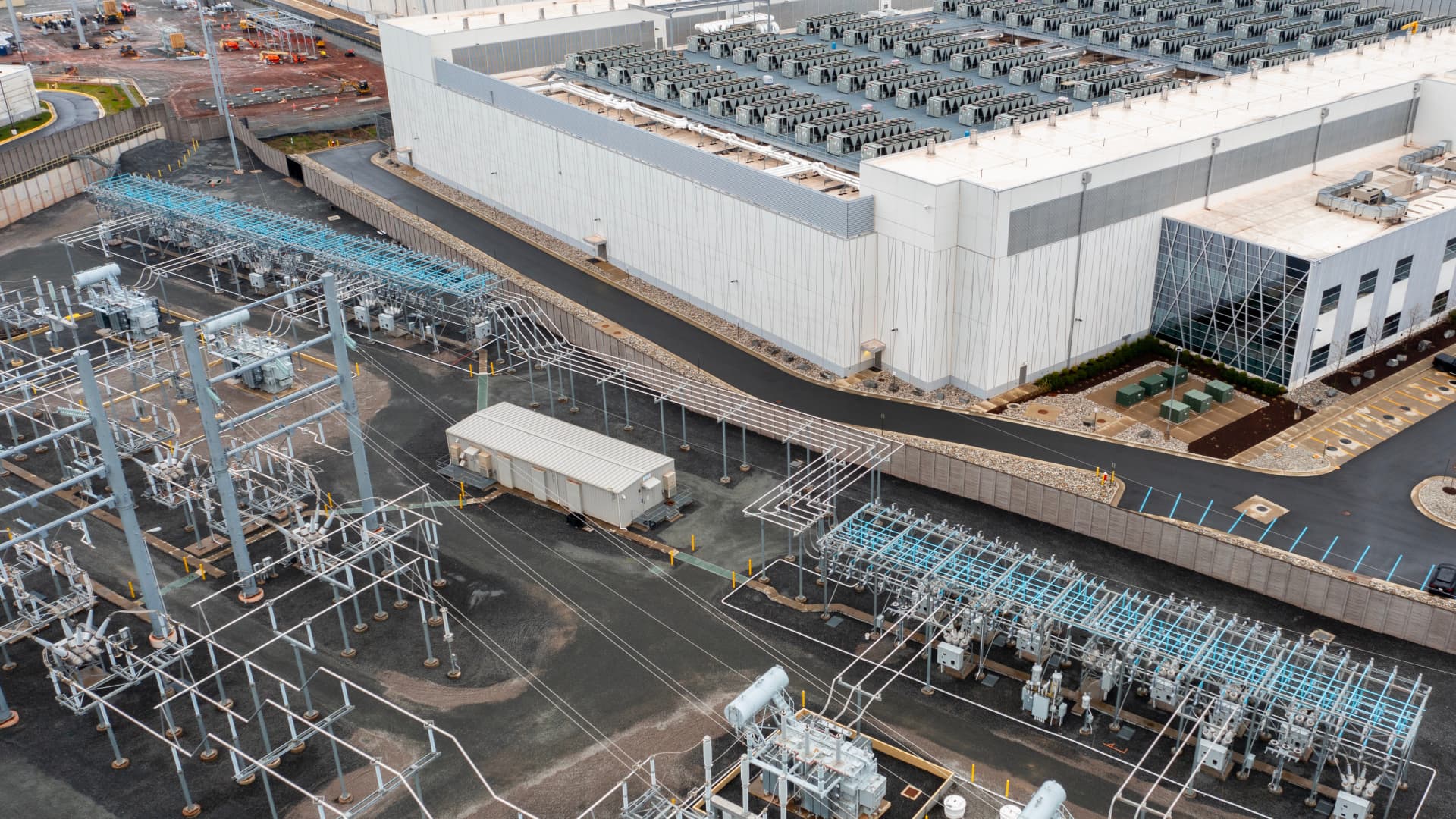
- Increased Debt Financing Demand: With tech giants like Amazon, Google, Microsoft, and Meta projected to invest $750 billion in AI infrastructure by 2026, the demand for debt financing has surged, particularly as rising interest rates increase borrowing costs, impacting the present value of future cash flows.
- Cash Flow Strain: An anticipated capital expenditure of up to $920 billion poses a risk of negative free cash flow for many tech companies, with Amazon expected to report negative cash flow, indicating that these firms are facing challenges similar to traditional capital-intensive industries.
- Heightened Rate Impact: Fed Chairman Kevin Warsh's indication of a potential rate hike in 2026 has triggered equity sell-offs and rising rates, with the 10-year Treasury yield nearing 4.45%, placing greater pressure on tech companies that rely on future profits, especially smaller firms.
- Shifting Market Reactions: Investors are beginning to pay attention to interest rates and inflation data, requiring tech investors to adapt to a new market environment, where debt financing has become a critical strategy for expansion in the high-risk AI investment sector, despite facing higher borrowing costs.
See More

Tech Giants Face Rising Debt Amid Cash Flow Strains

- Rising Debt Burden: Tech giants are significantly increasing debt for data center expansions, with a potential rate hike in 2026 leading to equity sell-offs and higher borrowing costs, intensifying pressure on smaller tech firms.
- Surge in Capital Expenditure: Goldman Sachs projects capital expenditures to approach $920 billion in 2023, with capital spending as a percentage of cash flow at its highest since the dot-com era, indicating a sharp rise in funding needs for tech companies.
- Cash Flow Volatility: Amazon is expected to report negative free cash flow this year, highlighting the challenges faced by tech firms in capital-intensive sectors, prompting investors to monitor access to debt and equity markets for financing.
- Individual Company Risk Assessment: Despite sector-wide pressures, Nvidia's free cash flow surged to $48.5 billion in the latest quarter, showcasing its strong cash reserves that provide financing flexibility and alleviate concerns over debt risks.
See More

Allegiant's Acquisition of Sun Country Boosts Goldman Sachs Outlook

- Acquisition Finalized: Allegiant Travel successfully closed its acquisition of Sun Country Airlines for $1.5 billion, which is expected to enhance the competitive positioning of both budget airlines and create a more differentiated service offering.
- Upgraded Price Target: Goldman Sachs upgraded Allegiant's rating from neutral to buy, setting a price target of $125, which implies a 30% upside from Wednesday's close, reflecting a positive outlook on the company's growth potential.
- Fleet Integration Benefits: Post-merger, Allegiant and Sun Country will operate a combined fleet of 195 aircraft, improving operational efficiency, as Allegiant's recent purchase of a Boeing 737 will support Sun Country's flights, thereby expanding their route network.
- Enhanced Pricing Power: With the exit of competitor Spirit, Allegiant gains increased pricing power in the market, and analysts believe this will provide more profitable growth opportunities for the company, especially amid volatile jet fuel prices.
See More
Opportunity to Lock in High CD Rates
- Current CD Rate Overview: As of June 20, 2026, the highest CD rate available is 4% APY, offered by Marcus by Goldman Sachs for a 14-month CD, making it a particularly attractive option for investors looking to lock in high returns before potential rate changes.
- Interest Earnings Calculation: For a $1,000 investment in a one-year CD with a 1.52% APY, the end-of-year balance would grow to $1,015.20, while choosing a 4% APY CD would increase the balance to $1,040.74, highlighting the significant impact of higher rates on earnings and encouraging investors to consider better options.
- Impact of Deposit Amount: If $10,000 is deposited in a 4% APY CD, the total balance at maturity would reach $10,407.42, resulting in $407.42 in interest, emphasizing the positive correlation between deposit amounts and earnings, which prompts investors to consider larger deposits when selecting CDs.
- Diversity of CD Types: Beyond traditional CDs, investors can explore options like bump-up CDs, no-penalty CDs, and jumbo CDs, which may offer varying degrees of flexibility and risk, yet in the current rate environment, selecting the right type of CD remains crucial for maximizing returns.
See More
SpaceX's S-1 Filing Reveals $28.5 Trillion Market Potential
- Massive Market Potential: SpaceX's S-1 filing forecasts a total addressable market (TAM) of $28.5 trillion, with $26.5 trillion attributed to artificial intelligence (AI), indicating the company's ambitious vision in the AI sector while also highlighting potential investment risks.
- Infrastructure Challenges: A major bottleneck for AI is the power supply for data centers; SpaceX's plan to launch 1 million satellites as data centers aims to leverage solar energy in space, potentially positioning the company as a leader in AI infrastructure development.
- Revenue Growth Expectations: Goldman Sachs projects that SpaceX's AI division will see revenue surge from $3.2 billion in 2025 to $322 billion by 2030, with total revenue expected to reach $474 billion by 2030, showcasing the company's strong growth potential in the AI market.
- High Spending and Risks: Despite the promising outlook, SpaceX anticipates a $6.4 billion operating loss in 2025 and $12.7 billion in capital expenditures for AI infrastructure, indicating that while pursuing growth, the company faces significant integration and execution risks.
See More
SpaceX's S-1 Filing Reveals Ambitious AI Market Potential
- Massive Market Potential: SpaceX's S-1 filing forecasts a total addressable market (TAM) of $26.5 trillion for artificial intelligence (AI), indicating the company's ambitious vision that could reshape investor perceptions of its traditional space operations.
- Infrastructure Challenges: The plan to launch 1 million satellites as data centers aims to address AI workload power demands, although challenges such as permitting, construction timelines, and water scarcity remain; success in this venture could position SpaceX as a leader in AI infrastructure.
- Revenue Growth Expectations: Goldman Sachs projects SpaceX's AI division revenue to surge from $3.2 billion in 2025 to $322 billion by 2030, highlighting significant profit potential, even as the company navigates integration and execution risks within its AI segment.
- Investment Risk Considerations: Despite the promising AI market, SpaceX anticipates a $6.4 billion operating loss in 2025 and $12.7 billion in capital expenditures for AI infrastructure, necessitating careful evaluation of risks and returns in long-term investment strategies.
See More
Tech Companies Face Rising Debt Risks Amid AI Expansion
- Increased Debt Financing Demand: With tech giants like Amazon, Google, Microsoft, and Meta projected to invest $750 billion in AI infrastructure by 2026, the demand for debt financing has surged, particularly as rising interest rates increase borrowing costs, impacting the present value of future cash flows.
- Cash Flow Strain: An anticipated capital expenditure of up to $920 billion poses a risk of negative free cash flow for many tech companies, with Amazon expected to report negative cash flow, indicating that these firms are facing challenges similar to traditional capital-intensive industries.
- Heightened Rate Impact: Fed Chairman Kevin Warsh's indication of a potential rate hike in 2026 has triggered equity sell-offs and rising rates, with the 10-year Treasury yield nearing 4.45%, placing greater pressure on tech companies that rely on future profits, especially smaller firms.
- Shifting Market Reactions: Investors are beginning to pay attention to interest rates and inflation data, requiring tech investors to adapt to a new market environment, where debt financing has become a critical strategy for expansion in the high-risk AI investment sector, despite facing higher borrowing costs.
See More
Tech Giants Face Rising Debt Amid Cash Flow Strains
- Rising Debt Burden: Tech giants are significantly increasing debt for data center expansions, with a potential rate hike in 2026 leading to equity sell-offs and higher borrowing costs, intensifying pressure on smaller tech firms.
- Surge in Capital Expenditure: Goldman Sachs projects capital expenditures to approach $920 billion in 2023, with capital spending as a percentage of cash flow at its highest since the dot-com era, indicating a sharp rise in funding needs for tech companies.
- Cash Flow Volatility: Amazon is expected to report negative free cash flow this year, highlighting the challenges faced by tech firms in capital-intensive sectors, prompting investors to monitor access to debt and equity markets for financing.
- Individual Company Risk Assessment: Despite sector-wide pressures, Nvidia's free cash flow surged to $48.5 billion in the latest quarter, showcasing its strong cash reserves that provide financing flexibility and alleviate concerns over debt risks.
See More
Allegiant's Acquisition of Sun Country Boosts Goldman Sachs Outlook
- Acquisition Finalized: Allegiant Travel successfully closed its acquisition of Sun Country Airlines for $1.5 billion, which is expected to enhance the competitive positioning of both budget airlines and create a more differentiated service offering.
- Upgraded Price Target: Goldman Sachs upgraded Allegiant's rating from neutral to buy, setting a price target of $125, which implies a 30% upside from Wednesday's close, reflecting a positive outlook on the company's growth potential.
- Fleet Integration Benefits: Post-merger, Allegiant and Sun Country will operate a combined fleet of 195 aircraft, improving operational efficiency, as Allegiant's recent purchase of a Boeing 737 will support Sun Country's flights, thereby expanding their route network.
- Enhanced Pricing Power: With the exit of competitor Spirit, Allegiant gains increased pricing power in the market, and analysts believe this will provide more profitable growth opportunities for the company, especially amid volatile jet fuel prices.
See More