Futures Rise as Trump Pauses Hormuz Opening Efforts
Written by Emily J. Thompson, Senior Investment Analyst
Updated: May 06 2026
0mins

Source: Yahoo Finance
- Futures Market Surge: Futures prices have risen, reflecting optimistic sentiment regarding future economic prospects, which may attract more investors and drive overall market recovery.
- Trump's Policy Shift: President Trump announced a pause on the Hormuz opening efforts, a move that could significantly impact global energy supply chains and the stability of oil markets.
- AI Company Earnings Impact: Companies like AMD, Astera Labs, Lumentum, and Arista became market movers following their earnings reports, highlighting the strong growth potential in the AI sector and possibly drawing more investor interest towards these tech stocks.
- Market Dynamics Fluctuation: With the changes in Trump's policies and the earnings impact from AI companies, market sentiment may experience volatility, prompting investors to closely monitor developments to adjust their investment strategies.
Trade with 70% Backtested Accuracy
Stop guessing "Should I Buy AMD?" and start using high-conviction signals backed by rigorous historical data.
Sign up today to access powerful investing tools and make smarter, data-driven decisions.
Analyst Views on AMD
Wall Street analysts forecast AMD stock price to fall
33 Analyst Rating
25 Buy
8 Hold
0 Sell
Strong Buy
Current: 512.480

Low
210.00
Averages
289.13
High
377.00
Current: 512.480
Low
210.00
Averages
289.13
High
377.00
About AMD
Advanced Micro Devices, Inc. is a global semiconductor company. The Company is focused on high-performance computing and artificial intelligence (AI). Its segments include Data Center, Client and Gaming, and Embedded. Data Center segment includes AI accelerators, microprocessors (CPUs) for servers, graphics processing units (GPUs), accelerated processing units (APUs), data processing units (DPUs), Field Programmable Gate Arrays (FPGAs), and Adaptive system-on-Chip (SoC) products for data centers. Client and Gaming segment includes CPUs, APUs, chipsets for desktops and notebooks, discrete GPUs, and semi-custom SoC products and development services. Embedded segment includes embedded CPUs, APUs, FPGAs, system on modules (SOMs), and Adaptive SoC products. It markets and sells its products under the AMD trademark. Its products include AMD EPYC, AMD Ryzen, AMD Ryzen PRO, Virtex UltraScale+, among others.
About the author

Emily J. Thompson
Emily J. Thompson, a Chartered Financial Analyst (CFA) with 12 years in investment research, graduated with honors from the Wharton School. Specializing in industrial and technology stocks, she provides in-depth analysis for Intellectia’s earnings and market brief reports.
AMD Acquires MEXT to Enhance AI Infrastructure

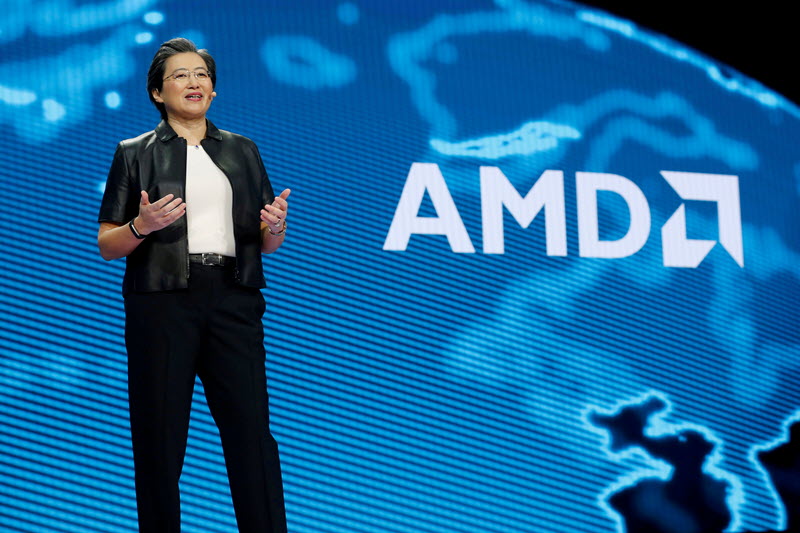
- Acquisition Fuels Growth: AMD's announcement to acquire MEXT, which has developed AI-driven memory optimization technology that allows NAND flash to function as dynamic random access memory (DRAM), is set to further propel AMD's growth in the market.
- Significant Cost Benefits: MEXT's technology can expand a system's DRAM capacity by 2 to 4 times while halving costs, which is crucial given that DRAM is approximately 50 times more expensive than flash memory, thus saving customers substantial amounts.
- Optimized Market Positioning: By integrating MEXT's technology, AMD will enhance the attractiveness of its data center product line, solidifying its position in the inference market, particularly in memory-constrained environments.
- Accelerated Strategic Transformation: This acquisition signifies AMD's shift from being merely a chipmaker to a more comprehensive AI infrastructure provider, strengthening its competitiveness in the rapidly growing inference and agentic AI markets.
See More

Major Market Indexes on Wall Street Rise

- Analyst Rating Changes: Rothschild & Co Redburn upgraded Lyft (LYFT) from Neutral to Buy with a price target of $22, believing that recent pressures on ride growth are temporary rather than structural, and that international expansion will help re-accelerate demand.
- Bullish on Energy Stocks: Bank of America upgraded Exxon Mobil (XOM) from Neutral to Buy with a price target of $154, citing that the recent pullback leaves the stock pricing Brent crude at $65/bbl long-term, while Exxon's strong execution in the Permian provides a clear growth trajectory.
- Focus on Semiconductors: Micron (MU) attracted attention as Stifel raised its price target from $550 to $1,500, modeling nearly 80% quarter-over-quarter revenue growth driven by ASP increases, while Wedbush also raised its target from $550 to $1,300.
- Market Dynamics Analysis: Major market indexes on Wall Street rose amid the Federal Reserve's hawkish policy shift, as investors balanced concerns over the Fed with optimism surrounding AI, with the S&P 500 posting weekly gains.
See More
Nvidia Calls Marvell Next Trillion-Dollar Semiconductor Stock

- Investment and Partnership: Nvidia's $2 billion investment in Marvell earlier this year, coupled with a partnership to streamline integration for Marvell's custom chip customers like Amazon via NVLink Fusion, enhances Marvell's competitive edge in the semiconductor market.
- Revenue Growth Expectations: Marvell anticipates a 40% revenue increase this year to $11.5 billion, with interconnect revenue soaring by 70%, indicating strong growth potential in the rapidly expanding AI data center market.
- Market Challenges: Despite Marvell's robust performance in custom chips, it faces competition from Taiwanese semiconductor firm AIchip, which may jeopardize its leading role in future iterations of its Trainium chips, posing a threat to its market share.
- Industry Outlook: With a market cap below $250 billion and a frothy forward P/E ratio nearing 70 times, Marvell must achieve significant growth to reach a $1 trillion valuation in the coming years, which is a critical point of concern for investors.
See More

Market Outlook for Marvell and AMD: Trillion-Dollar Potential
- Marvell's Growth Potential: Marvell expects a 40% revenue increase this year to $11.5 billion, with interconnect revenue soaring by 70%, highlighting its significant position in the rapidly growing data center market; however, with a market cap below $250 billion, it will require substantial growth to reach a trillion-dollar valuation.
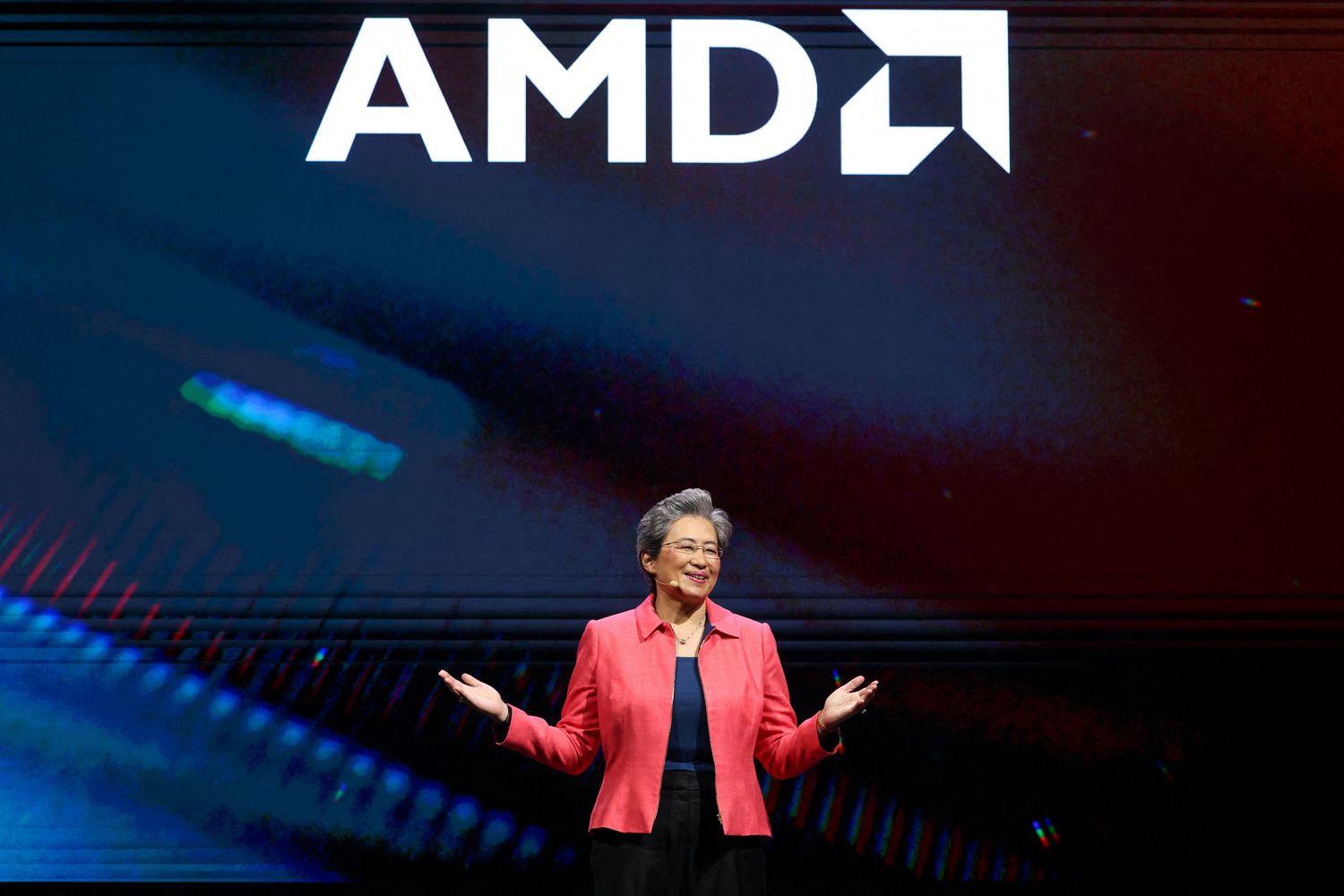
- AMD's Market Opportunities: AMD, with a market cap exceeding $865 billion, is only 15.6% away from a trillion-dollar valuation, and its strong market trends in inference and agentic AI, coupled with its recent acquisition of AI memory optimization technology, are set to significantly reduce costs and enhance performance.
- ASML's Monopoly Position: ASML holds a monopoly on extreme ultraviolet lithography technology, with a market cap around $710 billion, and is expected to maintain high demand as AI chip and memory needs rise, positioning it as a strong contender for a trillion-dollar market cap.
- Industry Trend Impacts: As demand for AI and high-bandwidth memory increases, Marvell, AMD, and ASML are all benefiting in their respective fields, particularly with Marvell's innovations in optical interconnect technology enhancing its competitiveness in the data center market, despite challenges from other companies.
See More
Marvell Technology's Optimistic Outlook Fueled by AI Product Innovations


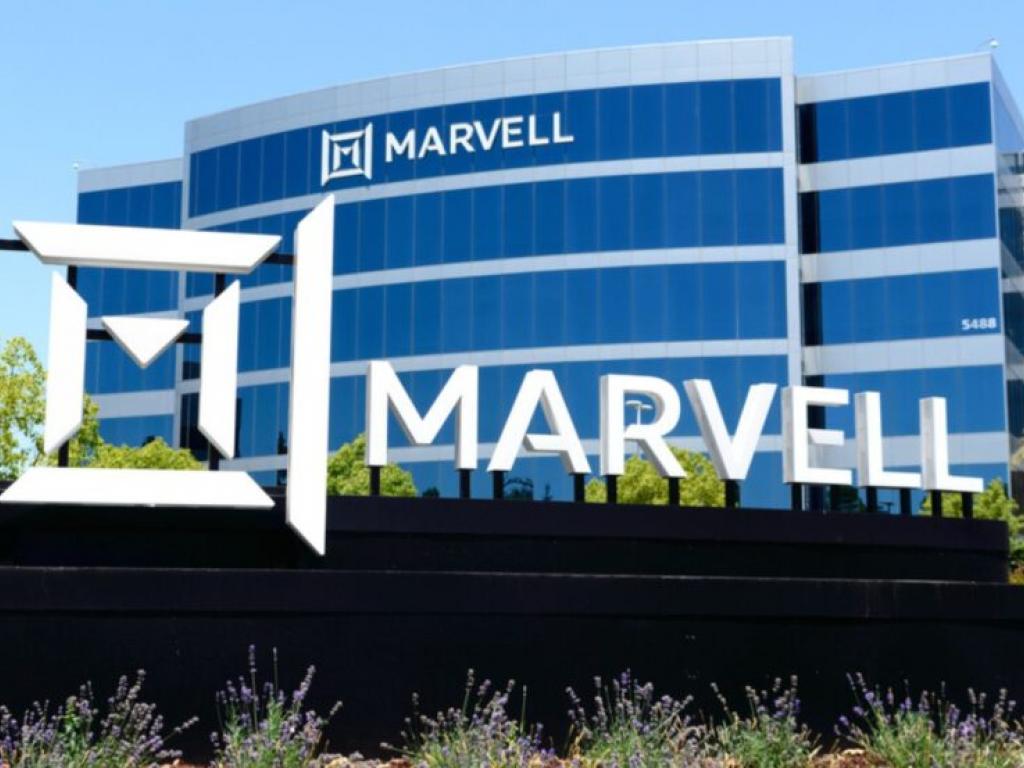
- Strong Revenue Growth: Marvell Technology achieved a 28% year-over-year revenue growth in Q1 FY2027, with Q2 revenue projected at $2.7 billion, reflecting a 35% year-over-year and 11.7% sequential growth, indicating significant long-term growth potential.
- Surge in AI Orders: CEO Matt Murphy noted exceptional AI-related bookings, leading to a substantial upward revision in revenue outlook for FY2027 and FY2028, suggesting a future valuation of $1 trillion, although other AI stocks may reach this milestone sooner.
- Launch of Teralynx T100 Chip: The newly released Teralynx T100 networking chip delivers 25% lower power consumption and the industry's lowest latency for AI workloads, significantly enhancing data center efficiency and addressing the high demand for energy optimization.
- Product Portfolio Strength: The upgrade of the Teralynx T100 complements Marvell's existing portfolio of ASIC chips and optical fibers, with ongoing product innovations poised to help the company maintain its competitive edge and expand market share.
See More
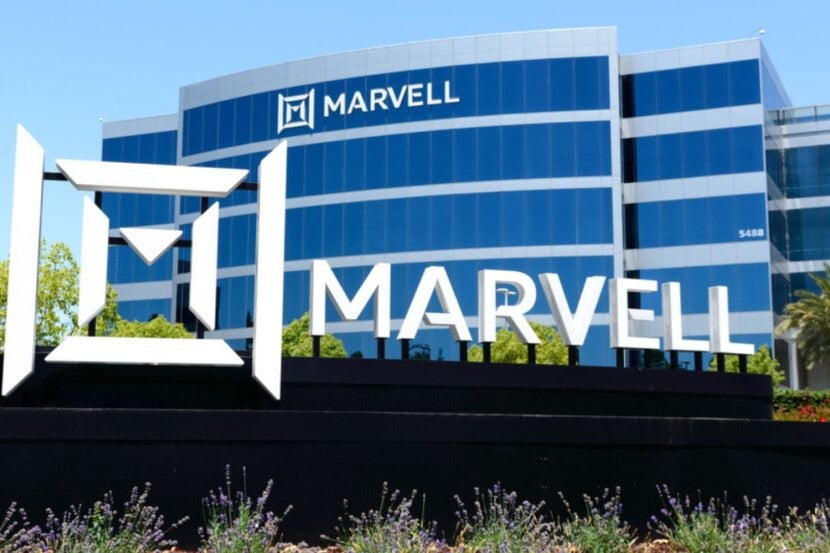
Marvell Technology Shows Strong Growth Potential
- Significant Revenue Growth: Marvell Technology achieved a 28% year-over-year revenue growth in Q1 FY2027, with projected Q2 revenue of $2.7 billion indicating a 35% year-over-year increase and 11.7% sequential growth, showcasing the company's strengthening market competitiveness.
- Optimistic Guidance Outlook: CEO Matt Murphy indicated that revenue is expected to accelerate each quarter throughout FY2027, particularly due to a surge in AI-related bookings, which raises the revenue outlook for both FY2027 and FY2028, suggesting a potential $1 trillion valuation in the future.
- Product Innovation Enhances Competitiveness: The newly launched Teralynx T100 networking chip delivers 25% lower power consumption and the industry's lowest latency for AI workloads, optimizing data center energy use and enhancing Marvell's competitive edge in the market.
- Market Share Expansion Strategy: Through continuous product upgrades and innovations, Marvell Technology aims to increase its market share in ASIC chips and optical fibers, and while other AI stocks like AMD and Sandisk may reach $1 trillion sooner, Marvell's strategic positioning lays a solid foundation for future growth.
See More
AMD Acquires MEXT to Enhance AI Infrastructure
- Acquisition Fuels Growth: AMD's announcement to acquire MEXT, which has developed AI-driven memory optimization technology that allows NAND flash to function as dynamic random access memory (DRAM), is set to further propel AMD's growth in the market.
- Significant Cost Benefits: MEXT's technology can expand a system's DRAM capacity by 2 to 4 times while halving costs, which is crucial given that DRAM is approximately 50 times more expensive than flash memory, thus saving customers substantial amounts.
- Optimized Market Positioning: By integrating MEXT's technology, AMD will enhance the attractiveness of its data center product line, solidifying its position in the inference market, particularly in memory-constrained environments.
- Accelerated Strategic Transformation: This acquisition signifies AMD's shift from being merely a chipmaker to a more comprehensive AI infrastructure provider, strengthening its competitiveness in the rapidly growing inference and agentic AI markets.
See More
Major Market Indexes on Wall Street Rise
- Analyst Rating Changes: Rothschild & Co Redburn upgraded Lyft (LYFT) from Neutral to Buy with a price target of $22, believing that recent pressures on ride growth are temporary rather than structural, and that international expansion will help re-accelerate demand.
- Bullish on Energy Stocks: Bank of America upgraded Exxon Mobil (XOM) from Neutral to Buy with a price target of $154, citing that the recent pullback leaves the stock pricing Brent crude at $65/bbl long-term, while Exxon's strong execution in the Permian provides a clear growth trajectory.
- Focus on Semiconductors: Micron (MU) attracted attention as Stifel raised its price target from $550 to $1,500, modeling nearly 80% quarter-over-quarter revenue growth driven by ASP increases, while Wedbush also raised its target from $550 to $1,300.
- Market Dynamics Analysis: Major market indexes on Wall Street rose amid the Federal Reserve's hawkish policy shift, as investors balanced concerns over the Fed with optimism surrounding AI, with the S&P 500 posting weekly gains.
See More
Nvidia Calls Marvell Next Trillion-Dollar Semiconductor Stock
- Investment and Partnership: Nvidia's $2 billion investment in Marvell earlier this year, coupled with a partnership to streamline integration for Marvell's custom chip customers like Amazon via NVLink Fusion, enhances Marvell's competitive edge in the semiconductor market.
- Revenue Growth Expectations: Marvell anticipates a 40% revenue increase this year to $11.5 billion, with interconnect revenue soaring by 70%, indicating strong growth potential in the rapidly expanding AI data center market.
- Market Challenges: Despite Marvell's robust performance in custom chips, it faces competition from Taiwanese semiconductor firm AIchip, which may jeopardize its leading role in future iterations of its Trainium chips, posing a threat to its market share.
- Industry Outlook: With a market cap below $250 billion and a frothy forward P/E ratio nearing 70 times, Marvell must achieve significant growth to reach a $1 trillion valuation in the coming years, which is a critical point of concern for investors.
See More
Market Outlook for Marvell and AMD: Trillion-Dollar Potential
- Marvell's Growth Potential: Marvell expects a 40% revenue increase this year to $11.5 billion, with interconnect revenue soaring by 70%, highlighting its significant position in the rapidly growing data center market; however, with a market cap below $250 billion, it will require substantial growth to reach a trillion-dollar valuation.
- AMD's Market Opportunities: AMD, with a market cap exceeding $865 billion, is only 15.6% away from a trillion-dollar valuation, and its strong market trends in inference and agentic AI, coupled with its recent acquisition of AI memory optimization technology, are set to significantly reduce costs and enhance performance.
- ASML's Monopoly Position: ASML holds a monopoly on extreme ultraviolet lithography technology, with a market cap around $710 billion, and is expected to maintain high demand as AI chip and memory needs rise, positioning it as a strong contender for a trillion-dollar market cap.
- Industry Trend Impacts: As demand for AI and high-bandwidth memory increases, Marvell, AMD, and ASML are all benefiting in their respective fields, particularly with Marvell's innovations in optical interconnect technology enhancing its competitiveness in the data center market, despite challenges from other companies.
See More
Marvell Technology's Optimistic Outlook Fueled by AI Product Innovations
- Strong Revenue Growth: Marvell Technology achieved a 28% year-over-year revenue growth in Q1 FY2027, with Q2 revenue projected at $2.7 billion, reflecting a 35% year-over-year and 11.7% sequential growth, indicating significant long-term growth potential.
- Surge in AI Orders: CEO Matt Murphy noted exceptional AI-related bookings, leading to a substantial upward revision in revenue outlook for FY2027 and FY2028, suggesting a future valuation of $1 trillion, although other AI stocks may reach this milestone sooner.
- Launch of Teralynx T100 Chip: The newly released Teralynx T100 networking chip delivers 25% lower power consumption and the industry's lowest latency for AI workloads, significantly enhancing data center efficiency and addressing the high demand for energy optimization.
- Product Portfolio Strength: The upgrade of the Teralynx T100 complements Marvell's existing portfolio of ASIC chips and optical fibers, with ongoing product innovations poised to help the company maintain its competitive edge and expand market share.
See More
Marvell Technology Shows Strong Growth Potential
- Significant Revenue Growth: Marvell Technology achieved a 28% year-over-year revenue growth in Q1 FY2027, with projected Q2 revenue of $2.7 billion indicating a 35% year-over-year increase and 11.7% sequential growth, showcasing the company's strengthening market competitiveness.
- Optimistic Guidance Outlook: CEO Matt Murphy indicated that revenue is expected to accelerate each quarter throughout FY2027, particularly due to a surge in AI-related bookings, which raises the revenue outlook for both FY2027 and FY2028, suggesting a potential $1 trillion valuation in the future.
- Product Innovation Enhances Competitiveness: The newly launched Teralynx T100 networking chip delivers 25% lower power consumption and the industry's lowest latency for AI workloads, optimizing data center energy use and enhancing Marvell's competitive edge in the market.
- Market Share Expansion Strategy: Through continuous product upgrades and innovations, Marvell Technology aims to increase its market share in ASIC chips and optical fibers, and while other AI stocks like AMD and Sandisk may reach $1 trillion sooner, Marvell's strategic positioning lays a solid foundation for future growth.
See More