

Cathie Wood Sells AMD Shares Amid Portfolio Management
Written by Emily J. Thompson, Senior Investment Analyst
Updated: 13 hours ago
0mins

Source: Fool
- AMD Share Reduction: On July 6, Cathie Wood sold over 15,000 shares of AMD through her Ark Innovation fund, valued at more than $8 million, which may raise concerns but is likely more about portfolio management than operational issues.
- Buying Opportunity: After AMD's stock dropped 17.3% following its February 3 earnings report, Wood's ETFs purchased over 141,000 shares worth more than $28 million on February 4, indicating her confidence in AMD's future prospects.
- Strong Earnings Performance: AMD reported $10.2 billion in revenue for Q1 2026 on May 5, exceeding expectations of $9.8 billion, with the stock price rising from $351.51 to $409.49, reflecting robust growth momentum.
- Profit-Taking Strategy: With AMD's stock up about 140% year-to-date, Wood's decision to sell shares for profit-taking to fund other positions demonstrates her keen market awareness and adaptive investment strategy.
Trade with 70% Backtested Accuracy
Stop guessing "Should I Buy AMD?" and start using high-conviction signals backed by rigorous historical data.
Sign up today to access powerful investing tools and make smarter, data-driven decisions.
Analyst Views on AMD
Wall Street analysts forecast AMD stock price to fall
33 Analyst Rating
25 Buy
8 Hold
0 Sell
Strong Buy
Current: 516.110

Low
210.00
Averages
289.13
High
377.00
Current: 516.110
Low
210.00
Averages
289.13
High
377.00
About AMD
Advanced Micro Devices, Inc. is a global semiconductor company. The Company is focused on high-performance computing and artificial intelligence (AI). Its segments include Data Center, Client and Gaming, and Embedded. Data Center segment includes AI accelerators, microprocessors (CPUs) for servers, graphics processing units (GPUs), accelerated processing units (APUs), data processing units (DPUs), Field Programmable Gate Arrays (FPGAs), and Adaptive system-on-Chip (SoC) products for data centers. Client and Gaming segment includes CPUs, APUs, chipsets for desktops and notebooks, discrete GPUs, and semi-custom SoC products and development services. Embedded segment includes embedded CPUs, APUs, FPGAs, system on modules (SOMs), and Adaptive SoC products. It markets and sells its products under the AMD trademark. Its products include AMD EPYC, AMD Ryzen, AMD Ryzen PRO, Virtex UltraScale+, among others.
About the author

Emily J. Thompson
Emily J. Thompson, a Chartered Financial Analyst (CFA) with 12 years in investment research, graduated with honors from the Wharton School. Specializing in industrial and technology stocks, she provides in-depth analysis for Intellectia’s earnings and market brief reports.

Oil Prices Surge Amid Tech Stock Volatility


- Oil Price Surge: Brent crude futures surpassed $80 on Wednesday, primarily driven by U.S. military actions against Iran, with the energy sector being the top performer of the day, up 1.45%, indicating strong market reactions to energy demand.
- Tech Stock Volatility: Nvidia's stock is down 14% from its May high, while AMD, Applied Materials, and Micron Technology have seen declines of 11.5%, 22%, and 24% respectively, reflecting investor caution towards tech stocks that may influence future investment decisions.
- PepsiCo Earnings Preview: PepsiCo is set to report earnings on Thursday, with its stock down about 8% over the past three months and 17% from its 52-week high, which could affect market perceptions of its future growth potential.
- Blue Origin Funding: Jeff Bezos' Blue Origin secured a $4 billion investment from Coatue Management as part of a new $10 billion fundraising round, expected to value the company at $130 billion, showcasing the investment enthusiasm and growth potential in the space industry.
See More

Orbital Computing: A New Frontier for AI

- Orbital Computing Potential: Morgan Stanley's research indicates that orbital computing may be more credible than terrestrial AI data centers due to its potential to lower costs, alleviate land constraints, and reduce environmental impacts, thereby enabling new capabilities for security-critical applications.
- Commercial Space Profitability: With the momentum of national security, civil, and commercial space programs, investing in space technology and exploration has transitioned from science fiction to a frontier technology and defense innovation opportunity, as exemplified by SpaceX's reusable launch model that has reduced costs and moved the industry towards scalable networks.
- Supply Chain Structure: Morgan Stanley identified 43 companies linked to orbital computing, with about a third (15) based in the U.S., including Nvidia, Broadcom, Micron Technology, and AMD, which dominate the market value and form the backbone of the orbital compute supply chain.
- Global Hardware Support: Beyond the U.S., the supply chain includes companies in Asia and Europe, such as TSMC in Taiwan and Samsung Electronics in South Korea, providing essential hardware needed for space-based computing, highlighting the necessity of global collaboration.
See More

Nvidia Stock Price Drops to 2019 Levels

- P/E Ratio Decline: Nvidia's forward P/E ratio has dropped to 22.22x, nearing the 22.47x level from June 2019, indicating market caution regarding its future growth, which may affect investor confidence.
- Significant Revenue Growth: Despite the declining P/E ratio, Nvidia's fiscal 2026 revenue reached $215.9 billion, a 65% year-over-year increase, far exceeding the $11.7 billion reported in 2019, demonstrating strong fundamentals.
- Intensifying Competition: Compared to AMD's 73.53x and Intel's 136.99x P/E ratios, Nvidia's significantly lower ratio reflects market doubts about its competitiveness in the AI sector, potentially impacting its market share.
- Shifting Investor Sentiment: As the AI investment landscape evolves, investor focus has shifted away from Nvidia towards memory and storage chip manufacturers, putting pressure on Nvidia's stock price and affecting future capital inflows.
See More

Logic Chips and Storage Demand in the AI Revolution

- Significant Revenue Growth: Nvidia's revenue surpassed $215 billion last year, showcasing its dominance in the AI logic chip market and attracting numerous enterprise clients, which propelled its stock price up over 350% in the past three years.
- Surge in Storage Demand: Sandisk, Micron, and Western Digital achieved revenue growth of 640%, 650%, and 45% respectively in the first half of 2023, indicating a rapid rise in demand for memory and storage solutions driven by AI applications, making them new market favorites.
- Impact of Inference Computing: Western Digital's CEO highlighted that inference is expected to account for two-thirds of AI compute, increasing data generation needs that will further drive demand for storage solutions, ensuring ongoing growth potential for related companies.
- Long-term Investment Value: While storage companies have recently outperformed, GPU designers like Nvidia will still play a crucial role in the future of AI, making reasonably valued companies great long-term investment choices.
See More

Emerging Winners in AI Chip Market
- Significant Revenue Growth: Nvidia's revenue surpassed $215 billion in the past year, highlighting its dominant position in the AI chip market as numerous AI companies rushed to acquire its GPUs, which significantly boosted the company's stock performance.
- Surge in Storage Demand: Sandisk, Micron, and Western Digital achieved revenue growth of 640%, 650%, and 45% respectively in the first half of 2023, indicating a rapid increase in demand for memory and storage driven by AI applications, which may continue to enhance their market performance.
- Rise of Inference Computing: Western Digital's CEO noted that inference is expected to account for two-thirds of all AI compute, a trend that will further increase data storage needs and drive ongoing demand for products from related companies.
- Long-Term Investment Potential: While memory and storage companies have shown strong short-term performance, GPU designers will still play a crucial role in the future phases of AI development, making reasonably valued companies attractive long-term investment options.
See More
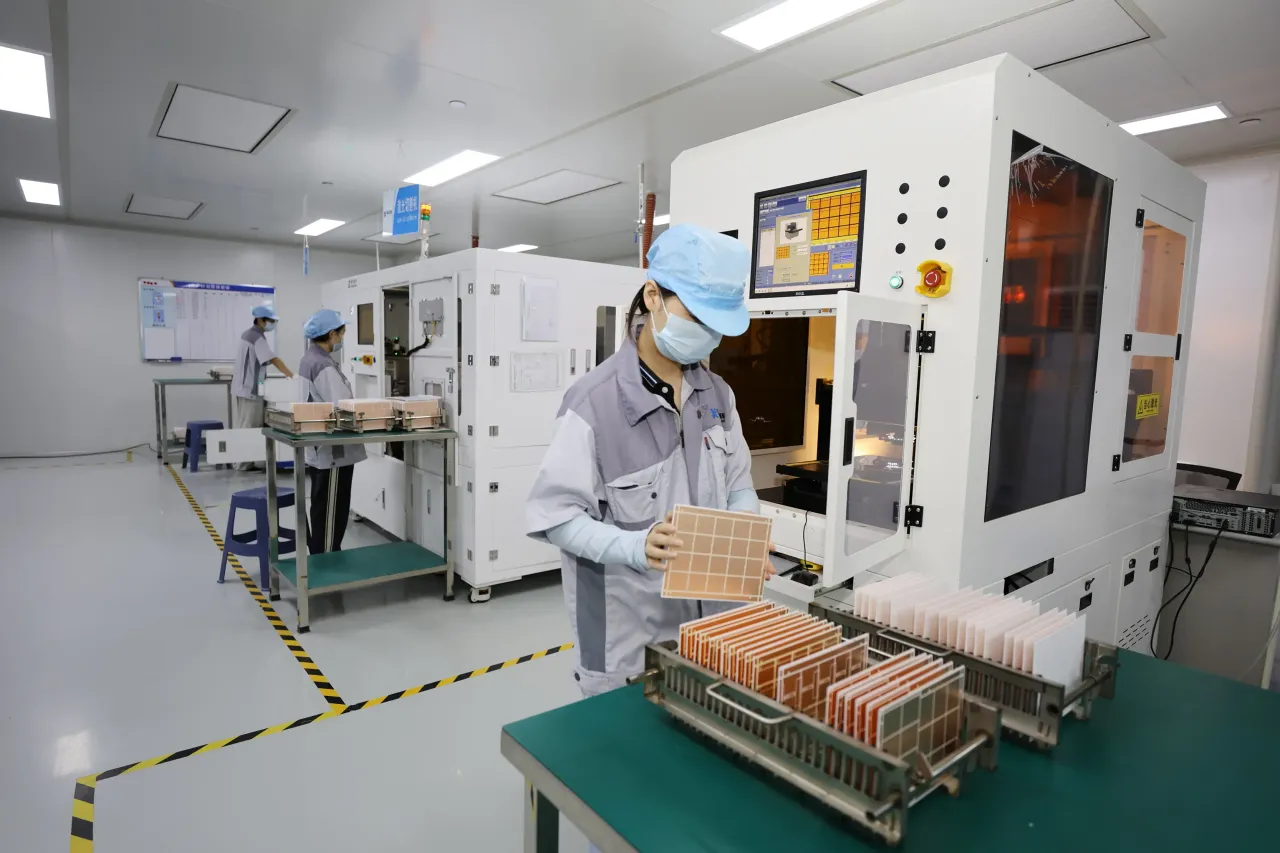
Semiconductor Stocks Retreat as Investors Book Profits

- Market Pullback: Following a red-hot rally in the semiconductor sector, investors are booking profits, with Intel's stock dropping 9.7% on Tuesday, marking the largest decline in the S&P 500 index, indicating a shift in market sentiment.
- Strong Samsung Results but Stock Decline: Despite Samsung Electronics reporting a staggering 19-fold increase in expected second-quarter operating profit to 89.4 trillion won ($58.44 billion) and a 129% revenue increase to 171 trillion won, its shares fell nearly 7% in Seoul, impacting SK Hynix and the broader Kospi index.
- Broad Chip Stock Decline: In the U.S., Intel and AMD saw their stocks drop 9.7% and 6.5%, respectively, while Western Digital and SanDisk each fell over 7%, reflecting investor concerns over the AI trade losing momentum and potential broader downturns in the market.
- Analyst Insights: Despite the pullback, Daniel Newman, CEO of Futurum Group, asserts that the AI trade remains intact with demand significantly outpacing supply, suggesting that profit-taking after parabolic moves is a healthy market behavior.
See More
Oil Prices Surge Amid Tech Stock Volatility
- Oil Price Surge: Brent crude futures surpassed $80 on Wednesday, primarily driven by U.S. military actions against Iran, with the energy sector being the top performer of the day, up 1.45%, indicating strong market reactions to energy demand.
- Tech Stock Volatility: Nvidia's stock is down 14% from its May high, while AMD, Applied Materials, and Micron Technology have seen declines of 11.5%, 22%, and 24% respectively, reflecting investor caution towards tech stocks that may influence future investment decisions.
- PepsiCo Earnings Preview: PepsiCo is set to report earnings on Thursday, with its stock down about 8% over the past three months and 17% from its 52-week high, which could affect market perceptions of its future growth potential.
- Blue Origin Funding: Jeff Bezos' Blue Origin secured a $4 billion investment from Coatue Management as part of a new $10 billion fundraising round, expected to value the company at $130 billion, showcasing the investment enthusiasm and growth potential in the space industry.
See More
Orbital Computing: A New Frontier for AI
- Orbital Computing Potential: Morgan Stanley's research indicates that orbital computing may be more credible than terrestrial AI data centers due to its potential to lower costs, alleviate land constraints, and reduce environmental impacts, thereby enabling new capabilities for security-critical applications.
- Commercial Space Profitability: With the momentum of national security, civil, and commercial space programs, investing in space technology and exploration has transitioned from science fiction to a frontier technology and defense innovation opportunity, as exemplified by SpaceX's reusable launch model that has reduced costs and moved the industry towards scalable networks.
- Supply Chain Structure: Morgan Stanley identified 43 companies linked to orbital computing, with about a third (15) based in the U.S., including Nvidia, Broadcom, Micron Technology, and AMD, which dominate the market value and form the backbone of the orbital compute supply chain.
- Global Hardware Support: Beyond the U.S., the supply chain includes companies in Asia and Europe, such as TSMC in Taiwan and Samsung Electronics in South Korea, providing essential hardware needed for space-based computing, highlighting the necessity of global collaboration.
See More
Nvidia Stock Price Drops to 2019 Levels
- P/E Ratio Decline: Nvidia's forward P/E ratio has dropped to 22.22x, nearing the 22.47x level from June 2019, indicating market caution regarding its future growth, which may affect investor confidence.
- Significant Revenue Growth: Despite the declining P/E ratio, Nvidia's fiscal 2026 revenue reached $215.9 billion, a 65% year-over-year increase, far exceeding the $11.7 billion reported in 2019, demonstrating strong fundamentals.
- Intensifying Competition: Compared to AMD's 73.53x and Intel's 136.99x P/E ratios, Nvidia's significantly lower ratio reflects market doubts about its competitiveness in the AI sector, potentially impacting its market share.
- Shifting Investor Sentiment: As the AI investment landscape evolves, investor focus has shifted away from Nvidia towards memory and storage chip manufacturers, putting pressure on Nvidia's stock price and affecting future capital inflows.
See More
Logic Chips and Storage Demand in the AI Revolution
- Significant Revenue Growth: Nvidia's revenue surpassed $215 billion last year, showcasing its dominance in the AI logic chip market and attracting numerous enterprise clients, which propelled its stock price up over 350% in the past three years.
- Surge in Storage Demand: Sandisk, Micron, and Western Digital achieved revenue growth of 640%, 650%, and 45% respectively in the first half of 2023, indicating a rapid rise in demand for memory and storage solutions driven by AI applications, making them new market favorites.
- Impact of Inference Computing: Western Digital's CEO highlighted that inference is expected to account for two-thirds of AI compute, increasing data generation needs that will further drive demand for storage solutions, ensuring ongoing growth potential for related companies.
- Long-term Investment Value: While storage companies have recently outperformed, GPU designers like Nvidia will still play a crucial role in the future of AI, making reasonably valued companies great long-term investment choices.
See More
Emerging Winners in AI Chip Market
- Significant Revenue Growth: Nvidia's revenue surpassed $215 billion in the past year, highlighting its dominant position in the AI chip market as numerous AI companies rushed to acquire its GPUs, which significantly boosted the company's stock performance.
- Surge in Storage Demand: Sandisk, Micron, and Western Digital achieved revenue growth of 640%, 650%, and 45% respectively in the first half of 2023, indicating a rapid increase in demand for memory and storage driven by AI applications, which may continue to enhance their market performance.
- Rise of Inference Computing: Western Digital's CEO noted that inference is expected to account for two-thirds of all AI compute, a trend that will further increase data storage needs and drive ongoing demand for products from related companies.
- Long-Term Investment Potential: While memory and storage companies have shown strong short-term performance, GPU designers will still play a crucial role in the future phases of AI development, making reasonably valued companies attractive long-term investment options.
See More
Semiconductor Stocks Retreat as Investors Book Profits
- Market Pullback: Following a red-hot rally in the semiconductor sector, investors are booking profits, with Intel's stock dropping 9.7% on Tuesday, marking the largest decline in the S&P 500 index, indicating a shift in market sentiment.
- Strong Samsung Results but Stock Decline: Despite Samsung Electronics reporting a staggering 19-fold increase in expected second-quarter operating profit to 89.4 trillion won ($58.44 billion) and a 129% revenue increase to 171 trillion won, its shares fell nearly 7% in Seoul, impacting SK Hynix and the broader Kospi index.
- Broad Chip Stock Decline: In the U.S., Intel and AMD saw their stocks drop 9.7% and 6.5%, respectively, while Western Digital and SanDisk each fell over 7%, reflecting investor concerns over the AI trade losing momentum and potential broader downturns in the market.
- Analyst Insights: Despite the pullback, Daniel Newman, CEO of Futurum Group, asserts that the AI trade remains intact with demand significantly outpacing supply, suggesting that profit-taking after parabolic moves is a healthy market behavior.
See More





