Whirlpool price target raised to $68 from $67 at BofA
Written by Emily J. Thompson, Senior Investment Analyst
Updated: Apr 25 2025
0mins
Should l Buy WHR?
Price Target Adjustment: BofA raised Whirlpool's price target to $68 from $67 while maintaining an Underperform rating due to Q1 adjusted EBIT falling 8% below estimates.
Future Earnings Forecasts: The firm has slightly lowered its 2025 adjusted EBIT outlook by 1% but increased the 2026 forecast by 3%, citing a challenging macro environment and Whirlpool's high leverage as reasons for the Underperform rating.
Trade with 70% Backtested Accuracy
Stop guessing "Should I Buy WHR?" and start using high-conviction signals backed by rigorous historical data.
Sign up today to access powerful investing tools and make smarter, data-driven decisions.
Analyst Views on WHR
Wall Street analysts forecast WHR stock price to rise
4 Analyst Rating
0 Buy
2 Hold
2 Sell
Moderate Sell
Current: 55.750

Low
51.00
Averages
64.50
High
78.00
Current: 55.750
Low
51.00
Averages
64.50
High
78.00
About WHR
Whirlpool Corporation is a home appliance company. The Company is a manufacturer of kitchen and laundry appliances. Its segments include Major Domestic Appliances (MDA) North America; MDA Latin America; MDA Asia, and Small Domestic Appliances (SDA) Global. The Company in the United States and Canada, market and distributes home appliances and other consumer products under the Whirlpool, KitchenAid, Maytag, Amana, InSinkErator, JennAir, affresh, Swash, everydrop, and Gladiator brand names to retailers, distributors, and builders, and directly to consumers. In Latin America, the Company produces, market and distributes primarily Consul, Brastemp, Whirlpool, KitchenAid, Acros, Maytag, and Eslabon de Lujo brand names. In Asia, the Company market primarily under the Whirlpool, Elica, Maytag, KitchenAid, and Indesit brand names. In SDA Global, the Company markets the appliances under the KitchenAid brand name to retailers, distributors, and to consumers.
About the author

Emily J. Thompson
Emily J. Thompson, a Chartered Financial Analyst (CFA) with 12 years in investment research, graduated with honors from the Wharton School. Specializing in industrial and technology stocks, she provides in-depth analysis for Intellectia’s earnings and market brief reports.

Analysis of SaaS Companies' Prospects Amid AI Disruption


- Market Panic Intensifies: SaaS companies are experiencing severe market panic, as evidenced by the iShares Expanded Tech-Software Sector ETF (IGV) dropping over 30% in the past six months, compared to a mere 9% decline in the NASDAQ, indicating a significant loss of investor confidence in SaaS stocks.
- Chegg's Collapse: The online homework help platform Chegg has seen its stock plummet over 99% since its peak in 2021, as its core product has been replaced by free AI tools like ChatGPT, leading to a 40% year-over-year revenue decline, highlighting the tangible threat AI poses to certain SaaS companies.
- HubSpot and Constellation's Dilemma: Despite HubSpot and Constellation Software achieving all-time highs in revenue and free cash flow, their valuations have plummeted, with HubSpot trading at a mere 4 times sales and Constellation at 3 times, reflecting a pessimistic outlook from the market regarding their futures.
- AI as a Double-Edged Sword: While AI poses a threat to SaaS companies, some experts believe it could also serve as an advantage, particularly for firms like ServiceNow and Cadence, which may leverage AI effectively to gain a competitive edge in the evolving market landscape.
See More
KitchenAid Launches Fully Automatic Espresso Machines with Iced Coffee
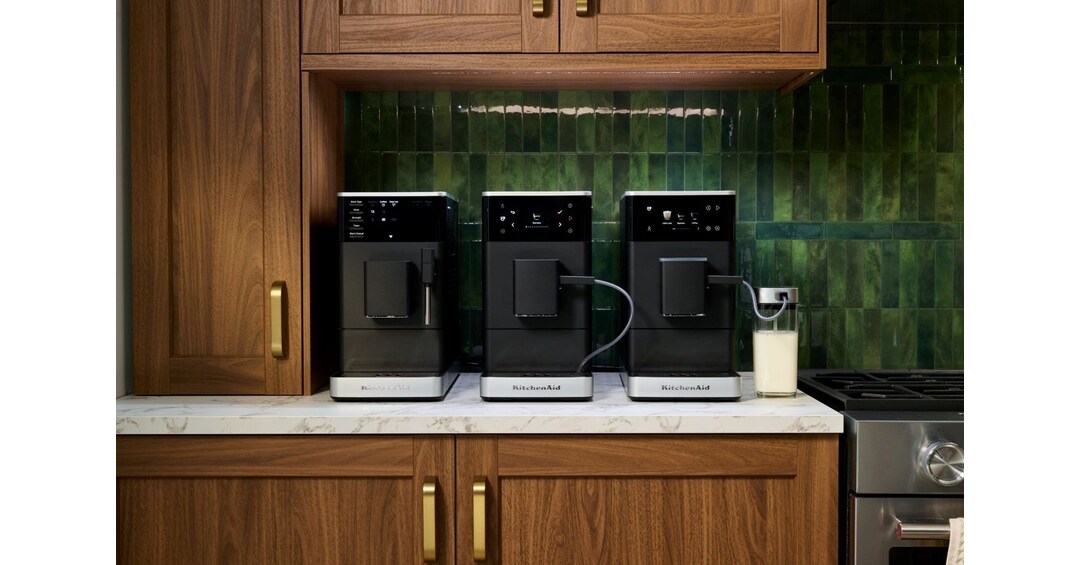
- Product Innovation: KitchenAid has launched its new Fully Automatic Espresso Machines with Iced Coffee, available in three models designed for both hot and iced coffee, utilizing lower temperature brewing to meet consumer demand for refreshing beverages, thereby reinforcing its leadership in the home coffee market.
- Enhanced User Experience: The new models feature up to 24 preset recipe options, allowing users to easily create bold espressos or refreshing iced coffees, simplifying the coffee-making process and appealing to a broad user base from novices to coffee enthusiasts.
- Quiet Operation: The espresso machines are Quiet Mark certified, indicating they are among the quietest in their category, enabling users to enjoy their coffee in a peaceful environment, thus enhancing the comfort of home life.
- Compact Design: The new machines are 25% smaller than the KF6, KF7, and KF8 models, offering space-saving benefits without compromising performance, making them ideal for modern kitchens and further boosting KitchenAid's competitiveness in the home appliance market.
See More
Whirlpool Expands Manufacturing with New Ohio Facility
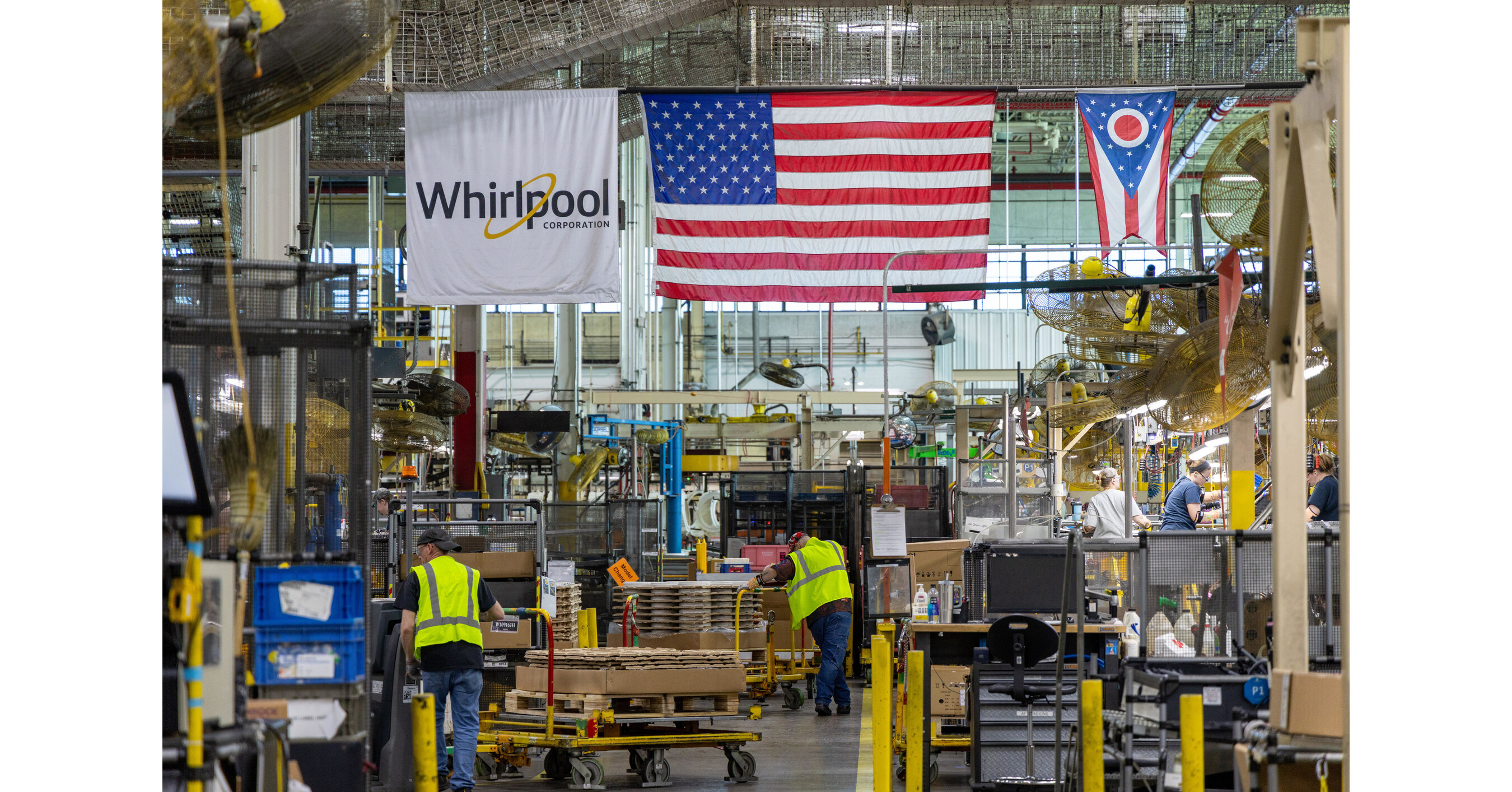
- New Factory Construction: Whirlpool Corporation plans to build a state-of-the-art production facility in Perrysburg, Ohio, with an investment of over $60 million, expected to create 100 to 150 new jobs over the next two years, thereby further solidifying its position in American manufacturing.
- Technological Upgrade: The new facility will incorporate advanced manufacturing technologies and automation focused on producing components for washers and dryers, which not only enhances production efficiency but also strengthens Whirlpool's competitive edge in the appliance market.
- Commitment to Domestic Investment: Whirlpool has invested $23 billion in manufacturing, labor, and logistics in the past decade, with over $6 billion spent with U.S. suppliers last year, demonstrating its strong confidence in the U.S. manufacturing sector.
- Policy Support: The investment is subject to approval from JobsOhio and a tax credit from the State of Ohio, reflecting Whirlpool's attention to the policy environment while expanding production capacity, which is expected to further drive local economic development.
See More

Whirlpool Expands Manufacturing Footprint with New Ohio Facility
- New Factory Construction: Whirlpool Corporation plans to build a state-of-the-art production facility in Perrysburg, Ohio, with an investment of over $60 million, expected to create 100 to 150 new jobs over the next two years, further solidifying its leadership in U.S. manufacturing.
- Technology Upgrade: The new facility will incorporate advanced manufacturing technologies and automation, focusing on producing components and subassemblies for washers and dryers, which is anticipated to enhance production efficiency and product quality, thereby strengthening the company's competitive edge in the appliance market.
- Ongoing Investment: This expansion is part of Whirlpool's continued investment in U.S. manufacturing, following a $300 million investment in laundry operations last year that added a new production line and created 400 to 600 new jobs, demonstrating the company's confidence and commitment to the U.S. market.
- Local Economic Impact: The establishment of the new factory will not only bring job opportunities to the Perrysburg area but also boost the local economy, as Whirlpool has invested $23 billion in manufacturing, labor, and logistics in the U.S. over the past decade, highlighting its focus on the American supply chain.
See More
Whirlpool to Invest in New Manufacturing Facility in Ohio
- New Facility Investment: Whirlpool plans to invest $60 million in a new manufacturing facility in Perrysburg, Ohio, which is expected to create between 100 and 150 new jobs over the next two years, thereby boosting the local economy.
- Facility Retrofit: The company has acquired a former solar panel manufacturing building and will retrofit it with advanced manufacturing technology and automation, focusing on producing components and subassemblies for washers and dryers to support existing operations.
- Financial Performance: Whirlpool's latest earnings report indicated flat Q4 revenue of approximately $4.1 billion, with an improved operating margin of about 5.9%, although full-year 2025 organic revenue is expected to remain flat due to heavy promotions and roughly $300 million in tariff headwinds.
- Future Outlook: Management's guidance for 2026 includes low single-digit revenue growth and margin expansion, despite EPS guidance falling below consensus expectations, highlighting the challenges and opportunities the company faces during its transition.
See More

Sysco and McCormick Announce Major Acquisitions
- Sysco Acquisition Update: Sysco is acquiring Restaurant Depot for $26 billion, aiming to enhance its supply chain efficiency across 700,000 restaurants, although it faces potential antitrust scrutiny that could complicate the deal.
- McCormick and Unilever Merger: McCormick announced a $44 billion merger with Unilever's food division, despite being valued at only $14 billion itself, indicating a strategic move to leverage scale and synergies, though past similar deals have often failed to deliver expected value.
- M&A Activity in Food Sector: The recent surge in mergers within the food industry highlights a market trend towards consolidation and economies of scale, yet historical data suggests that many large consumer brand mergers have not yielded positive outcomes, prompting investors to proceed with caution.
- Eli Lilly's Centessa Acquisition: Eli Lilly is acquiring Centessa Pharmaceuticals for $7.8 billion, focusing on expediting the market entry of a promising narcolepsy treatment, despite Centessa lacking commercial products, with success hinging on upcoming clinical trial results.
See More
Analysis of SaaS Companies' Prospects Amid AI Disruption
- Market Panic Intensifies: SaaS companies are experiencing severe market panic, as evidenced by the iShares Expanded Tech-Software Sector ETF (IGV) dropping over 30% in the past six months, compared to a mere 9% decline in the NASDAQ, indicating a significant loss of investor confidence in SaaS stocks.
- Chegg's Collapse: The online homework help platform Chegg has seen its stock plummet over 99% since its peak in 2021, as its core product has been replaced by free AI tools like ChatGPT, leading to a 40% year-over-year revenue decline, highlighting the tangible threat AI poses to certain SaaS companies.
- HubSpot and Constellation's Dilemma: Despite HubSpot and Constellation Software achieving all-time highs in revenue and free cash flow, their valuations have plummeted, with HubSpot trading at a mere 4 times sales and Constellation at 3 times, reflecting a pessimistic outlook from the market regarding their futures.
- AI as a Double-Edged Sword: While AI poses a threat to SaaS companies, some experts believe it could also serve as an advantage, particularly for firms like ServiceNow and Cadence, which may leverage AI effectively to gain a competitive edge in the evolving market landscape.
See More
KitchenAid Launches Fully Automatic Espresso Machines with Iced Coffee
- Product Innovation: KitchenAid has launched its new Fully Automatic Espresso Machines with Iced Coffee, available in three models designed for both hot and iced coffee, utilizing lower temperature brewing to meet consumer demand for refreshing beverages, thereby reinforcing its leadership in the home coffee market.
- Enhanced User Experience: The new models feature up to 24 preset recipe options, allowing users to easily create bold espressos or refreshing iced coffees, simplifying the coffee-making process and appealing to a broad user base from novices to coffee enthusiasts.
- Quiet Operation: The espresso machines are Quiet Mark certified, indicating they are among the quietest in their category, enabling users to enjoy their coffee in a peaceful environment, thus enhancing the comfort of home life.
- Compact Design: The new machines are 25% smaller than the KF6, KF7, and KF8 models, offering space-saving benefits without compromising performance, making them ideal for modern kitchens and further boosting KitchenAid's competitiveness in the home appliance market.
See More
Whirlpool Expands Manufacturing with New Ohio Facility
- New Factory Construction: Whirlpool Corporation plans to build a state-of-the-art production facility in Perrysburg, Ohio, with an investment of over $60 million, expected to create 100 to 150 new jobs over the next two years, thereby further solidifying its position in American manufacturing.
- Technological Upgrade: The new facility will incorporate advanced manufacturing technologies and automation focused on producing components for washers and dryers, which not only enhances production efficiency but also strengthens Whirlpool's competitive edge in the appliance market.
- Commitment to Domestic Investment: Whirlpool has invested $23 billion in manufacturing, labor, and logistics in the past decade, with over $6 billion spent with U.S. suppliers last year, demonstrating its strong confidence in the U.S. manufacturing sector.
- Policy Support: The investment is subject to approval from JobsOhio and a tax credit from the State of Ohio, reflecting Whirlpool's attention to the policy environment while expanding production capacity, which is expected to further drive local economic development.
See More
Whirlpool Expands Manufacturing Footprint with New Ohio Facility
- New Factory Construction: Whirlpool Corporation plans to build a state-of-the-art production facility in Perrysburg, Ohio, with an investment of over $60 million, expected to create 100 to 150 new jobs over the next two years, further solidifying its leadership in U.S. manufacturing.
- Technology Upgrade: The new facility will incorporate advanced manufacturing technologies and automation, focusing on producing components and subassemblies for washers and dryers, which is anticipated to enhance production efficiency and product quality, thereby strengthening the company's competitive edge in the appliance market.
- Ongoing Investment: This expansion is part of Whirlpool's continued investment in U.S. manufacturing, following a $300 million investment in laundry operations last year that added a new production line and created 400 to 600 new jobs, demonstrating the company's confidence and commitment to the U.S. market.
- Local Economic Impact: The establishment of the new factory will not only bring job opportunities to the Perrysburg area but also boost the local economy, as Whirlpool has invested $23 billion in manufacturing, labor, and logistics in the U.S. over the past decade, highlighting its focus on the American supply chain.
See More
Whirlpool to Invest in New Manufacturing Facility in Ohio
- New Facility Investment: Whirlpool plans to invest $60 million in a new manufacturing facility in Perrysburg, Ohio, which is expected to create between 100 and 150 new jobs over the next two years, thereby boosting the local economy.
- Facility Retrofit: The company has acquired a former solar panel manufacturing building and will retrofit it with advanced manufacturing technology and automation, focusing on producing components and subassemblies for washers and dryers to support existing operations.
- Financial Performance: Whirlpool's latest earnings report indicated flat Q4 revenue of approximately $4.1 billion, with an improved operating margin of about 5.9%, although full-year 2025 organic revenue is expected to remain flat due to heavy promotions and roughly $300 million in tariff headwinds.
- Future Outlook: Management's guidance for 2026 includes low single-digit revenue growth and margin expansion, despite EPS guidance falling below consensus expectations, highlighting the challenges and opportunities the company faces during its transition.
See More
Sysco and McCormick Announce Major Acquisitions
- Sysco Acquisition Update: Sysco is acquiring Restaurant Depot for $26 billion, aiming to enhance its supply chain efficiency across 700,000 restaurants, although it faces potential antitrust scrutiny that could complicate the deal.
- McCormick and Unilever Merger: McCormick announced a $44 billion merger with Unilever's food division, despite being valued at only $14 billion itself, indicating a strategic move to leverage scale and synergies, though past similar deals have often failed to deliver expected value.
- M&A Activity in Food Sector: The recent surge in mergers within the food industry highlights a market trend towards consolidation and economies of scale, yet historical data suggests that many large consumer brand mergers have not yielded positive outcomes, prompting investors to proceed with caution.
- Eli Lilly's Centessa Acquisition: Eli Lilly is acquiring Centessa Pharmaceuticals for $7.8 billion, focusing on expediting the market entry of a promising narcolepsy treatment, despite Centessa lacking commercial products, with success hinging on upcoming clinical trial results.
See More