

August Jobs Data: Potential Catalyst for a Homebuilder ETF Surge

Weak Job Growth: The August jobs report revealed a significant slowdown in U.S. nonfarm payrolls, with only 22,000 jobs added, far below expectations and marking the first net job loss since the pandemic.
Market Reaction: The disappointing labor data increased expectations for Federal Reserve interest rate cuts, leading to a rise in stock prices, a drop in Treasury yields, and a shift towards sectors likely to benefit from lower borrowing costs.
Housing Sector Gains: Homebuilders and housing-related ETFs, such as ITB and XHB, saw notable gains as lower mortgage rates are expected to boost demand in a sector previously hindered by affordability issues.
Broader Market Trends: Alongside housing, cyclical stocks and precious metals also experienced a rally, indicating a potential shift in investor sentiment towards sectors that could thrive in a lower interest rate environment.
Trade with 70% Backtested Accuracy
Analyst Views on NVR

About NVR
About the author


2026 Housing Market Outlook: Comparing Lennar and NVR


- Lennar's Market Performance: In FY 2025, Lennar reported revenue of nearly $32.7 billion, a decline of approximately 4.2% year-over-year, with net income around $1.6 billion and a net margin of about 5%, indicating its ability to maintain profitability despite challenges in managing a complex supply chain.
- NVR's Profitability: NVR generated approximately $9.6 billion in revenue for FY 2025, down about 4.9% year-over-year, with net income close to $1.4 billion and a net margin of roughly 13%, demonstrating its unique land-light model's advantage in maintaining high profitability amid market fluctuations.
- Risk Analysis: Lennar faces risks from the cyclical nature of the housing market, particularly as rising interest rates could increase home buying costs, while NVR mitigates capital risk through fixed-price lot purchase agreements, although it still relies on independent contractors for construction, posing external risks.
- Valuation Comparison: Lennar's price-to-sales ratio stands at 0.7x, making it more attractive compared to NVR's 2.1x, yet NVR's forward P/E ratio of 18.8x reflects market recognition of its stable profitability amidst economic uncertainties.

Comparative Analysis of Lennar and NVR in the Housing Market
- Revenue Comparison: Lennar reported nearly $32.7 billion in revenue for FY 2025, a decline of approximately 4.2%, while NVR generated about $9.6 billion, down about 4.9%, indicating similar performance under market pressures and reflecting overall weakness in the housing market.
- Net Income and Margins: Lennar's net income was around $1.6 billion with a net margin of about 5%, whereas NVR achieved a net income close to $1.4 billion and a net margin of 13%, highlighting NVR's superior cost control and profitability.
- Financial Health Metrics: As of November 2025, Lennar's current ratio was approximately 3.1 and its debt-to-equity ratio stood at 0.3; in comparison, NVR's current ratio was 4.0 with a similar debt-to-equity ratio of 0.3, indicating comparable financial structures but with NVR showing stronger liquidity.
- Market Risks and Strategies: Lennar faces risks from rising interest rates that could dampen buyer demand, while NVR's land-light model mitigates risks, although its reliance on independent contractors for construction introduces operational risks, showcasing differing strategies in navigating market volatility.

Congress Passes Housing Act, Boosting Market Sentiment

- Legislative Impact: The bipartisan 21st Century ROAD to Housing Act, passed by Congress, is hailed as the most significant federal housing supply legislation since 1990, aiming to cut red tape and limit institutional purchases, which is expected to lower building costs and boost demand for new homes.
- Market Reaction: Despite Trump canceling the signing ceremony, builder stocks surged, with NVR and Champion Homes rising 6.4% and 4.4% respectively, indicating strong market confidence in the housing sector following the new legislation.
- KB Home Performance: KB Home reported Q2 revenue of $1.11 billion, exceeding the $1.10 billion consensus, highlighting robust demand for new construction even as mortgage rates remain high at 6.56%, showcasing builders' effective sales strategies.
- Macroeconomic Impact: The 10-year Treasury yield dropped below 4.5%, reducing mortgage rates and improving affordability for buyers, which further stimulates demand for new homes, suggesting resilience in long-term housing demand.
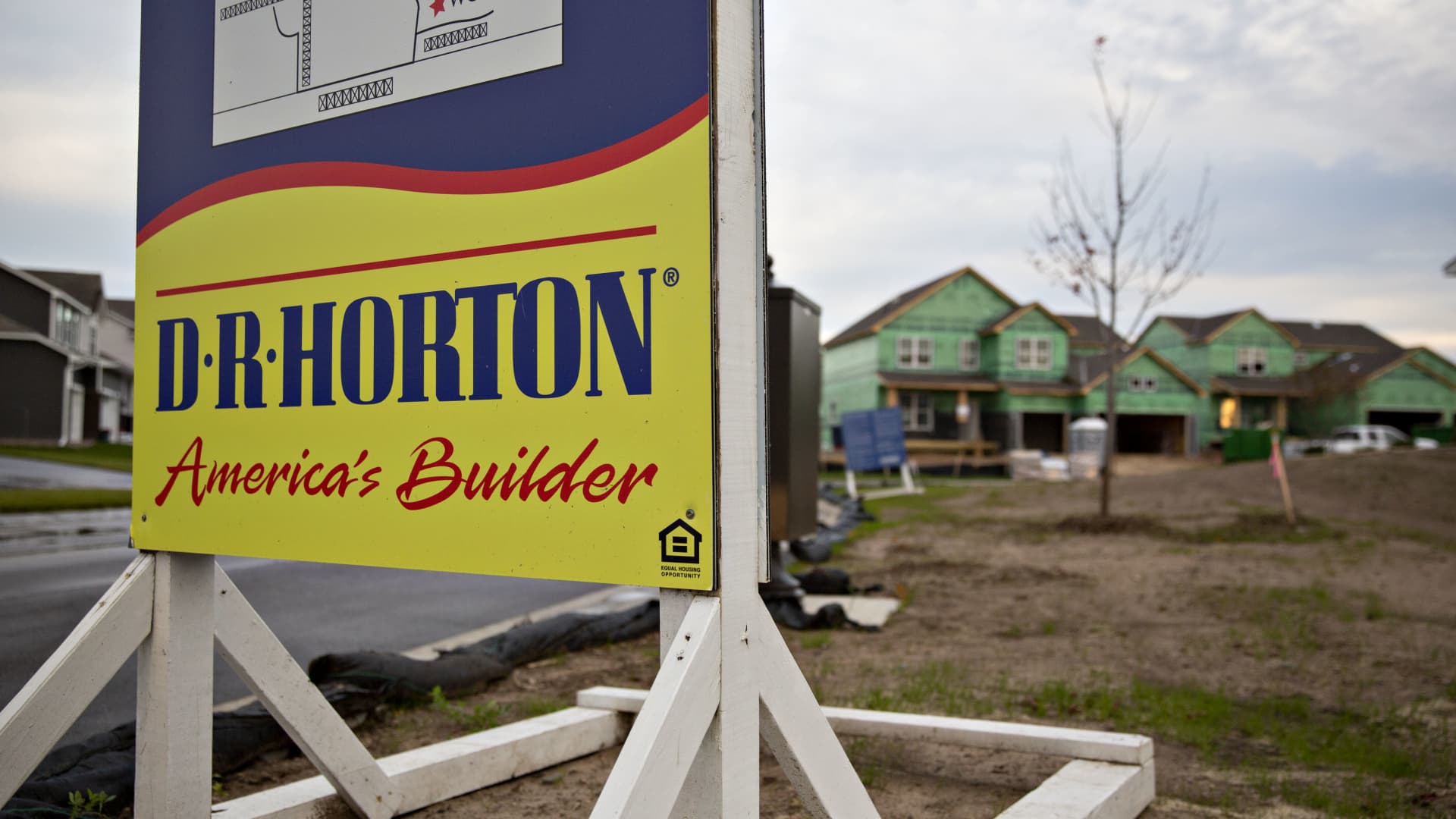
U.S. Homebuilder Stocks Surge Following Housing Bill Passage

- Homebuilder Stock Rally: U.S. homebuilder stocks surged after the House passed a bill aimed at accelerating the construction and availability of affordable housing, with the PHLX Housing Index rising 5.4% to briefly hit its highest level since February 25, indicating strong market optimism regarding housing policy.
- Long-Term Benefits Anticipated: Analysts at Evercore ISI noted that while the bill may not provide immediate benefits to homebuilders, it could significantly alleviate long-term housing supply issues, enhancing the sector's recovery prospects.
- Uncertainty Over Trump's Signature: President Trump canceled his plan to sign the bill, creating uncertainty as he did not indicate a veto; if he takes no action within 10 days, the bill will automatically become law, adding a layer of unpredictability to the market.
- Strong Individual Stock Performance: Major builders like D.R. Horton and Lennar saw their shares rise over 6%, while PulteGroup jumped more than 8%, reflecting market optimism about future housing policies, particularly in the context of the upcoming midterm elections.

Three S&P 500 Stocks Facing Challenges


- Lockheed Martin's Growth Challenges: Lockheed Martin (LMT) has experienced only a 2.6% annual revenue growth over the past five years, significantly lagging behind other industrial firms, while its earnings per share have declined by 3.7% annually, indicating deteriorating profitability; with a current share price of $547.48 and a forward P/E of 17.2, investors should exercise caution.
- Northrop Grumman's Weak Demand: Northrop Grumman (NOC) faces similar growth issues, with an estimated sales growth of only 5.4% for the next 12 months, reflecting soft demand, and its earnings per share have grown just 3.1% annually over the past five years; trading at $553.75 with a forward P/E of 19.1, the investment risk is heightened.
- NVR's Stagnant Sales: NVR has seen flat sales over the last two years, indicating a need for new growth strategies during this cycle, while its earnings per share have fallen by 7.5% annually, suggesting reduced profitability; currently priced at $6,470 with a forward P/E of 16.7, caution is advised for potential investors.
- Market Disparity Intensifies: As the market rapidly differentiates, the gap between quality stocks and overvalued ones is widening, prompting investors to pay attention to the impact of AI on sectors to timely adjust their investment strategies.
Market Capitalization Comparison: NVR vs CF

- Market Cap Comparison: NVR Inc. has a market capitalization of $17.02 billion, compared to CF Industries Holdings Inc. at $16.79 billion, indicating NVR's relative strength in the market, which may attract more large investors.
- Investor Misconceptions: Many beginners mistakenly believe that a higher stock price indicates greater value, but market capitalization provides a more accurate comparison of company value, aiding investors in making informed decisions.
- Market Position Impact: Market capitalization determines a company's size tier among peers, directly influencing which mutual funds and ETFs are willing to hold these stocks, particularly as large funds tend to favor companies with market caps over $10 billion.
- Stock Price Fluctuations: At Thursday's close, NVR's stock rose approximately 2.7%, while CF's stock fell about 2.4%, reflecting the market's positive sentiment towards NVR and negative sentiment towards CF.
2026 Housing Market Outlook: Comparing Lennar and NVR
- Lennar's Market Performance: In FY 2025, Lennar reported revenue of nearly $32.7 billion, a decline of approximately 4.2% year-over-year, with net income around $1.6 billion and a net margin of about 5%, indicating its ability to maintain profitability despite challenges in managing a complex supply chain.
- NVR's Profitability: NVR generated approximately $9.6 billion in revenue for FY 2025, down about 4.9% year-over-year, with net income close to $1.4 billion and a net margin of roughly 13%, demonstrating its unique land-light model's advantage in maintaining high profitability amid market fluctuations.
- Risk Analysis: Lennar faces risks from the cyclical nature of the housing market, particularly as rising interest rates could increase home buying costs, while NVR mitigates capital risk through fixed-price lot purchase agreements, although it still relies on independent contractors for construction, posing external risks.
- Valuation Comparison: Lennar's price-to-sales ratio stands at 0.7x, making it more attractive compared to NVR's 2.1x, yet NVR's forward P/E ratio of 18.8x reflects market recognition of its stable profitability amidst economic uncertainties.
Comparative Analysis of Lennar and NVR in the Housing Market
- Revenue Comparison: Lennar reported nearly $32.7 billion in revenue for FY 2025, a decline of approximately 4.2%, while NVR generated about $9.6 billion, down about 4.9%, indicating similar performance under market pressures and reflecting overall weakness in the housing market.
- Net Income and Margins: Lennar's net income was around $1.6 billion with a net margin of about 5%, whereas NVR achieved a net income close to $1.4 billion and a net margin of 13%, highlighting NVR's superior cost control and profitability.
- Financial Health Metrics: As of November 2025, Lennar's current ratio was approximately 3.1 and its debt-to-equity ratio stood at 0.3; in comparison, NVR's current ratio was 4.0 with a similar debt-to-equity ratio of 0.3, indicating comparable financial structures but with NVR showing stronger liquidity.
- Market Risks and Strategies: Lennar faces risks from rising interest rates that could dampen buyer demand, while NVR's land-light model mitigates risks, although its reliance on independent contractors for construction introduces operational risks, showcasing differing strategies in navigating market volatility.
Congress Passes Housing Act, Boosting Market Sentiment
- Legislative Impact: The bipartisan 21st Century ROAD to Housing Act, passed by Congress, is hailed as the most significant federal housing supply legislation since 1990, aiming to cut red tape and limit institutional purchases, which is expected to lower building costs and boost demand for new homes.
- Market Reaction: Despite Trump canceling the signing ceremony, builder stocks surged, with NVR and Champion Homes rising 6.4% and 4.4% respectively, indicating strong market confidence in the housing sector following the new legislation.
- KB Home Performance: KB Home reported Q2 revenue of $1.11 billion, exceeding the $1.10 billion consensus, highlighting robust demand for new construction even as mortgage rates remain high at 6.56%, showcasing builders' effective sales strategies.
- Macroeconomic Impact: The 10-year Treasury yield dropped below 4.5%, reducing mortgage rates and improving affordability for buyers, which further stimulates demand for new homes, suggesting resilience in long-term housing demand.
U.S. Homebuilder Stocks Surge Following Housing Bill Passage
- Homebuilder Stock Rally: U.S. homebuilder stocks surged after the House passed a bill aimed at accelerating the construction and availability of affordable housing, with the PHLX Housing Index rising 5.4% to briefly hit its highest level since February 25, indicating strong market optimism regarding housing policy.
- Long-Term Benefits Anticipated: Analysts at Evercore ISI noted that while the bill may not provide immediate benefits to homebuilders, it could significantly alleviate long-term housing supply issues, enhancing the sector's recovery prospects.
- Uncertainty Over Trump's Signature: President Trump canceled his plan to sign the bill, creating uncertainty as he did not indicate a veto; if he takes no action within 10 days, the bill will automatically become law, adding a layer of unpredictability to the market.
- Strong Individual Stock Performance: Major builders like D.R. Horton and Lennar saw their shares rise over 6%, while PulteGroup jumped more than 8%, reflecting market optimism about future housing policies, particularly in the context of the upcoming midterm elections.
Three S&P 500 Stocks Facing Challenges
- Lockheed Martin's Growth Challenges: Lockheed Martin (LMT) has experienced only a 2.6% annual revenue growth over the past five years, significantly lagging behind other industrial firms, while its earnings per share have declined by 3.7% annually, indicating deteriorating profitability; with a current share price of $547.48 and a forward P/E of 17.2, investors should exercise caution.
- Northrop Grumman's Weak Demand: Northrop Grumman (NOC) faces similar growth issues, with an estimated sales growth of only 5.4% for the next 12 months, reflecting soft demand, and its earnings per share have grown just 3.1% annually over the past five years; trading at $553.75 with a forward P/E of 19.1, the investment risk is heightened.
- NVR's Stagnant Sales: NVR has seen flat sales over the last two years, indicating a need for new growth strategies during this cycle, while its earnings per share have fallen by 7.5% annually, suggesting reduced profitability; currently priced at $6,470 with a forward P/E of 16.7, caution is advised for potential investors.
- Market Disparity Intensifies: As the market rapidly differentiates, the gap between quality stocks and overvalued ones is widening, prompting investors to pay attention to the impact of AI on sectors to timely adjust their investment strategies.
Market Capitalization Comparison: NVR vs CF
- Market Cap Comparison: NVR Inc. has a market capitalization of $17.02 billion, compared to CF Industries Holdings Inc. at $16.79 billion, indicating NVR's relative strength in the market, which may attract more large investors.
- Investor Misconceptions: Many beginners mistakenly believe that a higher stock price indicates greater value, but market capitalization provides a more accurate comparison of company value, aiding investors in making informed decisions.
- Market Position Impact: Market capitalization determines a company's size tier among peers, directly influencing which mutual funds and ETFs are willing to hold these stocks, particularly as large funds tend to favor companies with market caps over $10 billion.
- Stock Price Fluctuations: At Thursday's close, NVR's stock rose approximately 2.7%, while CF's stock fell about 2.4%, reflecting the market's positive sentiment towards NVR and negative sentiment towards CF.





