
Key Takeaway
Real World Asset (RWA) tokenization has evolved from a blockchain experiment into the most significant structural shift in global finance since the advent of electronic trading. In 2026, this market has crossed $36 billion in on-chain value, with projections reaching $16 trillion by 2030 according to Boston Consulting Group. The transformation is being driven by institutional giants including BlackRock, Goldman Sachs, JPMorgan, and Ondo Finance, who are collectively building the infrastructure for a tokenized financial system that promises 24/7 liquidity, instant settlement, and democratized access to previously institutional-only assets.
The implications for investors are profound. Traditional barriers to entry in private equity, real estate, and institutional-grade fixed income are dissolving as fractional ownership becomes possible through blockchain technology. Ondo Finance, the leading RWA protocol, has already surpassed $3.7 billion in Total Value Locked and commands over 70% market share in tokenized equities. With the DTCC launching production testing of tokenized Russell 1000 stocks in July 2026, we are witnessing the transition from pilot programs to mainstream financial infrastructure.
For investors seeking exposure to this megatrend, understanding the key players, regulatory developments, and investment mechanisms is essential. The RWA sector represents not just a new asset class, but a fundamental reimagining of how value is created, transferred, and stored in the global economy.
What Is RWA Tokenization and Why Does It Matter in 2026
Real World Asset tokenization refers to the process of representing physical or financial assets as digital tokens on a blockchain. This seemingly simple concept carries transformative implications for the $10 trillion-plus markets it targets. The core value proposition centers on eliminating inefficiencies that have plagued traditional finance for decades.
The legacy financial system operates on a T+2 settlement cycle, meaning trades take two business days to clear. This creates settlement risk, ties up capital, and generates billions in unnecessary costs. Tokenized assets enable instant settlement, 24/7 trading, and programmable ownership rights that can be transferred globally in seconds rather than days.
In 2026, the RWA market has reached an inflection point. According to rwa.xyz data, total value locked in tokenized assets has grown from $5 billion in 2022 to over $36 billion today, representing 380% growth. This acceleration reflects institutional adoption rather than speculative crypto investment. BlackRock's BUIDL fund alone holds over $25 billion in tokenized assets, offering yields with instant liquidity that traditional money market funds cannot match.
The democratization aspect is equally significant. Historically, premium assets like Manhattan commercial real estate, private equity funds, and sovereign wealth-grade fixed income were accessible only to institutional investors. Tokenization enables fractional ownership, allowing retail investors to participate with minimum investments as low as $100. This expands the total addressable market for these assets by trillions of dollars while providing liquidity to previously illiquid markets.
Ondo Finance: The Leading RWA Tokenization Platform
Ondo Finance has emerged as the dominant player in the RWA tokenization space, commanding over 70% market share in tokenized equities and $3.78 billion in Total Value Locked as of mid-2026. The protocol's success stems from its three flagship products that bridge traditional finance with blockchain infrastructure.
USDY, Ondo's yield-bearing stablecoin alternative, is backed by short-term U.S. Treasuries and currently offers 4.65% APY with $740 million in supply across Ethereum, Solana, Mantle, Sui, and Aptos. Unlike traditional stablecoins that offer zero yield, USDY provides risk-free Treasury returns while maintaining the instant transferability of digital assets. This product has become increasingly utilized as base-layer collateral within DeFi protocols, serving as an alternative to non-yielding stablecoins for sophisticated investors.
OUSG represents Ondo's institutional-grade offering, providing permissioned access to tokenized Treasury funds backed directly by BlackRock's BUIDL money market fund. Ondo is BUIDL's single largest holder, demonstrating the deep institutional integration the protocol has achieved. OUSG supports instant subscriptions and redemptions via USDC or PYUSD, offering institutional capital constant access to Treasury yields within a compliant, KYC-gated environment.
The most ambitious product is Ondo Global Markets (GM), which offers tokenized exposure to over 260 U.S. stocks and ETFs including SPY, QQQ, NVDA, TSLA, and GOOGL. Launched in September 2025, OGM crossed $1 billion in TVL by May 2026, becoming the first tokenized equities platform to achieve this milestone. Available on Ethereum, Solana, and BNB Chain, OGM provides 24/7 trading access to traditional equities for qualified international investors.
Institutional Partnerships: BlackRock, Goldman Sachs, and JPMorgan
The RWA revolution is not being led by crypto startups alone. The partnership list behind Ondo Finance reads like a Fortune 500 financial services directory, with live integrations that demonstrate serious institutional commitment to tokenization.
BlackRock's involvement represents the most significant institutional endorsement of RWA tokenization. The world's largest asset manager has not only launched its BUIDL fund but has made Ondo its single largest holder. This creates a symbiotic relationship where BlackRock provides the underlying Treasury exposure while Ondo delivers the blockchain infrastructure for global distribution. The BUIDL fund has grown to over $25 billion in AUM, demonstrating massive demand for tokenized fixed income products.
JPMorgan's integration through its Kinexys platform enables real-time cross-border OUSG redemption with settlement in under 5 seconds. This partnership, announced in May 2026, represents the first time a major U.S. bank has enabled instant blockchain-based settlement for Treasury products. The implications for global treasury management are substantial, as corporations can now move funds internationally with the speed of cryptocurrency but the stability of government-backed assets.
Goldman Sachs has launched its Digital Asset Platform (GS DAP) to facilitate automated issuance and lifecycle management of tokenized products. This infrastructure play positions Goldman to capture significant market share as tokenization scales across asset classes. The platform significantly lowers overhead costs for managing thousands of investors in a single asset pool, making fractionalized products economically viable.
Additional partnerships include Mastercard, which has integrated Ondo into its Multi-Token Network for RWA settlement; Fidelity, which has incorporated OUSG into tokenized fund strategies; and PayPal, which established a $25 million facility connecting PYUSD with Ondo yield products. These integrations demonstrate that RWA tokenization is becoming embedded in mainstream financial infrastructure.
The DTCC Pilot: Tokenized Stocks Go Mainstream in July 2026
The most significant development in RWA tokenization is the Depository Trust and Clearing Corporation's announcement of production testing for tokenized securities beginning July 2026. As the primary clearinghouse for U.S. securities, processing over $2 quadrillion in transactions annually, the DTCC's entry into blockchain settlement represents a watershed moment for institutional adoption.
The pilot program will bring Russell 1000 equities, major ETFs, and U.S. Treasuries onto blockchain infrastructure for the first time. Over 50 firms are participating, including BlackRock, Goldman Sachs, JPMorgan, Circle, Ondo Finance, and Ripple Prime. Limited production trades begin in July 2026, with a full service launch scheduled for October 2026.
This initiative addresses the fundamental question that has constrained RWA adoption: whether tokenized securities can deliver faster, more efficient settlement than traditional market infrastructure. The DTCC's involvement provides the regulatory clarity and institutional credibility necessary for mainstream adoption. When the organization that clears virtually all U.S. securities validates blockchain settlement, the technology transitions from experimental to essential.
The pilot will assess multiple value propositions including T+0 settlement versus traditional T+2, 24/7 trading capabilities, reduced counterparty risk through atomic settlement, and improved capital efficiency through reduced margin requirements. Success in these areas could trigger rapid adoption across the $100 trillion global securities market.
For investors, the DTCC pilot represents the clearest signal yet that tokenized assets are becoming the standard rather than the alternative. The infrastructure being tested today will likely underpin securities trading within this decade.
Investment Opportunities and How to Access Tokenized Assets
The RWA tokenization megatrend creates multiple investment opportunities across different risk profiles and asset classes. Understanding these options is essential for investors seeking exposure to this structural shift in global finance.
Direct tokenized asset exposure is available through platforms like Ondo Finance. Investors can mint USDY for yield-bearing stablecoin exposure, OUSG for institutional-grade Treasury returns, or access tokenized equities through Ondo Global Markets. These products require a Web3 wallet and completion of standard customer due diligence, but provide immediate access to yields and trading opportunities unavailable in traditional markets.
Protocol tokens represent another avenue for RWA exposure. ONDO, the native token of Ondo Finance, has demonstrated significant price appreciation as the platform's TVL has grown. With a market capitalization exceeding $2.1 billion and trading volume placing it among the top trending assets on CoinGecko, ONDO provides leveraged exposure to the growth of tokenized assets. However, investors should note that ONDO trades approximately 83% below its all-time high, reflecting both the volatility of crypto markets and the early stage of RWA adoption.
Traditional equity investors can gain RWA exposure through publicly traded companies leading the tokenization charge. BlackRock (BLK) offers exposure through its BUIDL fund growth and blockchain infrastructure investments. Goldman Sachs (GS) and JPMorgan (JPM) are positioning their digital asset platforms to capture significant market share as tokenization scales. For investors preferring diversified exposure, these traditional financial institutions provide RWA participation without direct crypto market volatility.
For sophisticated investors, private market opportunities exist in RWA infrastructure companies, tokenization platforms, and regulatory technology providers. Venture capital firms including Andreessen Horowitz, Paradigm, and Framework have made significant investments in the RWA ecosystem, signaling strong institutional confidence in the sector's growth trajectory.
Risks and Challenges in RWA Tokenization
Despite the compelling growth narrative, RWA tokenization faces significant risks and challenges that investors must understand. The technology is mature enough for production use, but regulatory, technical, and market risks remain substantial.
Regulatory uncertainty represents the primary risk factor. While the DTCC pilot and SEC filings by Ondo indicate positive regulatory momentum, the legal framework for tokenized securities remains fragmented across jurisdictions. The classification of tokens as securities, commodities, or new asset classes varies by country and continues to evolve. Regulatory changes could impact the viability of certain tokenization models or restrict access for specific investor categories.
Centralized custody risks exist in current RWA implementations. BlackRock holds the underlying assets for many tokenized products, creating a single point of failure. While bankruptcy-remote special purpose vehicles provide legal protection, the concentration of custody with traditional financial institutions contradicts the decentralization ethos of blockchain technology. Smart contract risks in bridges and cross-chain infrastructure add technical vulnerabilities that could result in fund loss.
Market risks include liquidity constraints during stress periods, correlation with traditional markets during downturns, and the potential for technological obsolescence as competing standards emerge. The RWA sector has demonstrated crypto-market volatility, with ONDO experiencing 83% drawdowns from peak prices despite strong fundamental growth.
Adoption risks center on whether institutional players will fully commit to blockchain settlement or maintain parallel traditional systems. The DTCC pilot's success is not guaranteed, and failure could delay mainstream adoption by years. Additionally, competing technologies including central bank digital currencies (CBDCs) and traditional payment system upgrades could reduce the competitive advantage of blockchain-based settlement.
Investors should approach RWA tokenization with appropriate position sizing, diversification across protocols and asset classes, and awareness that this remains an emerging technology subject to significant volatility and regulatory evolution.
The Future of Finance: $16 Trillion by 2030
The trajectory of RWA tokenization points toward a fundamental restructuring of global financial infrastructure. Boston Consulting Group's projection of $16 trillion in tokenized assets by 2030 represents not speculative growth but institutional capital voting with real dollars on the future of value transfer.
Several converging trends support this ambitious forecast. The elimination of T+2 settlement through instant blockchain settlement will save the financial industry billions annually in capital requirements and counterparty risk. The democratization of private markets through fractional ownership expands the investor base for premium assets by orders of magnitude. The integration of AI with blockchain infrastructure enables programmable compliance, automated portfolio management, and real-time risk assessment at scales impossible in traditional systems.
Standard Chartered CEO Bill Winters has stated that most transactions will eventually settle on blockchain infrastructure. When the chief executive of a 170-year-old bank makes this claim, the significance extends beyond marketing to strategic conviction. The infrastructure being built today by Ondo, BlackRock, Goldman Sachs, and the DTCC will likely underpin the financial system of the 2030s.
For investors, the question is not whether RWA tokenization will transform finance, but how to position for this transformation. The protocols, platforms, and partnerships being established today will determine the winners in a $16 trillion market. Early adoption provides asymmetric upside potential, while the institutional backing from the world's largest financial institutions provides downside protection unavailable in purely speculative crypto investments.
The RWA revolution is here. The infrastructure is live. The institutions are committed. For investors seeking exposure to the most significant financial innovation since the internet, tokenized real world assets represent an opportunity that extends far beyond cryptocurrency speculation to the fundamental architecture of global value exchange.
Conclusion
Real World Asset tokenization has transitioned from crypto experimentation to institutional infrastructure in 2026. With $36 billion already on-chain, partnerships spanning BlackRock, JPMorgan, and Goldman Sachs, and the DTCC launching production testing in July, the transformation of global finance is underway. Ondo Finance leads this revolution with $3.7 billion in TVL and 70% market share in tokenized equities, offering investors immediate access to yields and assets previously reserved for institutions.
The $16 trillion projection for 2030 is supported not by speculation but by the fundamental advantages of blockchain settlement: instant execution, 24/7 liquidity, fractional ownership, and reduced counterparty risk. As these benefits become apparent to mainstream investors, capital migration from traditional to tokenized assets will accelerate.
For investors seeking to participate in this megatrend, multiple pathways exist. Direct tokenized asset exposure through platforms like Ondo provides immediate yield and trading benefits. Protocol tokens offer leveraged exposure to platform growth. Traditional equities in BlackRock, Goldman Sachs, and JPMorgan provide diversified participation without direct crypto volatility.
The RWA opportunity extends beyond financial returns to the fundamental restructuring of how value is created, transferred, and stored in the global economy. The infrastructure being built today will define financial markets for decades. Investors who understand and position for this transformation will be best positioned to capture the value creation of the tokenized economy.
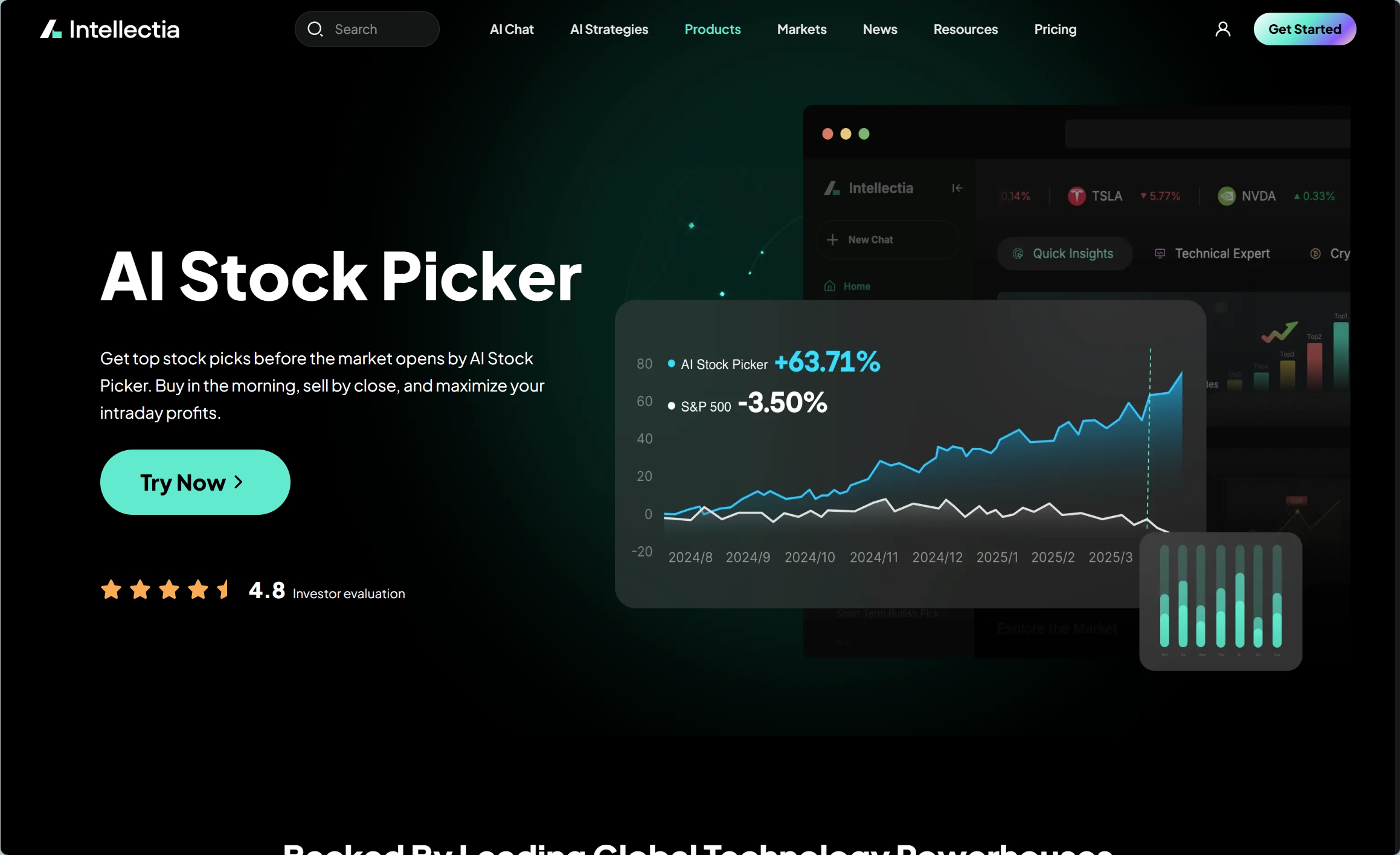
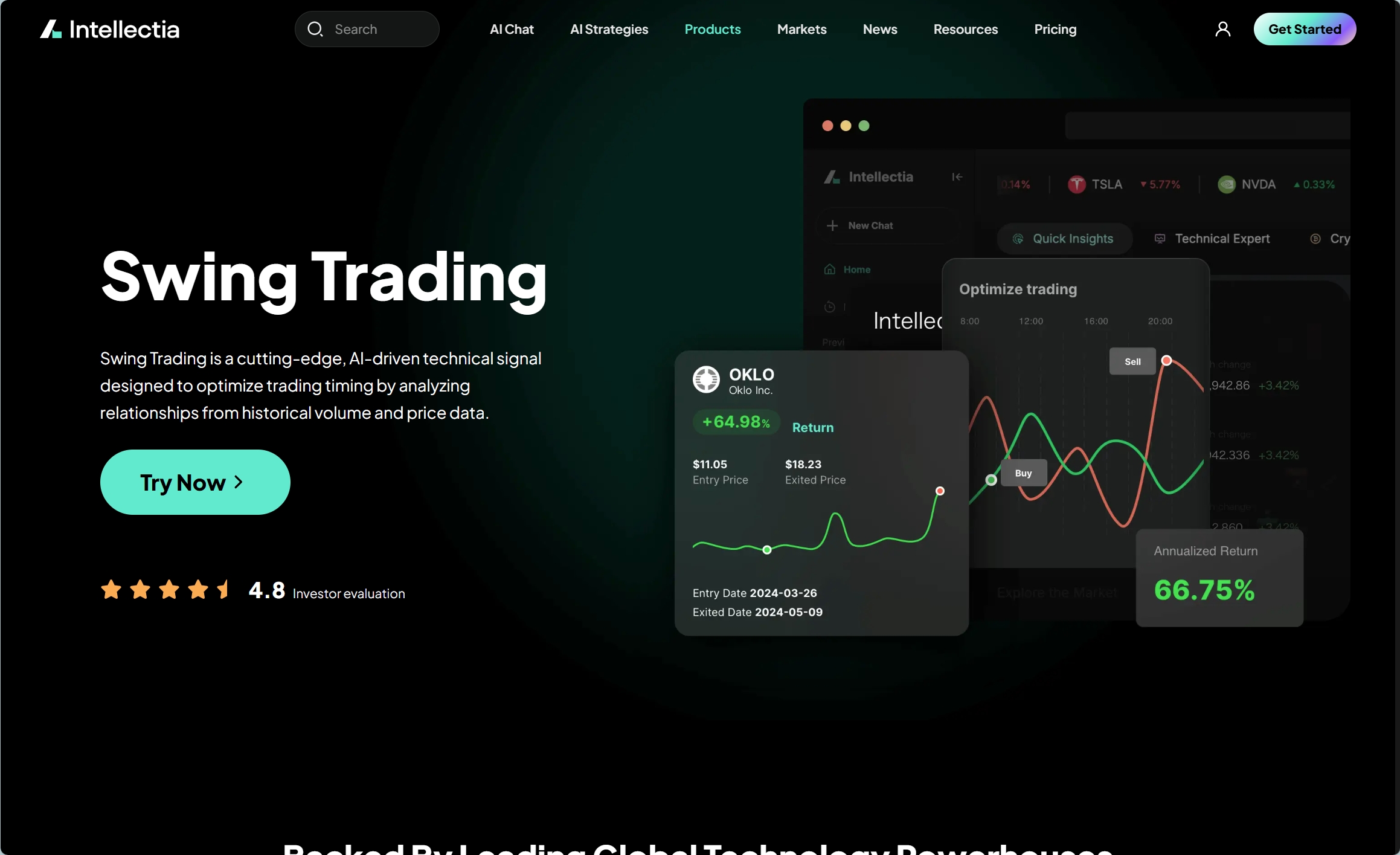
Ready to explore tokenized assets and identify the best RWA investment opportunities? Use our AI-powered stock screener to analyze Ondo Finance and other leading RWA protocols with real-time data and professional-grade analytics. Discover institutional-grade investment insights and build your RWA portfolio with confidence.
Start your RWA investment journey today by signing up for Intellectia.ai and access advanced screening tools, portfolio analytics, and expert research on the $16 trillion tokenization revolution.