
Key Takeaway
The year 2026 is shaping up to be the most consequential moment in public market capitalism since the dot-com era. Three artificial intelligence giants—SpaceX/xAI, OpenAI, and Anthropic—are collectively targeting approximately $3.8 trillion in combined market capitalization, potentially raising more capital than all U.S. IPO listings combined since 2022. This unprecedented wave of mega IPOs represents not merely an AI investment story, but a fundamental stress test for public markets as they validate the financial claims of the generative AI era through GAAP accounting, quarterly earnings discipline, and institutional scrutiny.
For investors, this IPO wave presents both extraordinary opportunities and significant risks. While these companies represent the cutting edge of technological innovation, their valuations assume flawless execution of business models that are still evolving. Understanding the distinct characteristics, financial profiles, and strategic positioning of each company is essential for making informed investment decisions in what promises to be a transformative period for technology investing.
The Scale of the 2026 AI IPO Wave
The magnitude of the 2026 AI IPO wave is difficult to overstate. SpaceX is targeting a $1.75 trillion valuation with a planned $75 billion capital raise, Anthropic is seeking approximately $965 billion with $60 billion in funding, and OpenAI is positioning for a $1 trillion valuation with similar capital needs. Combined, these three companies represent roughly 10% of the entire current U.S. stock market capitalization.
This concentration of value in just three companies raises important questions about market dynamics and investor appetite. At conventional valuation multiples, these companies would need to generate approximately $150 billion in combined annual earnings to justify their target valuations—a remarkable figure given that they currently lose approximately $20 billion collectively each year. The path from negative to positive earnings of this magnitude represents one of the most ambitious financial transformations in corporate history.
The sequencing of these IPOs matters enormously for market dynamics. SpaceX is expected to be first to market, pricing in June 2026, followed by Anthropic in October, and OpenAI in the fourth quarter. This staggered approach allows each offering to absorb market attention and capital without directly competing for the same investor dollars, though the cumulative effect on market liquidity and sector valuations remains a significant consideration.
SpaceX: The $1.75 Trillion Space-AI Hybrid
SpaceX's IPO represents more than just a rocket company going public. Through its merger with xAI and integration of Starlink and X (formerly Twitter), SpaceX is effectively asking public markets to price a conglomerate spanning space launch, satellite internet, artificial intelligence, and social media—all controlled by Elon Musk under a single stock ticker.
The financial breakdown reveals a complex picture. Starlink, the satellite connectivity division, generated $3.26 billion in Q1 2026 revenue with operating profits of $1.19 billion, demonstrating genuine profitability and scalability. However, the space launch division lost $660 million on $620 million in revenue, while the AI division (xAI, Grok, and X) lost $2.47 billion on $820 million in revenue. The consolidated entity reported $4.69 billion in revenue with operating losses of $1.94 billion.
What makes SpaceX particularly intriguing for investors is the Starlink growth story. The satellite internet service has achieved operating leverage that few infrastructure businesses ever reach, with recurring revenue from a rapidly expanding global subscriber base. The company's ability to manufacture satellites at scale and launch them on its own rockets creates a vertically integrated cost advantage that competitors struggle to match.
However, governance concerns loom large. Musk will retain absolute majority voting control through Class B shares with ten votes per share, effectively rendering public shareholders powerless in corporate decision-making. Additionally, recent Nasdaq rule changes allow mega-cap companies to be included in the Nasdaq-100 index within three weeks of listing, even with low public float. This means over $600 billion in passive index funds will be forced to buy SpaceX shares regardless of price, creating artificial demand that may not reflect fundamental value.
For investors considering AI-powered stock screening tools, SpaceX presents unique challenges. Traditional valuation metrics struggle to capture the company's diverse business mix, while the concentrated ownership structure and artificial index demand create price dynamics that fundamental analysis alone cannot predict.
OpenAI: From Non-Profit to $1 Trillion Public Company
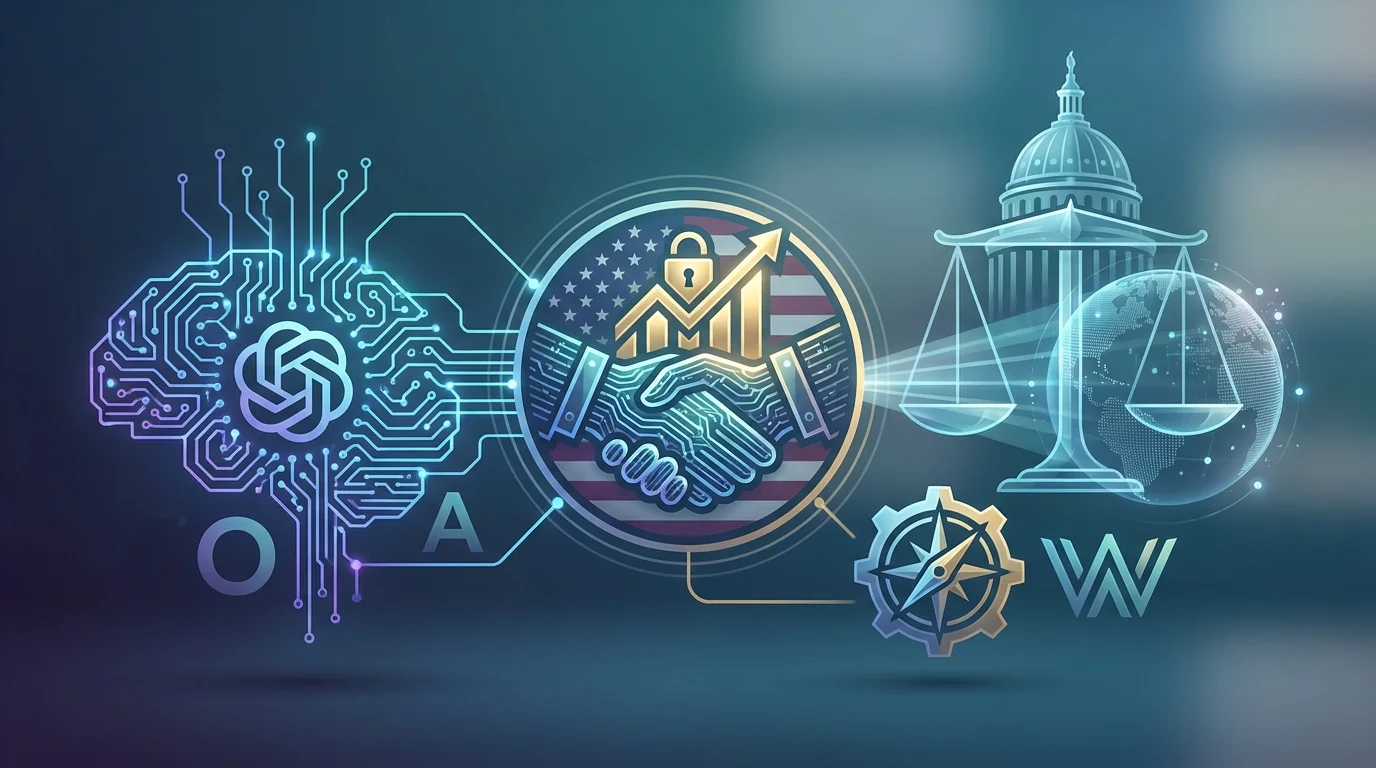
OpenAI's journey from a non-profit research lab to a $1 trillion public company represents one of the most dramatic corporate transformations in modern history. Originally founded in 2015 to ensure AI benefits humanity, the organization has ballooned into a commercial behemoth while navigating complex structural changes to enable public ownership.
The company's recent restructuring abandoned its convoluted capped-profit hybrid model to become a traditional for-profit Public Benefit Corporation (PBC). This change was necessary to accommodate massive capital infusions from partners like Microsoft and Nvidia while providing a clear ownership structure for public market investors.
OpenAI's revenue growth has been extraordinary, driven by the widespread adoption of ChatGPT and the company's API services. However, the competitive landscape is intensifying rapidly. Google's Gemini, Anthropic's Claude, and open-source alternatives are all vying for market share in the generative AI space. OpenAI's first-mover advantage remains significant, but maintaining that position will require continued innovation and substantial capital investment.
The company's path to profitability remains uncertain. Training frontier AI models requires billions of dollars in compute resources, and the arms race for talent and infrastructure shows no signs of slowing. OpenAI's ability to convert its technological leadership into sustainable economic returns will be the critical question for investors evaluating its $1 trillion valuation target.
Investors seeking exposure to the AI revolution might consider using AI stock picker tools to identify complementary positions in the AI ecosystem beyond just the headline IPOs. Companies providing the infrastructure, semiconductors, and enterprise software that enable AI adoption may offer more attractive risk-adjusted returns than the highly valued pure-play AI companies.
Anthropic: The Safety-Focused AI Challenger
Anthropic enters the public markets with a distinct positioning focused on AI safety and responsible development. Founded by former OpenAI researchers who were concerned about the pace of commercialization relative to safety research, Anthropic has built its Claude AI assistant with a strong emphasis on reducing harmful outputs and maintaining alignment with human values.
This safety-first approach has attracted significant investment from technology giants, most notably Google, which has invested billions in Anthropic as part of its strategy to compete in the generative AI space. The company's $965 billion target valuation reflects both the quality of its technology and the strategic importance of having a viable alternative to OpenAI in the market.
Anthropic's financial profile shares similarities with OpenAI—rapid revenue growth paired with substantial losses as the company invests in research and infrastructure. However, Anthropic's focused approach on enterprise applications and safety may provide a clearer path to sustainable competitive advantage than the more generalist strategy pursued by OpenAI.
The company's public benefit corporation structure explicitly commits to balancing shareholder returns with broader societal impacts from AI development. This dual mandate creates both opportunities and challenges for investors, as management decisions may prioritize safety considerations over short-term profit maximization.
Market Impact and Investor Implications
The flood of new shares from these three mega IPOs could create significant headwinds for existing AI stocks and test Wall Street's appetite for AI exposure. When companies representing 10% of the market simultaneously seek public capital, the absorption capacity of investors becomes a critical constraint.
Historical precedents suggest that massive IPO waves often coincide with market tops or significant sector rotations. The dot-com era saw similarly large capital raises from technology companies, followed by a prolonged period of underperformance as reality failed to match expectations. While the current AI boom has more substantial technological foundations than the internet bubble, valuation discipline remains essential.
For investors, the key question is whether these companies can grow into their valuations over a reasonable time horizon. Amazon, Uber, and Netflix all demonstrated that companies losing money at scale can eventually generate substantial profits, but each had clearer and more established revenue models than frontier AI in 2026. The transition from $20 billion in collective losses to $150 billion in required earnings represents a swing of historical proportions that cannot be achieved without flawless execution.
The semiconductor sector, which provides the essential infrastructure for AI development, may offer more attractive investment opportunities than the AI application companies themselves. Nvidia, AMD, and other chipmakers benefit from AI demand regardless of which specific AI models succeed, providing a diversified way to play the AI trend without taking single-company risk.
Investment Strategies for the AI IPO Era
Navigating the AI mega IPO wave requires a thoughtful approach that balances opportunity recognition with risk management. Several strategies may help investors position themselves effectively while avoiding common pitfalls.
First, consider dollar-cost averaging into positions rather than making large initial commitments. The volatility surrounding mega IPOs can create significant price swings in the first months of trading, and spreading purchases over time reduces the risk of buying at temporary peaks. This approach is particularly important given the artificial demand dynamics created by index inclusion and retail investor enthusiasm.
Second, maintain a diversified exposure to the AI theme rather than concentrating in the headline IPOs. The AI ecosystem includes semiconductor manufacturers, cloud infrastructure providers, enterprise software companies, and traditional businesses adopting AI to improve operations. A portfolio that captures value across this spectrum may perform better than one focused solely on the highly valued pure-play AI companies.
Third, pay close attention to governance structures and shareholder rights. The concentrated voting control maintained by founders at these companies means public shareholders have limited ability to influence strategy or hold management accountable. Understanding these limitations is essential for setting appropriate expectations about corporate behavior and long-term value creation.
Fourth, consider the broader market context when evaluating these opportunities. If the AI IPO wave coincides with tightening monetary policy, rising interest rates, or economic slowdown, the ability of markets to absorb these massive capital raises may be compromised. Macro conditions can overwhelm company-specific fundamentals in determining short-term performance.
For investors seeking professional guidance on navigating these complex dynamics, signing up for advanced analytics platforms can provide the tools and insights needed to make informed decisions in rapidly evolving markets.
Risks and Challenges Ahead
The AI mega IPO wave faces numerous risks that could derail the optimistic scenarios priced into current valuations. Understanding these risks is essential for investors considering participation in these offerings.
Regulatory risk represents a significant concern. Governments worldwide are grappling with how to regulate AI systems, and the outcome of these policy debates could substantially impact the business models and profitability of AI companies. Requirements for safety testing, transparency, or restrictions on certain applications could increase costs and limit growth opportunities.
Competition risk is equally important. The barriers to entry in AI are substantial but not insurmountable. Open-source models, well-funded competitors, and technological breakthroughs by established technology giants could erode the competitive advantages currently enjoyed by the leading AI companies. The rapid pace of innovation means that today's leaders may not be tomorrow's winners.
Valuation risk is perhaps the most immediate concern. The $3.8 trillion collective valuation assumes continued exponential growth in AI adoption and the successful monetization of that adoption. Any slowdown in either dimension could lead to significant multiple compression as investors reassess growth prospects. The history of technology investing is filled with examples of great companies that were poor investments because too much growth was priced in at the time of purchase.
Finally, concentration risk affects both individual investors and the broader market. When a small number of companies represents such a large share of market capitalization, portfolio outcomes become increasingly dependent on the performance of those specific companies. This concentration amplifies both upside potential and downside risk.
The Semiconductor Infrastructure Play
While the AI application companies capture headlines, the semiconductor sector that powers AI development may offer more compelling investment opportunities. Companies like Nvidia, AMD, and Broadcom provide the essential infrastructure that enables AI training and inference, regardless of which specific AI models ultimately succeed in the market.
Nvidia's dominance in AI training chips has created one of the most valuable companies in the world, with a market capitalization that has grown exponentially alongside AI investment. The company's data center revenue has surged as cloud providers and enterprises rush to build AI capabilities, and its competitive position remains strong despite increasing efforts by customers to develop alternative solutions.
AMD has emerged as a credible competitor to Nvidia in both data center and consumer AI applications. The company's MI300 series chips offer competitive performance for AI workloads, and its traditional strength in CPUs provides a foundation for integrated AI solutions. AMD's valuation, while elevated, may offer better value than the pure-play AI application companies given its diversified revenue base and established profitability.
The semiconductor sector's cyclical nature requires careful timing, but the structural demand growth driven by AI adoption provides a favorable long-term backdrop. Investors seeking exposure to the AI theme without the extreme valuations of the application layer may find the infrastructure layer more attractive.
Conclusion
The 2026 AI mega IPO wave represents a defining moment for technology investing and public markets. The simultaneous listing of SpaceX, OpenAI, and Anthropic—with combined valuations approaching $4 trillion—will test the capacity of markets to absorb new capital and validate the financial promises of the generative AI era.
For investors, this wave presents both extraordinary opportunities and significant risks. The companies at the center of this wave are genuinely transformative, with technologies that could reshape entire industries and create substantial economic value. However, their valuations assume near-flawless execution of business models that are still evolving, in a competitive landscape that remains highly uncertain.
Success in navigating this environment requires discipline, diversification, and a clear-eyed assessment of risk versus reward. The temptation to participate in historic IPOs at any price must be balanced against the reality that great companies can make poor investments when valuations detach from fundamentals.
As these companies transition from private to public ownership, they will face the unforgiving arithmetic of quarterly earnings, analyst scrutiny, and market volatility that cannot be managed through private funding rounds. How they perform under this pressure will determine whether the 2026 AI IPO wave marks the beginning of a new era of technology leadership or a cautionary tale about the dangers of excessive optimism.
For investors ready to explore the opportunities in AI and technology investing, Intellectia's AI-powered platform provides the tools and insights needed to navigate complex markets and identify attractive investment opportunities across the AI ecosystem. Whether you're considering participation in the mega IPOs or seeking exposure through the infrastructure layer, having the right analytical tools is essential for making informed decisions in this transformative period.