
Key Takeaway
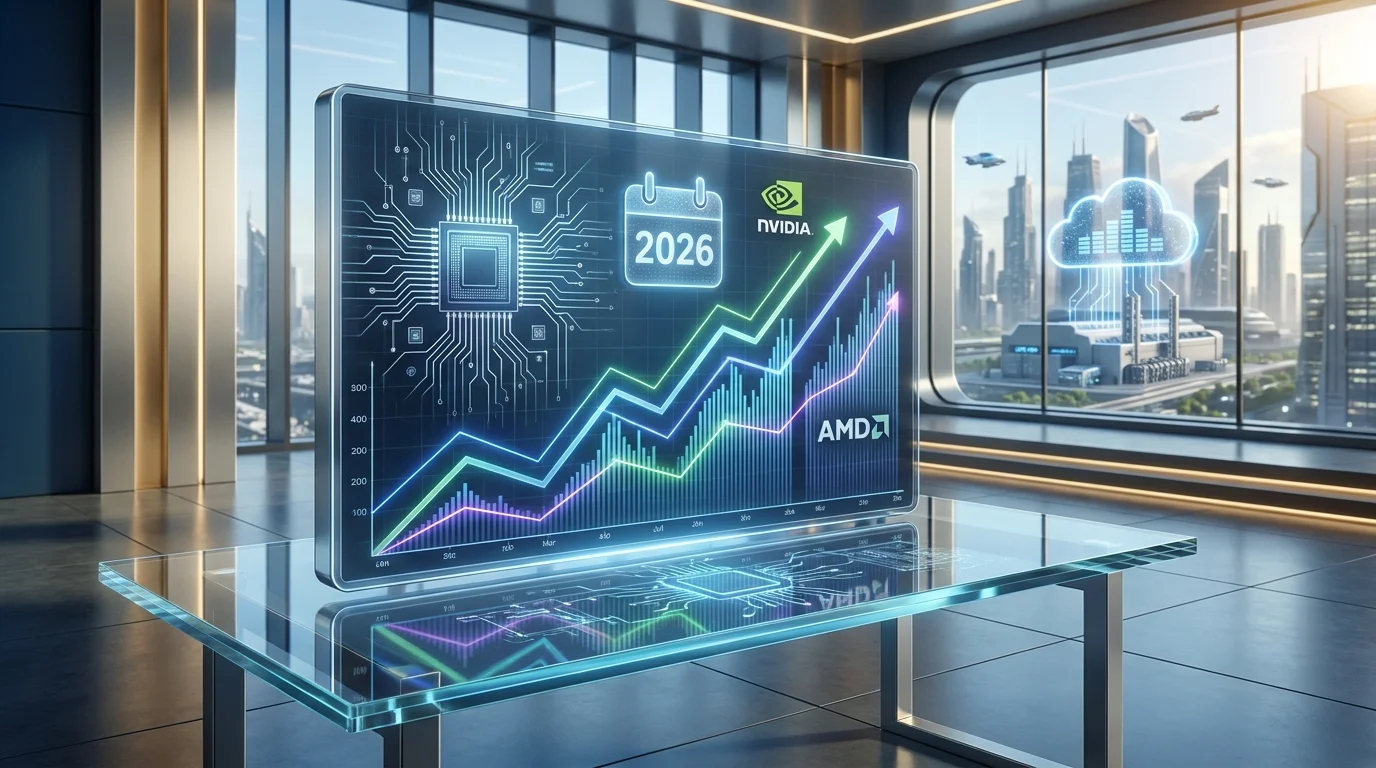
The artificial intelligence chip sector continues to dominate market headlines in July 2026, with Nvidia and Advanced Micro Devices leading the charge amid a complex landscape of record-breaking earnings, valuation concerns, and shifting investor sentiment. The PHLX chip index has gained approximately 60% year-to-date, reflecting unprecedented demand for AI infrastructure despite recent volatility that has tested even the most bullish investors convictions.
Nvidia maintains its position as the dominant force in AI accelerators, commanding a 7.5% weight in the S&P 500 that exceeds the combined allocations of the entire energy and utilities sectors. However, Junes 10.82% decline in NVDA shares has sparked legitimate questions about whether the AI trade is experiencing a healthy consolidation or facing a more significant repricing. Meanwhile, AMD has emerged as a surprising outperformer, surging 130% year-to-date as investors rotate toward alternative AI plays that offer more attractive entry points.
The Federal Reserves hawkish stance on interest rates, with Chair Kevin Warsh signaling continued commitment to price stability, has added another layer of complexity to the semiconductor investment thesis. Higher rates typically pressure growth stocks with elevated valuations, yet the structural demand for AI chips appears robust enough to withstand near-term monetary headwinds. For investors navigating this environment, understanding the nuanced differences between Nvidias data center dominance and AMDs emerging AI strategy has never been more critical.
For traders seeking to capitalize on these market movements, consider using Alphio AIs copy trading feature to mirror successful traders who specialize in semiconductor and technology sector opportunities.
The AI Chip Rally: A Mid-Year Assessment
The first half of 2026 has delivered extraordinary returns for semiconductor investors, with the Nasdaq 100 advancing 20% and the S&P 500 gaining 9.55% through June. Chip stocks have been the primary engine of this rally, driven by what Nvidia CEO Jensen Huang has described as the largest infrastructure expansion in human history. Data center revenue at Nvidia surged 92% year-over-year to $75.2 billion in the first quarter of fiscal 2027, validating the massive capital expenditures being deployed by hyperscalers including Microsoft, Google, Amazon, and Meta.
However, the rally has not been without its challenges. June witnessed a significant rotation out of mega-cap tech names, with Nvidia shedding $588 billion in market capitalization during the month. This correction was driven by multiple factors: concerns about AI spending sustainability, questions about return on investment for massive infrastructure builds, and a broader market rotation toward value and smaller-cap names. The volatility has been particularly acute for Nvidia given its outsized influence on benchmark indexes.
Despite these headwinds, the fundamental demand environment for AI chips remains exceptionally strong. Cloud providers continue to expand their AI training and inference capabilities, enterprise adoption of generative AI is accelerating, and sovereign nations are investing heavily in domestic AI infrastructure. These trends suggest that the current correction may represent a buying opportunity for long-term investors rather than the beginning of a more severe downturn.
Nvidia: The Data Center Juggernaut
Nvidias first-quarter fiscal 2027 results demonstrated why the company commands a premium valuation in the semiconductor space. Revenue of $81.6 billion represented an 85% year-over-year increase, with data center revenue of $75.2 billion driving the vast majority of growth. The companys gross margins have expanded significantly as pricing power in the AI accelerator market remains robust, allowing Nvidia to capture substantial value from the AI infrastructure buildout.
The competitive moat surrounding Nvidias CUDA software ecosystem continues to be the companys most valuable asset. While competitors like AMD and Intel have developed competitive hardware alternatives, the decade-long investment in software libraries, developer tools, and optimization frameworks has created significant switching costs for AI researchers and practitioners. This ecosystem advantage is particularly pronounced in the training of large language models, where Nvidias H100 and emerging Blackwell architectures dominate.
Nvidias networking business has emerged as an underappreciated growth driver. According to IDC data, the company led the data center Ethernet switch market by revenue in the first quarter of 2026, generating $2.1 billion and capturing 21.5% market share. The Spectrum-X platform has been particularly successful in AI-optimized networking, with Huang noting that it is now larger than all other Ethernet networking peers combined. This positions Nvidia to benefit not just from GPU sales but from the broader AI data center infrastructure buildout.
AMD: The Challengers Momentum
Advanced Micro Devices has emerged as one of the standout performers of 2026, with shares surging 130% year-to-date as investors recognize the companys improving competitive position in AI accelerators. The MI300X series has gained meaningful traction among hyperscalers seeking alternatives to Nvidias dominant H100, with Microsoft, Meta, and Oracle among the customers deploying AMDs accelerators for AI workloads.
The companys data center segment has been the primary growth engine, with revenue increasing significantly as AI accelerator adoption accelerates. AMDs strategy of offering competitive performance at more attractive price points has resonated with customers facing budget constraints and seeking to diversify their supplier base. The open-source ROCm software platform, while still trailing CUDA in ecosystem maturity, has made meaningful progress in supporting popular AI frameworks including PyTorch and TensorFlow.
Beyond AI accelerators, AMD continues to gain share in the server CPU market with its EPYC processors. The combination of strong data center CPU positioning and emerging AI accelerator capabilities creates a compelling total addressable market opportunity. For investors seeking exposure to the AI infrastructure buildout at a more attractive valuation than Nvidia, AMD represents a compelling alternative with significant upside potential.
Valuation Considerations and Market Risks
The valuation gap between Nvidia and its semiconductor peers has become a central debate among investors. Nvidia trades at a significant premium to the broader semiconductor sector, reflecting its dominant market position and exceptional growth rates. However, this premium leaves the stock vulnerable to any signs of slowing demand or competitive encroachment. The June correction served as a reminder that even the highest-quality growth stocks can experience significant volatility when sentiment shifts.
Interest rate risk remains a key consideration for semiconductor investors. The Federal Reserves commitment to restoring price stability has pushed Treasury yields higher, creating headwinds for growth stocks with long-duration cash flows. Chair Kevin Warshs hawkish remarks have reinforced expectations that rates may remain elevated for an extended period, potentially compressing valuation multiples across the technology sector.
Supply chain considerations also warrant attention. While the acute shortages of 2021-2022 have largely resolved, the complex global semiconductor supply chain remains vulnerable to geopolitical disruptions. Tensions between the United States and China continue to create uncertainty, with export controls on advanced AI chips representing a persistent risk factor for Nvidia and AMDs China exposure. Investors should monitor regulatory developments closely as they assess the long-term growth trajectories of these companies.
Investment Strategies for the Current Environment
For investors considering exposure to AI chip stocks in the current environment, several strategies warrant consideration. Dollar-cost averaging into positions can help mitigate the impact of near-term volatility while building exposure to what remains a compelling long-term growth theme. The June correction has improved entry points for patient investors willing to look through near-term noise.
Diversification within the AI semiconductor theme can also reduce portfolio risk. While Nvidia and AMD dominate headlines, other beneficiaries of the AI buildout include memory manufacturers like Micron, networking specialists like Marvell, and semiconductor equipment providers like ASML and Applied Materials. A diversified approach can capture the broad AI infrastructure trend while reducing single-stock risk.
For active traders, the elevated volatility in chip stocks creates opportunities for tactical positioning. Options strategies including cash-secured puts and covered calls can generate income while providing exposure to the sector. However, investors should be mindful of the risks associated with leveraged positions in volatile stocks and ensure that any tactical trades align with their overall risk tolerance.
Explore Alphio AIs agentic trading features to automate your portfolio management with AI-powered strategies tailored to the semiconductor sectors unique characteristics.
The Road Ahead: Second Half 2026 Outlook
As we look toward the second half of 2026, several catalysts could drive continued volatility and opportunity in AI chip stocks. The back-to-school and holiday shopping seasons will provide important data points on consumer demand for AI-enabled devices, while enterprise software earnings will offer insights into corporate AI adoption trends. Any updates from hyperscalers on their AI capital expenditure plans will be closely watched for signs of demand acceleration or deceleration.
The competitive landscape is also evolving rapidly. Nvidias Blackwell architecture is expected to begin ramping in volume during the second half of the year, potentially resetting performance benchmarks and extending the companys technology lead. AMDs roadmap includes next-generation AI accelerators that could further challenge Nvidias dominance in certain workloads. Intels efforts to reenter the AI accelerator market with its Gaudi platform add another variable to the competitive equation.
Geopolitical developments will remain a wildcard. The U.S. presidential election in November could shift policy priorities regarding technology exports and domestic semiconductor manufacturing incentives. Continued tensions with China may result in additional restrictions on AI chip exports, potentially impacting revenue for Nvidia and AMD while creating opportunities for domestic Chinese semiconductor companies.
Conclusion
The AI chip sector remains one of the most dynamic and consequential investment themes of 2026. Nvidia and AMD have delivered extraordinary returns for investors while navigating a complex landscape of supply constraints, competitive pressures, and macroeconomic uncertainty. The June correction, while painful for recent buyers, has created more attractive entry points for long-term investors who believe in the transformative potential of artificial intelligence.
The fundamental demand drivers for AI chips remain robust. The buildout of AI infrastructure by cloud providers, enterprises, and governments represents a multi-year investment cycle that should continue to drive revenue growth for semiconductor companies with exposure to this trend. While valuation concerns and interest rate risks warrant caution, the structural growth opportunity in AI accelerators appears durable.
For investors seeking to navigate this complex environment, a balanced approach combining core positions in market leaders like Nvidia with selective exposure to emerging challengers like AMD may offer the best risk-adjusted returns. Maintaining a long-term perspective while remaining attentive to near-term catalysts will be essential for success in this rapidly evolving sector.
Ready to take your AI chip stock trading to the next level? Try Alphio AIs conversational trading interface to execute trades, monitor positions, and receive personalized insights through natural language commands.

Additionally, set up automated trading workflows with Alphio AIs automations feature to capture opportunities in the volatile semiconductor sector without constant monitoring.