Will Micron Be the Next Nvidia or Intel?
Written by Emily J. Thompson, Senior Investment Analyst
Updated: Feb 15 2026
0mins

Should l Buy INTC?
Source: Yahoo Finance
- Significant Revenue Growth: Micron Technology reported a 57% year-over-year revenue increase in its fiscal Q1 2026, with adjusted earnings soaring 169% to $5.5 billion, indicating strong market demand and profitability that could attract more investor interest.
- Intensifying Market Competition: Despite the high demand for Micron's high-bandwidth memory (HBM), competitors like Samsung and SK Hynix are rapidly capturing market share, posing a potential threat to Micron's market position and future growth prospects.
- Rising Technological Importance: Nvidia CEO Jensen Huang emphasized that Micron's leadership in high-performance memory is crucial for enabling the next generation of AI breakthroughs, suggesting that Micron's technology plays a key role in the AI wave, potentially enhancing its market value.
- Cyclical Risk Exists: Micron is viewed as a cyclical stock, with investors concerned that the current memory supply-demand imbalance could quickly evaporate, leading to a stock price decline, which is reflected in its trading at only 11.8 times forward earnings, indicating market uncertainty about its future.
Trade with 70% Backtested Accuracy
Stop guessing "Should I Buy INTC?" and start using high-conviction signals backed by rigorous historical data.
Sign up today to access powerful investing tools and make smarter, data-driven decisions.
Analyst Views on INTC
Wall Street analysts forecast INTC stock price to fall
29 Analyst Rating
5 Buy
19 Hold
5 Sell
Hold
Current: 48.030

Low
20.00
Averages
39.30
High
52.00
Current: 48.030
Low
20.00
Averages
39.30
High
52.00
About INTC
Intel Corporation is a global designer and manufacturer of semiconductor products. The Company operates through three segments: Intel Products, Intel Foundry, and All Other. Its Intel Products segment includes Client Computing Group (CCG), Data Center and AI (DCAI), Network and Edge (NEX). The CCG is bringing together the operating system, system architecture, hardware, and software application integration to enable PC experiences. DCAI delivers workload-optimized solutions to cloud service providers and enterprises, along with silicon devices for communications service providers, network and edge, and HPC customers. NEX helps networks and edge compute systems from fixed-function hardware to general-purpose compute, acceleration, and networking devices running cloud native software on programmable hardware. The Intel Foundry segment comprises technology development, manufacturing and foundry services. All Other segments include Altera, Mobileye, Other.
About the author

Emily J. Thompson
Emily J. Thompson, a Chartered Financial Analyst (CFA) with 12 years in investment research, graduated with honors from the Wharton School. Specializing in industrial and technology stocks, she provides in-depth analysis for Intellectia’s earnings and market brief reports.
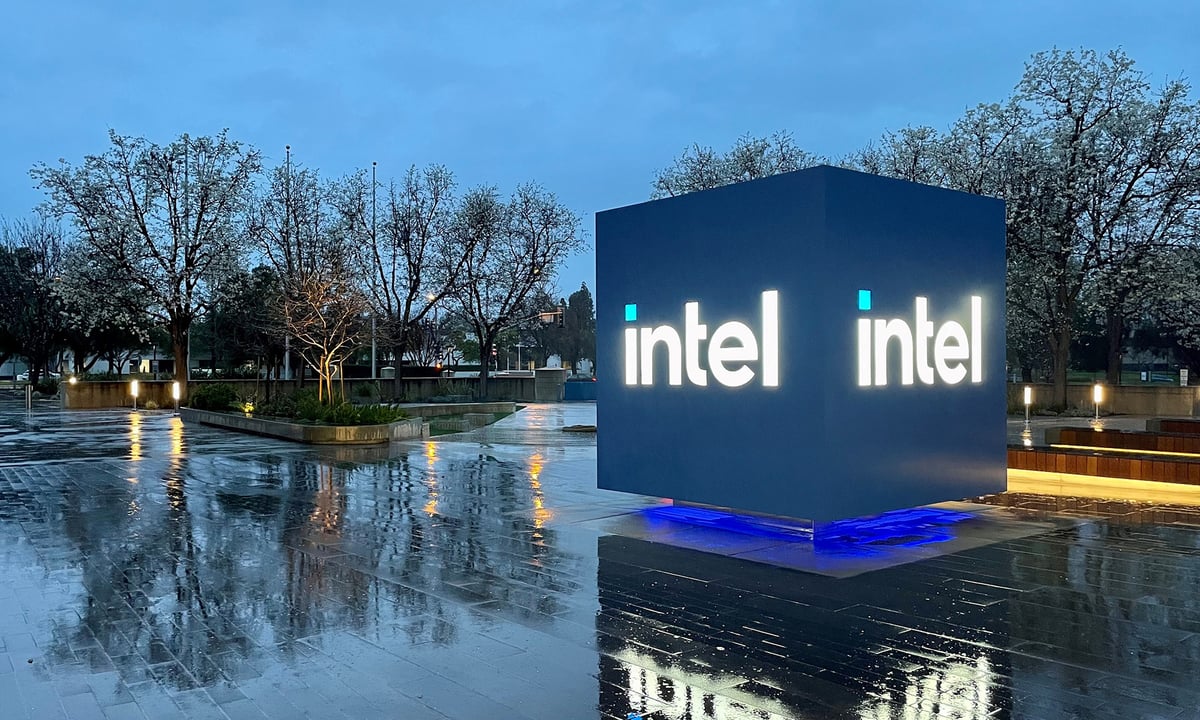
Intel Shows Significant Financial Improvement

- Financial Improvement: Intel's financial position has significantly improved compared to two years ago, reflecting the company's recovery and growth potential in the competitive market, which enhances investor confidence.
- Stock Performance: As of the afternoon of April 1, 2026, Intel's stock price rose by 4.89%, indicating a positive market reaction and optimistic expectations from investors regarding the company's future.
- Strategic Adjustments: This stock price increase is seen as a sign of successful strategic adjustments by Intel, indicating substantial progress in technology innovation and market expansion.
- Restored Market Confidence: The signs of improvement at Intel not only boost shareholder confidence but may also attract more investor attention, further driving the company's stock price upward.
See More

Ethereum's Declining Dominance: Solana Emerges as a Strong Contender

- Ethereum's Performance Decline: Since its launch in 2015, Ethereum has surged 68,400%, but it has now dropped over 30% in 2026, currently trading at a 57% discount from its all-time high of $4,954, indicating a weakening market position.
- Rising Competitors: Among the top 25 cryptocurrencies, four direct competitors—Solana, Cardano, Tron, and Avalanche—are capturing market share in key areas like decentralized finance (DeFi), suggesting a threat to Ethereum's dominance.
- Solana's Advantages: With a market cap nearing $50 billion, Solana ranks as the seventh-largest cryptocurrency globally, offering faster and cheaper transactions, making it more appealing to users and developers, particularly as it surpasses Ethereum in the number of digital wallets holding tokenized real-world assets.
- ETF Driving Capital Inflow: There are now eight spot Solana ETFs trading in the U.S., led by the Bitwise Solana Staking ETF, ensuring a steady flow of institutional investor money into Solana, which enhances its market potential moving forward.
See More

Realty Income Trust Offers Stable High-Yield Dividends

- High-Yield Appeal: Realty Income currently offers a 5.2% dividend yield, meaning a $1,000 investment can buy about 15 shares, generating approximately $48 in annual passive income, making it an attractive option for investors seeking stability amid economic uncertainty.
- Dividend Growth History: The trust has a remarkable track record of increasing dividends for 31 consecutive years, demonstrating resilience during economic downturns, particularly through the dot-com crash, the Great Recession, and the COVID-19 pandemic, which bolsters investor confidence.
- Diverse Asset Portfolio: Realty Income boasts over 15,500 properties, primarily single-tenant net lease retail, along with industrial assets and unique properties like vineyards and casinos, which helps mitigate risk and enhance income stability.
- Conservative Operating Strategy: The trust operates with an investment-grade rated balance sheet, ensuring competitive access to capital markets, which allows it to aggressively compete in property acquisitions, further supporting its long-term growth potential.
See More

Nvidia vs. Alphabet: Which AI Stock is the Better Buy?

- Nvidia Financial Performance: In Q4 of fiscal 2026, Nvidia's revenue surged 73% year-over-year to $68.1 billion, with the data center segment contributing $62.3 billion, indicating strong demand from cloud providers for AI-capable GPUs, although future hardware cycle risks loom.
- Alphabet Growth Drivers: Alphabet's revenue rose 18% year-over-year to $113.8 billion in Q4, with Google Cloud's revenue soaring 48% to $17.7 billion, highlighting its significant growth potential in high-margin sectors.
- Market Competition Analysis: Nvidia's price-to-earnings ratio stands at approximately 36, reflecting market expectations for rapid growth but also indicating greater risk if capital expenditure cycles normalize; in contrast, Alphabet's P/E ratio of 27 suggests a more stable investment return outlook.
- Investment Strategy Recommendation: While Nvidia may continue to exceed expectations in the near term, Alphabet is arguably the safer long-term investment due to its diversified revenue streams and accelerating cloud business, especially as AI infrastructure spending may cool off.
See More

Three Challenges Facing Trump's Economy in 2026
- Energy Crisis Impact: The Iran war has caused crude oil prices to surge by 74%, leading to a shortage of 11 million barrels per day, which severely destabilizes energy markets and poses a risk of economic recession.
- Inflation Pressure Intensifies: Rising energy costs are expected to increase U.S. inflation by 0.2 percentage points to 3.1% by the end of 2026, further eroding consumer confidence and heightening the risk of an economic downturn.
- AI Economics Strained: Higher energy costs threaten the profitability of AI projects, as evidenced by OpenAI shutting down its video generation platform Sora due to high compute costs, indicating a negative impact on investor confidence in the AI sector.
- Market Outlook Uncertain: Despite a 17.9% rise in the stock market in 2025 under Trump's policies, the multiple challenges facing the economy in 2026 could lead to a significant drop in stock valuations, prompting investors to approach future uncertainties with caution.
See More

XRP Price Prediction Amid Market Dynamics
- Legal Clarity Achieved: On March 17, the SEC and CFTC issued new guidance clarifying XRP's status as a digital commodity, effectively removing the legal uncertainty that has persisted since 2020, which will allow financial institutions to onboard operations to the XRP Ledger without incurring legal liabilities, thereby enhancing its market appeal.
- Mainstream Partnership Opportunities: Mastercard launched a new Crypto Partner Program on March 11, including Ripple, the issuer of XRP, linking it to Mastercard's $9 trillion in annual payment flows, which supports the legitimacy and scalability of XRP transactions, although its price has not significantly increased.
- Price Prediction Volatility: Currently priced at $1.32, XRP is expected to end April between $1.15 and $1.60, with the most likely range being $1.30 to $1.45, indicating a lack of significant price movement in the short term, while investors should monitor the potential impact of the upcoming Clarity Act on the market.
- Geopolitical Risks: Ongoing conflicts in the Middle East could significantly impact XRP's price; if energy facilities are destroyed or the Strait of Hormuz remains closed, XRP could drop below $1.15, whereas a ceasefire in April might help prices approach the upper end of the predicted range.
See More
Intel Shows Significant Financial Improvement
- Financial Improvement: Intel's financial position has significantly improved compared to two years ago, reflecting the company's recovery and growth potential in the competitive market, which enhances investor confidence.
- Stock Performance: As of the afternoon of April 1, 2026, Intel's stock price rose by 4.89%, indicating a positive market reaction and optimistic expectations from investors regarding the company's future.
- Strategic Adjustments: This stock price increase is seen as a sign of successful strategic adjustments by Intel, indicating substantial progress in technology innovation and market expansion.
- Restored Market Confidence: The signs of improvement at Intel not only boost shareholder confidence but may also attract more investor attention, further driving the company's stock price upward.
See More
Ethereum's Declining Dominance: Solana Emerges as a Strong Contender
- Ethereum's Performance Decline: Since its launch in 2015, Ethereum has surged 68,400%, but it has now dropped over 30% in 2026, currently trading at a 57% discount from its all-time high of $4,954, indicating a weakening market position.
- Rising Competitors: Among the top 25 cryptocurrencies, four direct competitors—Solana, Cardano, Tron, and Avalanche—are capturing market share in key areas like decentralized finance (DeFi), suggesting a threat to Ethereum's dominance.
- Solana's Advantages: With a market cap nearing $50 billion, Solana ranks as the seventh-largest cryptocurrency globally, offering faster and cheaper transactions, making it more appealing to users and developers, particularly as it surpasses Ethereum in the number of digital wallets holding tokenized real-world assets.
- ETF Driving Capital Inflow: There are now eight spot Solana ETFs trading in the U.S., led by the Bitwise Solana Staking ETF, ensuring a steady flow of institutional investor money into Solana, which enhances its market potential moving forward.
See More
Realty Income Trust Offers Stable High-Yield Dividends
- High-Yield Appeal: Realty Income currently offers a 5.2% dividend yield, meaning a $1,000 investment can buy about 15 shares, generating approximately $48 in annual passive income, making it an attractive option for investors seeking stability amid economic uncertainty.
- Dividend Growth History: The trust has a remarkable track record of increasing dividends for 31 consecutive years, demonstrating resilience during economic downturns, particularly through the dot-com crash, the Great Recession, and the COVID-19 pandemic, which bolsters investor confidence.
- Diverse Asset Portfolio: Realty Income boasts over 15,500 properties, primarily single-tenant net lease retail, along with industrial assets and unique properties like vineyards and casinos, which helps mitigate risk and enhance income stability.
- Conservative Operating Strategy: The trust operates with an investment-grade rated balance sheet, ensuring competitive access to capital markets, which allows it to aggressively compete in property acquisitions, further supporting its long-term growth potential.
See More
Nvidia vs. Alphabet: Which AI Stock is the Better Buy?
- Nvidia Financial Performance: In Q4 of fiscal 2026, Nvidia's revenue surged 73% year-over-year to $68.1 billion, with the data center segment contributing $62.3 billion, indicating strong demand from cloud providers for AI-capable GPUs, although future hardware cycle risks loom.
- Alphabet Growth Drivers: Alphabet's revenue rose 18% year-over-year to $113.8 billion in Q4, with Google Cloud's revenue soaring 48% to $17.7 billion, highlighting its significant growth potential in high-margin sectors.
- Market Competition Analysis: Nvidia's price-to-earnings ratio stands at approximately 36, reflecting market expectations for rapid growth but also indicating greater risk if capital expenditure cycles normalize; in contrast, Alphabet's P/E ratio of 27 suggests a more stable investment return outlook.
- Investment Strategy Recommendation: While Nvidia may continue to exceed expectations in the near term, Alphabet is arguably the safer long-term investment due to its diversified revenue streams and accelerating cloud business, especially as AI infrastructure spending may cool off.
See More
Three Challenges Facing Trump's Economy in 2026
- Energy Crisis Impact: The Iran war has caused crude oil prices to surge by 74%, leading to a shortage of 11 million barrels per day, which severely destabilizes energy markets and poses a risk of economic recession.
- Inflation Pressure Intensifies: Rising energy costs are expected to increase U.S. inflation by 0.2 percentage points to 3.1% by the end of 2026, further eroding consumer confidence and heightening the risk of an economic downturn.
- AI Economics Strained: Higher energy costs threaten the profitability of AI projects, as evidenced by OpenAI shutting down its video generation platform Sora due to high compute costs, indicating a negative impact on investor confidence in the AI sector.
- Market Outlook Uncertain: Despite a 17.9% rise in the stock market in 2025 under Trump's policies, the multiple challenges facing the economy in 2026 could lead to a significant drop in stock valuations, prompting investors to approach future uncertainties with caution.
See More
XRP Price Prediction Amid Market Dynamics
- Legal Clarity Achieved: On March 17, the SEC and CFTC issued new guidance clarifying XRP's status as a digital commodity, effectively removing the legal uncertainty that has persisted since 2020, which will allow financial institutions to onboard operations to the XRP Ledger without incurring legal liabilities, thereby enhancing its market appeal.
- Mainstream Partnership Opportunities: Mastercard launched a new Crypto Partner Program on March 11, including Ripple, the issuer of XRP, linking it to Mastercard's $9 trillion in annual payment flows, which supports the legitimacy and scalability of XRP transactions, although its price has not significantly increased.
- Price Prediction Volatility: Currently priced at $1.32, XRP is expected to end April between $1.15 and $1.60, with the most likely range being $1.30 to $1.45, indicating a lack of significant price movement in the short term, while investors should monitor the potential impact of the upcoming Clarity Act on the market.
- Geopolitical Risks: Ongoing conflicts in the Middle East could significantly impact XRP's price; if energy facilities are destroyed or the Strait of Hormuz remains closed, XRP could drop below $1.15, whereas a ceasefire in April might help prices approach the upper end of the predicted range.
See More