Why Investors Are Shifting to Cash?
Written by Emily J. Thompson, Senior Investment Analyst
Updated: 2 hours ago
0mins
Should l Buy NVDA?
Source: Yahoo Finance
- Record Cash Inflows: As of the end of February, money market funds held approximately $8.25 trillion, marking an all-time high and a significant increase from $5 trillion in 2022, indicating investor concerns over market volatility and a flight to safety.
- Poor Stock Market Returns: Since early 2022, the S&P 500 has delivered a total return of 42%, while the Vanguard Federal Money Market Fund only returned 18%, highlighting the opportunity cost of cash investments and the potential for higher stock market gains.
- Geopolitical Impact: The ongoing Iran conflict has pushed oil prices to new highs, with market expectations for interest rate cuts virtually eliminated, leading to negative investor sentiment and further downward pressure on stock prices in the short term.
- Investor Behavior Risks: During market corrections, investors often move to cash only after stock prices have fallen, locking in losses and missing out on rebounds, suggesting that maintaining investments during volatility may be a wiser strategy.
Trade with 70% Backtested Accuracy
Stop guessing "Should I Buy NVDA?" and start using high-conviction signals backed by rigorous historical data.
Sign up today to access powerful investing tools and make smarter, data-driven decisions.
Analyst Views on NVDA
Wall Street analysts forecast NVDA stock price to rise
41 Analyst Rating
39 Buy
1 Hold
1 Sell
Strong Buy
Current: 175.750

Low
200.00
Averages
264.97
High
352.00
Current: 175.750
Low
200.00
Averages
264.97
High
352.00
About NVDA
NVIDIA Corporation is an artificial intelligence (AI) infrastructure company. The Company is engaged in accelerated computing to help solve the challenging computational problems. Its segments include Compute & Networking and Graphics. The Compute & Networking segment includes its Data Center accelerated computing and networking platforms and AI solutions and software, and automotive platforms and autonomous and electric vehicle solutions, including software. The Graphics segment includes GeForce GPUs for gaming and personal computers (PCs), and Quadro/NVIDIA RTX GPUs for enterprise workstation graphics. Its technology stack includes the foundational NVIDIA CUDA development platform that runs on all NVIDIA GPUs, as well as hundreds of domain-specific software libraries, frameworks, algorithms, software development kits (SDKs), and application programming interfaces (APIs). Its platforms address four markets, which include Data Center, Gaming, Professional Visualization, and Automotive.
About the author

Emily J. Thompson
Emily J. Thompson, a Chartered Financial Analyst (CFA) with 12 years in investment research, graduated with honors from the Wharton School. Specializing in industrial and technology stocks, she provides in-depth analysis for Intellectia’s earnings and market brief reports.

Nvidia Projects $1 Trillion AI Revenue by 2027

- Revenue Surge Expected: Nvidia projects its AI revenue to reach $1 trillion by 2027, a significant increase from the $500 billion expected this year, indicating strong growth potential in the AI market that may attract more investor interest.
- Strong GPU Sales: In Q4 of fiscal 2026, Nvidia reported sales of $68.1 billion, a 73% year-over-year increase, with the data center segment contributing $62.3 billion, up 75%, showcasing the company's sustained competitiveness in a high-demand market.
- New Product Launch: At the GTC conference, Nvidia unveiled NemoClaw, designed to provide AI agents for OpenClaw, demonstrating the company's innovative capabilities in agentic AI, which could further drive its market share growth.
- Market Capitalization Changes: Despite Nvidia's stock being down 15% from its all-time high, resulting in a market cap loss of approximately $1 trillion, CEO Jensen Huang emphasized that AI will be a crucial growth driver for the company, potentially prompting investors to reassess its investment value.
See More

Nvidia Anticipates Massive Growth in Data Center Spending
- Data Center Spending Forecast: Nvidia anticipates that global data center capital expenditures will reach $3 trillion to $4 trillion by 2030, indicating strong demand for AI technology and significant market potential that could drive substantial revenue growth for the company.
- Capital Expenditure Trends: By 2026, the big four hyperscalers are expected to spend $650 billion, excluding expenditures from China and other major AI players, highlighting the increasing reliance on Nvidia's products in the market.
- Industry Growth Rate: Nvidia projects a 48% compound annual growth rate (CAGR) for the industry, and if this rate continues through 2030, the company's revenue could reach $1.53 trillion, significantly surpassing the $216 billion generated in the past 12 months, showcasing its potential market leadership.
- Investor Confidence: While Nvidia is considered a top stock pick, it was not included in the Motley Fool's current list of best investment stocks, reflecting differing market perceptions about its future performance, prompting investors to carefully assess risks and opportunities.
See More

Impact of Fed Rate Policy on AI Investments

- Rising Capital Costs: With the Federal Reserve maintaining interest rates, AI infrastructure capital expenditures are projected to reach $3 trillion to $4 trillion annually, leading companies to face higher borrowing costs that could impact profitability and investment strategies.
- Market Sentiment Pressure: As expectations for sustained high interest rates increase, valuations of AI stocks may come under pressure, particularly for unprofitable firms like C3.ai and SoundHound AI, which face greater challenges in future earnings projections.
- Shift in Investor Focus: While the Fed's policies have a significant market impact, savvy investors should prioritize the fundamentals of individual companies rather than relying solely on interest rate changes, which will help maintain competitiveness in uncertain market conditions.
- Earnings Expectations Adjustment: Even established AI firms like Nvidia and Alphabet may see their price-to-earnings ratios contract due to market expectations of prolonged high rates, prompting investors to reassess these companies' future profitability in light of potential market fluctuations.
See More

SpaceX Aims for $75 Billion IPO at $2 Trillion Valuation
- Record-Setting IPO: SpaceX is aiming to raise up to $75 billion in its IPO, which, if successful, would become the largest IPO in history, further solidifying its position as one of the most valuable companies globally.
- Investor Windfall: Alphabet's $900 million investment in 2015 for a 7% stake could be worth $140 billion if SpaceX reaches a $2 trillion valuation, significantly enhancing Alphabet's financial outlook.
- Collaboration with Nvidia: As a major customer of Nvidia, SpaceX is expected to increase its chip purchases following the acquisition of xAI, further solidifying Nvidia's dominance in the AI market.
- Future Data Center Plans: Musk intends to use IPO proceeds to establish data centers in space, a concept met with skepticism, but if realized, it could lead to increased demand for Nvidia chips, driving long-term growth.
See More
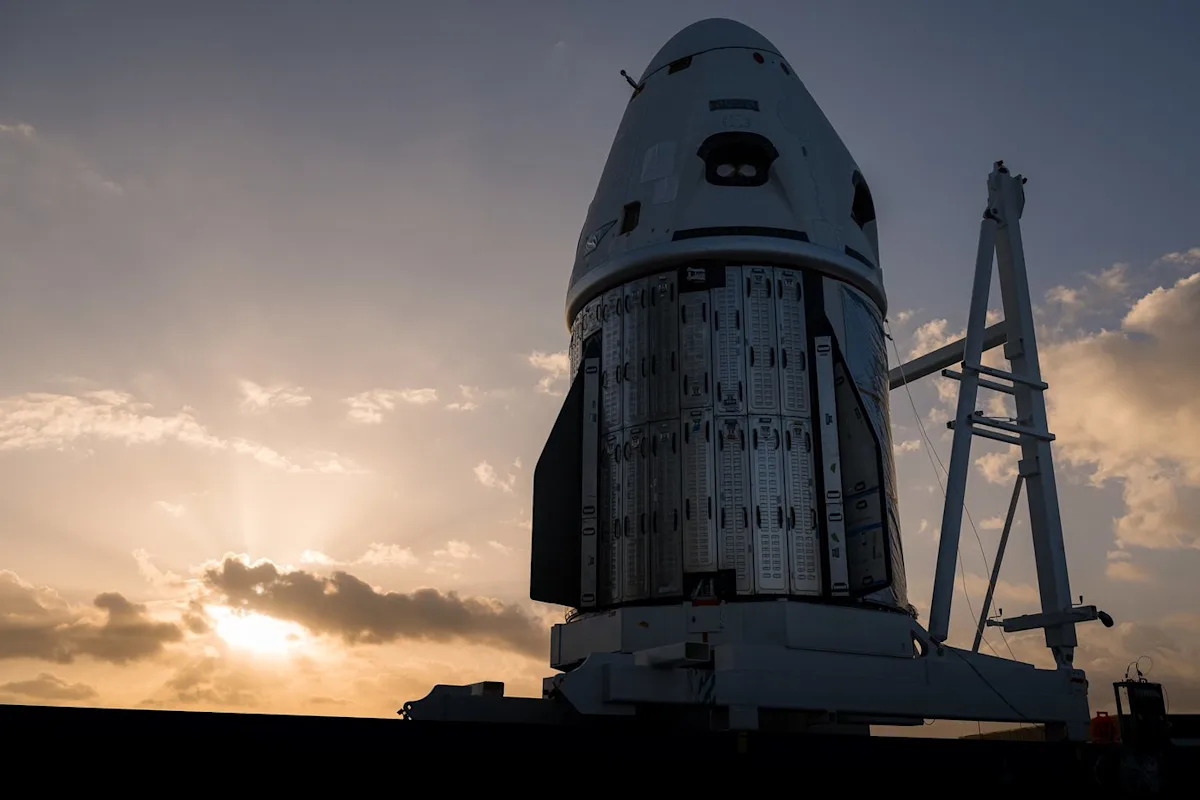
SpaceX Prepares for IPO, Valuation Could Reach $2 Trillion

- Historic IPO Plans: SpaceX recently filed confidentially for an IPO, aiming to raise up to $75 billion, which would make it the largest IPO in history; if successful, the company's valuation could reach $2 trillion, further solidifying its leadership in the global aerospace market.
- Significant Investor Gains: The IPO is set to yield substantial returns for investors, including Elon Musk, whose net worth is projected to exceed $1 trillion post-IPO, enhancing his personal wealth and potentially attracting more investor interest in the aerospace sector.
- Alphabet's Potential Windfall: Alphabet invested $900 million in SpaceX in 2015, and if SpaceX reaches a $2 trillion valuation, its stake could be worth $140 billion, providing crucial funding for its AI investments and furthering its expansion in the tech sector.
- Nvidia's Market Opportunities: Although Nvidia is not a direct investor in SpaceX, as a major customer, the IPO could lead to increased chip procurement, especially following SpaceX's acquisition of xAI, which is expected to boost demand for Nvidia chips and drive further growth in the AI market.
See More

Market Volatility and Earnings Growth Analysis
- Market Volatility Context: The markets have faced significant volatility over the past month due to the war in Iran, with the S&P 500 dropping 9% at one point in late March, which, while not technically a correction, has created a tense atmosphere among investors who are cautious about future developments.
- Earnings Growth and Market Performance: S&P 500 earnings growth is expected to be in the double digits over the next two years, and historical data indicates that strong earnings growth typically correlates with a lower risk of bear markets, suggesting that even during corrections, the market may remain relatively stable.
- Historical Lessons: Past correction cases, such as those in 1994, 1997, and 2018, show that despite market pullbacks, S&P 500 earnings continued to grow, highlighting the protective role of earnings growth against market downturns.
- Future Outlook: FactSet currently estimates S&P 500 earnings growth of 17% for both 2026 and 2027, and if these projections hold true, they would significantly reduce the likelihood of a market crash; however, the impact of the war in Iran serves as a reminder for investors to stay vigilant and monitor changes in earnings expectations.
See More
Nvidia Projects $1 Trillion AI Revenue by 2027
- Revenue Surge Expected: Nvidia projects its AI revenue to reach $1 trillion by 2027, a significant increase from the $500 billion expected this year, indicating strong growth potential in the AI market that may attract more investor interest.
- Strong GPU Sales: In Q4 of fiscal 2026, Nvidia reported sales of $68.1 billion, a 73% year-over-year increase, with the data center segment contributing $62.3 billion, up 75%, showcasing the company's sustained competitiveness in a high-demand market.
- New Product Launch: At the GTC conference, Nvidia unveiled NemoClaw, designed to provide AI agents for OpenClaw, demonstrating the company's innovative capabilities in agentic AI, which could further drive its market share growth.
- Market Capitalization Changes: Despite Nvidia's stock being down 15% from its all-time high, resulting in a market cap loss of approximately $1 trillion, CEO Jensen Huang emphasized that AI will be a crucial growth driver for the company, potentially prompting investors to reassess its investment value.
See More
Nvidia Anticipates Massive Growth in Data Center Spending
- Data Center Spending Forecast: Nvidia anticipates that global data center capital expenditures will reach $3 trillion to $4 trillion by 2030, indicating strong demand for AI technology and significant market potential that could drive substantial revenue growth for the company.
- Capital Expenditure Trends: By 2026, the big four hyperscalers are expected to spend $650 billion, excluding expenditures from China and other major AI players, highlighting the increasing reliance on Nvidia's products in the market.
- Industry Growth Rate: Nvidia projects a 48% compound annual growth rate (CAGR) for the industry, and if this rate continues through 2030, the company's revenue could reach $1.53 trillion, significantly surpassing the $216 billion generated in the past 12 months, showcasing its potential market leadership.
- Investor Confidence: While Nvidia is considered a top stock pick, it was not included in the Motley Fool's current list of best investment stocks, reflecting differing market perceptions about its future performance, prompting investors to carefully assess risks and opportunities.
See More
Impact of Fed Rate Policy on AI Investments
- Rising Capital Costs: With the Federal Reserve maintaining interest rates, AI infrastructure capital expenditures are projected to reach $3 trillion to $4 trillion annually, leading companies to face higher borrowing costs that could impact profitability and investment strategies.
- Market Sentiment Pressure: As expectations for sustained high interest rates increase, valuations of AI stocks may come under pressure, particularly for unprofitable firms like C3.ai and SoundHound AI, which face greater challenges in future earnings projections.
- Shift in Investor Focus: While the Fed's policies have a significant market impact, savvy investors should prioritize the fundamentals of individual companies rather than relying solely on interest rate changes, which will help maintain competitiveness in uncertain market conditions.
- Earnings Expectations Adjustment: Even established AI firms like Nvidia and Alphabet may see their price-to-earnings ratios contract due to market expectations of prolonged high rates, prompting investors to reassess these companies' future profitability in light of potential market fluctuations.
See More
SpaceX Aims for $75 Billion IPO at $2 Trillion Valuation
- Record-Setting IPO: SpaceX is aiming to raise up to $75 billion in its IPO, which, if successful, would become the largest IPO in history, further solidifying its position as one of the most valuable companies globally.
- Investor Windfall: Alphabet's $900 million investment in 2015 for a 7% stake could be worth $140 billion if SpaceX reaches a $2 trillion valuation, significantly enhancing Alphabet's financial outlook.
- Collaboration with Nvidia: As a major customer of Nvidia, SpaceX is expected to increase its chip purchases following the acquisition of xAI, further solidifying Nvidia's dominance in the AI market.
- Future Data Center Plans: Musk intends to use IPO proceeds to establish data centers in space, a concept met with skepticism, but if realized, it could lead to increased demand for Nvidia chips, driving long-term growth.
See More
SpaceX Prepares for IPO, Valuation Could Reach $2 Trillion
- Historic IPO Plans: SpaceX recently filed confidentially for an IPO, aiming to raise up to $75 billion, which would make it the largest IPO in history; if successful, the company's valuation could reach $2 trillion, further solidifying its leadership in the global aerospace market.
- Significant Investor Gains: The IPO is set to yield substantial returns for investors, including Elon Musk, whose net worth is projected to exceed $1 trillion post-IPO, enhancing his personal wealth and potentially attracting more investor interest in the aerospace sector.
- Alphabet's Potential Windfall: Alphabet invested $900 million in SpaceX in 2015, and if SpaceX reaches a $2 trillion valuation, its stake could be worth $140 billion, providing crucial funding for its AI investments and furthering its expansion in the tech sector.
- Nvidia's Market Opportunities: Although Nvidia is not a direct investor in SpaceX, as a major customer, the IPO could lead to increased chip procurement, especially following SpaceX's acquisition of xAI, which is expected to boost demand for Nvidia chips and drive further growth in the AI market.
See More
Market Volatility and Earnings Growth Analysis
- Market Volatility Context: The markets have faced significant volatility over the past month due to the war in Iran, with the S&P 500 dropping 9% at one point in late March, which, while not technically a correction, has created a tense atmosphere among investors who are cautious about future developments.
- Earnings Growth and Market Performance: S&P 500 earnings growth is expected to be in the double digits over the next two years, and historical data indicates that strong earnings growth typically correlates with a lower risk of bear markets, suggesting that even during corrections, the market may remain relatively stable.
- Historical Lessons: Past correction cases, such as those in 1994, 1997, and 2018, show that despite market pullbacks, S&P 500 earnings continued to grow, highlighting the protective role of earnings growth against market downturns.
- Future Outlook: FactSet currently estimates S&P 500 earnings growth of 17% for both 2026 and 2027, and if these projections hold true, they would significantly reduce the likelihood of a market crash; however, the impact of the war in Iran serves as a reminder for investors to stay vigilant and monitor changes in earnings expectations.
See More