

Wall Street Opens Cautiously Amid China Market Concerns
Written by Emily J. Thompson, Senior Investment Analyst
Updated: Feb 26 2026
0mins


Source: stocktwits
- Cautious Market Sentiment: Despite Nvidia's strong earnings report, Wall Street traders are cautious ahead of the open due to concerns over its revenue from China, with Nasdaq futures down 0.1% and Dow futures down 0.2%.
- Merger Developments in Focus: Investors are closely watching Warner Bros. Discovery's upcoming earnings report, while speculation arises that Netflix may abandon its bid for the company, with its co-CEO heading to the White House to discuss regulatory issues, highlighting the market's keen interest in merger dynamics.
- Software Giants' Guidance Miss: Salesforce's fiscal 2027 revenue guidance fell short of Wall Street expectations despite a strong Q4 earnings report, negatively impacting investor sentiment and leading to a decline in confidence in the software sector.
- Monitoring Economic Data: Investors will be attentive to the weekly jobless claims data set to be released at 8:30 a.m. ET, along with Federal Reserve Vice Chair Michelle Bowman's testimony before Congress, which could influence market perceptions of the economic outlook.
Trade with 70% Backtested Accuracy
Stop guessing "Should I Buy NVDA?" and start using high-conviction signals backed by rigorous historical data.
Sign up today to access powerful investing tools and make smarter, data-driven decisions.
Analyst Views on NVDA
Wall Street analysts forecast NVDA stock price to rise
41 Analyst Rating
39 Buy
1 Hold
1 Sell
Strong Buy
Current: 205.190

Low
200.00
Averages
264.97
High
352.00
Current: 205.190
Low
200.00
Averages
264.97
High
352.00
About NVDA
NVIDIA Corporation is an artificial intelligence (AI) infrastructure company. The Company is engaged in accelerated computing to help solve the challenging computational problems. Its segments include Compute & Networking and Graphics. The Compute & Networking segment includes its Data Center accelerated computing and networking platforms and AI solutions and software, and automotive platforms and autonomous and electric vehicle solutions, including software. The Graphics segment includes GeForce GPUs for gaming and personal computers (PCs), and Quadro/NVIDIA RTX GPUs for enterprise workstation graphics. Its technology stack includes the foundational NVIDIA CUDA development platform that runs on all NVIDIA GPUs, as well as hundreds of domain-specific software libraries, frameworks, algorithms, software development kits (SDKs), and application programming interfaces (APIs). Its platforms address four markets, which include Data Center, Gaming, Professional Visualization, and Automotive.
About the author

Emily J. Thompson
Emily J. Thompson, a Chartered Financial Analyst (CFA) with 12 years in investment research, graduated with honors from the Wharton School. Specializing in industrial and technology stocks, she provides in-depth analysis for Intellectia’s earnings and market brief reports.
Nvidia Plans to Raise $20B Through Bond Offering

- Bond Offering Scale: Nvidia is looking to raise at least $20 billion through a bond offering with maturities ranging from two to 30 years, which will provide the company with long-term funding to support future investment needs.
- Marketing Strategy: The bond offering will be marketed in seven tranches, indicating Nvidia's proactive approach to capital markets aimed at attracting a diverse investor base to optimize its financing structure.
- First Bond Offering: This marks Nvidia's first bond issuance since 2021, signaling a renewed activity in capital markets that could secure funding for its future expansion and R&D initiatives.
- Underwriter Lineup: Top investment banks including J.P. Morgan, Morgan Stanley, and Goldman Sachs will be involved in the bond offering, reflecting market confidence in Nvidia and recognition of its growth potential.
See More
AMD Acquires MEXT to Optimize Memory Technology

- Acquisition Context: AMD announced on Monday the acquisition of MEXT, a company focused on AI-driven memory optimization technology, aiming to address growing memory constraints in modern data center environments, which is expected to enhance memory utilization and accelerate large-scale deployments.
- Technology Integration: MEXT's predictive memory technology allows flash storage to behave more like DRAM, enabling organizations to expand usable memory capacity while maintaining performance and efficiency, thereby lowering infrastructure costs and improving resource utilization.
- Market Reaction: On the day of the acquisition announcement, AMD's market capitalization surpassed $900 billion for the first time, with shares rising nearly 7.5%, indicating a positive market response to the integration of new technology and reflecting investor confidence in AMD's future growth potential.
- Industry Challenge: As AI, data analytics, and high-performance computing workloads become increasingly complex, memory bottlenecks are becoming more pronounced; AMD's acquisition aims to tackle this challenge by improving efficiency, ensuring customers can deploy workloads more effectively and economically.
See More

Wall Street Rallies on Preliminary US-Iran Peace Agreement


- Market Surge: Wall Street experienced a significant rally with the S&P 500 rising 1.9% and the Nasdaq Composite gaining 3%, reflecting investor optimism driven by the preliminary peace agreement between the U.S. and Iran.
- Dow Jones Milestone: The Dow Jones Industrial Average climbed 1.4% just before 1 p.m. ET, reaching a new all-time intraday high, indicating strong market sentiment ahead of the anticipated signing of the ceasefire agreement.
- Tech Stocks Lead: Major tech companies like Alphabet, Nvidia, and Micron Technology collectively added over $300 billion in market capitalization, showcasing the robust performance of the tech sector in the current market climate.
- Oil Price Decline Impact: Oil prices fell sharply, with West Texas Intermediate crude dropping to around $80 per barrel, potentially easing inflationary pressures and reducing the likelihood of further Federal Reserve rate hikes, thereby boosting investor confidence in riskier assets.
See More
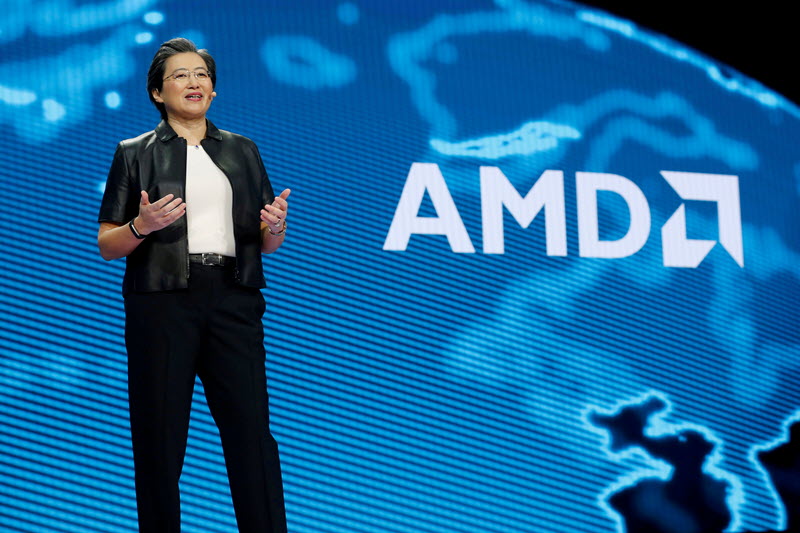
AI Inference Demand Drives CPU Market Transformation

- Inference Computing Growth: According to McKinsey, inference is expected to account for over 50% of AI computing capacity in data centers by 2030, indicating a rapid increase in demand for CPUs, particularly for handling AI inference workloads, which has significant business implications.
- AMD Market Share Increase: AMD doubled its total addressable market estimate for server CPUs to $120 billion last month, with a projected 70% revenue growth by 2026, demonstrating strong demand and market potential in AI inference applications.
- Intel Facing Challenges: Although Intel holds nearly 67% of the server CPU market share, it is gradually losing ground to AMD, particularly in product performance and pricing power, necessitating faster production to counter AMD's competition.
- Investor Outlook Optimistic: AMD anticipates a 78% earnings growth by 2027, significantly outpacing Intel's 42% forecast, and its influence in the data center GPU market suggests a higher investment value in AMD within the AI sector.
See More
Global Data Center Investment to Exceed $1 Trillion

- Surge in Investment: Dell'Oro Group projects that global data center capital expenditures will exceed $1 trillion by 2026, reflecting fierce competition among cloud providers to build AI infrastructure, indicating a strong market demand for computing power.
- ETF Investment Advantage: The iShares Semiconductor ETF (SOXX) holds about 30 stocks, covering a broad spectrum of the chip supply chain, particularly featuring chip designers like Nvidia that dominate AI data centers, allowing investors to diversify risk while capitalizing on AI infrastructure growth.
- Strong Market Demand: The combined capital expenditure guidance from the four largest U.S. cloud providers exceeds $700 billion, indicating sustained demand for semiconductors, while the iShares Semiconductor ETF's expense ratio of 0.34% is relatively low for a thematic fund, enhancing its appeal.
- Concentration Investment Risk: Although the iShares ETF maintains balance with its largest holdings accounting for only 8% to 9%, the cyclical volatility of the semiconductor industry remains, necessitating careful risk assessment by investors to navigate potential market fluctuations.
See More

US Stocks Surge as Tech Leads Gains Amid Peace Deal


- Strong Market Performance: The S&P 500 rose by 1.67% and the Nasdaq 100 by 2.79%, with the Dow Jones Industrial Average hitting a new record high, reflecting optimistic market sentiment driven primarily by gains in technology stocks.
- Crude Oil Price Plunge: WTI crude oil prices fell over 5% to a three-month low due to the US-Iran peace agreement and the reopening of the Strait of Hormuz, easing inflation expectations and providing support for equity markets.
- Weak Economic Data: The US June Empire Manufacturing Index dropped to 5.7, below the expected 13.7, while May manufacturing production remained unchanged, and the June NAHB housing market index unexpectedly fell to 35, indicating fragility in the economic recovery that could impact future market confidence.
- Tech Stocks Lead Gains: Chipmakers and AI infrastructure stocks surged, with the iShares Semiconductor ETF up over 4% and Western Digital soaring more than 14%, demonstrating strong market confidence in the tech sector, particularly amid rising risk appetite.
See More
Nvidia Plans to Raise $20B Through Bond Offering
- Bond Offering Scale: Nvidia is looking to raise at least $20 billion through a bond offering with maturities ranging from two to 30 years, which will provide the company with long-term funding to support future investment needs.
- Marketing Strategy: The bond offering will be marketed in seven tranches, indicating Nvidia's proactive approach to capital markets aimed at attracting a diverse investor base to optimize its financing structure.
- First Bond Offering: This marks Nvidia's first bond issuance since 2021, signaling a renewed activity in capital markets that could secure funding for its future expansion and R&D initiatives.
- Underwriter Lineup: Top investment banks including J.P. Morgan, Morgan Stanley, and Goldman Sachs will be involved in the bond offering, reflecting market confidence in Nvidia and recognition of its growth potential.
See More
AMD Acquires MEXT to Optimize Memory Technology
- Acquisition Context: AMD announced on Monday the acquisition of MEXT, a company focused on AI-driven memory optimization technology, aiming to address growing memory constraints in modern data center environments, which is expected to enhance memory utilization and accelerate large-scale deployments.
- Technology Integration: MEXT's predictive memory technology allows flash storage to behave more like DRAM, enabling organizations to expand usable memory capacity while maintaining performance and efficiency, thereby lowering infrastructure costs and improving resource utilization.
- Market Reaction: On the day of the acquisition announcement, AMD's market capitalization surpassed $900 billion for the first time, with shares rising nearly 7.5%, indicating a positive market response to the integration of new technology and reflecting investor confidence in AMD's future growth potential.
- Industry Challenge: As AI, data analytics, and high-performance computing workloads become increasingly complex, memory bottlenecks are becoming more pronounced; AMD's acquisition aims to tackle this challenge by improving efficiency, ensuring customers can deploy workloads more effectively and economically.
See More
Wall Street Rallies on Preliminary US-Iran Peace Agreement
- Market Surge: Wall Street experienced a significant rally with the S&P 500 rising 1.9% and the Nasdaq Composite gaining 3%, reflecting investor optimism driven by the preliminary peace agreement between the U.S. and Iran.
- Dow Jones Milestone: The Dow Jones Industrial Average climbed 1.4% just before 1 p.m. ET, reaching a new all-time intraday high, indicating strong market sentiment ahead of the anticipated signing of the ceasefire agreement.
- Tech Stocks Lead: Major tech companies like Alphabet, Nvidia, and Micron Technology collectively added over $300 billion in market capitalization, showcasing the robust performance of the tech sector in the current market climate.
- Oil Price Decline Impact: Oil prices fell sharply, with West Texas Intermediate crude dropping to around $80 per barrel, potentially easing inflationary pressures and reducing the likelihood of further Federal Reserve rate hikes, thereby boosting investor confidence in riskier assets.
See More
AI Inference Demand Drives CPU Market Transformation
- Inference Computing Growth: According to McKinsey, inference is expected to account for over 50% of AI computing capacity in data centers by 2030, indicating a rapid increase in demand for CPUs, particularly for handling AI inference workloads, which has significant business implications.
- AMD Market Share Increase: AMD doubled its total addressable market estimate for server CPUs to $120 billion last month, with a projected 70% revenue growth by 2026, demonstrating strong demand and market potential in AI inference applications.
- Intel Facing Challenges: Although Intel holds nearly 67% of the server CPU market share, it is gradually losing ground to AMD, particularly in product performance and pricing power, necessitating faster production to counter AMD's competition.
- Investor Outlook Optimistic: AMD anticipates a 78% earnings growth by 2027, significantly outpacing Intel's 42% forecast, and its influence in the data center GPU market suggests a higher investment value in AMD within the AI sector.
See More
Global Data Center Investment to Exceed $1 Trillion
- Surge in Investment: Dell'Oro Group projects that global data center capital expenditures will exceed $1 trillion by 2026, reflecting fierce competition among cloud providers to build AI infrastructure, indicating a strong market demand for computing power.
- ETF Investment Advantage: The iShares Semiconductor ETF (SOXX) holds about 30 stocks, covering a broad spectrum of the chip supply chain, particularly featuring chip designers like Nvidia that dominate AI data centers, allowing investors to diversify risk while capitalizing on AI infrastructure growth.
- Strong Market Demand: The combined capital expenditure guidance from the four largest U.S. cloud providers exceeds $700 billion, indicating sustained demand for semiconductors, while the iShares Semiconductor ETF's expense ratio of 0.34% is relatively low for a thematic fund, enhancing its appeal.
- Concentration Investment Risk: Although the iShares ETF maintains balance with its largest holdings accounting for only 8% to 9%, the cyclical volatility of the semiconductor industry remains, necessitating careful risk assessment by investors to navigate potential market fluctuations.
See More
US Stocks Surge as Tech Leads Gains Amid Peace Deal
- Strong Market Performance: The S&P 500 rose by 1.67% and the Nasdaq 100 by 2.79%, with the Dow Jones Industrial Average hitting a new record high, reflecting optimistic market sentiment driven primarily by gains in technology stocks.
- Crude Oil Price Plunge: WTI crude oil prices fell over 5% to a three-month low due to the US-Iran peace agreement and the reopening of the Strait of Hormuz, easing inflation expectations and providing support for equity markets.
- Weak Economic Data: The US June Empire Manufacturing Index dropped to 5.7, below the expected 13.7, while May manufacturing production remained unchanged, and the June NAHB housing market index unexpectedly fell to 35, indicating fragility in the economic recovery that could impact future market confidence.
- Tech Stocks Lead Gains: Chipmakers and AI infrastructure stocks surged, with the iShares Semiconductor ETF up over 4% and Western Digital soaring more than 14%, demonstrating strong market confidence in the tech sector, particularly amid rising risk appetite.
See More





