

Valuation Analysis of U.S. Industrial Stocks
Written by Emily J. Thompson, Senior Investment Analyst
Updated: Jun 01 2026
0mins
Source: seekingalpha
- Valuation Overview: Seeking Alpha's valuation grades highlight that among U.S. companies with market caps over $10 billion, Southwest Airlines (LUV), U-Haul (UHAL), and Stanley Black & Decker (SWK) are among the most attractively valued, indicating their competitive edge in the industry.
- Southwest Airlines Performance: Southwest Airlines (LUV) received an A valuation grade, suggesting a relatively low valuation compared to peers, which may attract investor interest and enhance its market performance.
- U-Haul and Stanley Black & Decker: U-Haul (UHAL) and Stanley Black & Decker (SWK) received A and A- ratings respectively, reflecting their robust financial performance and investment appeal in their sectors, potentially driving future capital inflows.
- Other Notable Stocks: Companies like United Airlines (UAL), United Parcel Service (UPS), and Paychex (PAYX) also performed well in valuation ratings, indicating market confidence in these large firms, which could influence their stock price movements.
Trade with 70% Backtested Accuracy
Stop guessing "Should I Buy LUV?" and start using high-conviction signals backed by rigorous historical data.
Sign up today to access powerful investing tools and make smarter, data-driven decisions.
Analyst Views on LUV
Wall Street analysts forecast LUV stock price to fall
14 Analyst Rating
4 Buy
9 Hold
1 Sell
Hold
Current: 51.420

Low
34.00
Averages
44.21
High
60.00
Current: 51.420
Low
34.00
Averages
44.21
High
60.00
About LUV
Southwest Airlines Co. (Southwest) operates Southwest Airlines, a passenger airline that provides scheduled air transportation in the United States and near-international markets. The Company's fare products include four categories: Wanna Get Away, Wanna Get Away Plus, Anytime, and Business Select to provide customers options when choosing a fare. It also offers ancillary services, such as EarlyBird Check-In, Upgraded Boarding, and transportation of pets and unaccompanied minors, in accordance with Southwest’s respective policies. Its Rapid Rewards loyalty program enables program members to earn points for every dollar spent on Southwest base fares, also including purchases paid with LUV Vouchers, gift cards, or flight credit, with no portion of the purchase price paid with Rapid Rewards points. It operates over 803 Boeing 737 aircraft in its fleet and serves 117 destinations in 42 states, the District of Columbia, the Commonwealth of Puerto Rico, and ten near-international countries.
About the author

Emily J. Thompson
Emily J. Thompson, a Chartered Financial Analyst (CFA) with 12 years in investment research, graduated with honors from the Wharton School. Specializing in industrial and technology stocks, she provides in-depth analysis for Intellectia’s earnings and market brief reports.
Southwest Airlines Celebrates America's 250th Anniversary
- Special Flight Tracking: Southwest Airlines partners with FlightAware to launch a unique tracking icon for Independence One, featuring thirteen stars representing the original colonies, aimed at enhancing tracking experiences for customers and aviation enthusiasts, which is expected to draw more passenger attention to the flight.
- Rich Celebrations: Starting July 1, Southwest will decorate Ronald Reagan Washington National Airport and participate in America's Block Party in New York City, aiming to enhance brand image and attract more customer participation, further solidifying its market position.
- Collectible Promotion: Southwest introduces “America Trio” aircraft trading cards that passengers can request from pilots during flights, which is expected to enhance customer engagement and brand loyalty while providing unique memorabilia for aviation fans, enriching the customer experience.
- Market Leadership: Southwest Airlines carries more travelers on nonstop flights within the U.S. than any other airline, and with over 55 years of operational history and exceptional customer service, it further solidifies its leadership position in the aviation market, expected to attract more travelers to choose its services.
See More

Southwest Airlines Celebrates America's 250th Anniversary with Independence One
- New Tracking Feature: Southwest Airlines collaborates with FlightAware to launch a unique Independence One tracking icon, symbolizing the original thirteen colonies, enhancing customer and aviation enthusiast tracking experience, which is expected to boost customer engagement and brand loyalty.
- Rich Celebrations: Starting July 1, Southwest pilots will distribute “America Trio” aircraft trading cards featuring Independence One, further enhancing customer interaction, while decorations at Ronald Reagan Washington National Airport will elevate the festive atmosphere.
- Participation in National Celebrations: Southwest Airlines will participate in America250's Block Party on July 4, showcasing its commitment to national history, which is expected to attract more customer attention and enhance brand image.
- Market Leadership: Southwest Airlines carries more travelers flying nonstop within the United States than any other airline, further solidifying its leadership position in the aviation market with its unique value and passionate service.
See More

Market Outlook and Company Updates


- Market Performance: On the last trading day of June, the S&P 500 is up nearly 14% and the Nasdaq has risen almost 20%, marking the best quarterly performance since Q2 2020, reflecting optimistic market sentiment regarding economic recovery.
- Comcast Upgrade: Deutsche Bank upgraded Comcast from hold to buy, anticipating that its planned spin-off of NBCUniversal will unlock value, leading to a 4.5% rise in shares yesterday and an additional 2.5% increase in early trading, indicating strong market confidence in future growth.
- Semiconductor Equipment Price Target Increases: Price targets for Applied Materials and Lam Research were significantly raised from $575 and $385 to $900 and $475, respectively, highlighting their critical role in semiconductor manufacturing amid a computing shortage.
- Airline Price Target Increases: Wells Fargo raised Delta Air Lines' price target from $75 to $105 and United Airlines' from $130 to $165, benefiting from a drop in crude transport prices, showcasing the recovery potential in the airline industry.
See More
Nike Shares Plummet, Underperforming in Dow Industrials

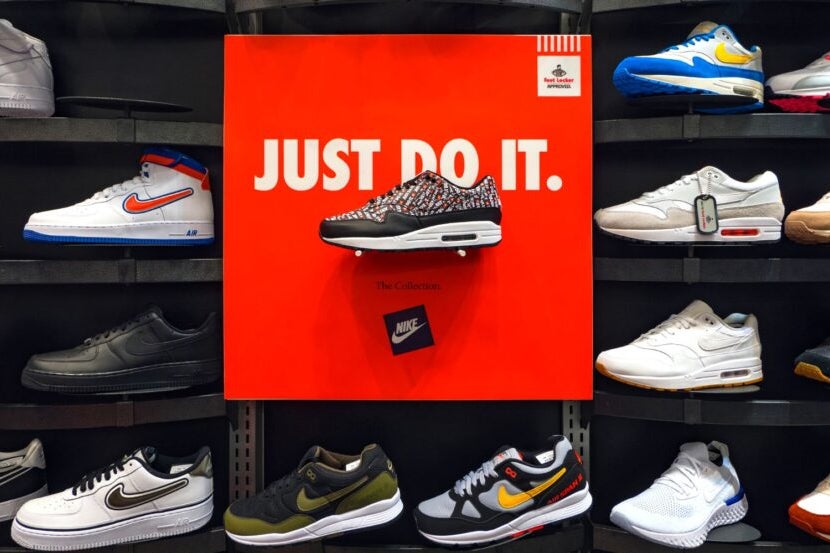
- Nike Stock Decline: Nike shares have fallen nearly 20% over the past three months and are down 48% from the August 2025 high, making it the worst performer in the Dow Industrials, only better than Chevron, indicating significant weakness in its market position.
- Year-to-Date Performance: Year-to-date, Nike's stock is down about 35%, and no other Dow constituent has performed worse in the past 12 months, highlighting the challenges it faces in the highly competitive sports apparel market.
- Constellation Brands Struggles: Constellation Brands, the maker of Corona and Modelo beers, has seen its stock drop nearly 8% in the last three months and is down 21% from its July 2025 high, reflecting pressure in its market segment.
- Healthcare Sector Strength: The healthcare sector has risen nearly 8% in the past month, with Moderna's stock surging 47%, indicating a strong recovery in the sector and investor confidence in its growth potential.
See More

Oversold Stocks Poised for Rebound After Market Volatility


- Market Volatility Impact: The S&P 500 declined nearly 2% this week, while the Nasdaq Composite fell 4.6%, indicating significant pressure from a sharp sell-off in tech stocks, particularly in the semiconductor sector.
- Oversold Stocks Identification: Using a 14-day relative strength index (RSI), both Intercontinental Exchange and CME Group recorded an RSI of 24.4, suggesting these stocks are oversold and may rebound in the near term.
- CME Lawsuit Impact: CME's stock dropped 10% this week due to concerns over risks posed to traditional exchanges, following its lawsuit against the Commodity Futures Trading Commission, exacerbating its double-digit losses for June.
- Defensive Stocks in Favor: Despite overall market declines, Cardinal Health emerged as the most overbought stock with an RSI of 84.4, surging over 7% as investors shifted towards defensive sectors, reflecting a change in market sentiment.
See More
Market Capitalization Comparison: Southwest Airlines vs. West Pharmaceutical
- Market Cap Comparison: Southwest Airlines has a market capitalization of $24.90 billion, while West Pharmaceutical Services stands at $24.05 billion, highlighting their relative sizes in the market, which may influence investor choices and fund flows.
- Investor Misconception: Many novice investors mistakenly believe that a higher stock price indicates greater company value, but market capitalization provides a more accurate comparison of company worth, aiding investors in making informed decisions.
- Market Impact: The size of a company's market cap directly affects which mutual funds and ETFs are willing to hold these stocks, particularly as large-cap funds tend to focus on companies valued over $10 billion, influencing capital inflows and outflows.
- Index Classification: For instance, the S&P MidCap index focuses on smaller companies by excluding the largest 100 firms, indicating the significance of market cap in company classification and investment strategies, potentially allowing smaller firms to outperform larger ones in favorable market conditions.
See More
Southwest Airlines Celebrates America's 250th Anniversary
- Special Flight Tracking: Southwest Airlines partners with FlightAware to launch a unique tracking icon for Independence One, featuring thirteen stars representing the original colonies, aimed at enhancing tracking experiences for customers and aviation enthusiasts, which is expected to draw more passenger attention to the flight.
- Rich Celebrations: Starting July 1, Southwest will decorate Ronald Reagan Washington National Airport and participate in America's Block Party in New York City, aiming to enhance brand image and attract more customer participation, further solidifying its market position.
- Collectible Promotion: Southwest introduces “America Trio” aircraft trading cards that passengers can request from pilots during flights, which is expected to enhance customer engagement and brand loyalty while providing unique memorabilia for aviation fans, enriching the customer experience.
- Market Leadership: Southwest Airlines carries more travelers on nonstop flights within the U.S. than any other airline, and with over 55 years of operational history and exceptional customer service, it further solidifies its leadership position in the aviation market, expected to attract more travelers to choose its services.
See More
Southwest Airlines Celebrates America's 250th Anniversary with Independence One
- New Tracking Feature: Southwest Airlines collaborates with FlightAware to launch a unique Independence One tracking icon, symbolizing the original thirteen colonies, enhancing customer and aviation enthusiast tracking experience, which is expected to boost customer engagement and brand loyalty.
- Rich Celebrations: Starting July 1, Southwest pilots will distribute “America Trio” aircraft trading cards featuring Independence One, further enhancing customer interaction, while decorations at Ronald Reagan Washington National Airport will elevate the festive atmosphere.
- Participation in National Celebrations: Southwest Airlines will participate in America250's Block Party on July 4, showcasing its commitment to national history, which is expected to attract more customer attention and enhance brand image.
- Market Leadership: Southwest Airlines carries more travelers flying nonstop within the United States than any other airline, further solidifying its leadership position in the aviation market with its unique value and passionate service.
See More
Market Outlook and Company Updates
- Market Performance: On the last trading day of June, the S&P 500 is up nearly 14% and the Nasdaq has risen almost 20%, marking the best quarterly performance since Q2 2020, reflecting optimistic market sentiment regarding economic recovery.
- Comcast Upgrade: Deutsche Bank upgraded Comcast from hold to buy, anticipating that its planned spin-off of NBCUniversal will unlock value, leading to a 4.5% rise in shares yesterday and an additional 2.5% increase in early trading, indicating strong market confidence in future growth.
- Semiconductor Equipment Price Target Increases: Price targets for Applied Materials and Lam Research were significantly raised from $575 and $385 to $900 and $475, respectively, highlighting their critical role in semiconductor manufacturing amid a computing shortage.
- Airline Price Target Increases: Wells Fargo raised Delta Air Lines' price target from $75 to $105 and United Airlines' from $130 to $165, benefiting from a drop in crude transport prices, showcasing the recovery potential in the airline industry.
See More
Nike Shares Plummet, Underperforming in Dow Industrials
- Nike Stock Decline: Nike shares have fallen nearly 20% over the past three months and are down 48% from the August 2025 high, making it the worst performer in the Dow Industrials, only better than Chevron, indicating significant weakness in its market position.
- Year-to-Date Performance: Year-to-date, Nike's stock is down about 35%, and no other Dow constituent has performed worse in the past 12 months, highlighting the challenges it faces in the highly competitive sports apparel market.
- Constellation Brands Struggles: Constellation Brands, the maker of Corona and Modelo beers, has seen its stock drop nearly 8% in the last three months and is down 21% from its July 2025 high, reflecting pressure in its market segment.
- Healthcare Sector Strength: The healthcare sector has risen nearly 8% in the past month, with Moderna's stock surging 47%, indicating a strong recovery in the sector and investor confidence in its growth potential.
See More
Oversold Stocks Poised for Rebound After Market Volatility
- Market Volatility Impact: The S&P 500 declined nearly 2% this week, while the Nasdaq Composite fell 4.6%, indicating significant pressure from a sharp sell-off in tech stocks, particularly in the semiconductor sector.
- Oversold Stocks Identification: Using a 14-day relative strength index (RSI), both Intercontinental Exchange and CME Group recorded an RSI of 24.4, suggesting these stocks are oversold and may rebound in the near term.
- CME Lawsuit Impact: CME's stock dropped 10% this week due to concerns over risks posed to traditional exchanges, following its lawsuit against the Commodity Futures Trading Commission, exacerbating its double-digit losses for June.
- Defensive Stocks in Favor: Despite overall market declines, Cardinal Health emerged as the most overbought stock with an RSI of 84.4, surging over 7% as investors shifted towards defensive sectors, reflecting a change in market sentiment.
See More
Market Capitalization Comparison: Southwest Airlines vs. West Pharmaceutical
- Market Cap Comparison: Southwest Airlines has a market capitalization of $24.90 billion, while West Pharmaceutical Services stands at $24.05 billion, highlighting their relative sizes in the market, which may influence investor choices and fund flows.
- Investor Misconception: Many novice investors mistakenly believe that a higher stock price indicates greater company value, but market capitalization provides a more accurate comparison of company worth, aiding investors in making informed decisions.
- Market Impact: The size of a company's market cap directly affects which mutual funds and ETFs are willing to hold these stocks, particularly as large-cap funds tend to focus on companies valued over $10 billion, influencing capital inflows and outflows.
- Index Classification: For instance, the S&P MidCap index focuses on smaller companies by excluding the largest 100 firms, indicating the significance of market cap in company classification and investment strategies, potentially allowing smaller firms to outperform larger ones in favorable market conditions.
See More




