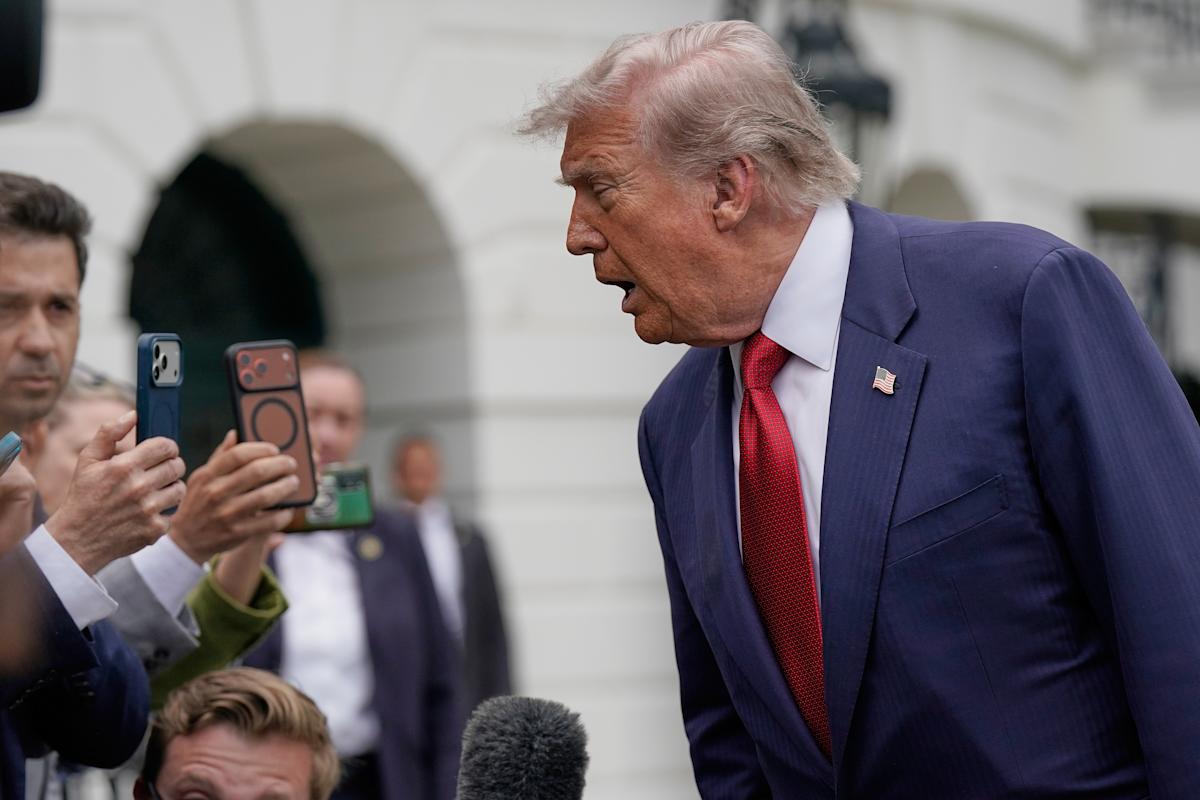
Trump Issues Jones Act Waiver, Impacting Oil Market


Catch up on the top industries and stocks that were impacted, or were predicted to be impacted, by the comments, actions and policies of President Donald Trump with this daily recap compiled by The Fly.JONES ACT:President Donald Trump has issued a short-term waiver of the Jones Act, authorizing foreign-flagged vessels to transport a range of commodities between U.S. ports for the next 60 days. "President Trump's decision to issue a 60-day Jones Act waiver is just another step to mitigate the short-term disruptions to the oil market as the U.S. military continues meeting the objectives of Operation Epic Fury. The Administration remains committed to continuing to strengthen our critical supply chains," White House Press Secretary Karoline Leavitt stated.QUARTERLY REPORTING:The Securities and Exchange Commission is preparing a proposal to eliminate the quarterly earnings report requirement and instead give companies the option to share results twice a year, people familiar with the matterThe Wall Street Journal's Corrie Driebusch, adding that the regulator could publish the proposal as soon as next month.TRUMPRX:President Trump and top federal health officials have repeatedly claimed that their new website, TrumpRx, offers Americans the world's lowest prices on prescription drugs, but that is not true, according to a review by The New York Times and the German news organizations Suddeutsche Zeitung, NDR and WDR, The NYT's Rebecca Robbins. The drugs listed on TrumpRx can cost American patients up to hundreds or thousands of dollars, while a patient walking into a German pharmacy pays next to nothing, Robbins writes. Publicly traded companies in the space include AstraZeneca, Bristol Myers, Eli Lilly, GSK, Johnson & Johnson, Merck, Novartis, Pfizer, Rocheand Sanofi.NATIONAL CYBERSECURITY STRATEGY:Quantum Cybersaid, "On March 10, 2026, the White House released a sweeping National Cybersecurity Strategy document under the direction of President Donald Trump, articulating six foundational pillars intended to defend the safety, security, and prosperity of the American people in cyberspace. The strategy represents one of the most comprehensive federal policy commitments to cyber defense in recent history and signals a significant expansion of investment and regulatory focus in both cybersecurity and quantum computing."Among the key pillars of the Trump cybersecurity framework are: proactively detecting and defeating adversarial cyber actors before they breach U.S. networks; streamlining cyber regulations to reduce compliance burdens and align the private sector with government objectives; accelerating the adoption of post-quantum cryptography, zero-trust architecture, and secure cloud infrastructure across national security systems; prioritizing U.S.-developed technologies over adversarial products; building a robust domestic cyber workforce; and promoting the security of cryptocurrencies and blockchain technologies through the adoption of post-quantum cryptographic standards."Quantum Cyber views the White House's strategy as a direct validation of the Company's core business thesis. The convergence of quantum computing and cybersecurity - two domains at the center of the Trump Administration's framework - represents one of the most significant growth opportunities in the technology sector over the coming decade. The Company believes its name, focus, and developing capabilities place it at the intersection of both priority areas identified by the federal government. Building on the momentum of the Trump Administration's cybersecurity framework, Quantum Cyber's management team is actively evaluating a pipeline of strategic acquisition candidates operating in quantum computing, post-quantum cryptography, zero-trust network architecture, and adjacent cybersecurity disciplines."The Company believes that a targeted acquisition strategy will accelerate its ability to build an operationally active platform with measurable revenue potential in sectors directly aligned with U.S. national security priorities. The Company is currently conducting preliminary due diligence on several opportunities and is engaged in discussions with potential targets. While no definitive agreements have been reached and there can be no assurance that any transaction will be consummated, management is cautiously optimistic about the quality of the pipeline and the timeliness of the strategic window created by the current federal policy environment. The Company intends to provide further updates as discussions progress."
Trade with 70% Backtested Accuracy
Analyst Views on QUCY


No data
About QUCY
About the author


Quantum Cyber Secures Exclusive Drone Technology Rights

- Exclusive Technology Rights: Quantum Cyber has signed an intellectual property licensing agreement with BP United, granting exclusive rights to its drone technology portfolio, including an autonomous aerial defense platform designed for military and security operations, marking a significant advancement for the company in the UAV market.
- Platform Performance: The autonomous platform can operate at distances exceeding 25 kilometers and features fully autonomous take-off, navigation, and landing capabilities, which can be configured for surveillance, interception, and payload delivery, enhancing the company's technological strength and market competitiveness.
- Stock Surge: Quantum Cyber's shares surged over 70% in morning trading on Wednesday, breaching the 50-day moving average for the first time, reflecting strong investor confidence in the company's pivot and new technology agreement, and indicating a potential reversal of a four-session losing streak.
- Market Outlook: With the U.S. government seeking approximately $55 billion for drone and autonomous warfare programs in its fiscal 2027 budget, Quantum Cyber's strategic pivot aligns perfectly with the rapidly growing UAV market, positioning the company for significant business expansion and revenue growth in the future.

Rapid Growth in the Drone Market Driven by Defense Budgets

- Surging Market Demand: The global military drone market is projected to grow from $15.8 billion in 2025 to $22.8 billion by 2030, reflecting an increasing reliance on drones by nations, which is driving significant increases in defense spending.
- Accelerated Technological Innovation: ZenaTech's ZenaDrone 2000 heavy-lift interceptor drone has completed fuselage manufacturing and is set to begin initial flight testing in Q3 2026, aiming to meet urgent demands for counter-drone systems and solidify its position in the projected $20 billion market.
- Increased Defense Budgets: The Trump administration is seeking approximately $55 billion for drone and autonomous warfare programs in the fiscal 2027 budget, a substantial increase from $225 million the previous year, marking a strategic shift in U.S. drone technology priorities.
- International Collaboration and Investment: Quantum Cyber has signed an IP licensing agreement with BP United to secure exclusive rights to innovative drone technology, highlighting the rapid development of global drone ecosystems and nations' investment intentions in defense sectors.

Rapid Growth in the Drone Market Driven by Defense Budgets

- Surging Market Demand: The military drone market is projected to grow from $15.8 billion in 2025 to $22.8 billion by 2030, reflecting a strong global demand for drone technology, particularly amid increasing defense budgets.
- Accelerated Technological Innovation: ZenaTech's ZenaDrone 2000 heavy-lift interceptor drone has completed fuselage manufacturing and entered the systems integration phase, with initial flight testing planned for Q3 2026 to meet the rising demand in the counter-drone market.
- Rise of Counter-Drone Systems: As drones become more integrated into military operations, countries are racing to develop counter-drone technologies, with the counter-drone market expected to exceed $20 billion by 2030, highlighting the importance of drones as essential military infrastructure.
- Increased Global Investment: Governments across the U.S., Europe, Asia, and the Middle East are ramping up investments in domestic drone production and next-generation autonomous technologies to address geopolitical tensions and enhance intelligence, surveillance, and reconnaissance capabilities.
Quantum Cyber Secures Exclusive Drone Technology Rights
- Exclusive Technology Rights: Quantum Cyber has signed an intellectual property licensing agreement with BP United, granting exclusive rights to its drone technology portfolio, including an autonomous aerial defense platform designed for military and security operations, marking a significant advancement for the company in the UAV market.
- Platform Performance: The autonomous platform can operate at distances exceeding 25 kilometers and features fully autonomous take-off, navigation, and landing capabilities, which can be configured for surveillance, interception, and payload delivery, enhancing the company's technological strength and market competitiveness.
- Stock Surge: Quantum Cyber's shares surged over 70% in morning trading on Wednesday, breaching the 50-day moving average for the first time, reflecting strong investor confidence in the company's pivot and new technology agreement, and indicating a potential reversal of a four-session losing streak.
- Market Outlook: With the U.S. government seeking approximately $55 billion for drone and autonomous warfare programs in its fiscal 2027 budget, Quantum Cyber's strategic pivot aligns perfectly with the rapidly growing UAV market, positioning the company for significant business expansion and revenue growth in the future.
Rapid Growth in the Drone Market Driven by Defense Budgets
- Surging Market Demand: The global military drone market is projected to grow from $15.8 billion in 2025 to $22.8 billion by 2030, reflecting an increasing reliance on drones by nations, which is driving significant increases in defense spending.
- Accelerated Technological Innovation: ZenaTech's ZenaDrone 2000 heavy-lift interceptor drone has completed fuselage manufacturing and is set to begin initial flight testing in Q3 2026, aiming to meet urgent demands for counter-drone systems and solidify its position in the projected $20 billion market.
- Increased Defense Budgets: The Trump administration is seeking approximately $55 billion for drone and autonomous warfare programs in the fiscal 2027 budget, a substantial increase from $225 million the previous year, marking a strategic shift in U.S. drone technology priorities.
- International Collaboration and Investment: Quantum Cyber has signed an IP licensing agreement with BP United to secure exclusive rights to innovative drone technology, highlighting the rapid development of global drone ecosystems and nations' investment intentions in defense sectors.
Rapid Growth in the Drone Market Driven by Defense Budgets
- Surging Market Demand: The military drone market is projected to grow from $15.8 billion in 2025 to $22.8 billion by 2030, reflecting a strong global demand for drone technology, particularly amid increasing defense budgets.
- Accelerated Technological Innovation: ZenaTech's ZenaDrone 2000 heavy-lift interceptor drone has completed fuselage manufacturing and entered the systems integration phase, with initial flight testing planned for Q3 2026 to meet the rising demand in the counter-drone market.
- Rise of Counter-Drone Systems: As drones become more integrated into military operations, countries are racing to develop counter-drone technologies, with the counter-drone market expected to exceed $20 billion by 2030, highlighting the importance of drones as essential military infrastructure.
- Increased Global Investment: Governments across the U.S., Europe, Asia, and the Middle East are ramping up investments in domestic drone production and next-generation autonomous technologies to address geopolitical tensions and enhance intelligence, surveillance, and reconnaissance capabilities.