Trump Administration Ends Climate Regulations
Written by Emily J. Thompson, Senior Investment Analyst
Updated: 4 days ago
0mins


Source: Benzinga
- Regulatory Termination Impact: The Trump administration officially terminates the 2009 'endangerment finding,' effectively dismantling the legal foundation for federal climate regulations, which immediately eliminates greenhouse gas emission standards for cars and trucks, signaling the end of the government-led push for mandatory electric vehicle transitions.
- Tesla Revenue Risk: With the EPA losing authority to enforce tailpipe standards, Tesla's reliance on selling billions in regulatory credits will vanish, and analysts estimate this rollback could erase margin revenue for Tesla as competitors no longer need to pay for compliance.
- Traditional Manufacturers Benefit: Traditional automakers like Ford and General Motors are projected to save over $2,400 per vehicle, providing them with an immediate competitive advantage to pivot capital from high-cost EV mandates back into their high-margin gas-powered SUV and truck lineups.
- Climate Policy Shift: The EPA administrator announced the end of federal credits for automatic start-stop technology, marking the conclusion of 'climate participation trophies' for manufacturers, emphasizing that there will be no more incentives for technologies that cause cars to stall at red lights.
Trade with 70% Backtested Accuracy
Stop guessing "Should I Buy GM?" and start using high-conviction signals backed by rigorous historical data.
Sign up today to access powerful investing tools and make smarter, data-driven decisions.
Analyst Views on GM
Wall Street analysts forecast GM stock price to rise
19 Analyst Rating
14 Buy
4 Hold
1 Sell
Moderate Buy
Current: 81.080

Low
57.00
Averages
95.06
High
122.00
Current: 81.080
Low
57.00
Averages
95.06
High
122.00
About GM
General Motors Company designs, builds and sells trucks, crossovers, cars and automobile parts and provides software-enabled services and subscriptions worldwide. The Company's segments include GMNA, GMI, Cruise and GM Financial. Its GM North America (GMNA) and GM International (GMI) develop, manufacture and/or markets vehicles under the Buick, Cadillac, Chevrolet and GMC brands. The Company provides automotive financing services through its General Motors Financial Company, Inc. (GM Financial) segment. Its Cruise segment is engaged in the development and commercialization of autonomous vehicle technology. Its software-enabled services and subscriptions, including OnStar, its advanced driver-assistance systems (ADAS), including Super Cruise driver assistance technology, and its end-to-end software platform. The Company is also focused on investing in electric vehicles (EVs) and AVs, software-enabled services and subscriptions and new business opportunities.
About the author

Emily J. Thompson
Emily J. Thompson, a Chartered Financial Analyst (CFA) with 12 years in investment research, graduated with honors from the Wharton School. Specializing in industrial and technology stocks, she provides in-depth analysis for Intellectia’s earnings and market brief reports.

Automakers Focus on Electric Vehicle Affordability


- Critical Price Point: Multiple automakers have confirmed that the $35,000 to $50,000 price range is essential for mass-market EV adoption, with Rivian and Ford specifically targeting this segment in their strategic plans.
- Lack of Options: Despite years of EV development, industry executives acknowledge a surprising lack of compelling choices at accessible price points, making the options significantly fewer compared to internal combustion engine vehicles.
- Demand Fluctuations: While near-term consumer demand has softened, particularly following policy changes like the elimination of tax credits, automakers remain confident in the long-term potential for EV adoption, believing the market still holds promise.
- Cost Reduction Focus: All companies emphasize ongoing efforts to reduce battery costs, manufacturing expenses, and overall vehicle costs to achieve profitability at lower price points, ensuring competitiveness in the future market.
See More

Earnings Analysis of Spotify, Datadog, and Ferrari


- Spotify User Growth: Spotify added 29 million paid subscribers this quarter, with Monthly Active Users (MAU) growing 11% year-over-year, demonstrating its appeal in a competitive market; despite a 4% decline in ad revenue, its operating margin exceeding 15% indicates significant progress in profitability.
- Datadog Financial Performance: Datadog reported nearly 30% year-over-year sales growth in Q4, and despite facing AI competition pressures, management emphasized that AI-driven innovations will help attract more complex customers, suggesting resilience in its business model amid current challenges and potential for higher future charges.
- Ferrari Market Reaction: After experiencing a record stock price drop, Ferrari's Q4 earnings revealed strong performance, with shares rising about 10%, and management reaffirmed that its order book extends into 2027, indicating sustained brand appeal and pricing power in the luxury market.
- Industry Outlook: Despite concerns about AI disruption in the software sector, analysts believe that strong management teams and innovation capabilities will enable Spotify, Datadog, and Ferrari to maintain competitive advantages in the evolving consumer demand and technological landscape.
See More
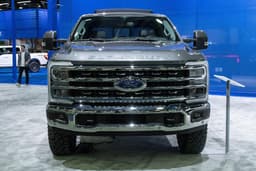
Ford's $5 Billion Bet on Next-Gen EV Technology

- Electrical Architecture Innovation: Ford's adoption of a 48-volt electrical architecture is expected to enhance production efficiency for its electric pickup by reducing parts by 20% and workstations by 40%, significantly lowering production costs and improving market competitiveness.
- Market Competition Strategy: Ford plans to launch a small electric pickup starting at $30,000 in 2027, aiming to compete against Tesla and rapidly expanding Chinese brands, thereby promoting broader EV adoption.
- Production Efficiency Improvement: The new electric pickup's wiring harness will be over 4,000 feet shorter and 22 pounds lighter than that of the first-generation electric SUV, and combined with new technologies, assembly time will be reduced by 15%, enhancing overall production efficiency.
- Future Development Vision: CEO Jim Farley describes this transformation as a
See More

GENERAL MOTORS CFO STATES THAT THE "TARIFF SITUATION IS BECOMING MORE STABLE"
General Motors' CFO Statement: The Chief Financial Officer of General Motors has indicated that the tariff environment is becoming more stable.
Implications for Business: This stability in tariffs may have positive implications for the automotive industry and GM's operations moving forward.
See More

General Motors Reaffirms Commitment to Silverado EV
- Production Commitment: GM spokesperson Shad Balch emphasized that despite the Trump administration rolling back the EPA's 2009 Endangerment Finding, there are no plans to discontinue the Chevrolet Silverado EV, demonstrating the company's strong confidence in the electric pickup market.
- Marketing Investment: Balch revealed that GM is offering additional trims for the Silverado EV and increasing marketing efforts to enhance the model's market visibility and sales potential, aiming to strengthen brand competitiveness.
- Production Stability: Balch clearly stated that there are currently no plans to cut production of the Silverado EV, a decision that helps ensure supply chain stability and meet the growing demand for electric vehicles, thereby boosting the company's overall performance.
- Stock Performance: On February 13, GM's stock price rose by 1.44% to $81.08, although it slightly declined by 0.07% to $81.02 in after-hours trading, reflecting the market's positive response to its electric vehicle strategy.
See More

Tesla's $20 Billion Investment Reshapes Transportation Market

- Surge in Capital Expenditure: Tesla plans to invest over $20 billion in capital spending by 2026, more than double last year's expenditure, highlighting its ambitious vision for the electric vehicle market, especially as competitors scale back their investments.
- Diversified Factory Investments: Among the six new factories, three are dedicated to electric vehicle production, including a lithium refinery and a low-cost lithium iron phosphate battery factory, directly supporting EV growth and strengthening Tesla's market position.
- Autonomous Driving Vision: CEO Elon Musk clearly stated in the recent earnings call that only 1% to 5% of miles driven will be by humans in the future, indicating Tesla's leadership in autonomous driving, with expectations that Cybercab production will surpass all other models combined.
- Significant Market Potential: The Cybercab is expected to cost under $30,000 and have a significantly lower cost per mile than traditional taxis; if regulatory approval is achieved, Tesla's robotaxi could present a compelling market opportunity, further solidifying its leadership in the EV sector.
See More
Automakers Focus on Electric Vehicle Affordability
- Critical Price Point: Multiple automakers have confirmed that the $35,000 to $50,000 price range is essential for mass-market EV adoption, with Rivian and Ford specifically targeting this segment in their strategic plans.
- Lack of Options: Despite years of EV development, industry executives acknowledge a surprising lack of compelling choices at accessible price points, making the options significantly fewer compared to internal combustion engine vehicles.
- Demand Fluctuations: While near-term consumer demand has softened, particularly following policy changes like the elimination of tax credits, automakers remain confident in the long-term potential for EV adoption, believing the market still holds promise.
- Cost Reduction Focus: All companies emphasize ongoing efforts to reduce battery costs, manufacturing expenses, and overall vehicle costs to achieve profitability at lower price points, ensuring competitiveness in the future market.
See More
Earnings Analysis of Spotify, Datadog, and Ferrari
- Spotify User Growth: Spotify added 29 million paid subscribers this quarter, with Monthly Active Users (MAU) growing 11% year-over-year, demonstrating its appeal in a competitive market; despite a 4% decline in ad revenue, its operating margin exceeding 15% indicates significant progress in profitability.
- Datadog Financial Performance: Datadog reported nearly 30% year-over-year sales growth in Q4, and despite facing AI competition pressures, management emphasized that AI-driven innovations will help attract more complex customers, suggesting resilience in its business model amid current challenges and potential for higher future charges.
- Ferrari Market Reaction: After experiencing a record stock price drop, Ferrari's Q4 earnings revealed strong performance, with shares rising about 10%, and management reaffirmed that its order book extends into 2027, indicating sustained brand appeal and pricing power in the luxury market.
- Industry Outlook: Despite concerns about AI disruption in the software sector, analysts believe that strong management teams and innovation capabilities will enable Spotify, Datadog, and Ferrari to maintain competitive advantages in the evolving consumer demand and technological landscape.
See More
Ford's $5 Billion Bet on Next-Gen EV Technology
- Electrical Architecture Innovation: Ford's adoption of a 48-volt electrical architecture is expected to enhance production efficiency for its electric pickup by reducing parts by 20% and workstations by 40%, significantly lowering production costs and improving market competitiveness.
- Market Competition Strategy: Ford plans to launch a small electric pickup starting at $30,000 in 2027, aiming to compete against Tesla and rapidly expanding Chinese brands, thereby promoting broader EV adoption.
- Production Efficiency Improvement: The new electric pickup's wiring harness will be over 4,000 feet shorter and 22 pounds lighter than that of the first-generation electric SUV, and combined with new technologies, assembly time will be reduced by 15%, enhancing overall production efficiency.
- Future Development Vision: CEO Jim Farley describes this transformation as a
See More
GENERAL MOTORS CFO STATES THAT THE "TARIFF SITUATION IS BECOMING MORE STABLE"
General Motors' CFO Statement: The Chief Financial Officer of General Motors has indicated that the tariff environment is becoming more stable.
Implications for Business: This stability in tariffs may have positive implications for the automotive industry and GM's operations moving forward.
See More
General Motors Reaffirms Commitment to Silverado EV
- Production Commitment: GM spokesperson Shad Balch emphasized that despite the Trump administration rolling back the EPA's 2009 Endangerment Finding, there are no plans to discontinue the Chevrolet Silverado EV, demonstrating the company's strong confidence in the electric pickup market.
- Marketing Investment: Balch revealed that GM is offering additional trims for the Silverado EV and increasing marketing efforts to enhance the model's market visibility and sales potential, aiming to strengthen brand competitiveness.
- Production Stability: Balch clearly stated that there are currently no plans to cut production of the Silverado EV, a decision that helps ensure supply chain stability and meet the growing demand for electric vehicles, thereby boosting the company's overall performance.
- Stock Performance: On February 13, GM's stock price rose by 1.44% to $81.08, although it slightly declined by 0.07% to $81.02 in after-hours trading, reflecting the market's positive response to its electric vehicle strategy.
See More
Tesla's $20 Billion Investment Reshapes Transportation Market
- Surge in Capital Expenditure: Tesla plans to invest over $20 billion in capital spending by 2026, more than double last year's expenditure, highlighting its ambitious vision for the electric vehicle market, especially as competitors scale back their investments.
- Diversified Factory Investments: Among the six new factories, three are dedicated to electric vehicle production, including a lithium refinery and a low-cost lithium iron phosphate battery factory, directly supporting EV growth and strengthening Tesla's market position.
- Autonomous Driving Vision: CEO Elon Musk clearly stated in the recent earnings call that only 1% to 5% of miles driven will be by humans in the future, indicating Tesla's leadership in autonomous driving, with expectations that Cybercab production will surpass all other models combined.
- Significant Market Potential: The Cybercab is expected to cost under $30,000 and have a significantly lower cost per mile than traditional taxis; if regulatory approval is achieved, Tesla's robotaxi could present a compelling market opportunity, further solidifying its leadership in the EV sector.
See More