

Toyota Secures Sixth Le Mans Victory, Ending Ferrari's Streak
Written by Emily J. Thompson, Senior Investment Analyst
Updated: 1 hour ago
0mins
Source: seekingalpha
- Historic Victory: Toyota secured its sixth overall win at the 94th Le Mans, marking its first victory since 2022 and ending Ferrari's three-race winning streak, thereby reaffirming its dominance in the Hypercar class.
- Race Performance: Starting deep in the field, Toyota's number 7 car capitalized on a safety car period to move into contention, ultimately finishing just 10.9 seconds ahead of BMW's number 20 entry, showcasing exceptional racing strategy and execution.
- Strategic Restructuring: The victory can be attributed in part to Toyota's strategic decision to split its racing division into
Trade with 70% Backtested Accuracy
Stop guessing "Should I Buy TM?" and start using high-conviction signals backed by rigorous historical data.
Sign up today to access powerful investing tools and make smarter, data-driven decisions.
Analyst Views on TM
About TM
Toyota Motor Corp is a Japan-based company mainly engaged in the automotive business, as well as financial services and other businesses. It operates through three business segments. The Automotive segment designs, manufactures, and sells automobiles, including sedans, minivans, compact cars, sport utility vehicles (SUVs), and trucks, as well as related parts and accessories. The Financial Services segment provides financing and vehicle leasing services to complement the sales of automobiles and other products manufactured by itself and its affiliates. The Other segment engages in information and communications services. It also oversees manufacturing and sales companies, conducts public relations and research activities, oversees financial companies, and develops various mobility products, primarily software.
About the author

Emily J. Thompson
Emily J. Thompson, a Chartered Financial Analyst (CFA) with 12 years in investment research, graduated with honors from the Wharton School. Specializing in industrial and technology stocks, she provides in-depth analysis for Intellectia’s earnings and market brief reports.
Toyota's 70-Year Journey in America Documented

- Historical Overview: Toyota's nearly 70-year journey in America is showcased in the documentary 'Built to Last: Toyota's Mobility Journey,' which spans from the first Toyopet sedan in the 1950s to current battery production, reflecting the company's commitment and evolution in the U.S. market.
- Investment and Economic Impact: Toyota's investments in the U.S. exceed $60 billion, including a landmark $14 billion battery manufacturing facility, marking the largest economic development project in North Carolina's history, expected to create numerous jobs and stimulate local economic growth.
- Diverse Technology Strategy: Toyota is advancing hybrid, plug-in hybrid, and battery electric technologies through a multi-pathway approach, aiming to deliver practical mobility solutions for the future, demonstrating its leadership in the automotive industry's transformation.
- Community Engagement and Talent Development: With approximately 48,000 employees in the U.S., Toyota fosters the next generation of manufacturing talent through its TourToyota.com platform, showcasing its deep roots in the community and commitment to future growth.
See More

Toyota Secures Sixth Le Mans Victory, Ending Ferrari's Streak
- Historic Victory: Toyota secured its sixth overall win at the 94th Le Mans, marking its first victory since 2022 and ending Ferrari's three-race winning streak, thereby reaffirming its dominance in the Hypercar class.
- Race Performance: Starting deep in the field, Toyota's number 7 car capitalized on a safety car period to move into contention, ultimately finishing just 10.9 seconds ahead of BMW's number 20 entry, showcasing exceptional racing strategy and execution.
- Strategic Restructuring: The victory can be attributed in part to Toyota's strategic decision to split its racing division into
See More

Toyota's 70-Year Journey in America Documented
- Historical Overview: The documentary 'Hecho para durar' will showcase Toyota's nearly 70-year journey in the U.S., highlighting its evolution from the first Toyopet sedan in the 1950s to current battery production in North Carolina, reflecting Toyota's deep commitment to the American market.
- Massive Investment Plans: Toyota's investments in the U.S. have exceeded $60 billion, including a $14 billion battery manufacturing plant, which is the largest economic development project in North Carolina's history, further solidifying its position in the electric vehicle market.
- Diverse Technological Transformation: The documentary will explore how Toyota is adapting to significant changes in the automotive industry by advancing hybrid, plug-in hybrid, and battery electric technologies to meet future mobility needs.
- Community Engagement and Future Vision: The program will highlight Toyota's interactions with state leaders and factory workers, emphasizing its efforts in promoting sustainable mobility and inspiring the next generation to pursue careers in advanced manufacturing.
See More

Analysis of Competition in the eVTOL Market


- Market Outlook: According to Eve Air Mobility's Global Market Outlook, by 2045, there could be 30,000 eVTOLs in operation carrying three billion passengers, despite Joby and Archer lacking FAA approval for commercial flights, which has led to depressed stock prices for both companies.
- Technical Comparison: Joby's S4 and Archer's Midnight exhibit significant design differences, with the S4 achieving a maximum range of 150 miles and a speed of 200 mph, while the Midnight has a range of 100 miles and a speed of 150 mph, highlighting Joby's technological advantage.
- Financial Projections: Analysts expect Joby's revenue to grow from $53 million in 2025 to $458 million in 2028, with a net loss narrowing to $722 million, whereas Archer's revenue is projected to surge from under $1 million in 2025 to $482 million in 2028, but its net loss is expected to widen to $868 million.
- Investment Advantages: Joby's market cap stands at $9.2 billion, trading at 20 times its 2028 sales, reflecting its potential in the
See More
Joby and Archer's eVTOL Aircraft Prospects
- Market Outlook: According to Eve Air Mobility's Global Market Outlook, by 2045, there could be 30,000 eVTOLs operating globally, carrying three billion passengers, presenting potential market opportunities for both Joby and Archer.
- FAA Approval Challenges: Both Joby and Archer must navigate the lengthy multi-stage approval process from the Federal Aviation Administration (FAA), with full commercial flight approvals likely not occurring until late 2026 or 2027, contributing to stock pressure this year.
- Financial Projections Comparison: Analysts expect Joby's revenue to grow from $53 million in 2025 to $458 million in 2028, while Archer's revenue is projected to surge from under $1 million to $482 million, although both companies are expected to widen their net losses, indicating differing market expectations.
- Investment Value Assessment: Joby trades at a market cap of $9.2 billion at 20 times its 2028 sales, while Archer's $4.0 billion market cap trades at just eight times its 2028 sales; despite Archer appearing more attractive, Joby's vertically integrated model and stronger liquidity position it as a more compelling long-term investment.
See More
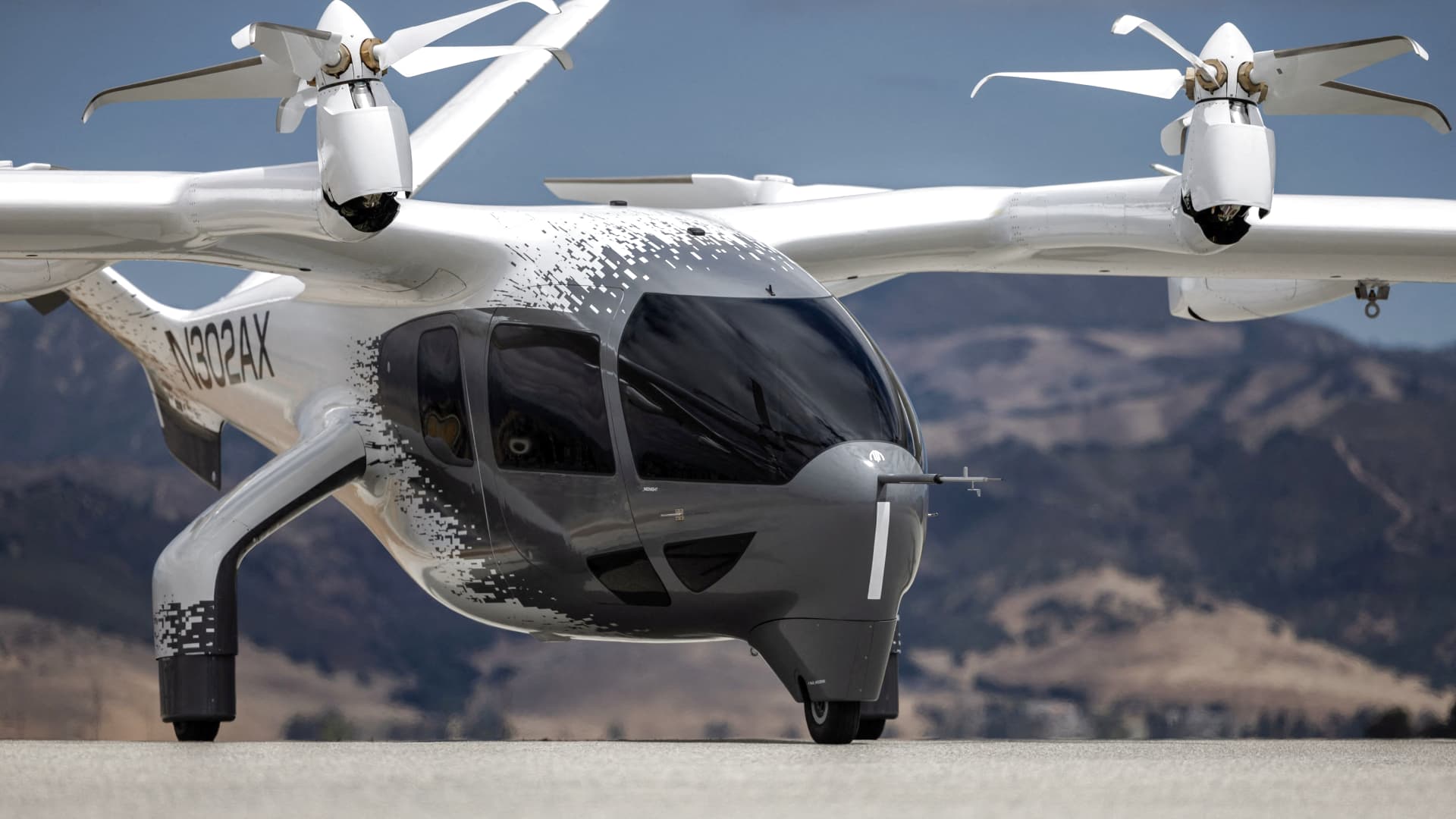
Joby Aviation: Future of eVTOL Aircraft
- Market Performance Fluctuations: Joby Aviation went public via SPAC on August 11, 2021, opening at $10.62 per share and reaching a record high of $20.39 on August 4, 2025, but now trades around $9, indicating waning investor confidence in its commercialization progress.
- Significant Technical Advantages: Joby's S4 eVTOL can carry one pilot and four passengers, travel 150 miles on a single charge, and reach speeds of 200 mph, surpassing competitor Archer Aviation's Midnight eVTOL due to its tilt-rotor design.
- Strategic Partnerships: Joby is backed by major investors like Toyota, Delta Air Lines, and Uber, with Toyota assisting in mass production, Delta planning to use the S4 for airport-to-home air taxi services, and Uber integrating these flights into its app.
- Future Growth Potential: Joby's revenue is expected to surge from $53 million in 2025 to $458 million by 2028, and if the FAA approves its commercial flights, its eVTOLs could replace traditional helicopters, potentially tripling its stock price over the next five years.
See More
Toyota's 70-Year Journey in America Documented
- Historical Overview: Toyota's nearly 70-year journey in America is showcased in the documentary 'Built to Last: Toyota's Mobility Journey,' which spans from the first Toyopet sedan in the 1950s to current battery production, reflecting the company's commitment and evolution in the U.S. market.
- Investment and Economic Impact: Toyota's investments in the U.S. exceed $60 billion, including a landmark $14 billion battery manufacturing facility, marking the largest economic development project in North Carolina's history, expected to create numerous jobs and stimulate local economic growth.
- Diverse Technology Strategy: Toyota is advancing hybrid, plug-in hybrid, and battery electric technologies through a multi-pathway approach, aiming to deliver practical mobility solutions for the future, demonstrating its leadership in the automotive industry's transformation.
- Community Engagement and Talent Development: With approximately 48,000 employees in the U.S., Toyota fosters the next generation of manufacturing talent through its TourToyota.com platform, showcasing its deep roots in the community and commitment to future growth.
See More
Toyota Secures Sixth Le Mans Victory, Ending Ferrari's Streak
- Historic Victory: Toyota secured its sixth overall win at the 94th Le Mans, marking its first victory since 2022 and ending Ferrari's three-race winning streak, thereby reaffirming its dominance in the Hypercar class.
- Race Performance: Starting deep in the field, Toyota's number 7 car capitalized on a safety car period to move into contention, ultimately finishing just 10.9 seconds ahead of BMW's number 20 entry, showcasing exceptional racing strategy and execution.
- Strategic Restructuring: The victory can be attributed in part to Toyota's strategic decision to split its racing division into
See More
Toyota's 70-Year Journey in America Documented
- Historical Overview: The documentary 'Hecho para durar' will showcase Toyota's nearly 70-year journey in the U.S., highlighting its evolution from the first Toyopet sedan in the 1950s to current battery production in North Carolina, reflecting Toyota's deep commitment to the American market.
- Massive Investment Plans: Toyota's investments in the U.S. have exceeded $60 billion, including a $14 billion battery manufacturing plant, which is the largest economic development project in North Carolina's history, further solidifying its position in the electric vehicle market.
- Diverse Technological Transformation: The documentary will explore how Toyota is adapting to significant changes in the automotive industry by advancing hybrid, plug-in hybrid, and battery electric technologies to meet future mobility needs.
- Community Engagement and Future Vision: The program will highlight Toyota's interactions with state leaders and factory workers, emphasizing its efforts in promoting sustainable mobility and inspiring the next generation to pursue careers in advanced manufacturing.
See More
Analysis of Competition in the eVTOL Market
- Market Outlook: According to Eve Air Mobility's Global Market Outlook, by 2045, there could be 30,000 eVTOLs in operation carrying three billion passengers, despite Joby and Archer lacking FAA approval for commercial flights, which has led to depressed stock prices for both companies.
- Technical Comparison: Joby's S4 and Archer's Midnight exhibit significant design differences, with the S4 achieving a maximum range of 150 miles and a speed of 200 mph, while the Midnight has a range of 100 miles and a speed of 150 mph, highlighting Joby's technological advantage.
- Financial Projections: Analysts expect Joby's revenue to grow from $53 million in 2025 to $458 million in 2028, with a net loss narrowing to $722 million, whereas Archer's revenue is projected to surge from under $1 million in 2025 to $482 million in 2028, but its net loss is expected to widen to $868 million.
- Investment Advantages: Joby's market cap stands at $9.2 billion, trading at 20 times its 2028 sales, reflecting its potential in the
See More
Joby and Archer's eVTOL Aircraft Prospects
- Market Outlook: According to Eve Air Mobility's Global Market Outlook, by 2045, there could be 30,000 eVTOLs operating globally, carrying three billion passengers, presenting potential market opportunities for both Joby and Archer.
- FAA Approval Challenges: Both Joby and Archer must navigate the lengthy multi-stage approval process from the Federal Aviation Administration (FAA), with full commercial flight approvals likely not occurring until late 2026 or 2027, contributing to stock pressure this year.
- Financial Projections Comparison: Analysts expect Joby's revenue to grow from $53 million in 2025 to $458 million in 2028, while Archer's revenue is projected to surge from under $1 million to $482 million, although both companies are expected to widen their net losses, indicating differing market expectations.
- Investment Value Assessment: Joby trades at a market cap of $9.2 billion at 20 times its 2028 sales, while Archer's $4.0 billion market cap trades at just eight times its 2028 sales; despite Archer appearing more attractive, Joby's vertically integrated model and stronger liquidity position it as a more compelling long-term investment.
See More
Joby Aviation: Future of eVTOL Aircraft
- Market Performance Fluctuations: Joby Aviation went public via SPAC on August 11, 2021, opening at $10.62 per share and reaching a record high of $20.39 on August 4, 2025, but now trades around $9, indicating waning investor confidence in its commercialization progress.
- Significant Technical Advantages: Joby's S4 eVTOL can carry one pilot and four passengers, travel 150 miles on a single charge, and reach speeds of 200 mph, surpassing competitor Archer Aviation's Midnight eVTOL due to its tilt-rotor design.
- Strategic Partnerships: Joby is backed by major investors like Toyota, Delta Air Lines, and Uber, with Toyota assisting in mass production, Delta planning to use the S4 for airport-to-home air taxi services, and Uber integrating these flights into its app.
- Future Growth Potential: Joby's revenue is expected to surge from $53 million in 2025 to $458 million by 2028, and if the FAA approves its commercial flights, its eVTOLs could replace traditional helicopters, potentially tripling its stock price over the next five years.
See More





