Three Top Dividend Stocks with Growth Potential for the Next Decade
Written by Emily J. Thompson, Senior Investment Analyst
Updated: Apr 08 2026
0mins


Source: Fool
- Brookfield Asset Management: Brookfield Asset Management (BAM) focuses on high-demand sectors, targeting revenue growth of 15% to 20% over the next decade while committing 90% of earnings to dividends, with a current yield of 4.13%, showcasing strong cash flow and stable dividend capacity.
- Equinix's Growth Potential: Although Equinix (EQIX) has a current dividend yield of only 2%, its average annual dividend growth rate of 11% over the past decade indicates strong market demand and profitability in the cloud computing and data center sectors, with projected revenue growth of about 10% this year.
- Constellation Energy's Nuclear Advantage: Constellation Energy (CEG) generates over 80% of its power from 21 nuclear reactors, positioning it to meet the increasing electricity demand as global nuclear power generation is expected to grow by 50% by 2050, despite a low current yield of 0.58%.
- Investor Confidence and Market Opportunities: The unique strengths and growth potential of these three companies attract investor interest, particularly against the backdrop of surging demand for artificial intelligence data centers, which is expected to drive both stock prices and dividends higher.
Trade with 70% Backtested Accuracy
Stop guessing "Should I Buy BAM?" and start using high-conviction signals backed by rigorous historical data.
Sign up today to access powerful investing tools and make smarter, data-driven decisions.
Analyst Views on BAM
Wall Street analysts forecast BAM stock price to rise
9 Analyst Rating
5 Buy
4 Hold
0 Sell
Moderate Buy
Current: 44.850

Low
56.59
Averages
64.98
High
74.46
Current: 44.850
Low
56.59
Averages
64.98
High
74.46
About BAM
Brookfield Asset Management Ltd. is a global alternative asset manager, offering a broad range of investment strategies designed to build and preserve wealth for institutional and individual investors. The Company invests client capital for the long-term with a focus on real assets and essential service businesses that form the backbone of the global economy. It offers a range of alternative investment products to over 2,500 institutional clients around the world, including public and private pension plans, endowments and foundations, sovereign wealth funds, financial institutions, insurance companies and private wealth investors. Its products have three categories, which include long-term private funds, permanent capital vehicles and perpetual strategies, and liquid strategies. These are invested across five principal strategies: renewable power and transition, infrastructure, real estate, private equity, and credit.
About the author

Emily J. Thompson
Emily J. Thompson, a Chartered Financial Analyst (CFA) with 12 years in investment research, graduated with honors from the Wharton School. Specializing in industrial and technology stocks, she provides in-depth analysis for Intellectia’s earnings and market brief reports.

Bloom Energy Expands Partnership with Brookfield to $25 Billion


- Partnership Expansion: Brookfield Asset Management is increasing its investment in Bloom Energy from an initial $5 billion to $25 billion, reflecting strong demand and confidence in the AI infrastructure market.
- Market Opportunity Capture: Brookfield anticipates that total spending on AI-related infrastructure will exceed $7 trillion over the next decade, prompting the launch of a $100 billion AI Infrastructure Fund, with Bloom Energy as a key partner.
- Rapid Deployment Advantage: Bloom Energy's fuel cell systems were delivered in just 55 days, significantly ahead of the 90-day target, leading Oracle to expand its order to 2.8 GW, further validating Bloom's critical role in powering AI data centers.
- Revenue Growth Momentum: Bloom Energy's revenue surged 130% year-over-year to $750 million in Q1, with expectations of reaching between $3.4 billion and $3.8 billion for the year, showcasing its strong performance in the rapidly growing hydrogen market.
See More

FuelCell Shares Surge 21% Following $25 Billion Partnership Expansion
- Stock Surge: FuelCell Energy (FCEL) shares jumped nearly 21% at Tuesday's close, primarily driven by Bloom Energy's expanded partnership with Brookfield, which increased committed funding from $5 billion to $25 billion, indicating strong expectations for power demand from AI data centers.
- Financing Support: FCEL recently secured a $49 million financing package from the U.S. Export-Import Bank to deploy five 2.8-megawatt energy blocks in South Korea, a move that not only strengthens the company's market position but also lays the groundwork for future growth.
- Retail Investor Interest: FCEL has seen a 121% surge in discussion volume on Stocktwits, reflecting strong retail investor interest, with about 30% of 648 participants in a poll planning to buy or add to their FCEL positions, indicating optimistic market sentiment regarding its future performance.
- Analyst Rating Upgrade: B. Riley upgraded FCEL from 'Neutral' to 'Buy', setting a price target of $32, more than double the previous target of $13, although the average 12-month price target from eight analysts is $22, suggesting a potential downside risk of 39% from its last close.
See More
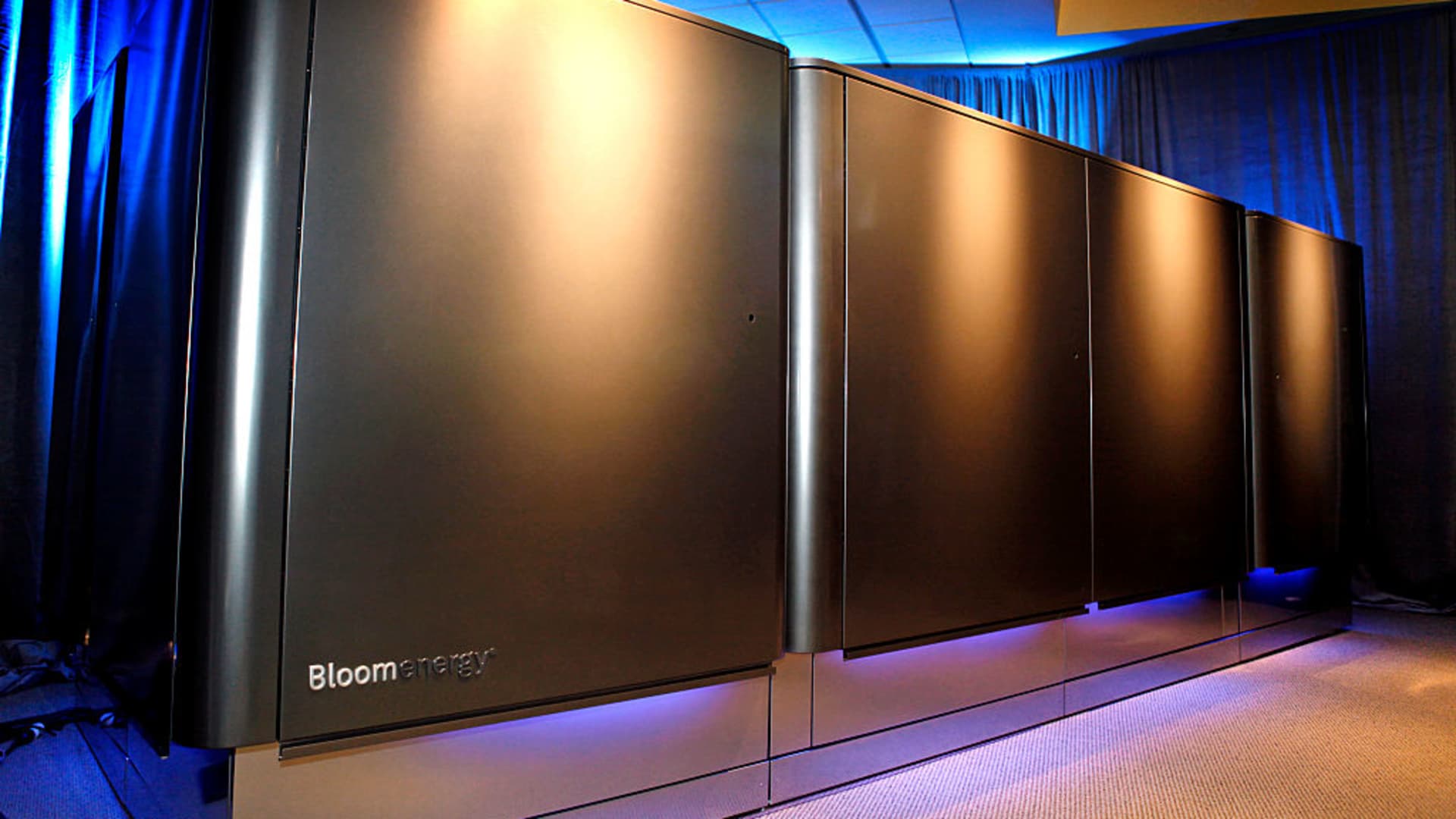
Bloom Energy Expands Partnership with Brookfield to $25B for AI Infrastructure
- Partnership Expansion: Bloom Energy's collaboration with Brookfield Asset Management has increased from the previously announced $5 billion to $25 billion, marking a fivefold growth that highlights strong demand for financing AI infrastructure projects.
- Strong Market Demand: The expansion reflects sustained demand from hyperscalers and AI infrastructure developers for fast, reliable, and community-friendly power, indicating market recognition of the new AI factory model.
- Technology Deployment Progress: Bloom Energy has successfully deployed its fuel cell technology to data centers through partnerships with American Electric Power, Equinix, and Oracle, further solidifying its market position in the AI infrastructure sector.
- Strategic Investment Plan: The expanded partnership is part of Brookfield's dedicated AI Infrastructure Fund, launched in November 2025 with a target to deploy $100 billion, demonstrating strong confidence in the future AI market.
See More

AWS Invests $1 Billion to Boost AI Engineering


- New Unit Launch: Amazon Web Services (AWS) has announced a $1 billion investment to establish a new Forward Deployed Engineering unit aimed at assisting customers in building and rolling out artificial intelligence systems, thereby enhancing the speed and efficiency of customer technical transformations.
- Embedded Engineers: AWS plans to embed thousands of Forward Deployed Engineers (FDEs) at customer sites, starting with an initial pod of five to six engineers who will work closely with clients' business and security teams to ensure rapid delivery of self-sufficient solutions.
- Market Competition: As the first hyperscaler to announce such an initiative, AWS aims to compete directly with rivals like OpenAI and Anthropic in the AI space, further solidifying its market leadership position.
- Customer Demand Response: AWS's vice president stated that speed is currently the primary concern for customers, and the introduction of FDEs will help accelerate value delivery, addressing urgent needs for rapid technology iteration, especially in highly regulated industries.
See More

AWS Invests $1 Billion to Accelerate AI System Deployment

- New Unit Launch: AWS has announced a $1 billion investment to establish a new Forward Deployed Engineering unit aimed at assisting customers in building and deploying AI systems, which is expected to significantly transform technology adoption and accelerate value delivery in the market.
- Engineer Team Scale: The unit will be seeded with 'thousands' of forward deployed engineers, with an initial pod of about five or six engineers embedded within customer teams, directly collaborating with clients' business and engineering staff to enhance technical capabilities and responsiveness.
- Market Competition Strategy: AWS is the first cloud service provider to announce such an initiative, aiming to compete with rivals like OpenAI and Anthropic for market share, demonstrating its ambitions and strategic positioning in the AI sector.
- Customer Demand Focus: AWS's forward deployed engineers will concentrate on helping clients achieve rapid technological transformation, addressing the urgent demand for speed, particularly in highly regulated industries, which is expected to attract more businesses to adopt this service.
See More

High-Yield Financial Stocks Investment Opportunities


- Brookfield Asset Management: Brookfield Asset Management manages over $1 trillion in assets, with fee-related earnings reaching $3.1 billion over the past 12 months, an 18% year-over-year increase, and expects to grow fee-related earnings at a 17% compound annual rate through 2030, supporting annual dividend growth of over 15%.
- Realty Income: Realty Income owns a diversified portfolio of properties, generating stable rental income that allows for a monthly dividend yield exceeding 5%, having increased its dividend 135 times since its 1994 public listing, demonstrating strong cash flow and growth potential.
- Main Street Capital: As a business development company, Main Street Capital must distribute 90% of its taxable income as dividends, with its dividend having grown by 160% since its 2007 IPO, currently yielding over 6% monthly, and has paid supplemental quarterly dividends for 19 consecutive quarters.
- Stable Income Streams: Brookfield, Realty Income, and Main Street Capital all provide high-yield dividends backed by stable and growing cash flows, indicating they will continue to grow dividends, making them ideal choices for investors seeking reliable income streams.
See More
Bloom Energy Expands Partnership with Brookfield to $25 Billion
- Partnership Expansion: Brookfield Asset Management is increasing its investment in Bloom Energy from an initial $5 billion to $25 billion, reflecting strong demand and confidence in the AI infrastructure market.
- Market Opportunity Capture: Brookfield anticipates that total spending on AI-related infrastructure will exceed $7 trillion over the next decade, prompting the launch of a $100 billion AI Infrastructure Fund, with Bloom Energy as a key partner.
- Rapid Deployment Advantage: Bloom Energy's fuel cell systems were delivered in just 55 days, significantly ahead of the 90-day target, leading Oracle to expand its order to 2.8 GW, further validating Bloom's critical role in powering AI data centers.
- Revenue Growth Momentum: Bloom Energy's revenue surged 130% year-over-year to $750 million in Q1, with expectations of reaching between $3.4 billion and $3.8 billion for the year, showcasing its strong performance in the rapidly growing hydrogen market.
See More
FuelCell Shares Surge 21% Following $25 Billion Partnership Expansion
- Stock Surge: FuelCell Energy (FCEL) shares jumped nearly 21% at Tuesday's close, primarily driven by Bloom Energy's expanded partnership with Brookfield, which increased committed funding from $5 billion to $25 billion, indicating strong expectations for power demand from AI data centers.
- Financing Support: FCEL recently secured a $49 million financing package from the U.S. Export-Import Bank to deploy five 2.8-megawatt energy blocks in South Korea, a move that not only strengthens the company's market position but also lays the groundwork for future growth.
- Retail Investor Interest: FCEL has seen a 121% surge in discussion volume on Stocktwits, reflecting strong retail investor interest, with about 30% of 648 participants in a poll planning to buy or add to their FCEL positions, indicating optimistic market sentiment regarding its future performance.
- Analyst Rating Upgrade: B. Riley upgraded FCEL from 'Neutral' to 'Buy', setting a price target of $32, more than double the previous target of $13, although the average 12-month price target from eight analysts is $22, suggesting a potential downside risk of 39% from its last close.
See More
Bloom Energy Expands Partnership with Brookfield to $25B for AI Infrastructure
- Partnership Expansion: Bloom Energy's collaboration with Brookfield Asset Management has increased from the previously announced $5 billion to $25 billion, marking a fivefold growth that highlights strong demand for financing AI infrastructure projects.
- Strong Market Demand: The expansion reflects sustained demand from hyperscalers and AI infrastructure developers for fast, reliable, and community-friendly power, indicating market recognition of the new AI factory model.
- Technology Deployment Progress: Bloom Energy has successfully deployed its fuel cell technology to data centers through partnerships with American Electric Power, Equinix, and Oracle, further solidifying its market position in the AI infrastructure sector.
- Strategic Investment Plan: The expanded partnership is part of Brookfield's dedicated AI Infrastructure Fund, launched in November 2025 with a target to deploy $100 billion, demonstrating strong confidence in the future AI market.
See More
AWS Invests $1 Billion to Boost AI Engineering
- New Unit Launch: Amazon Web Services (AWS) has announced a $1 billion investment to establish a new Forward Deployed Engineering unit aimed at assisting customers in building and rolling out artificial intelligence systems, thereby enhancing the speed and efficiency of customer technical transformations.
- Embedded Engineers: AWS plans to embed thousands of Forward Deployed Engineers (FDEs) at customer sites, starting with an initial pod of five to six engineers who will work closely with clients' business and security teams to ensure rapid delivery of self-sufficient solutions.
- Market Competition: As the first hyperscaler to announce such an initiative, AWS aims to compete directly with rivals like OpenAI and Anthropic in the AI space, further solidifying its market leadership position.
- Customer Demand Response: AWS's vice president stated that speed is currently the primary concern for customers, and the introduction of FDEs will help accelerate value delivery, addressing urgent needs for rapid technology iteration, especially in highly regulated industries.
See More
AWS Invests $1 Billion to Accelerate AI System Deployment
- New Unit Launch: AWS has announced a $1 billion investment to establish a new Forward Deployed Engineering unit aimed at assisting customers in building and deploying AI systems, which is expected to significantly transform technology adoption and accelerate value delivery in the market.
- Engineer Team Scale: The unit will be seeded with 'thousands' of forward deployed engineers, with an initial pod of about five or six engineers embedded within customer teams, directly collaborating with clients' business and engineering staff to enhance technical capabilities and responsiveness.
- Market Competition Strategy: AWS is the first cloud service provider to announce such an initiative, aiming to compete with rivals like OpenAI and Anthropic for market share, demonstrating its ambitions and strategic positioning in the AI sector.
- Customer Demand Focus: AWS's forward deployed engineers will concentrate on helping clients achieve rapid technological transformation, addressing the urgent demand for speed, particularly in highly regulated industries, which is expected to attract more businesses to adopt this service.
See More
High-Yield Financial Stocks Investment Opportunities
- Brookfield Asset Management: Brookfield Asset Management manages over $1 trillion in assets, with fee-related earnings reaching $3.1 billion over the past 12 months, an 18% year-over-year increase, and expects to grow fee-related earnings at a 17% compound annual rate through 2030, supporting annual dividend growth of over 15%.
- Realty Income: Realty Income owns a diversified portfolio of properties, generating stable rental income that allows for a monthly dividend yield exceeding 5%, having increased its dividend 135 times since its 1994 public listing, demonstrating strong cash flow and growth potential.
- Main Street Capital: As a business development company, Main Street Capital must distribute 90% of its taxable income as dividends, with its dividend having grown by 160% since its 2007 IPO, currently yielding over 6% monthly, and has paid supplemental quarterly dividends for 19 consecutive quarters.
- Stable Income Streams: Brookfield, Realty Income, and Main Street Capital all provide high-yield dividends backed by stable and growing cash flows, indicating they will continue to grow dividends, making them ideal choices for investors seeking reliable income streams.
See More