

Three Quality Stocks for Long-Term Investment
Written by Emily J. Thompson, Senior Investment Analyst
Updated: 3 hours ago
0mins

Source: NASDAQ.COM
- Buffett's Confidence: Berkshire Hathaway's CEO Warren Buffett has demonstrated strong management over the years, with a beta of 0.62 indicating that its stock price fluctuates only 62% as much as the market during volatility, showcasing its resilience.
- Leader in Surgical Systems: Intuitive Surgical boasts a market value of $151 billion with over 12,000 robotic surgical systems installed globally, and in Q1, it reported a 17% year-over-year increase in procedures and a 23% rise in revenue, highlighting its robust growth potential and stable service contract income.
- Growth Engine in Data Centers: Nvidia achieved $81.6 billion in revenue in Q1, an 85% year-over-year increase, with data center revenue reaching $75.2 billion, up 92%, positioning it favorably in the AI processing market despite a 25% stock price decline over the past year.
- Valuation Opportunity: Intuitive Surgical's forward P/E ratio stands at 44, below the five-year average of 55, indicating that its current stock price is relatively reasonable, making it an attractive option for investors looking to capitalize on future growth opportunities.
Trade with 70% Backtested Accuracy
Stop guessing "Should I Buy NVDA?" and start using high-conviction signals backed by rigorous historical data.
Sign up today to access powerful investing tools and make smarter, data-driven decisions.
Analyst Views on NVDA
Wall Street analysts forecast NVDA stock price to rise
41 Analyst Rating
39 Buy
1 Hold
1 Sell
Strong Buy
Current: 205.100

Low
200.00
Averages
264.97
High
352.00
Current: 205.100
Low
200.00
Averages
264.97
High
352.00
About NVDA
NVIDIA Corporation is an artificial intelligence (AI) infrastructure company. The Company is engaged in accelerated computing to help solve the challenging computational problems. Its segments include Compute & Networking and Graphics. The Compute & Networking segment includes its Data Center accelerated computing and networking platforms and AI solutions and software, and automotive platforms and autonomous and electric vehicle solutions, including software. The Graphics segment includes GeForce GPUs for gaming and personal computers (PCs), and Quadro/NVIDIA RTX GPUs for enterprise workstation graphics. Its technology stack includes the foundational NVIDIA CUDA development platform that runs on all NVIDIA GPUs, as well as hundreds of domain-specific software libraries, frameworks, algorithms, software development kits (SDKs), and application programming interfaces (APIs). Its platforms address four markets, which include Data Center, Gaming, Professional Visualization, and Automotive.
About the author

Emily J. Thompson
Emily J. Thompson, a Chartered Financial Analyst (CFA) with 12 years in investment research, graduated with honors from the Wharton School. Specializing in industrial and technology stocks, she provides in-depth analysis for Intellectia’s earnings and market brief reports.

Nvidia's Stock Continues to Climb, Market Cap Reaches $5.3 Trillion

- Significant Stock Growth: As of June 4, Nvidia's stock has risen 17% in 2026, reaching a market cap of $5.3 trillion, indicating strong market performance and investor confidence.
- Remarkable Investment Returns: An investment of $10,000 in Nvidia a decade ago would now be worth nearly $1.9 million, yielding a staggering 18,720% return, far surpassing Bitcoin's 11,040% increase, highlighting its leadership in the AI sector.
- Strong Revenue Growth: Nvidia's revenue surged by 1,033% over the past three years, reflecting robust demand for its AI data center hardware and software, solidifying its market dominance.
- Excellent Profit Margins: In Q1 2027, Nvidia reported an operating margin of 65.6%, demonstrating its strong profitability in the rapidly growing AI market.
See More
Trump Meets AI Executives on Government Equity Stakes
- Government Equity Plan: Trump has held private meetings with executives from major AI companies like OpenAI to discuss the government acquiring voluntary equity stakes, which could significantly impact investment structures and market confidence in the AI sector.
- Legislative Proposal Impact: Senator Sanders has introduced legislation mandating the government to acquire 50% equity in AI companies, which, if passed, would profoundly affect companies like Microsoft and Nvidia, potentially constraining private value creation in the industry.
- IPO Uncertainty: OpenAI is anticipated to go public in 2026 with a valuation between $830 billion and $1 trillion, despite projecting $14 billion in losses, and the potential government equity stake could directly influence its IPO valuation.
- Increased Market Risk: Sanders' proposal has raised uncertainties for Microsoft, Nvidia, and Alphabet, as investors worry that government co-ownership could limit future monetization opportunities, thereby increasing short-term market risks.
See More

Computex Highlights Surge in AI Demand

- Nvidia Market Dominance: According to UBS analysts, Nvidia continues to lead in GPU shipments over AMD, with expectations that its Blackwell will dominate the market by 2026, highlighting its critical role in the surge of AI computing demand.
- AMD Shipment Outlook: While AMD's Helios is expected to begin shipments in Q4 2026, full rack deployments may be delayed until the end of 2026 due to additional time needed for optimization and validation, potentially impacting its competitive position in the market.
- Arm Customer Expansion: Arm confirmed that its AGI products are now in production at TSMC, with new large-scale customers including ByteDance and Oracle, suggesting that its previous $15 billion revenue target may be conservative, reflecting an optimistic outlook on its expanding hyperscaler customer base.
- Marvell Stock Surge: Following comments from Nvidia CEO Jensen Huang, Marvell's stock surged 14%, indicating its strong positioning in AI networking and XPUs, although the market reaction may be somewhat overextended given limited incremental disclosures.
See More

Intel Stock Rebounds Amid New Market Opportunities


- Market Rebound: Intel's stock rebounded 11.5% today after a 13.5% drop last week, reflecting investor confidence in future opportunities, particularly as the semiconductor sector lost $1 trillion in market capitalization.
- Potential Order: Reports suggest that Alphabet may place an order for 3 million tensor processing unit (TPU) AI chips from Intel in 2028; although unconfirmed, this news has sparked positive market reactions that could lead to significant revenue for Intel.
- Collaboration Rumors: In addition to the potential deal with Alphabet, Intel may act as a contract manufacturer for Nvidia, producing a new processor that combines four Nvidia GPUs, which could further solidify Intel's position in the high-performance computing market if true.
- Future Outlook: Despite currently being unprofitable and trading at over 120 times next year's earnings, the optimistic sentiment surrounding Intel's future, especially with rumors of a partnership with Tesla, may drive stock prices higher.
See More
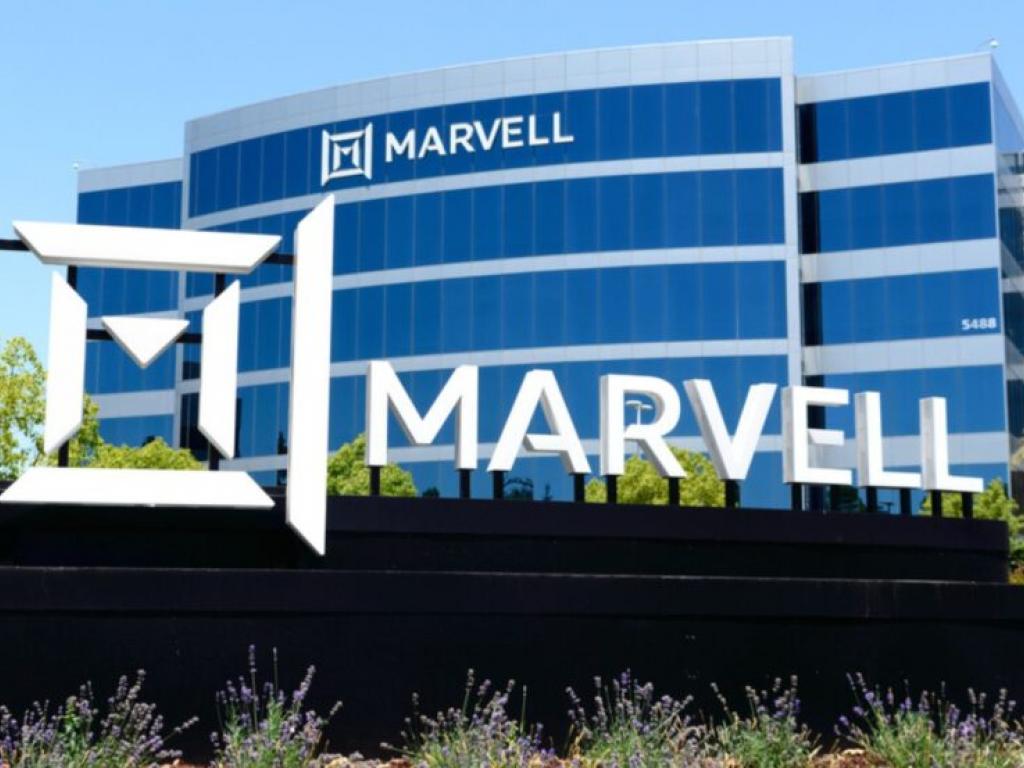
Can Marvell Technology Become the Next Nvidia?

- Market Positioning: Marvell Technology's market capitalization is approximately $275 billion, and with a recent 14.11% stock surge, it reflects market recognition of its significance in AI infrastructure, particularly with strategic investments from Nvidia and AMD.
- Technological Edge: Marvell specializes in custom silicon chips and high-bandwidth interconnect technologies, addressing bottlenecks in data movement, latency, and power efficiency that legacy architectures face, positioning the company as a key player in AI model training and future growth.
- Rising Industry Demand: With hyperscalers like Microsoft, Amazon, and Alphabet pouring hundreds of billions into AI capital expenditures, Marvell's infrastructure portfolio positions it as a critical enabler of AI factories, likely benefiting from this trend.
- Future Outlook: Although Marvell's scale is still a fraction of Nvidia's, as AI hyperscalers expand their data center footprints, Marvell has the potential to become a trillion-dollar stock, albeit more as a supporter rather than a leader in AI training workloads.
See More

Analysis of Growth Potential for Nvidia and Broadcom

- Nvidia Revenue Growth: Nvidia's revenue for Q1 of fiscal 2027 surged 85% year-over-year to $81.6 billion, with data center revenue increasing 92% to $75.2 billion, demonstrating strong performance in the AI market despite challenges in the Chinese market.
- Broadcom AI Semiconductor Revenue: Broadcom's AI semiconductor revenue rose 143% year-over-year to $10.8 billion, with total bookings exceeding $30 billion in Q2, indicating robust demand for AI infrastructure, and is expected to grow 180% year-over-year in fiscal 2026.
- Market Competition and Risks: Despite strong performances from Nvidia and Broadcom in the AI sector, high valuations and expectations pose risks for investors, particularly as Broadcom's P/E ratio exceeds 81.8, significantly higher than its five-year average of 69.3, reflecting market optimism about future growth.
- Long-term Customer Agreements: Broadcom has secured long-term agreements with major clients like Google to design multiple generations of TPUs and AI networking components, ensuring revenue visibility for the coming years; however, the company is heavily reliant on six core customers, exposing it to significant concentration risk.
See More
Nvidia's Stock Continues to Climb, Market Cap Reaches $5.3 Trillion
- Significant Stock Growth: As of June 4, Nvidia's stock has risen 17% in 2026, reaching a market cap of $5.3 trillion, indicating strong market performance and investor confidence.
- Remarkable Investment Returns: An investment of $10,000 in Nvidia a decade ago would now be worth nearly $1.9 million, yielding a staggering 18,720% return, far surpassing Bitcoin's 11,040% increase, highlighting its leadership in the AI sector.
- Strong Revenue Growth: Nvidia's revenue surged by 1,033% over the past three years, reflecting robust demand for its AI data center hardware and software, solidifying its market dominance.
- Excellent Profit Margins: In Q1 2027, Nvidia reported an operating margin of 65.6%, demonstrating its strong profitability in the rapidly growing AI market.
See More
Trump Meets AI Executives on Government Equity Stakes
- Government Equity Plan: Trump has held private meetings with executives from major AI companies like OpenAI to discuss the government acquiring voluntary equity stakes, which could significantly impact investment structures and market confidence in the AI sector.
- Legislative Proposal Impact: Senator Sanders has introduced legislation mandating the government to acquire 50% equity in AI companies, which, if passed, would profoundly affect companies like Microsoft and Nvidia, potentially constraining private value creation in the industry.
- IPO Uncertainty: OpenAI is anticipated to go public in 2026 with a valuation between $830 billion and $1 trillion, despite projecting $14 billion in losses, and the potential government equity stake could directly influence its IPO valuation.
- Increased Market Risk: Sanders' proposal has raised uncertainties for Microsoft, Nvidia, and Alphabet, as investors worry that government co-ownership could limit future monetization opportunities, thereby increasing short-term market risks.
See More
Computex Highlights Surge in AI Demand
- Nvidia Market Dominance: According to UBS analysts, Nvidia continues to lead in GPU shipments over AMD, with expectations that its Blackwell will dominate the market by 2026, highlighting its critical role in the surge of AI computing demand.
- AMD Shipment Outlook: While AMD's Helios is expected to begin shipments in Q4 2026, full rack deployments may be delayed until the end of 2026 due to additional time needed for optimization and validation, potentially impacting its competitive position in the market.
- Arm Customer Expansion: Arm confirmed that its AGI products are now in production at TSMC, with new large-scale customers including ByteDance and Oracle, suggesting that its previous $15 billion revenue target may be conservative, reflecting an optimistic outlook on its expanding hyperscaler customer base.
- Marvell Stock Surge: Following comments from Nvidia CEO Jensen Huang, Marvell's stock surged 14%, indicating its strong positioning in AI networking and XPUs, although the market reaction may be somewhat overextended given limited incremental disclosures.
See More
Intel Stock Rebounds Amid New Market Opportunities
- Market Rebound: Intel's stock rebounded 11.5% today after a 13.5% drop last week, reflecting investor confidence in future opportunities, particularly as the semiconductor sector lost $1 trillion in market capitalization.
- Potential Order: Reports suggest that Alphabet may place an order for 3 million tensor processing unit (TPU) AI chips from Intel in 2028; although unconfirmed, this news has sparked positive market reactions that could lead to significant revenue for Intel.
- Collaboration Rumors: In addition to the potential deal with Alphabet, Intel may act as a contract manufacturer for Nvidia, producing a new processor that combines four Nvidia GPUs, which could further solidify Intel's position in the high-performance computing market if true.
- Future Outlook: Despite currently being unprofitable and trading at over 120 times next year's earnings, the optimistic sentiment surrounding Intel's future, especially with rumors of a partnership with Tesla, may drive stock prices higher.
See More
Can Marvell Technology Become the Next Nvidia?
- Market Positioning: Marvell Technology's market capitalization is approximately $275 billion, and with a recent 14.11% stock surge, it reflects market recognition of its significance in AI infrastructure, particularly with strategic investments from Nvidia and AMD.
- Technological Edge: Marvell specializes in custom silicon chips and high-bandwidth interconnect technologies, addressing bottlenecks in data movement, latency, and power efficiency that legacy architectures face, positioning the company as a key player in AI model training and future growth.
- Rising Industry Demand: With hyperscalers like Microsoft, Amazon, and Alphabet pouring hundreds of billions into AI capital expenditures, Marvell's infrastructure portfolio positions it as a critical enabler of AI factories, likely benefiting from this trend.
- Future Outlook: Although Marvell's scale is still a fraction of Nvidia's, as AI hyperscalers expand their data center footprints, Marvell has the potential to become a trillion-dollar stock, albeit more as a supporter rather than a leader in AI training workloads.
See More
Analysis of Growth Potential for Nvidia and Broadcom
- Nvidia Revenue Growth: Nvidia's revenue for Q1 of fiscal 2027 surged 85% year-over-year to $81.6 billion, with data center revenue increasing 92% to $75.2 billion, demonstrating strong performance in the AI market despite challenges in the Chinese market.
- Broadcom AI Semiconductor Revenue: Broadcom's AI semiconductor revenue rose 143% year-over-year to $10.8 billion, with total bookings exceeding $30 billion in Q2, indicating robust demand for AI infrastructure, and is expected to grow 180% year-over-year in fiscal 2026.
- Market Competition and Risks: Despite strong performances from Nvidia and Broadcom in the AI sector, high valuations and expectations pose risks for investors, particularly as Broadcom's P/E ratio exceeds 81.8, significantly higher than its five-year average of 69.3, reflecting market optimism about future growth.
- Long-term Customer Agreements: Broadcom has secured long-term agreements with major clients like Google to design multiple generations of TPUs and AI networking components, ensuring revenue visibility for the coming years; however, the company is heavily reliant on six core customers, exposing it to significant concentration risk.
See More





