Synopsys: Long-Term Potential Surpasses Short-Term Challenges

Earnings Overview: Synopsys reported a revenue of $2.41 billion for fiscal Q1 2026, slightly exceeding estimates, with a 66% increase largely attributed to the acquisition of Ansys. Adjusted earnings per share rose by 24% to $3.77, surpassing guidance expectations.
Acquisition Impact: The $35 billion acquisition of Ansys is expected to enhance Synopsys's market position in electronic design automation (EDA) and expand its addressable market from simple chips to full-system development, although it has introduced near-term profit headwinds.
Stock Performance: Despite beating earnings expectations, Synopsys shares fell approximately 5% post-earnings release, influenced by broader market trends and concerns regarding the integration of Ansys's costs into Synopsys's financials.
Long-Term Outlook: Synopsys maintains a promising long-term outlook, with plans to generate significant cost and revenue synergies from the Ansys deal, aiming for $400 million in each category by year four post-merger, while also focusing on developing integrated software offerings to meet increasing complexity in technology.
Trade with 70% Backtested Accuracy
Analyst Views on SNPS

About SNPS
About the author


Software Stocks Rebound as AI Boosts Sector Recovery


- Market Rebound: The iShares Expanded Tech-Software Sector ETF has surged nearly 42% from its April low, reflecting investor confidence in AI capabilities and shifting pessimistic outlooks for the industry.
- Investor Preferences: Analysts highlight companies like Datadog and Palo Alto Networks for their usage-based pricing models, indicating market caution towards traditional subscription models and suggesting future profit potential.
- Strong Earnings Boost: Robust financial results and guidance from Snowflake and MongoDB have lifted market sentiment, indicating that software companies will benefit from AI advancements, further fueling investor optimism.
- Long-Term Investment Strategy: Investors are advised to select the right stocks, with Datadog and Palo Alto Networks seen as top picks for the long haul, as Datadog's stock nearly doubled due to AI demand, while Palo Alto's profitability is expected to rise with increasing security threats.
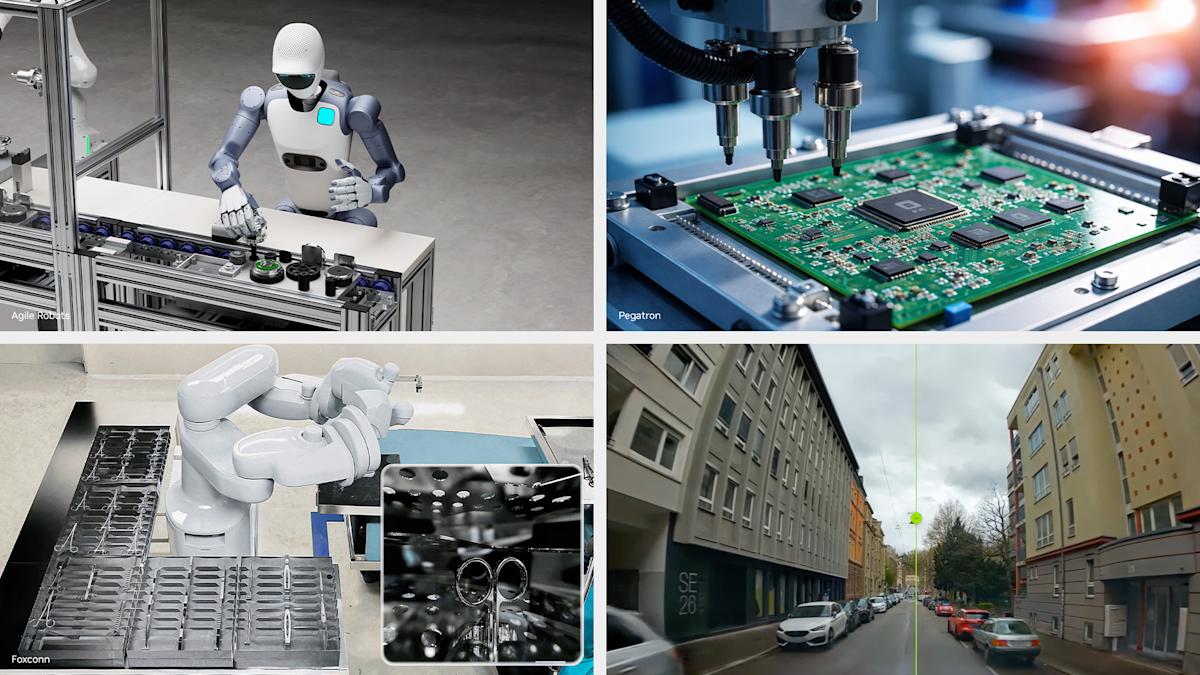
NVIDIA Unveils Open Source Tools for Physical AI Development


- Open Source Tools Launch: NVIDIA has released a comprehensive collection of open source physical AI skills and tools across platforms like Omniverse and Cosmos, aimed at simplifying the development processes for robotics, autonomous vehicles, and industrial digital twins, thereby reducing development costs and complexity.
- Widespread Industry Adoption: Industry leaders such as TSMC and Foxconn are leveraging NVIDIA's physical AI tools to accelerate development, with Foxconn reducing model training and deployment time by 67% using synthetic data, significantly enhancing production efficiency.
- Agent Technology Advancement: NVIDIA's Agent Toolkit enables developers to transform complex physical AI workflows into executable instructions, increasing development speed and facilitating the rapid construction of future robots and autonomous driving systems.
- Security and Scalability: The newly launched NVIDIA NemoClaw and OpenShell runtime provide developers with policy-driven security and privacy governance, ensuring safe building and deployment of autonomous agents on local or cloud hardware.

COMPUTEX 2026 Set to Showcase AI Innovations

- Event Schedule: COMPUTEX 2026 is set to take place from June 2 to June 5 at the Taipei Nangang Exhibition Center, where global tech giants will unveil the latest innovations in artificial intelligence and computing, likely drawing significant industry attention.
- Nvidia Keynote: Nvidia CEO Jensen Huang is scheduled to deliver a keynote at the GTC Taipei event on June 1, where he is expected to announce an accelerated release schedule for new data center GPU architectures, which could positively impact the company's stock price.
- Product Launch Highlights: At COMPUTEX 2024, Nvidia announced the annual launch of its Spectrum-X Ethernet networking platform, marking its technological leadership in AI, which is expected to drive increased market demand for its products.
- Industry Participants: In addition to Nvidia, major companies like Intel, Microsoft, and Google will also participate in the event, further enhancing COMPUTEX's industry influence and potentially creating new collaboration opportunities for exhibitors.

Nvidia CEO to Keynote at COMPUTEX 2026 in Taipei
- Keynote Schedule: Nvidia CEO Jensen Huang is set to deliver a keynote on June 1 at 11 a.m. local time during COMPUTEX 2026 in Taipei, which is expected to draw significant industry attention and potentially positively impact Nvidia's stock price.
- Historical Performance Review: During COMPUTEX 2024, Nvidia's stock surged by 10.4%, significantly outperforming the S&P 500's 1.4% gain, indicating the trade show's positive influence on the company's stock performance.
- Technology Release Strategy: Huang announced an acceleration in the release cadence for new data center GPU architectures from every two years to annually, a strategic shift aimed at strengthening Nvidia's leadership position in the competitive AI market.
- Industry Participation: COMPUTEX 2026 features participation from global tech giants such as Intel, Microsoft, and Qualcomm, highlighting the industry's focus on new technologies and potentially fostering collaboration and competition involving Nvidia.

Huawei's New Chip Design Breakthrough in Transmission Speed
- New Design Principle: Huawei's newly unveiled chip design principle focuses on enhancing transmission speed rather than continuing to shrink semiconductor sizes, offering a new path for China to develop cutting-edge chips despite U.S. sanctions, which could reshape the industry landscape over the next decade.
- Logic Folding Technology: The core technique, LogicFolding, aims to stack logic, analog, and memory circuits in tighter structures, potentially improving chip density and efficiency, although the actual breakthrough of this method remains to be validated over time.
- Market Competitive Pressure: While Huawei's technological innovation is seen as a breakthrough, industry experts argue that many of the underlying ideas resemble existing work in 3D stacking and advanced packaging, suggesting it may not pose a threat to TSMC, which has nearly a decade of experience in this area.
- New Kirin Chip Launch: Huawei's upcoming Kirin smartphone chip, which will utilize the LogicFolding architecture, is expected to improve power efficiency by 41% and peak operating speed by nearly 13%, and if achieved at commercial scale, it could significantly impact the market.

Photronics Reports Q2 Earnings Below Expectations


- Earnings Report: Photronics reported fiscal Q2 non-GAAP net income and sales below analysts' expectations, indicating challenges the company faces in the current market environment, which may affect investor confidence.
- Market Reaction: The disappointing performance could lead to negative impacts on Photronics' stock performance, prompting investors to reassess its future growth potential and potentially causing stock price volatility.
- Industry Context: The decline in Photronics' performance reflects intensified competition and uncertainty in market demand within the semiconductor industry, which may influence the company's long-term strategic planning.
- Outlook: Despite the current underperformance, Photronics needs to develop effective strategies to restore market confidence and drive future growth, particularly in terms of technological innovation and market expansion.
Software Stocks Rebound as AI Boosts Sector Recovery
- Market Rebound: The iShares Expanded Tech-Software Sector ETF has surged nearly 42% from its April low, reflecting investor confidence in AI capabilities and shifting pessimistic outlooks for the industry.
- Investor Preferences: Analysts highlight companies like Datadog and Palo Alto Networks for their usage-based pricing models, indicating market caution towards traditional subscription models and suggesting future profit potential.
- Strong Earnings Boost: Robust financial results and guidance from Snowflake and MongoDB have lifted market sentiment, indicating that software companies will benefit from AI advancements, further fueling investor optimism.
- Long-Term Investment Strategy: Investors are advised to select the right stocks, with Datadog and Palo Alto Networks seen as top picks for the long haul, as Datadog's stock nearly doubled due to AI demand, while Palo Alto's profitability is expected to rise with increasing security threats.
NVIDIA Unveils Open Source Tools for Physical AI Development
- Open Source Tools Launch: NVIDIA has released a comprehensive collection of open source physical AI skills and tools across platforms like Omniverse and Cosmos, aimed at simplifying the development processes for robotics, autonomous vehicles, and industrial digital twins, thereby reducing development costs and complexity.
- Widespread Industry Adoption: Industry leaders such as TSMC and Foxconn are leveraging NVIDIA's physical AI tools to accelerate development, with Foxconn reducing model training and deployment time by 67% using synthetic data, significantly enhancing production efficiency.
- Agent Technology Advancement: NVIDIA's Agent Toolkit enables developers to transform complex physical AI workflows into executable instructions, increasing development speed and facilitating the rapid construction of future robots and autonomous driving systems.
- Security and Scalability: The newly launched NVIDIA NemoClaw and OpenShell runtime provide developers with policy-driven security and privacy governance, ensuring safe building and deployment of autonomous agents on local or cloud hardware.
COMPUTEX 2026 Set to Showcase AI Innovations
- Event Schedule: COMPUTEX 2026 is set to take place from June 2 to June 5 at the Taipei Nangang Exhibition Center, where global tech giants will unveil the latest innovations in artificial intelligence and computing, likely drawing significant industry attention.
- Nvidia Keynote: Nvidia CEO Jensen Huang is scheduled to deliver a keynote at the GTC Taipei event on June 1, where he is expected to announce an accelerated release schedule for new data center GPU architectures, which could positively impact the company's stock price.
- Product Launch Highlights: At COMPUTEX 2024, Nvidia announced the annual launch of its Spectrum-X Ethernet networking platform, marking its technological leadership in AI, which is expected to drive increased market demand for its products.
- Industry Participants: In addition to Nvidia, major companies like Intel, Microsoft, and Google will also participate in the event, further enhancing COMPUTEX's industry influence and potentially creating new collaboration opportunities for exhibitors.
Nvidia CEO to Keynote at COMPUTEX 2026 in Taipei
- Keynote Schedule: Nvidia CEO Jensen Huang is set to deliver a keynote on June 1 at 11 a.m. local time during COMPUTEX 2026 in Taipei, which is expected to draw significant industry attention and potentially positively impact Nvidia's stock price.
- Historical Performance Review: During COMPUTEX 2024, Nvidia's stock surged by 10.4%, significantly outperforming the S&P 500's 1.4% gain, indicating the trade show's positive influence on the company's stock performance.
- Technology Release Strategy: Huang announced an acceleration in the release cadence for new data center GPU architectures from every two years to annually, a strategic shift aimed at strengthening Nvidia's leadership position in the competitive AI market.
- Industry Participation: COMPUTEX 2026 features participation from global tech giants such as Intel, Microsoft, and Qualcomm, highlighting the industry's focus on new technologies and potentially fostering collaboration and competition involving Nvidia.
Huawei's New Chip Design Breakthrough in Transmission Speed
- New Design Principle: Huawei's newly unveiled chip design principle focuses on enhancing transmission speed rather than continuing to shrink semiconductor sizes, offering a new path for China to develop cutting-edge chips despite U.S. sanctions, which could reshape the industry landscape over the next decade.
- Logic Folding Technology: The core technique, LogicFolding, aims to stack logic, analog, and memory circuits in tighter structures, potentially improving chip density and efficiency, although the actual breakthrough of this method remains to be validated over time.
- Market Competitive Pressure: While Huawei's technological innovation is seen as a breakthrough, industry experts argue that many of the underlying ideas resemble existing work in 3D stacking and advanced packaging, suggesting it may not pose a threat to TSMC, which has nearly a decade of experience in this area.
- New Kirin Chip Launch: Huawei's upcoming Kirin smartphone chip, which will utilize the LogicFolding architecture, is expected to improve power efficiency by 41% and peak operating speed by nearly 13%, and if achieved at commercial scale, it could significantly impact the market.
Photronics Reports Q2 Earnings Below Expectations
- Earnings Report: Photronics reported fiscal Q2 non-GAAP net income and sales below analysts' expectations, indicating challenges the company faces in the current market environment, which may affect investor confidence.
- Market Reaction: The disappointing performance could lead to negative impacts on Photronics' stock performance, prompting investors to reassess its future growth potential and potentially causing stock price volatility.
- Industry Context: The decline in Photronics' performance reflects intensified competition and uncertainty in market demand within the semiconductor industry, which may influence the company's long-term strategic planning.
- Outlook: Despite the current underperformance, Photronics needs to develop effective strategies to restore market confidence and drive future growth, particularly in terms of technological innovation and market expansion.