

SpaceX Valuation Soars to $2.1 Trillion Post-IPO
Written by Emily J. Thompson, Senior Investment Analyst
Updated: 44 minutes ago
0mins
Source: Fool
- Valuation Surge: Following its IPO, SpaceX's valuation skyrocketed from $1.77 trillion to $2.1 trillion, establishing it as one of the largest publicly traded companies globally, reflecting strong market confidence in its growth prospects.
- Nasdaq-100 Inclusion: SpaceX is set to be added to the Nasdaq-100 index after market close on July 6, which will trigger ETF purchases of its stock, potentially driving the share price higher and increasing market visibility.
- Price Support: Despite significant price swings since its IPO, SpaceX's stock has found crucial support near the $160.95 closing price on its debut, with the current price hovering close to that level, indicating market recognition of its value.
- Future Risks: While sales growth is expected to exceed last year's 33%, SpaceX faces a net loss risk of approximately $4.9 billion, and with around $800 billion in shares becoming eligible for sale in the coming months, there could be downward pressure on the stock price.
Trade with 70% Backtested Accuracy
Stop guessing "Should I Buy SPCX?" and start using high-conviction signals backed by rigorous historical data.
Sign up today to access powerful investing tools and make smarter, data-driven decisions.
Analyst Views on SPCX
Wall Street analysts forecast SPCX stock price to rise
0 Analyst Rating
0 Buy
0 Hold
0 Sell
Current: 157.540

Low
Averages
High
Current: 157.540
Low
Averages
High
About SPCX
Space Exploration Technologies Corp. designs, manufactures, launches, and operates products and services built on technologies, including rockets and spacecraft. The Company's segments include Space, Connectivity, and artificial intelligence (AI). Its Space segment designs, manufactures, and launches reusable rockets to provide access to space. Its Connectivity segment operates broadband data and communications network powered by approximately 9,600 Starlink broadband and mobile satellites in Low-Earth orbit, delivering connectivity to consumer, enterprises, and government customers over 164 countries, territories, and other markets. In its AI segment, it operates a vertically integrated AI platform spanning its truth-seeking frontier model Grok, AI solutions for consumer and enterprise customers, X-its real-time information, entertainment, and free speech platform and AI computational infrastructure.
About the author

Emily J. Thompson
Emily J. Thompson, a Chartered Financial Analyst (CFA) with 12 years in investment research, graduated with honors from the Wharton School. Specializing in industrial and technology stocks, she provides in-depth analysis for Intellectia’s earnings and market brief reports.

SpaceX IPO May Set Fast Track for Other Mega-Cap Debuts

- Market Dynamics Impact: Nick Ryder, Chief Investment Officer at Kathmere Capital Management, emphasizes that market conditions will dictate whether upcoming mega-cap IPOs will emulate SpaceX's successful model, indicating that market sentiment is crucial for IPO success.
- SpaceX IPO Performance: Since its public debut on June 12, SpaceX has achieved a market cap exceeding $2 trillion, with an opening price of $150, and saw its stock price soar 53% within just three days, reflecting strong market demand, although it has since moderated to a nearly 17% increase.
- Index Inclusion Speed: SpaceX has become one of the fastest stocks to be added to major indices, already included in the Russell 1000 and set to join the Nasdaq-100 after market close on July 6, showcasing its rapid market acceptance.
- Future IPO Blueprint: Arne Noack from FTSE Russell highlights that index providers have established a clear blueprint, allowing any company meeting specific criteria to potentially achieve fast-track index inclusion, providing a model for future IPOs.
See More

SpaceX Valuation Soars to $2.1 Trillion Post-IPO
- Valuation Surge: Following its IPO, SpaceX's valuation skyrocketed from $1.77 trillion to $2.1 trillion, establishing it as one of the largest publicly traded companies globally, reflecting strong market confidence in its growth prospects.
- Nasdaq-100 Inclusion: SpaceX is set to be added to the Nasdaq-100 index after market close on July 6, which will trigger ETF purchases of its stock, potentially driving the share price higher and increasing market visibility.
- Price Support: Despite significant price swings since its IPO, SpaceX's stock has found crucial support near the $160.95 closing price on its debut, with the current price hovering close to that level, indicating market recognition of its value.
- Future Risks: While sales growth is expected to exceed last year's 33%, SpaceX faces a net loss risk of approximately $4.9 billion, and with around $800 billion in shares becoming eligible for sale in the coming months, there could be downward pressure on the stock price.
See More
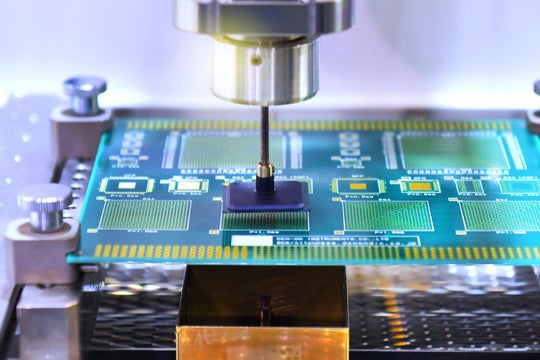
ASML Shares Surge Amid Semiconductor Investment Boom


- Significant Stock Surge: ASML shares rose 24.3% in June to $1,766.84, driven by positive sentiment surrounding semiconductor investments, indicating the company's robust position in the industry despite no financial reports.
- Terafab Project Support: Elon Musk endorsed the Terafab project at ASML's technology conference, envisioning it as a massive semiconductor manufacturing entity to serve SpaceX and Tesla's future needs, further solidifying ASML's critical role in the market.
- Memory Sector Investment Boom: Micron Technology's fiscal Q3 earnings exceeded expectations, raising capital expenditures to $27 billion, while Samsung and SK Hynix announced $520 billion in investments, all of which will drive strong demand for ASML's equipment.
- Increased Industry Spending Projections: Analysts raised their forecasts for semiconductor equipment spending to $190 billion in 2027 and potentially $300 billion by 2028, indicating that ASML will benefit significantly from the industry's rapid growth in the coming years.
See More

Amazon and SpaceX Compete for Digital Life Dominance

- Amazon Sales Surge: In 2025, Amazon's net sales reached $716.9 billion, with $269.3 billion from online stores, indicating its deep integration into consumers' daily lives and enhancing its market competitiveness.
- AWS Growth Continues: Amazon's AWS revenue grew 28% year-over-year to $37.6 billion in Q1, with operating income rising from $11.5 billion to $14.2 billion, showcasing its potential and profitability in the AI sector.
- SpaceX Mobile Service Expansion: SpaceX is launching Starlink direct-to-cell satellite technology in partnership with T-Mobile US, with plans to expand into mobile services, potentially competing with Verizon and AT&T, thereby enhancing its position in the consumer telecommunications market.
- Satellite Network Expansion: SpaceX received FCC approval to deploy an additional 7,500 Gen2 Starlink satellites, increasing its total network to 15,000, which will enhance coverage and support direct-to-cell services, improving user experience.
See More

Amazon's Satellite Network Set to Launch Initial Service
- Successful Satellite Launch: Amazon successfully launched 29 satellites on Thursday, bringing its total to over 390, which is sufficient to support initial service for its low Earth orbit internet network, Leo, marking a significant milestone in the satellite internet market.
- Intensifying Market Competition: Amazon's Leo network aims to compete with SpaceX's Starlink, which has around 10,000 satellites and over 10 million subscribers; Amazon's initial commercial service will target users in specific geographies, with plans to expand coverage and capacity in the future.
- Launch Capacity Challenges: Amazon aims to build a constellation of approximately 7,700 satellites, but progress has been hampered by a shortage of rocket launch capacity; the company signed historic agreements with multiple launch providers in 2022 to secure launches but continues to face delays.
- Future Launch Plans: Amazon's next Leo mission will utilize ULA's Vulcan heavy-lift rocket, expected to increase launch frequency and accelerate network coverage expansion, with hundreds of flight-ready satellites prepared at the Florida launch site to ensure rapid deployment.
See More
Amazon Set to Launch Leo Satellite Network This Year
- Satellite Deployment Progress: Amazon has successfully launched 29 satellites, bringing its Leo network total to over 390 satellites, which is sufficient to support initial service, marking a key milestone in its entry into the low Earth orbit satellite market.
- Market Competition Landscape: The Leo network will compete with SpaceX's Starlink, which boasts over 10,000 satellites and more than 10 million subscribers, indicating that Amazon's market entry will intensify competition in low Earth internet services.
- Service Coverage Limitations: Although Amazon plans to launch initial services later this year, network coverage will be restricted to specific geographic areas, with future missions aimed at expanding coverage and capacity to meet growing market demand.
- Launch Capacity Challenges: Amazon faces challenges related to rocket launch capacity; despite signing agreements with ULA, Arianespace, and SpaceX, delays caused by various factors may impact its satellite deployment timeline.
See More
SpaceX IPO May Set Fast Track for Other Mega-Cap Debuts
- Market Dynamics Impact: Nick Ryder, Chief Investment Officer at Kathmere Capital Management, emphasizes that market conditions will dictate whether upcoming mega-cap IPOs will emulate SpaceX's successful model, indicating that market sentiment is crucial for IPO success.
- SpaceX IPO Performance: Since its public debut on June 12, SpaceX has achieved a market cap exceeding $2 trillion, with an opening price of $150, and saw its stock price soar 53% within just three days, reflecting strong market demand, although it has since moderated to a nearly 17% increase.
- Index Inclusion Speed: SpaceX has become one of the fastest stocks to be added to major indices, already included in the Russell 1000 and set to join the Nasdaq-100 after market close on July 6, showcasing its rapid market acceptance.
- Future IPO Blueprint: Arne Noack from FTSE Russell highlights that index providers have established a clear blueprint, allowing any company meeting specific criteria to potentially achieve fast-track index inclusion, providing a model for future IPOs.
See More
SpaceX Valuation Soars to $2.1 Trillion Post-IPO
- Valuation Surge: Following its IPO, SpaceX's valuation skyrocketed from $1.77 trillion to $2.1 trillion, establishing it as one of the largest publicly traded companies globally, reflecting strong market confidence in its growth prospects.
- Nasdaq-100 Inclusion: SpaceX is set to be added to the Nasdaq-100 index after market close on July 6, which will trigger ETF purchases of its stock, potentially driving the share price higher and increasing market visibility.
- Price Support: Despite significant price swings since its IPO, SpaceX's stock has found crucial support near the $160.95 closing price on its debut, with the current price hovering close to that level, indicating market recognition of its value.
- Future Risks: While sales growth is expected to exceed last year's 33%, SpaceX faces a net loss risk of approximately $4.9 billion, and with around $800 billion in shares becoming eligible for sale in the coming months, there could be downward pressure on the stock price.
See More
ASML Shares Surge Amid Semiconductor Investment Boom
- Significant Stock Surge: ASML shares rose 24.3% in June to $1,766.84, driven by positive sentiment surrounding semiconductor investments, indicating the company's robust position in the industry despite no financial reports.
- Terafab Project Support: Elon Musk endorsed the Terafab project at ASML's technology conference, envisioning it as a massive semiconductor manufacturing entity to serve SpaceX and Tesla's future needs, further solidifying ASML's critical role in the market.
- Memory Sector Investment Boom: Micron Technology's fiscal Q3 earnings exceeded expectations, raising capital expenditures to $27 billion, while Samsung and SK Hynix announced $520 billion in investments, all of which will drive strong demand for ASML's equipment.
- Increased Industry Spending Projections: Analysts raised their forecasts for semiconductor equipment spending to $190 billion in 2027 and potentially $300 billion by 2028, indicating that ASML will benefit significantly from the industry's rapid growth in the coming years.
See More
Amazon and SpaceX Compete for Digital Life Dominance
- Amazon Sales Surge: In 2025, Amazon's net sales reached $716.9 billion, with $269.3 billion from online stores, indicating its deep integration into consumers' daily lives and enhancing its market competitiveness.
- AWS Growth Continues: Amazon's AWS revenue grew 28% year-over-year to $37.6 billion in Q1, with operating income rising from $11.5 billion to $14.2 billion, showcasing its potential and profitability in the AI sector.
- SpaceX Mobile Service Expansion: SpaceX is launching Starlink direct-to-cell satellite technology in partnership with T-Mobile US, with plans to expand into mobile services, potentially competing with Verizon and AT&T, thereby enhancing its position in the consumer telecommunications market.
- Satellite Network Expansion: SpaceX received FCC approval to deploy an additional 7,500 Gen2 Starlink satellites, increasing its total network to 15,000, which will enhance coverage and support direct-to-cell services, improving user experience.
See More
Amazon's Satellite Network Set to Launch Initial Service
- Successful Satellite Launch: Amazon successfully launched 29 satellites on Thursday, bringing its total to over 390, which is sufficient to support initial service for its low Earth orbit internet network, Leo, marking a significant milestone in the satellite internet market.
- Intensifying Market Competition: Amazon's Leo network aims to compete with SpaceX's Starlink, which has around 10,000 satellites and over 10 million subscribers; Amazon's initial commercial service will target users in specific geographies, with plans to expand coverage and capacity in the future.
- Launch Capacity Challenges: Amazon aims to build a constellation of approximately 7,700 satellites, but progress has been hampered by a shortage of rocket launch capacity; the company signed historic agreements with multiple launch providers in 2022 to secure launches but continues to face delays.
- Future Launch Plans: Amazon's next Leo mission will utilize ULA's Vulcan heavy-lift rocket, expected to increase launch frequency and accelerate network coverage expansion, with hundreds of flight-ready satellites prepared at the Florida launch site to ensure rapid deployment.
See More
Amazon Set to Launch Leo Satellite Network This Year
- Satellite Deployment Progress: Amazon has successfully launched 29 satellites, bringing its Leo network total to over 390 satellites, which is sufficient to support initial service, marking a key milestone in its entry into the low Earth orbit satellite market.
- Market Competition Landscape: The Leo network will compete with SpaceX's Starlink, which boasts over 10,000 satellites and more than 10 million subscribers, indicating that Amazon's market entry will intensify competition in low Earth internet services.
- Service Coverage Limitations: Although Amazon plans to launch initial services later this year, network coverage will be restricted to specific geographic areas, with future missions aimed at expanding coverage and capacity to meet growing market demand.
- Launch Capacity Challenges: Amazon faces challenges related to rocket launch capacity; despite signing agreements with ULA, Arianespace, and SpaceX, delays caused by various factors may impact its satellite deployment timeline.
See More




