SpaceX Shares Plummet Amid Overvaluation Concerns
Written by Emily J. Thompson, Senior Investment Analyst
Updated: 1 hour ago
0mins

Source: NASDAQ.COM
- Significant Stock Fluctuation: After debuting on June 12, SpaceX's shares peaked at $150 on June 16, reflecting a 67% increase, but have since dropped nearly 20% in the past week, indicating market concerns over its valuation.
- Valuation Issues: With a price-to-sales ratio of 77, SpaceX's valuation is significantly higher than Nvidia's 20 and Micron's 24, suggesting that the market's expectations for its future growth may be overly optimistic and lacking a margin of safety.
- Financing Plans Raise Concerns: The company indicated in its prospectus that it plans to utilize debt and equity financing for future growth, which could dilute existing shareholders and increase investment risks.
- Rising Debt Burden: SpaceX has raised $25 billion through debt financing, and while it holds over $100 billion in cash, the high debt levels could restrict its future flexibility and growth potential.
Trade with 70% Backtested Accuracy
Stop guessing "Should I Buy NVDA?" and start using high-conviction signals backed by rigorous historical data.
Sign up today to access powerful investing tools and make smarter, data-driven decisions.
Analyst Views on NVDA
Wall Street analysts forecast NVDA stock price to rise
41 Analyst Rating
39 Buy
1 Hold
1 Sell
Strong Buy
Current: 199.000

Low
200.00
Averages
264.97
High
352.00
Current: 199.000
Low
200.00
Averages
264.97
High
352.00
About NVDA
NVIDIA Corporation is an artificial intelligence (AI) infrastructure company. The Company is engaged in accelerated computing to help solve the challenging computational problems. Its segments include Compute & Networking and Graphics. The Compute & Networking segment includes its Data Center accelerated computing and networking platforms and AI solutions and software, and automotive platforms and autonomous and electric vehicle solutions, including software. The Graphics segment includes GeForce GPUs for gaming and personal computers (PCs), and Quadro/NVIDIA RTX GPUs for enterprise workstation graphics. Its technology stack includes the foundational NVIDIA CUDA development platform that runs on all NVIDIA GPUs, as well as hundreds of domain-specific software libraries, frameworks, algorithms, software development kits (SDKs), and application programming interfaces (APIs). Its platforms address four markets, which include Data Center, Gaming, Professional Visualization, and Automotive.
About the author

Emily J. Thompson
Emily J. Thompson, a Chartered Financial Analyst (CFA) with 12 years in investment research, graduated with honors from the Wharton School. Specializing in industrial and technology stocks, she provides in-depth analysis for Intellectia’s earnings and market brief reports.

Nvidia's AI Infrastructure Growth Accelerates

- Data Center Revenue Surge: Nvidia's data center revenue reached a record $75.2 billion in the first quarter of fiscal 2027, marking a 92% year-over-year increase, reflecting robust demand for its hardware and software and underscoring the company's central role in AI infrastructure development.
- Optimistic Capital Expenditure Outlook: Analysts project that hyperscaler capital spending could exceed $1 trillion by 2027, positioning Nvidia, as the dominant supplier of accelerated computing platforms, to capture a significant share of this spending, further driving company growth.
- New CPU Platform Launch: Nvidia's Vera CPU, designed for the emerging era of agentic AI, has been delivered to leading AI labs and cloud providers, optimizing integration with its GPUs and expected to accelerate growth in its data center business.
- Valuation Expansion Potential: Nvidia's current P/E ratio is well below historical levels during earlier phases of the AI revolution, and if it re-rates to between 24 and 27 times its expected fiscal 2028 EPS of $12.73, the stock price could exceed $300, implying over 50% upside from current trading levels.
See More
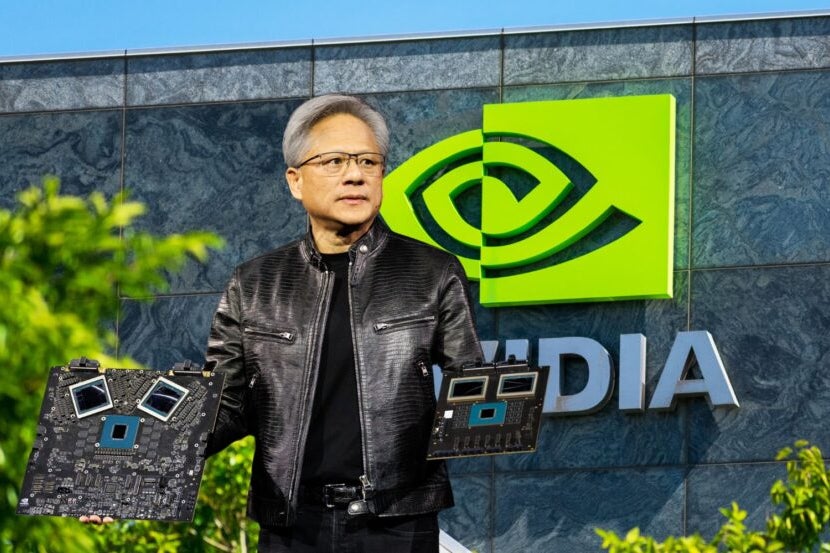
Nvidia Prioritizes U.S. National Security Over Commercial Opportunities
- National Security Priority: Nvidia CEO Jensen Huang stated at the shareholder meeting that the company would prioritize U.S. interests over commercial opportunities if they conflict with national security, emphasizing the importance of national security.
- Export Restriction Challenges: Huang noted that attempting to smuggle Nvidia chips into countries with export restrictions, such as China, would face difficulties as the company would not provide support or repairs, reinforcing its commitment to national security.
- Financial Return Commitment: Nvidia plans to return 50% of its free cash flow to investors through share repurchases and dividends over the next few years, with projected free cash flow exceeding $96 billion in fiscal 2026, showcasing strong financial execution.
- Shareholder Meeting Decisions: At the annual meeting, shareholders approved the executive compensation plan and re-elected all 10 board members, indicating strong support and trust in the company's governance.
See More

Nvidia Positioned as Superior Investment Over SpaceX
- Surge in AI Spending: Projected AI spending is expected to reach $1 trillion in 2027, a significant increase from $650 billion in 2026, which will create substantial revenue growth opportunities for Nvidia, further solidifying its leadership in AI computing.
- New Chip Architecture Launch: Nvidia's upcoming Rubin chip architecture is anticipated to reduce AI inference costs by 10 times and training costs by 4 times, driving companies to upgrade existing technology and enhancing the performance of future AI models, thereby boosting Nvidia's market demand.
- Increased Capital Expenditures: Alphabet forecasts a significant rise in data center capital expenditures for 2027, expected to be between $180 billion and $190 billion, which will directly drive Nvidia's stock price higher as the market has yet to fully reflect this growth potential.
- Attractive Valuation: Nvidia's shares currently trade at a forward P/E ratio of 23, slightly above the S&P 500's 22, but using next year's earnings projections, this metric drops to just 16, indicating strong upside potential for its stock in the coming years.
See More
Nvidia Anticipates Significant Growth by 2027 Driven by New Chip Architecture
- New Chip Architecture Driving Growth: Nvidia's upcoming Rubin chip architecture is expected to reduce AI inference running costs by 10 times and training costs by 4 times, which will encourage technology upgrades and lead to significant improvements in future AI models, thereby enhancing its market competitiveness.
- Surge in Capital Expenditures: AI hyperscalers are projected to spend around $1 trillion on data center capital expenditures in 2027, a substantial increase from $650 billion in 2026, and this growth will provide strong support for Nvidia's stock price, facilitating further market ascension.
- Clear Valuation Advantage: Nvidia's shares currently trade at a forward P/E ratio of 23, slightly above the S&P 500's 22, but using next year's earnings projections, this metric drops to just 16, indicating a low valuation and significant upside potential for its stock in the future.
- Increased Market Confidence: Companies like Alphabet have indicated that they expect significantly higher capital expenditures in 2027 compared to 2026, reflecting growing market confidence in Nvidia's future growth, with current stock prices not fully accounting for this potential.
See More
AMKL ETF Sees 39.4% Surge in Inflows

- Significant Inflow Growth: The AMKL ETF added 130,000 units this week, resulting in a 39.4% increase in outstanding units, indicating strong investor interest that may reflect optimism towards the underlying assets.
- Positive Market Reaction: This inflow surge not only enhances AMKL ETF's market position but could also attract more investor attention, further driving asset growth and strengthening its competitive edge in the ETF market.
- Investor Confidence Boost: The increase in AMKL ETF inflows suggests that investors trust its investment strategy and asset allocation, potentially leading to inflows into similar funds and creating a positive feedback loop.
- Industry Trend Indicator: The inflow growth of AMKL ETF may signal a shift in market preference towards specific industries or asset classes, providing crucial market signals for investors to adjust their portfolios in response to the evolving market landscape.
See More

Analysis of SpaceX's Stock Price Volatility Post-IPO

- IPO Performance Review: SpaceX debuted on June 12, witnessing a 67% surge in stock price shortly after, yet it has recently dropped nearly 20%, briefly falling below the initial trading price of $150, indicating market concerns over its valuation.
- Valuation Concerns: With a price-to-sales ratio of 77, SpaceX significantly exceeds Nvidia's 20 and Micron's 24, suggesting that its current market pricing is excessively high, prompting investors to carefully evaluate its future growth potential.
- Financing Plans Raise Concerns: The company indicated in its prospectus plans to utilize debt and equity financing for future growth, which could dilute existing shareholders' stakes and increase investment risks.
- Debt Burden Intensifies: SpaceX has raised $25 billion through debt financing, and while it holds over $100 billion in cash, the high debt levels may restrict the company's flexibility and future growth opportunities.
See More
Nvidia's AI Infrastructure Growth Accelerates
- Data Center Revenue Surge: Nvidia's data center revenue reached a record $75.2 billion in the first quarter of fiscal 2027, marking a 92% year-over-year increase, reflecting robust demand for its hardware and software and underscoring the company's central role in AI infrastructure development.
- Optimistic Capital Expenditure Outlook: Analysts project that hyperscaler capital spending could exceed $1 trillion by 2027, positioning Nvidia, as the dominant supplier of accelerated computing platforms, to capture a significant share of this spending, further driving company growth.
- New CPU Platform Launch: Nvidia's Vera CPU, designed for the emerging era of agentic AI, has been delivered to leading AI labs and cloud providers, optimizing integration with its GPUs and expected to accelerate growth in its data center business.
- Valuation Expansion Potential: Nvidia's current P/E ratio is well below historical levels during earlier phases of the AI revolution, and if it re-rates to between 24 and 27 times its expected fiscal 2028 EPS of $12.73, the stock price could exceed $300, implying over 50% upside from current trading levels.
See More
Nvidia Prioritizes U.S. National Security Over Commercial Opportunities
- National Security Priority: Nvidia CEO Jensen Huang stated at the shareholder meeting that the company would prioritize U.S. interests over commercial opportunities if they conflict with national security, emphasizing the importance of national security.
- Export Restriction Challenges: Huang noted that attempting to smuggle Nvidia chips into countries with export restrictions, such as China, would face difficulties as the company would not provide support or repairs, reinforcing its commitment to national security.
- Financial Return Commitment: Nvidia plans to return 50% of its free cash flow to investors through share repurchases and dividends over the next few years, with projected free cash flow exceeding $96 billion in fiscal 2026, showcasing strong financial execution.
- Shareholder Meeting Decisions: At the annual meeting, shareholders approved the executive compensation plan and re-elected all 10 board members, indicating strong support and trust in the company's governance.
See More
Nvidia Positioned as Superior Investment Over SpaceX
- Surge in AI Spending: Projected AI spending is expected to reach $1 trillion in 2027, a significant increase from $650 billion in 2026, which will create substantial revenue growth opportunities for Nvidia, further solidifying its leadership in AI computing.
- New Chip Architecture Launch: Nvidia's upcoming Rubin chip architecture is anticipated to reduce AI inference costs by 10 times and training costs by 4 times, driving companies to upgrade existing technology and enhancing the performance of future AI models, thereby boosting Nvidia's market demand.
- Increased Capital Expenditures: Alphabet forecasts a significant rise in data center capital expenditures for 2027, expected to be between $180 billion and $190 billion, which will directly drive Nvidia's stock price higher as the market has yet to fully reflect this growth potential.
- Attractive Valuation: Nvidia's shares currently trade at a forward P/E ratio of 23, slightly above the S&P 500's 22, but using next year's earnings projections, this metric drops to just 16, indicating strong upside potential for its stock in the coming years.
See More
Nvidia Anticipates Significant Growth by 2027 Driven by New Chip Architecture
- New Chip Architecture Driving Growth: Nvidia's upcoming Rubin chip architecture is expected to reduce AI inference running costs by 10 times and training costs by 4 times, which will encourage technology upgrades and lead to significant improvements in future AI models, thereby enhancing its market competitiveness.
- Surge in Capital Expenditures: AI hyperscalers are projected to spend around $1 trillion on data center capital expenditures in 2027, a substantial increase from $650 billion in 2026, and this growth will provide strong support for Nvidia's stock price, facilitating further market ascension.
- Clear Valuation Advantage: Nvidia's shares currently trade at a forward P/E ratio of 23, slightly above the S&P 500's 22, but using next year's earnings projections, this metric drops to just 16, indicating a low valuation and significant upside potential for its stock in the future.
- Increased Market Confidence: Companies like Alphabet have indicated that they expect significantly higher capital expenditures in 2027 compared to 2026, reflecting growing market confidence in Nvidia's future growth, with current stock prices not fully accounting for this potential.
See More
AMKL ETF Sees 39.4% Surge in Inflows
- Significant Inflow Growth: The AMKL ETF added 130,000 units this week, resulting in a 39.4% increase in outstanding units, indicating strong investor interest that may reflect optimism towards the underlying assets.
- Positive Market Reaction: This inflow surge not only enhances AMKL ETF's market position but could also attract more investor attention, further driving asset growth and strengthening its competitive edge in the ETF market.
- Investor Confidence Boost: The increase in AMKL ETF inflows suggests that investors trust its investment strategy and asset allocation, potentially leading to inflows into similar funds and creating a positive feedback loop.
- Industry Trend Indicator: The inflow growth of AMKL ETF may signal a shift in market preference towards specific industries or asset classes, providing crucial market signals for investors to adjust their portfolios in response to the evolving market landscape.
See More
Analysis of SpaceX's Stock Price Volatility Post-IPO
- IPO Performance Review: SpaceX debuted on June 12, witnessing a 67% surge in stock price shortly after, yet it has recently dropped nearly 20%, briefly falling below the initial trading price of $150, indicating market concerns over its valuation.
- Valuation Concerns: With a price-to-sales ratio of 77, SpaceX significantly exceeds Nvidia's 20 and Micron's 24, suggesting that its current market pricing is excessively high, prompting investors to carefully evaluate its future growth potential.
- Financing Plans Raise Concerns: The company indicated in its prospectus plans to utilize debt and equity financing for future growth, which could dilute existing shareholders' stakes and increase investment risks.
- Debt Burden Intensifies: SpaceX has raised $25 billion through debt financing, and while it holds over $100 billion in cash, the high debt levels may restrict the company's flexibility and future growth opportunities.
See More