SpaceX IPO Set to Become Largest in Wall Street History
Written by Emily J. Thompson, Senior Investment Analyst
Updated: 58 minutes ago
0mins
Source: Fool
- Record IPO Size: SpaceX is targeting a June 12 debut, aiming to raise $75 billion and achieve a valuation of at least $1.8 trillion, making it the largest IPO in Wall Street history and generating significant market buzz.
- Nasdaq Rule Changes: In an effort to attract SpaceX to list, Nasdaq has shortened the inclusion window from three months to just 15 trading days and shelved low-float rules, forcing over $30 trillion in passive investment funds to buy SpaceX shares at IPO valuations.
- Fast-Track Index Inclusion: The S&P 500 is considering relaxing its inclusion criteria, potentially waiving the GAAP profitability requirement, which could accelerate SpaceX's entry into the benchmark index, leading to billions in passive fund inflows in the short term.
- Staggered Lockup Period: SpaceX is implementing a staggered lockup schedule, allowing insiders to sell shares much sooner, with other insiders able to sell after the second trading day post-first quarterly earnings report, effectively using retail investors as exit liquidity.
Trade with 70% Backtested Accuracy
Stop guessing "Should I Buy TSLA?" and start using high-conviction signals backed by rigorous historical data.
Sign up today to access powerful investing tools and make smarter, data-driven decisions.
Analyst Views on TSLA
Wall Street analysts forecast TSLA stock price to fall
30 Analyst Rating
12 Buy
11 Hold
7 Sell
Hold
Current: 423.740

Low
25.28
Averages
401.93
High
600.00
Current: 423.740
Low
25.28
Averages
401.93
High
600.00
About TSLA
Tesla, Inc. designs, develops, manufactures, sells and leases high-performance fully electric vehicles and energy generation and storage systems, and offers services related to its products. Its segments include automotive, and energy generation and storage. The automotive segment includes the design, development, manufacturing, sales and leasing of high-performance fully electric vehicles, and sales of automotive regulatory credits. It also includes sales of used vehicles, non-warranty maintenance services and collisions, part sales, paid supercharging, insurance services revenue and retail merchandise sales. The energy generation and storage segment include the design, manufacture, installation, sales and leasing of solar energy generation and energy storage products and related services and sales of solar energy systems incentives. Its consumer vehicles include the Model 3, Y, S, X and Cybertruck. Its lithium-ion battery energy storage products include Powerwall and Megapack.
About the author

Emily J. Thompson
Emily J. Thompson, a Chartered Financial Analyst (CFA) with 12 years in investment research, graduated with honors from the Wharton School. Specializing in industrial and technology stocks, she provides in-depth analysis for Intellectia’s earnings and market brief reports.

SpaceX Enters Market at Overvalued Price

- Market Valuation Analysis: SpaceX is entering the market at a significantly overvalued price, reflecting investor over-optimism about its future growth, which may lead to increased stock price volatility in the short term.
- Investor Sentiment Impact: Given the general skepticism surrounding SpaceX's valuation, this could affect the success rate of its initial public offering (IPO), thereby impacting the company's ability to raise funds and execute future expansion plans.
- Competitive Environment Consideration: In an increasingly competitive aerospace industry, SpaceX's high valuation may pose challenges in attracting investors, especially as other companies are also vying for market share.
- Long-term Growth Risks: While SpaceX has a technological edge, its high valuation could limit flexibility in future financing, affecting its long-term strategic development and market positioning.
See More
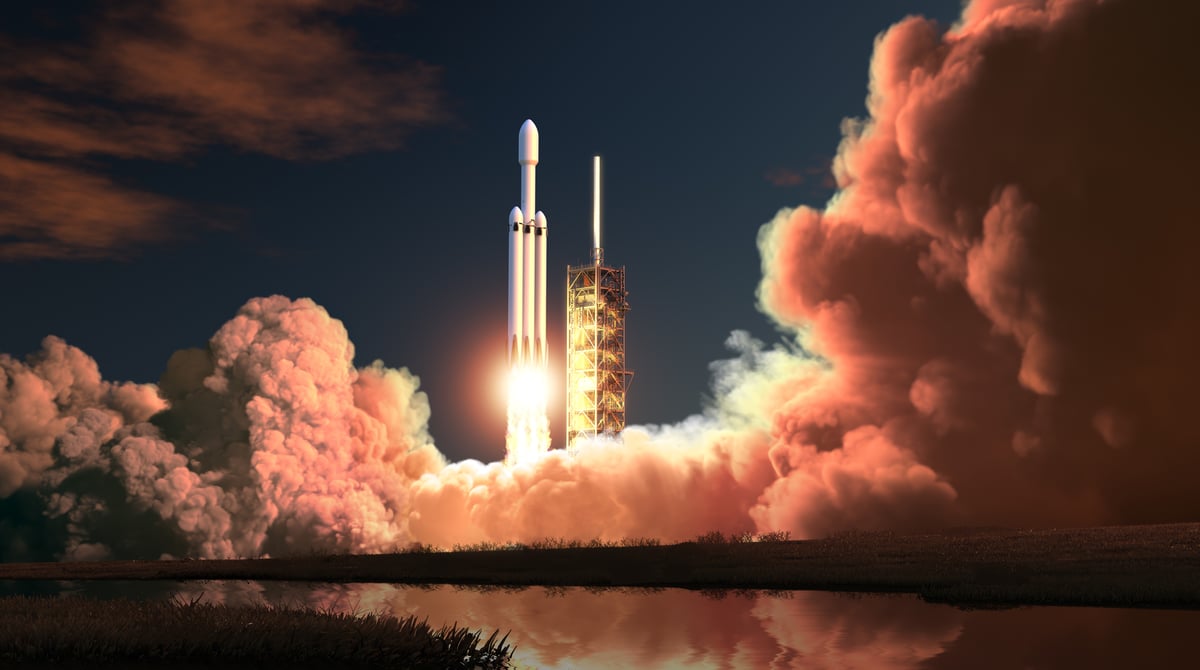
SpaceX IPO Set to Become Largest in Wall Street History

- Record IPO Size: SpaceX is targeting a June 12 debut, aiming to raise $75 billion and achieve a valuation of at least $1.8 trillion, making it the largest IPO in Wall Street history and generating significant market buzz.
- Nasdaq Rule Changes: In an effort to attract SpaceX to list, Nasdaq has shortened the inclusion window from three months to just 15 trading days and shelved low-float rules, forcing over $30 trillion in passive investment funds to buy SpaceX shares at IPO valuations.
- Fast-Track Index Inclusion: The S&P 500 is considering relaxing its inclusion criteria, potentially waiving the GAAP profitability requirement, which could accelerate SpaceX's entry into the benchmark index, leading to billions in passive fund inflows in the short term.
- Staggered Lockup Period: SpaceX is implementing a staggered lockup schedule, allowing insiders to sell shares much sooner, with other insiders able to sell after the second trading day post-first quarterly earnings report, effectively using retail investors as exit liquidity.
See More

SpaceX IPO Set to Trigger Massive Passive Buying
- Record-Breaking IPO: SpaceX is targeting a June 12 debut, aiming to raise $75 billion and achieve a valuation of at least $1.8 trillion, making it one of the most anticipated IPOs in history, which could significantly influence market indices.
- Fast-Track Inclusion Changes: Recent rule changes by Nasdaq and U.S. Russell Indexes will force trillions in passive investment funds to buy SpaceX shares shortly after the IPO, potentially leading to tens of billions in short-term buying pressure that could affect stock liquidity.
- Staggered Lockup Period: SpaceX's staggered lockup schedule allows insiders to sell shares as early as the second trading day after the first quarterly earnings report, which may position retail investors as exit liquidity for insiders, increasing market risk.
- Retail Investor Risks: The combination of new rules and lockup arrangements may leave retail investors holding shares of a historically expensive, capital-intensive, and money-losing business, masking potential investment pitfalls amid the excitement surrounding SpaceX.
See More

SpaceX IPO Set to Launch with Nearly $2 Trillion Valuation


- Massive IPO Scale: SpaceX's upcoming IPO is targeting a valuation close to $2 trillion, which, if successful, would mark the largest IPO in history, drawing significant investor interest particularly due to its involvement in high-growth sectors like space launches, satellite internet, and artificial intelligence.
- Retail Investor Opportunities: While traditionally 90% to 95% of IPO shares are allocated to institutional investors, Musk aims to reserve about 30% for retail investors, providing a unique opportunity for non-professional investors to participate at the offer price, thereby enhancing market engagement and activity.
- Diverse Participation Methods: SpaceX plans to offer shares to retail investors through various brokerages, including Charles Schwab, Fidelity, Robinhood, and SoFi, necessitating that investors check these brokerages' IPO calendars in advance to ensure they can participate in this significant investment event.
- Financial Situation Analysis: SpaceX has shown nearly 80% revenue growth over the past two years, but heavy spending in AI is expected to lead to losses in 2025, suggesting cautious investors might consider safer investment routes like ETFs, while aggressive investors may opt to enter early to capitalize on potential high growth.
See More

SpaceX Aims for Record-Breaking IPO Launch
- Record-Breaking IPO: SpaceX is targeting a valuation of nearly $2 trillion for its upcoming IPO, potentially making it the largest in history, which has garnered significant investor interest and reflects strong market confidence in its growth prospects.
- Retail Investor Opportunities: Unlike traditional IPOs, SpaceX plans to allocate about 30% of shares to retail investors, a move that not only enhances participation for non-professional investors but could also reshape the IPO landscape and strengthen ties between the company and its investors.
- Diverse Business Ventures: SpaceX's involvement in three high-growth sectors—space launches, satellite internet, and artificial intelligence—positions it strongly for future market competition, especially against the backdrop of increasing technological innovation and demand.
- Financial Health Assessment: While SpaceX's revenue has surged nearly 80% over two years, heavy investments in AI have led to projected losses in 2025, indicating that investors should carefully evaluate its financial health before deciding to participate in the IPO.
See More

Tesla Launches Unsupervised Robotaxis in Austin Metro Area
- Robotaxi Service Expansion: Tesla has launched its unsupervised robotaxi service in the Austin Metro area, marking a significant advancement in its autonomous ride-hailing efforts and furthering its shift from electric vehicles to AI and robotics.
- Vehicle Count Comparison: Tesla operates around 50 robotaxis in Austin, while competitor Alphabet's Waymo has over 250 vehicles in the same area, highlighting both challenges and opportunities for Tesla in capturing market share.
- Strategic Growth Focus: CEO Elon Musk stated that expanding the robotaxi service and wider adoption of its full self-driving software is crucial for Tesla's growth strategy, with plans to introduce fully autonomous vehicles without human safety monitors in the U.S. later this year.
- Network Expansion: Tesla officially launched its autonomous robotaxi service in Dallas and Houston in mid-April, marking a significant expansion of its driverless ride-hailing network and enhancing its competitive position in the autonomous driving market.
See More
SpaceX Enters Market at Overvalued Price
- Market Valuation Analysis: SpaceX is entering the market at a significantly overvalued price, reflecting investor over-optimism about its future growth, which may lead to increased stock price volatility in the short term.
- Investor Sentiment Impact: Given the general skepticism surrounding SpaceX's valuation, this could affect the success rate of its initial public offering (IPO), thereby impacting the company's ability to raise funds and execute future expansion plans.
- Competitive Environment Consideration: In an increasingly competitive aerospace industry, SpaceX's high valuation may pose challenges in attracting investors, especially as other companies are also vying for market share.
- Long-term Growth Risks: While SpaceX has a technological edge, its high valuation could limit flexibility in future financing, affecting its long-term strategic development and market positioning.
See More
SpaceX IPO Set to Become Largest in Wall Street History
- Record IPO Size: SpaceX is targeting a June 12 debut, aiming to raise $75 billion and achieve a valuation of at least $1.8 trillion, making it the largest IPO in Wall Street history and generating significant market buzz.
- Nasdaq Rule Changes: In an effort to attract SpaceX to list, Nasdaq has shortened the inclusion window from three months to just 15 trading days and shelved low-float rules, forcing over $30 trillion in passive investment funds to buy SpaceX shares at IPO valuations.
- Fast-Track Index Inclusion: The S&P 500 is considering relaxing its inclusion criteria, potentially waiving the GAAP profitability requirement, which could accelerate SpaceX's entry into the benchmark index, leading to billions in passive fund inflows in the short term.
- Staggered Lockup Period: SpaceX is implementing a staggered lockup schedule, allowing insiders to sell shares much sooner, with other insiders able to sell after the second trading day post-first quarterly earnings report, effectively using retail investors as exit liquidity.
See More
SpaceX IPO Set to Trigger Massive Passive Buying
- Record-Breaking IPO: SpaceX is targeting a June 12 debut, aiming to raise $75 billion and achieve a valuation of at least $1.8 trillion, making it one of the most anticipated IPOs in history, which could significantly influence market indices.
- Fast-Track Inclusion Changes: Recent rule changes by Nasdaq and U.S. Russell Indexes will force trillions in passive investment funds to buy SpaceX shares shortly after the IPO, potentially leading to tens of billions in short-term buying pressure that could affect stock liquidity.
- Staggered Lockup Period: SpaceX's staggered lockup schedule allows insiders to sell shares as early as the second trading day after the first quarterly earnings report, which may position retail investors as exit liquidity for insiders, increasing market risk.
- Retail Investor Risks: The combination of new rules and lockup arrangements may leave retail investors holding shares of a historically expensive, capital-intensive, and money-losing business, masking potential investment pitfalls amid the excitement surrounding SpaceX.
See More
SpaceX IPO Set to Launch with Nearly $2 Trillion Valuation
- Massive IPO Scale: SpaceX's upcoming IPO is targeting a valuation close to $2 trillion, which, if successful, would mark the largest IPO in history, drawing significant investor interest particularly due to its involvement in high-growth sectors like space launches, satellite internet, and artificial intelligence.
- Retail Investor Opportunities: While traditionally 90% to 95% of IPO shares are allocated to institutional investors, Musk aims to reserve about 30% for retail investors, providing a unique opportunity for non-professional investors to participate at the offer price, thereby enhancing market engagement and activity.
- Diverse Participation Methods: SpaceX plans to offer shares to retail investors through various brokerages, including Charles Schwab, Fidelity, Robinhood, and SoFi, necessitating that investors check these brokerages' IPO calendars in advance to ensure they can participate in this significant investment event.
- Financial Situation Analysis: SpaceX has shown nearly 80% revenue growth over the past two years, but heavy spending in AI is expected to lead to losses in 2025, suggesting cautious investors might consider safer investment routes like ETFs, while aggressive investors may opt to enter early to capitalize on potential high growth.
See More
SpaceX Aims for Record-Breaking IPO Launch
- Record-Breaking IPO: SpaceX is targeting a valuation of nearly $2 trillion for its upcoming IPO, potentially making it the largest in history, which has garnered significant investor interest and reflects strong market confidence in its growth prospects.
- Retail Investor Opportunities: Unlike traditional IPOs, SpaceX plans to allocate about 30% of shares to retail investors, a move that not only enhances participation for non-professional investors but could also reshape the IPO landscape and strengthen ties between the company and its investors.
- Diverse Business Ventures: SpaceX's involvement in three high-growth sectors—space launches, satellite internet, and artificial intelligence—positions it strongly for future market competition, especially against the backdrop of increasing technological innovation and demand.
- Financial Health Assessment: While SpaceX's revenue has surged nearly 80% over two years, heavy investments in AI have led to projected losses in 2025, indicating that investors should carefully evaluate its financial health before deciding to participate in the IPO.
See More
Tesla Launches Unsupervised Robotaxis in Austin Metro Area
- Robotaxi Service Expansion: Tesla has launched its unsupervised robotaxi service in the Austin Metro area, marking a significant advancement in its autonomous ride-hailing efforts and furthering its shift from electric vehicles to AI and robotics.
- Vehicle Count Comparison: Tesla operates around 50 robotaxis in Austin, while competitor Alphabet's Waymo has over 250 vehicles in the same area, highlighting both challenges and opportunities for Tesla in capturing market share.
- Strategic Growth Focus: CEO Elon Musk stated that expanding the robotaxi service and wider adoption of its full self-driving software is crucial for Tesla's growth strategy, with plans to introduce fully autonomous vehicles without human safety monitors in the U.S. later this year.
- Network Expansion: Tesla officially launched its autonomous robotaxi service in Dallas and Houston in mid-April, marking a significant expansion of its driverless ride-hailing network and enhancing its competitive position in the autonomous driving market.
See More