SpaceX IPO Could Impact Tesla Stock Valuation
Written by Emily J. Thompson, Senior Investment Analyst
Updated: Apr 06 2026
0mins
Should l Buy TSLA?
Source: Fool
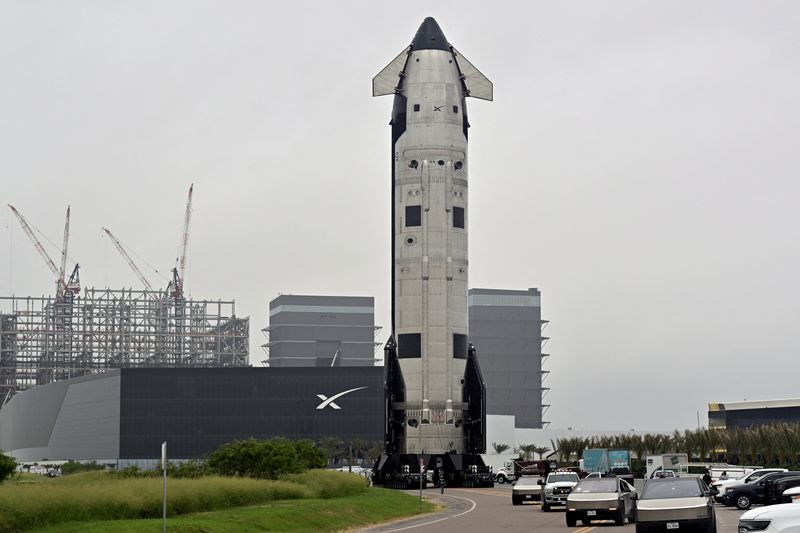
- SpaceX IPO Outlook: SpaceX is expected to go public this summer with a valuation potentially reaching $1.75 trillion, which analysts deem justifiable due to its robust Starlink satellite business and recurring revenue, thus attracting significant investor interest.
- Tesla's Challenges: Tesla, currently valued at $1.3 trillion, remains one of the world's most valuable companies, yet its high price-to-earnings ratio of 320 indicates pressure on profitability, potentially leading investors to shift towards the more attractive SpaceX.
- Increased Market Competition: Tesla's revenue declined by 3% in 2025, raising concerns about future earnings growth as competition in the EV market intensifies, which could motivate investors to sell Tesla shares in favor of SpaceX's potential.
- Investor Sentiment Shift: With the SpaceX IPO approaching, investor confidence in Tesla may wane, especially after Tesla fell short of delivery expectations in the first quarter, potentially exacerbating selling pressure on Tesla stock.
Trade with 70% Backtested Accuracy
Stop guessing "Should I Buy TSLA?" and start using high-conviction signals backed by rigorous historical data.
Sign up today to access powerful investing tools and make smarter, data-driven decisions.
Analyst Views on TSLA
Wall Street analysts forecast TSLA stock price to fall
30 Analyst Rating
12 Buy
11 Hold
7 Sell
Hold
Current: 404.110

Low
25.28
Averages
401.93
High
600.00
Current: 404.110
Low
25.28
Averages
401.93
High
600.00
About TSLA
Tesla, Inc. designs, develops, manufactures, sells and leases high-performance fully electric vehicles and energy generation and storage systems, and offers services related to its products. Its segments include automotive, and energy generation and storage. The automotive segment includes the design, development, manufacturing, sales and leasing of high-performance fully electric vehicles, and sales of automotive regulatory credits. It also includes sales of used vehicles, non-warranty maintenance services and collisions, part sales, paid supercharging, insurance services revenue and retail merchandise sales. The energy generation and storage segment include the design, manufacture, installation, sales and leasing of solar energy generation and energy storage products and related services and sales of solar energy systems incentives. Its consumer vehicles include the Model 3, Y, S, X and Cybertruck. Its lithium-ion battery energy storage products include Powerwall and Megapack.
About the author

Emily J. Thompson
Emily J. Thompson, a Chartered Financial Analyst (CFA) with 12 years in investment research, graduated with honors from the Wharton School. Specializing in industrial and technology stocks, she provides in-depth analysis for Intellectia’s earnings and market brief reports.
Tesla Launches Full Self-Driving Software in Lithuania

- European Market Expansion: Tesla has rolled out its Full Self-Driving (Supervised) software in Lithuania, becoming the second country in Europe to implement the system after the Netherlands, indicating the company's strategic expansion in the European market.
- Regulatory Approval Progress: The Dutch regulator RDW provisionally approved the system for public road use on April 10, marking a significant advancement in Tesla's efforts to legalize its autonomous driving technology.
- EU Recognition Mechanism: RDW is seeking EU-wide acceptance, allowing other member states to recognize the Dutch approval in the meantime, which could accelerate Tesla's market penetration across Europe.
- Lack of Lithuanian Feedback: The Lithuanian Transport Safety Administration has not yet responded to Tesla's request, which may impact the further rollout of the system and user acceptance.
See More
Nvidia's Strong Earnings Report Sparks Attention


- Strong Earnings: Nvidia's earnings report reveals nearly doubling year-over-year data center revenue, indicating relentless demand for its GPUs, although shares slipped in after-hours trading as investors scrutinized future guidance and rising competition.
- IPO Frenzy: SpaceX has filed for an IPO aiming to raise around $75 billion, surpassing Alibaba's record for the largest IPO, highlighting the intensifying competition among tech companies for public offerings, which could significantly impact market sentiment.
- Stabilizing Semiconductor Supply Chains: Samsung Electronics has reached a tentative agreement with its union to suspend a planned strike, likely providing temporary relief to global semiconductor supply chains critical for the ongoing AI boom.
- Market Rebound: Wall Street staged a strong rebound with the Dow surging over 600 points due to easing oil prices and moderating rate concerns, leading to a positive sentiment that has also lifted Asia-Pacific markets.
See More

SpaceX IPO Filing Reveals Musk's Business Network
- Interconnected Business Network: The SpaceX IPO filing reveals extensive commercial ties among Musk's companies, including approximately $650 million in goods and services purchased from Tesla last year by SpaceX and xAI, highlighting the intricate connections within his business empire.
- Financial Obligations Transparency: The filing disclosed over $20 billion in related-party AI infrastructure lease obligations tied to equipment agreements between xAI and Valor Equity Partners, indicating the financial pressures SpaceX faces as it expands its AI infrastructure.
- Investor Scrutiny: As SpaceX ventures into AI infrastructure and computing, investor focus on governance and capital allocation among Musk-controlled companies is increasing, which could impact future investment decisions and strategies.
- Strategic Collaboration Project: Tesla and SpaceX are collaborating on a multibillion-dollar chip manufacturing project called Terafab, demonstrating their increasingly close cooperation in AI and compute infrastructure, aimed at enhancing technological competitiveness.
See More

Anthropic's Q2 Revenue Projected to Double to $10.9 Billion

- Revenue Surge: Anthropic is projected to achieve $10.9 billion in revenue for Q2, representing a 130% increase from $4.8 billion in Q1, which will result in its first operating profit of $559 million, highlighting strong demand and market acceptance for generative AI.
- Valuation Boost: The ongoing funding round may push Anthropic's valuation above that of OpenAI, reflecting increased market confidence in its business model, particularly as corporate clients increasingly seek large-scale integration of its platform.
- Industry Competition: According to the Ramp AI Index, Anthropic has surpassed OpenAI in enterprise adoption for the first time, with 34.4% of tracked businesses using Anthropic compared to 32.3% for OpenAI, indicating rapid growth and competitiveness in the generative AI market.
- IPO Plans: Anthropic is considering going public as soon as October this year, joining OpenAI and SpaceX in a highly anticipated wave of IPOs, which is expected to further enhance its market position and capital-raising capabilities.
See More
SpaceX Files for Record IPO, Aiming for Nasdaq Debut
- Record IPO: SpaceX filed for its IPO on Wednesday, which is expected to be the largest in history, marking a significant milestone for the company and potentially providing funding for future expansions.
- Nasdaq Listing: The firm confirmed Nasdaq as its trading venue, a decision that will enhance its market visibility and attract more investors to its innovations in aerospace and satellite technology.
- Optimistic Market Outlook: Dan Ives, head of technology research at Wedbush Securities, noted that SpaceX's IPO positions it at the center of two of the largest growth opportunities over the coming decades, particularly at the intersection of AI and aerospace technology.
- Investor Sentiment: While the market remains optimistic about SpaceX's prospects, some investors express caution regarding its valuation, suggesting that once public, it may impact Tesla's market allure, prompting a reassessment of investment strategies related to Musk's companies.
See More
SpaceX Plans IPO with Massive Market Potential
- Significant Revenue Growth: SpaceX reported $18.674 billion in revenue for 2025, with Q1 2026 revenue reaching $4.694 billion, indicating strong financial performance despite operating losses of $2.589 billion, reflecting the company's aggressive strategy in expansion and technology investment.
- Massive Market Potential: In its S-1 filing, SpaceX estimates its quantifiable total addressable market (TAM) at $28.5 trillion, encompassing $370 billion in space-enabled solutions, $1.6 trillion in connectivity, and $26.5 trillion in AI, showcasing its strategic positioning across multiple sectors.
- IPO Readiness: SpaceX has filed its S-1 registration statement with the SEC, planning to list on Nasdaq under the ticker “SPCX,” and has implemented a dual-class share structure to maintain founder Elon Musk's control, demonstrating confidence in its future growth.
- Innovation-Driven Growth: SpaceX's fully reusable super-heavy-lift Starship is seen as critical for achieving long-term growth and multiplanetary goals, with its V3 version expected to conduct commercial missions in the second half of 2026, significantly accelerating Starlink deployment and supporting future lunar and Mars missions.
See More
Tesla Launches Full Self-Driving Software in Lithuania
- European Market Expansion: Tesla has rolled out its Full Self-Driving (Supervised) software in Lithuania, becoming the second country in Europe to implement the system after the Netherlands, indicating the company's strategic expansion in the European market.
- Regulatory Approval Progress: The Dutch regulator RDW provisionally approved the system for public road use on April 10, marking a significant advancement in Tesla's efforts to legalize its autonomous driving technology.
- EU Recognition Mechanism: RDW is seeking EU-wide acceptance, allowing other member states to recognize the Dutch approval in the meantime, which could accelerate Tesla's market penetration across Europe.
- Lack of Lithuanian Feedback: The Lithuanian Transport Safety Administration has not yet responded to Tesla's request, which may impact the further rollout of the system and user acceptance.
See More
Nvidia's Strong Earnings Report Sparks Attention
- Strong Earnings: Nvidia's earnings report reveals nearly doubling year-over-year data center revenue, indicating relentless demand for its GPUs, although shares slipped in after-hours trading as investors scrutinized future guidance and rising competition.
- IPO Frenzy: SpaceX has filed for an IPO aiming to raise around $75 billion, surpassing Alibaba's record for the largest IPO, highlighting the intensifying competition among tech companies for public offerings, which could significantly impact market sentiment.
- Stabilizing Semiconductor Supply Chains: Samsung Electronics has reached a tentative agreement with its union to suspend a planned strike, likely providing temporary relief to global semiconductor supply chains critical for the ongoing AI boom.
- Market Rebound: Wall Street staged a strong rebound with the Dow surging over 600 points due to easing oil prices and moderating rate concerns, leading to a positive sentiment that has also lifted Asia-Pacific markets.
See More
SpaceX IPO Filing Reveals Musk's Business Network
- Interconnected Business Network: The SpaceX IPO filing reveals extensive commercial ties among Musk's companies, including approximately $650 million in goods and services purchased from Tesla last year by SpaceX and xAI, highlighting the intricate connections within his business empire.
- Financial Obligations Transparency: The filing disclosed over $20 billion in related-party AI infrastructure lease obligations tied to equipment agreements between xAI and Valor Equity Partners, indicating the financial pressures SpaceX faces as it expands its AI infrastructure.
- Investor Scrutiny: As SpaceX ventures into AI infrastructure and computing, investor focus on governance and capital allocation among Musk-controlled companies is increasing, which could impact future investment decisions and strategies.
- Strategic Collaboration Project: Tesla and SpaceX are collaborating on a multibillion-dollar chip manufacturing project called Terafab, demonstrating their increasingly close cooperation in AI and compute infrastructure, aimed at enhancing technological competitiveness.
See More
Anthropic's Q2 Revenue Projected to Double to $10.9 Billion
- Revenue Surge: Anthropic is projected to achieve $10.9 billion in revenue for Q2, representing a 130% increase from $4.8 billion in Q1, which will result in its first operating profit of $559 million, highlighting strong demand and market acceptance for generative AI.
- Valuation Boost: The ongoing funding round may push Anthropic's valuation above that of OpenAI, reflecting increased market confidence in its business model, particularly as corporate clients increasingly seek large-scale integration of its platform.
- Industry Competition: According to the Ramp AI Index, Anthropic has surpassed OpenAI in enterprise adoption for the first time, with 34.4% of tracked businesses using Anthropic compared to 32.3% for OpenAI, indicating rapid growth and competitiveness in the generative AI market.
- IPO Plans: Anthropic is considering going public as soon as October this year, joining OpenAI and SpaceX in a highly anticipated wave of IPOs, which is expected to further enhance its market position and capital-raising capabilities.
See More
SpaceX Files for Record IPO, Aiming for Nasdaq Debut
- Record IPO: SpaceX filed for its IPO on Wednesday, which is expected to be the largest in history, marking a significant milestone for the company and potentially providing funding for future expansions.
- Nasdaq Listing: The firm confirmed Nasdaq as its trading venue, a decision that will enhance its market visibility and attract more investors to its innovations in aerospace and satellite technology.
- Optimistic Market Outlook: Dan Ives, head of technology research at Wedbush Securities, noted that SpaceX's IPO positions it at the center of two of the largest growth opportunities over the coming decades, particularly at the intersection of AI and aerospace technology.
- Investor Sentiment: While the market remains optimistic about SpaceX's prospects, some investors express caution regarding its valuation, suggesting that once public, it may impact Tesla's market allure, prompting a reassessment of investment strategies related to Musk's companies.
See More
SpaceX Plans IPO with Massive Market Potential
- Significant Revenue Growth: SpaceX reported $18.674 billion in revenue for 2025, with Q1 2026 revenue reaching $4.694 billion, indicating strong financial performance despite operating losses of $2.589 billion, reflecting the company's aggressive strategy in expansion and technology investment.
- Massive Market Potential: In its S-1 filing, SpaceX estimates its quantifiable total addressable market (TAM) at $28.5 trillion, encompassing $370 billion in space-enabled solutions, $1.6 trillion in connectivity, and $26.5 trillion in AI, showcasing its strategic positioning across multiple sectors.
- IPO Readiness: SpaceX has filed its S-1 registration statement with the SEC, planning to list on Nasdaq under the ticker “SPCX,” and has implemented a dual-class share structure to maintain founder Elon Musk's control, demonstrating confidence in its future growth.
- Innovation-Driven Growth: SpaceX's fully reusable super-heavy-lift Starship is seen as critical for achieving long-term growth and multiplanetary goals, with its V3 version expected to conduct commercial missions in the second half of 2026, significantly accelerating Starlink deployment and supporting future lunar and Mars missions.
See More