SpaceX Experiences Wild Volatility in First Week as Public Company
Written by Emily J. Thompson, Senior Investment Analyst
Updated: 1 hour ago
0mins
Source: CNBC
- Strong IPO Performance: SpaceX's stock surged over 60% from its initial offering price of $135 during its first week, briefly surpassing Amazon and Microsoft in market capitalization, indicating strong market confidence in its future potential.
- Retail Investor Enthusiasm: Retail investors purchased a net $405 million in SpaceX shares within the first five trading sessions, marking the strongest retail IPO debut in recent history, reflecting high demand driven by Elon Musk's vision and celebrity status.
- Increased Market Volatility: Despite a strong initial performance, the stock experienced declines of 5%, 4%, and 16% in subsequent trading days, highlighting market uncertainty regarding the company's future prospects and leading to fluctuating investor sentiment.
- Emerging Future Challenges: SpaceX faces dual challenges of increasing share supply as early investors cash out and concerns over its high valuation, as Musk's projected $1 trillion revenue by 2030 contrasts sharply with the company's current significant losses and capital requirements.
Trade with 70% Backtested Accuracy
Stop guessing "Should I Buy SPCX?" and start using high-conviction signals backed by rigorous historical data.
Sign up today to access powerful investing tools and make smarter, data-driven decisions.
Analyst Views on SPCX
Wall Street analysts forecast SPCX stock price to rise
0 Analyst Rating
0 Buy
0 Hold
0 Sell
Current: 154.540

Low
Averages
High
Current: 154.540
Low
Averages
High
About SPCX
Space Exploration Technologies Corp. designs, manufactures, launches, and operates products and services built on technologies, including rockets and spacecraft. The Company's segments include Space, Connectivity, and artificial intelligence (AI). Its Space segment designs, manufactures, and launches reusable rockets to provide access to space. Its Connectivity segment operates broadband data and communications network powered by approximately 9,600 Starlink broadband and mobile satellites in Low-Earth orbit, delivering connectivity to consumer, enterprises, and government customers over 164 countries, territories, and other markets. In its AI segment, it operates a vertically integrated AI platform spanning its truth-seeking frontier model Grok, AI solutions for consumer and enterprise customers, X-its real-time information, entertainment, and free speech platform and AI computational infrastructure.
About the author

Emily J. Thompson
Emily J. Thompson, a Chartered Financial Analyst (CFA) with 12 years in investment research, graduated with honors from the Wharton School. Specializing in industrial and technology stocks, she provides in-depth analysis for Intellectia’s earnings and market brief reports.

Analysis of SpaceX's Stock Volatility Post-IPO

- Post-IPO Price Drop: Following a record-breaking IPO, SpaceX's stock surged after trading began on June 12, but by June 22, its market cap had retreated from over $2 trillion, indicating profit-taking by investors and reflecting concerns over its high valuation in the market.
- Valuation Risks: Despite SpaceX's significant roles in rocket launches and internet satellites, its valuation exceeds $2 trillion with a price-to-sales ratio over 100, which is considerably higher than its industry peers, highlighting investor uncertainty regarding its future profitability.
- Distinction Between Investing and Speculating: In the current market climate, investors must clarify whether they are speculating or investing; speculators may face long-term losses, while true investors should focus on SpaceX's long-term vision and potential market opportunities, avoiding impulsive decisions based on short-term price fluctuations.
- Cautious Future Outlook: SpaceX's future growth hinges on ambitious plans like space data centers, and while stock price volatility is pronounced in the short term, investors should remain patient, particularly waiting until after lock-up periods to consider entry points, thereby mitigating risk.
See More
Analysis of SpaceX's Stock Volatility Post-IPO
- Significant Price Volatility: SpaceX has experienced a 32% drop in its stock price within two weeks of going public, currently trading at $154.54, which is only a 15% increase from its IPO price of $135, indicating market uncertainty about its future performance.
- Low Float Ratio: Currently, only 5% of SpaceX's total shares are available for public trading, with the majority held by insiders under a 366-day lockup period, which could lead to significant selling pressure once these shares are unlocked.
- Complex Unlocking Schedule: Following the earnings release on June 30, 2026, 20% of Early Release Eligible Shares may be sold, and if the stock price reaches $175.50 beforehand, this could drastically increase the float and impact market supply and demand dynamics.
- ETF Impact Potential: While SpaceX is not expected to join the S&P 500 until 2027, it may fast-track entry into the Nasdaq-100 in July 2026, prompting related ETFs to automatically increase their holdings, which could further influence its stock price trajectory.
See More

Bitzero Holdings Enters AI Infrastructure Market with Major Lease Agreement


- AI Infrastructure Opportunity: Bitzero Holdings has officially entered the AI data center market through a 15-year lease agreement with OneQode Networks, covering the 110 MW capacity of its Namsskogan data center in Norway, with an estimated value of approximately $2.6 billion over the lease term, marking a significant strategic shift for the company.
- Power Cost Advantage: The low-cost electricity resources in Norway and Finland provide Bitzero with a competitive edge in AI infrastructure development, particularly as Norway's hydroelectric and nuclear power sources offer stable electricity supply for AI workloads, significantly reducing cooling costs for data centers.
- Significant Revenue Potential: According to management analysis, the Namsskogan data center could generate approximately $176 million to $178 million in annual revenue at full utilization, and the lease structure allows the company to secure stable infrastructure revenue without absorbing the high ongoing power costs associated with large-scale AI workloads.
- Surging Market Demand: With global demand for AI infrastructure skyrocketing, infrastructure spending is projected to approach $7 trillion by 2030, positioning Bitzero favorably in this rapidly growing market and attracting investor interest.
See More

Bitzero Holdings Enters AI Infrastructure Market

- Strategic Partnership: Bitzero Holdings signed a 15-year lease agreement with OneQode Networks covering the full 110 MW capacity of its Namsskogan data center in Norway, with an implied value of approximately $2.6 billion, marking Bitzero's formal entry into the AI data center infrastructure market.
- Massive Market Potential: According to McKinsey, global AI infrastructure spending could approach $7 trillion by 2030, with $5.2 trillion directly tied to AI workloads, providing significant growth opportunities for Bitzero's expansion strategy.
- Significant Cost Advantage: Bitzero's low electricity costs in Norway and Finland position it favorably in the AI infrastructure race, with the Namsskogan lease expected to generate approximately $176 million to $178 million in annual revenue, further solidifying its market position.
- Future Growth Potential: Bitzero's development campus in Finland can scale to 1 GW, combined with its 225,000-square-foot facility in North Dakota, indicating the company's strong capacity for expansion and adaptability in response to surging global AI infrastructure demand.
See More
Apple Faces Price Hike Challenges Amid Market Turmoil


- Significant Stock Drop: Apple (AAPL) experienced its largest single-day stock decline in over a year following the announcement of price increases on nearly all products, raising concerns about its pricing strategy and potential impacts on future sales and market share.
- Intensified Competition Impact: The shortage of memory chips has driven prices up, highlighted by Micron's strong performance, suggesting that Apple's pricing strategy may weaken its profitability in a fiercely competitive market, especially with AI demand driving costs higher.
- Market Sentiment Decline: A global tech stock sell-off has led to widespread declines in Asian markets, with South Korea's Kospi index plummeting over 8% in early trading, reflecting investor pessimism about the future performance of tech stocks, which could adversely affect Apple's stock performance.
- IPO Delay Rumors: OpenAI is considering delaying its IPO plans, which could impact its valuation; the CEO has stated a reluctance to lower the target valuation, and this news may have a ripple effect on market confidence in Apple, particularly among AI-related investors.
See More
Analysis of Market Dynamics Post SpaceX IPO


- Market Capitalization Status: SpaceX went public on June 12, marking the largest IPO in history; despite significant fluctuations, its market capitalization remains around $2 trillion, underscoring its strong influence in the space industry.
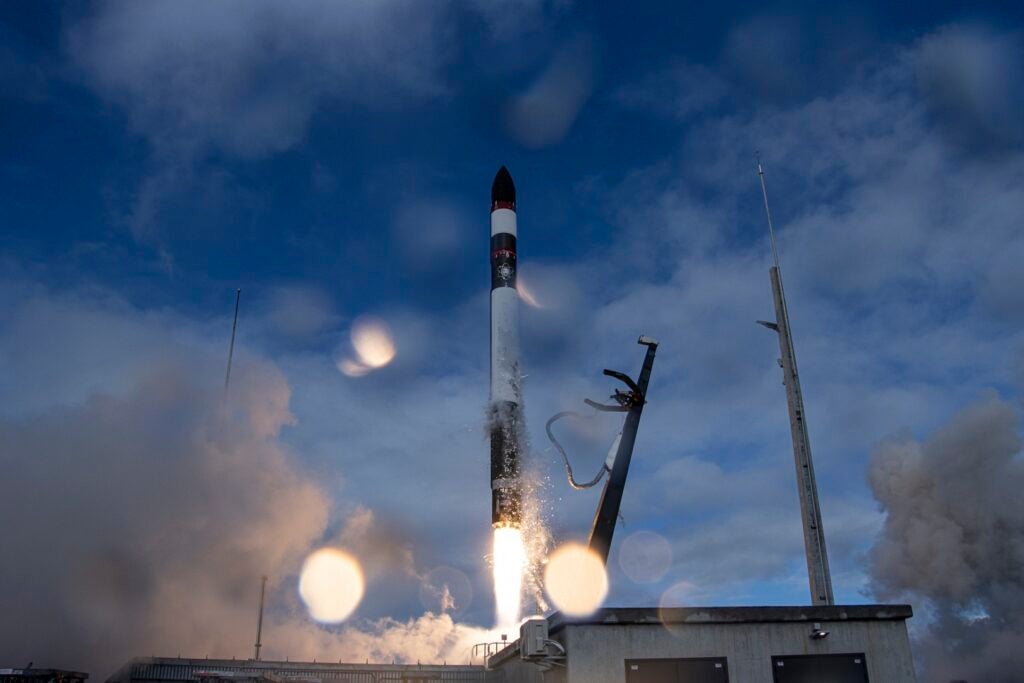
- Rocket Lab's Competitive Edge: Rocket Lab (RKLB), as a direct competitor to SpaceX, boasts the Electron rocket as the third most-launched orbital rocket globally, with plans to debut the larger, partially reusable Neutron rocket in 2026, which could significantly boost sales and challenge SpaceX's market share if successful.
- AST SpaceMobile's Market Potential: AST SpaceMobile (ASTS) offers satellite services competing with Starlink, and although its valuation is extremely high with a P/S ratio of 234, its technology promises faster 5G coverage, particularly in urban areas, indicating potential in addressing rural network gaps.
- Viasat's Growth Driver: Viasat (VSAT) has seen rapid growth in defense and government contracts, becoming a major growth driver, and despite challenges in its aviation business, its $4.64 billion revenue and $597.1 million free cash flow demonstrate resilience in the market.
See More
Analysis of SpaceX's Stock Volatility Post-IPO
- Post-IPO Price Drop: Following a record-breaking IPO, SpaceX's stock surged after trading began on June 12, but by June 22, its market cap had retreated from over $2 trillion, indicating profit-taking by investors and reflecting concerns over its high valuation in the market.
- Valuation Risks: Despite SpaceX's significant roles in rocket launches and internet satellites, its valuation exceeds $2 trillion with a price-to-sales ratio over 100, which is considerably higher than its industry peers, highlighting investor uncertainty regarding its future profitability.
- Distinction Between Investing and Speculating: In the current market climate, investors must clarify whether they are speculating or investing; speculators may face long-term losses, while true investors should focus on SpaceX's long-term vision and potential market opportunities, avoiding impulsive decisions based on short-term price fluctuations.
- Cautious Future Outlook: SpaceX's future growth hinges on ambitious plans like space data centers, and while stock price volatility is pronounced in the short term, investors should remain patient, particularly waiting until after lock-up periods to consider entry points, thereby mitigating risk.
See More
Analysis of SpaceX's Stock Volatility Post-IPO
- Significant Price Volatility: SpaceX has experienced a 32% drop in its stock price within two weeks of going public, currently trading at $154.54, which is only a 15% increase from its IPO price of $135, indicating market uncertainty about its future performance.
- Low Float Ratio: Currently, only 5% of SpaceX's total shares are available for public trading, with the majority held by insiders under a 366-day lockup period, which could lead to significant selling pressure once these shares are unlocked.
- Complex Unlocking Schedule: Following the earnings release on June 30, 2026, 20% of Early Release Eligible Shares may be sold, and if the stock price reaches $175.50 beforehand, this could drastically increase the float and impact market supply and demand dynamics.
- ETF Impact Potential: While SpaceX is not expected to join the S&P 500 until 2027, it may fast-track entry into the Nasdaq-100 in July 2026, prompting related ETFs to automatically increase their holdings, which could further influence its stock price trajectory.
See More
Bitzero Holdings Enters AI Infrastructure Market with Major Lease Agreement
- AI Infrastructure Opportunity: Bitzero Holdings has officially entered the AI data center market through a 15-year lease agreement with OneQode Networks, covering the 110 MW capacity of its Namsskogan data center in Norway, with an estimated value of approximately $2.6 billion over the lease term, marking a significant strategic shift for the company.
- Power Cost Advantage: The low-cost electricity resources in Norway and Finland provide Bitzero with a competitive edge in AI infrastructure development, particularly as Norway's hydroelectric and nuclear power sources offer stable electricity supply for AI workloads, significantly reducing cooling costs for data centers.
- Significant Revenue Potential: According to management analysis, the Namsskogan data center could generate approximately $176 million to $178 million in annual revenue at full utilization, and the lease structure allows the company to secure stable infrastructure revenue without absorbing the high ongoing power costs associated with large-scale AI workloads.
- Surging Market Demand: With global demand for AI infrastructure skyrocketing, infrastructure spending is projected to approach $7 trillion by 2030, positioning Bitzero favorably in this rapidly growing market and attracting investor interest.
See More
Bitzero Holdings Enters AI Infrastructure Market
- Strategic Partnership: Bitzero Holdings signed a 15-year lease agreement with OneQode Networks covering the full 110 MW capacity of its Namsskogan data center in Norway, with an implied value of approximately $2.6 billion, marking Bitzero's formal entry into the AI data center infrastructure market.
- Massive Market Potential: According to McKinsey, global AI infrastructure spending could approach $7 trillion by 2030, with $5.2 trillion directly tied to AI workloads, providing significant growth opportunities for Bitzero's expansion strategy.
- Significant Cost Advantage: Bitzero's low electricity costs in Norway and Finland position it favorably in the AI infrastructure race, with the Namsskogan lease expected to generate approximately $176 million to $178 million in annual revenue, further solidifying its market position.
- Future Growth Potential: Bitzero's development campus in Finland can scale to 1 GW, combined with its 225,000-square-foot facility in North Dakota, indicating the company's strong capacity for expansion and adaptability in response to surging global AI infrastructure demand.
See More
Apple Faces Price Hike Challenges Amid Market Turmoil
- Significant Stock Drop: Apple (AAPL) experienced its largest single-day stock decline in over a year following the announcement of price increases on nearly all products, raising concerns about its pricing strategy and potential impacts on future sales and market share.
- Intensified Competition Impact: The shortage of memory chips has driven prices up, highlighted by Micron's strong performance, suggesting that Apple's pricing strategy may weaken its profitability in a fiercely competitive market, especially with AI demand driving costs higher.
- Market Sentiment Decline: A global tech stock sell-off has led to widespread declines in Asian markets, with South Korea's Kospi index plummeting over 8% in early trading, reflecting investor pessimism about the future performance of tech stocks, which could adversely affect Apple's stock performance.
- IPO Delay Rumors: OpenAI is considering delaying its IPO plans, which could impact its valuation; the CEO has stated a reluctance to lower the target valuation, and this news may have a ripple effect on market confidence in Apple, particularly among AI-related investors.
See More
Analysis of Market Dynamics Post SpaceX IPO
- Market Capitalization Status: SpaceX went public on June 12, marking the largest IPO in history; despite significant fluctuations, its market capitalization remains around $2 trillion, underscoring its strong influence in the space industry.
- Rocket Lab's Competitive Edge: Rocket Lab (RKLB), as a direct competitor to SpaceX, boasts the Electron rocket as the third most-launched orbital rocket globally, with plans to debut the larger, partially reusable Neutron rocket in 2026, which could significantly boost sales and challenge SpaceX's market share if successful.
- AST SpaceMobile's Market Potential: AST SpaceMobile (ASTS) offers satellite services competing with Starlink, and although its valuation is extremely high with a P/S ratio of 234, its technology promises faster 5G coverage, particularly in urban areas, indicating potential in addressing rural network gaps.
- Viasat's Growth Driver: Viasat (VSAT) has seen rapid growth in defense and government contracts, becoming a major growth driver, and despite challenges in its aviation business, its $4.64 billion revenue and $597.1 million free cash flow demonstrate resilience in the market.
See More