Southwest Airlines Flight Attendant Awarded Nearly $1M in Damages
Following a victory at the Fifth Circuit Court of Appeals, Southwest Airlines flight attendant Charlene Carter has now received almost $1M in damages in her federal case against both Southwest and the Transport Workers Union. Her case charged both the union and airline with violating her rights by terminating her for expressing her personal and religious beliefs in opposition to TWU political activism. Carter has received free legal aid from National Right to Work Foundation staff attorneys in her nearly decade-long case. Carter's case began in 2017 when she sued both the union and airline in the Northern District Court of Texas for firing her in violation of both the federal Railway Labor Act (RLA) and Title VII of the Civil Rights Act. Through private communications, Carter had criticized the TWU Local 556 president for using union dues to send flight attendants to the 2017 "Women's March" and also panned the union's support for a host of divisive political positions. Title VII protects against religious discrimination in the workplace, while the RLA guards the right of workers in the air or rail industries to criticize union leadership. Five years later, a jury found in Carter's favor, awarding her a $5M verdict. The District Court ordered Southwest and the union to give Carter the maximum amount of compensatory and punitive damages permitted under federal law, in addition to other forms of relief. The District Court also ordered that Carter be reinstated as a flight attendant at Southwest. On appeal, the Fifth Circuit affirmed the District Court's finding that both Southwest and the union had discriminated against Carter based on her religious practice. Now, a Satisfaction of Judgment filed with the District Court indicates that Carter was paid damages totaling $946,102.87 as her nine-year litigation comes to a close.
Trade with 70% Backtested Accuracy
Analyst Views on LUV

About LUV
About the author


US Stocks Rise Slightly, Nasdaq Hits All-Time High


- Market Performance: The S&P 500 Index rose by 0.25% and the Nasdaq 100 Index increased by 0.17%, reaching all-time highs, reflecting strong corporate earnings and optimism around artificial intelligence, although rising oil prices and bond yields limited gains.
- Middle East Impact: The failure of the US and Iran to reach a peace agreement has led to rising global bond yields, with the 10-year T-note yield increasing by 3 basis points to 4.39%, raising concerns that elevated energy prices could force central banks to tighten monetary policy.
- Chinese Trade Data: China's April exports rose by 14.1% year-on-year and imports increased by 25.3%, both exceeding market expectations, indicating positive signals for global economic recovery that could benefit global markets.
- Earnings Reports: So far, 83% of the 446 S&P 500 companies that reported earnings have beaten estimates, with Q1 earnings projected to climb by 12% year-on-year, although excluding the technology sector, the growth is only 3%, marking the weakest performance in two years.

U.S. Stocks Rise Slightly Amid Strong Corporate Earnings
- Market Performance: The S&P 500 rose by 0.17% and the Nasdaq 100 reached an all-time high, reflecting strong corporate earnings and optimism around AI, although rising oil prices and bond yields limited gains.
- Middle East Impact: The failure of the U.S. and Iran to reach a peace agreement has led to rising global bond yields, with the 10-year Treasury yield increasing to 4.39%, potentially forcing central banks to tighten monetary policy, which could affect market liquidity.
- Chinese Trade Data: China's April exports rose 14.1% year-on-year and imports increased by 25.3%, both exceeding market expectations, providing a positive signal for global economic growth and potentially boosting international investment sentiment.
- Corporate Earnings Situation: So far, 83% of the 446 S&P 500 companies have exceeded earnings expectations, with Q1 earnings projected to grow by 12% year-on-year, demonstrating corporate resilience in the economic recovery, although growth in the tech sector has slowed to 3%.

Wall Street Futures Retreat as Oil Prices Surge Amid Iran Tensions

- Oil Price Surge Impact: Oil prices surged nearly 3% due to stalled negotiations between the U.S. and Iran, raising investor concerns about prolonged geopolitical conflicts, which in turn affected market sentiment and led to a retreat in Wall Street futures.
- Record Highs in Stock Market: Last week, both the S&P 500 and Nasdaq reached all-time highs, driven by strong corporate earnings and solid employment reports, indicating signs of economic recovery, although concerns about future developments remain prevalent.
- Inflation Data in Focus: Investors are keenly awaiting the upcoming consumer price index data, which is expected to show a rise in inflation for April, potentially impacting consumer demand amid escalating tensions in the Middle East.
- Strong Tech Sector Performance: While rising oil prices pressured airline stocks, the robust performance of the technology sector continued to drive market gains, with several major tech companies set to report earnings this week, further influencing market trends.
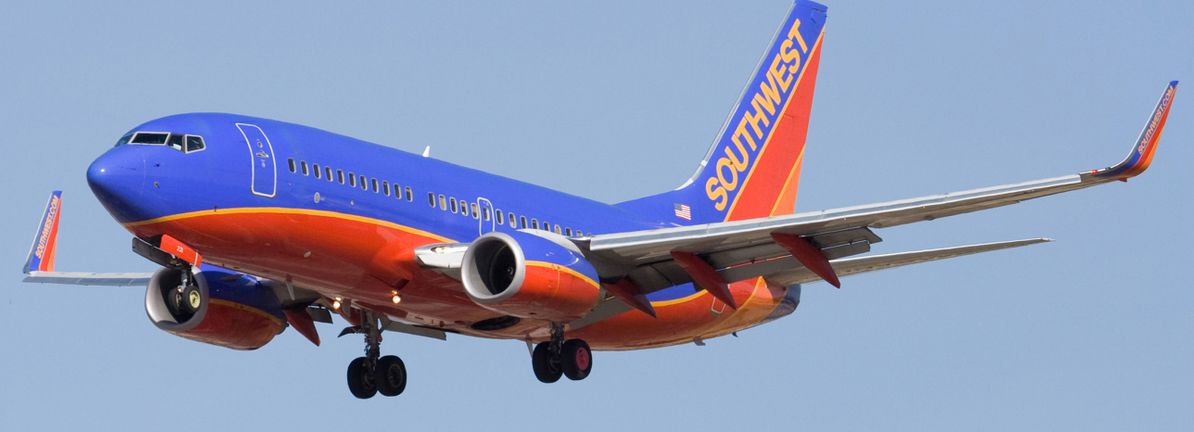
Valuation Analysis of Southwest Airlines Stock

- Stock Performance: Southwest Airlines achieved a 35.9% return over the past year, yet only 0.2% year-to-date, indicating a reassessment of investor confidence that could impact stock price volatility.
- Discounted Cash Flow Analysis: The latest DCF model estimates Southwest Airlines' intrinsic value at $110.12 per share, while the current price is around $41.39, suggesting a 62.4% undervaluation that may attract value investors.
- P/E Ratio Comparison: With a P/E ratio of 24.76x, significantly above the airline industry average of 8.74x, it indicates that investors are willing to pay a premium for each dollar of earnings, reflecting confidence in its growth potential.
- Diverse Narrative Analysis: Investor expectations for Southwest Airlines vary, with bullish narratives suggesting a fair value of $45.25 per share and bearish views estimating only $24.00, indicating potential for further valuation fluctuations in the market.

U.S. Aviation Sector Faces Demand Challenges Amid High Fares
- Marginal Passenger Volume Improvement: TSA screening data for U.S. airlines showed a slight improvement last week, yet year-over-year growth remains negative, indicating the aviation sector's struggle amid high ticket prices and strategic capacity cuts.
- Major Airlines Decline: Southwest Airlines and Alaska Air experienced TSA screening drops of 4.6% and 6.3%, respectively, while Delta Air Lines and United Airlines saw declines around 2%, reflecting a broader trend of weak demand.
- Capacity Adjustments in Response: Although domestic capacity for Q2 2026 is projected to grow by 3.6%, airlines have begun trimming seat arrangements for upcoming months, with total industry capacity reduced by 0.3% in May and 0.5% in June.
- High Fares Impacting Consumers: Despite a slight uptick in passenger volume, consumer sensitivity to high fares, exacerbated by war-related fuel price spikes, remains a significant headwind for the industry as it approaches the peak summer travel season.

Southwest Airlines Declares $0.18 Quarterly Dividend
- Quarterly Dividend Announcement: Southwest Airlines has declared a quarterly dividend of $0.18 per share, consistent with previous payouts, indicating the company's stable cash flow and profitability, which is expected to attract more investor interest.
- Consistent Dividend Record: The company has now announced a dividend of $0.18 for nineteen consecutive quarters, reflecting its stable financial performance and enhancing investor confidence in the company's long-term growth prospects.
- Dividend Yield: The forward yield of 1.74% from this dividend provides a relatively attractive return in the current market environment, potentially appealing to investors seeking stable income.
- Shareholder Equity Assurance: The dividend will be payable on July 2, with a record date of June 11 and an ex-dividend date also on June 11, ensuring that existing shareholders can benefit from this payout, further solidifying the trust between the company and its shareholders.
US Stocks Rise Slightly, Nasdaq Hits All-Time High
- Market Performance: The S&P 500 Index rose by 0.25% and the Nasdaq 100 Index increased by 0.17%, reaching all-time highs, reflecting strong corporate earnings and optimism around artificial intelligence, although rising oil prices and bond yields limited gains.
- Middle East Impact: The failure of the US and Iran to reach a peace agreement has led to rising global bond yields, with the 10-year T-note yield increasing by 3 basis points to 4.39%, raising concerns that elevated energy prices could force central banks to tighten monetary policy.
- Chinese Trade Data: China's April exports rose by 14.1% year-on-year and imports increased by 25.3%, both exceeding market expectations, indicating positive signals for global economic recovery that could benefit global markets.
- Earnings Reports: So far, 83% of the 446 S&P 500 companies that reported earnings have beaten estimates, with Q1 earnings projected to climb by 12% year-on-year, although excluding the technology sector, the growth is only 3%, marking the weakest performance in two years.
U.S. Stocks Rise Slightly Amid Strong Corporate Earnings
- Market Performance: The S&P 500 rose by 0.17% and the Nasdaq 100 reached an all-time high, reflecting strong corporate earnings and optimism around AI, although rising oil prices and bond yields limited gains.
- Middle East Impact: The failure of the U.S. and Iran to reach a peace agreement has led to rising global bond yields, with the 10-year Treasury yield increasing to 4.39%, potentially forcing central banks to tighten monetary policy, which could affect market liquidity.
- Chinese Trade Data: China's April exports rose 14.1% year-on-year and imports increased by 25.3%, both exceeding market expectations, providing a positive signal for global economic growth and potentially boosting international investment sentiment.
- Corporate Earnings Situation: So far, 83% of the 446 S&P 500 companies have exceeded earnings expectations, with Q1 earnings projected to grow by 12% year-on-year, demonstrating corporate resilience in the economic recovery, although growth in the tech sector has slowed to 3%.
Wall Street Futures Retreat as Oil Prices Surge Amid Iran Tensions
- Oil Price Surge Impact: Oil prices surged nearly 3% due to stalled negotiations between the U.S. and Iran, raising investor concerns about prolonged geopolitical conflicts, which in turn affected market sentiment and led to a retreat in Wall Street futures.
- Record Highs in Stock Market: Last week, both the S&P 500 and Nasdaq reached all-time highs, driven by strong corporate earnings and solid employment reports, indicating signs of economic recovery, although concerns about future developments remain prevalent.
- Inflation Data in Focus: Investors are keenly awaiting the upcoming consumer price index data, which is expected to show a rise in inflation for April, potentially impacting consumer demand amid escalating tensions in the Middle East.
- Strong Tech Sector Performance: While rising oil prices pressured airline stocks, the robust performance of the technology sector continued to drive market gains, with several major tech companies set to report earnings this week, further influencing market trends.
Valuation Analysis of Southwest Airlines Stock
- Stock Performance: Southwest Airlines achieved a 35.9% return over the past year, yet only 0.2% year-to-date, indicating a reassessment of investor confidence that could impact stock price volatility.
- Discounted Cash Flow Analysis: The latest DCF model estimates Southwest Airlines' intrinsic value at $110.12 per share, while the current price is around $41.39, suggesting a 62.4% undervaluation that may attract value investors.
- P/E Ratio Comparison: With a P/E ratio of 24.76x, significantly above the airline industry average of 8.74x, it indicates that investors are willing to pay a premium for each dollar of earnings, reflecting confidence in its growth potential.
- Diverse Narrative Analysis: Investor expectations for Southwest Airlines vary, with bullish narratives suggesting a fair value of $45.25 per share and bearish views estimating only $24.00, indicating potential for further valuation fluctuations in the market.
U.S. Aviation Sector Faces Demand Challenges Amid High Fares
- Marginal Passenger Volume Improvement: TSA screening data for U.S. airlines showed a slight improvement last week, yet year-over-year growth remains negative, indicating the aviation sector's struggle amid high ticket prices and strategic capacity cuts.
- Major Airlines Decline: Southwest Airlines and Alaska Air experienced TSA screening drops of 4.6% and 6.3%, respectively, while Delta Air Lines and United Airlines saw declines around 2%, reflecting a broader trend of weak demand.
- Capacity Adjustments in Response: Although domestic capacity for Q2 2026 is projected to grow by 3.6%, airlines have begun trimming seat arrangements for upcoming months, with total industry capacity reduced by 0.3% in May and 0.5% in June.
- High Fares Impacting Consumers: Despite a slight uptick in passenger volume, consumer sensitivity to high fares, exacerbated by war-related fuel price spikes, remains a significant headwind for the industry as it approaches the peak summer travel season.
Southwest Airlines Declares $0.18 Quarterly Dividend
- Quarterly Dividend Announcement: Southwest Airlines has declared a quarterly dividend of $0.18 per share, consistent with previous payouts, indicating the company's stable cash flow and profitability, which is expected to attract more investor interest.
- Consistent Dividend Record: The company has now announced a dividend of $0.18 for nineteen consecutive quarters, reflecting its stable financial performance and enhancing investor confidence in the company's long-term growth prospects.
- Dividend Yield: The forward yield of 1.74% from this dividend provides a relatively attractive return in the current market environment, potentially appealing to investors seeking stable income.
- Shareholder Equity Assurance: The dividend will be payable on July 2, with a record date of June 11 and an ex-dividend date also on June 11, ensuring that existing shareholders can benefit from this payout, further solidifying the trust between the company and its shareholders.