SoftBank Reports ¥1.9 Trillion Net Profit in Q1
Written by Emily J. Thompson, Senior Investment Analyst
Updated: 36 minutes ago
0mins
Should l Buy TMUS?
Source: Newsfilter
- Strong Profitability: SoftBank Group reported a net profit of ¥1.9 trillion ($12.05 billion) for the January-March 2023 quarter, a significant increase from ¥517 billion in the same period last year, demonstrating a remarkable enhancement in profitability and achieving net profit for five consecutive quarters.
- Significant Investment Gains: The Vision Fund recorded an investment gain of ¥3.1 trillion this quarter, primarily driven by returns from its investment in OpenAI, indicating that its strategic positioning in the AI sector is yielding positive results and further solidifying its market position.
- Future Investment Commitment: SoftBank has pledged an additional $30 billion to OpenAI by 2026, bringing its total investment to $64.4 billion for a 13% stake, reflecting confidence in the AI industry and laying a foundation for future growth.
- Capital Management Strategy: To cover its expenditures, SoftBank has raised funds through selling stakes in T-Mobile and Nvidia, issuing bonds, and taking out loans, showcasing its flexibility in capital operations and ability to adapt to market changes, ensuring financial stability.
Trade with 70% Backtested Accuracy
Stop guessing "Should I Buy TMUS?" and start using high-conviction signals backed by rigorous historical data.
Sign up today to access powerful investing tools and make smarter, data-driven decisions.
Analyst Views on TMUS
Wall Street analysts forecast TMUS stock price to rise
21 Analyst Rating
15 Buy
6 Hold
0 Sell
Moderate Buy
Current: 190.850

Low
220.00
Averages
265.42
High
310.00
Current: 190.850
Low
220.00
Averages
265.42
High
310.00
About TMUS
T-Mobile US, Inc. is a provider of wireless communications services, including voice, messaging and data, under its flagship brands, T-Mobile and Metro by T-Mobile, and Mint Mobile, in the United States, Puerto Rico and the United States Virgin Islands. It provides wireless communications services primarily using its 4G Long Term Evolution network and its 5G technology network. It also offers a selection of wireless devices, including handsets, tablets and other mobile communication devices, and accessories for sale, as well as financing through equipment installment plans. Its primary service plan offering is Go5G Plus, which includes unlimited talk, text and data on its network, 5G access at no extra cost, scam protection features and more. In addition to its wireless communications services, the Company also offers high speed Internet, which includes a fixed wireless product that utilizes the excess capacity of its nationwide 5G network. It also provides advertising solutions.
About the author

Emily J. Thompson
Emily J. Thompson, a Chartered Financial Analyst (CFA) with 12 years in investment research, graduated with honors from the Wharton School. Specializing in industrial and technology stocks, she provides in-depth analysis for Intellectia’s earnings and market brief reports.

Deutsche Telekom Raises Full-Year Outlook Following T-Mobile Guidance
- Upgraded Outlook: Deutsche Telekom expects its adjusted EBITDAaL to reach €47.5 billion in 2026, up from the previous guidance of €47.4 billion, reflecting a positive outlook that may bolster investor confidence.
- Analyst Consensus Surpassed: The company's provided analyst consensus anticipated a full-year EBITDAaL of €46.6 billion, and the upgrade indicates strong performance in a competitive market, potentially attracting more investor interest.
- German Market Performance: While Deutsche Telekom reported a 2% year-on-year revenue increase in Germany, the loss of 83,000 fixed-network lines highlights persistent sluggish market conditions, which could impact future growth potential.
- Merger Transaction Focus: Deutsche Telekom is assessing a potential merger with T-Mobile, which would be the largest public merger to date, potentially reshaping the industry landscape and enhancing the company's market position.
See More
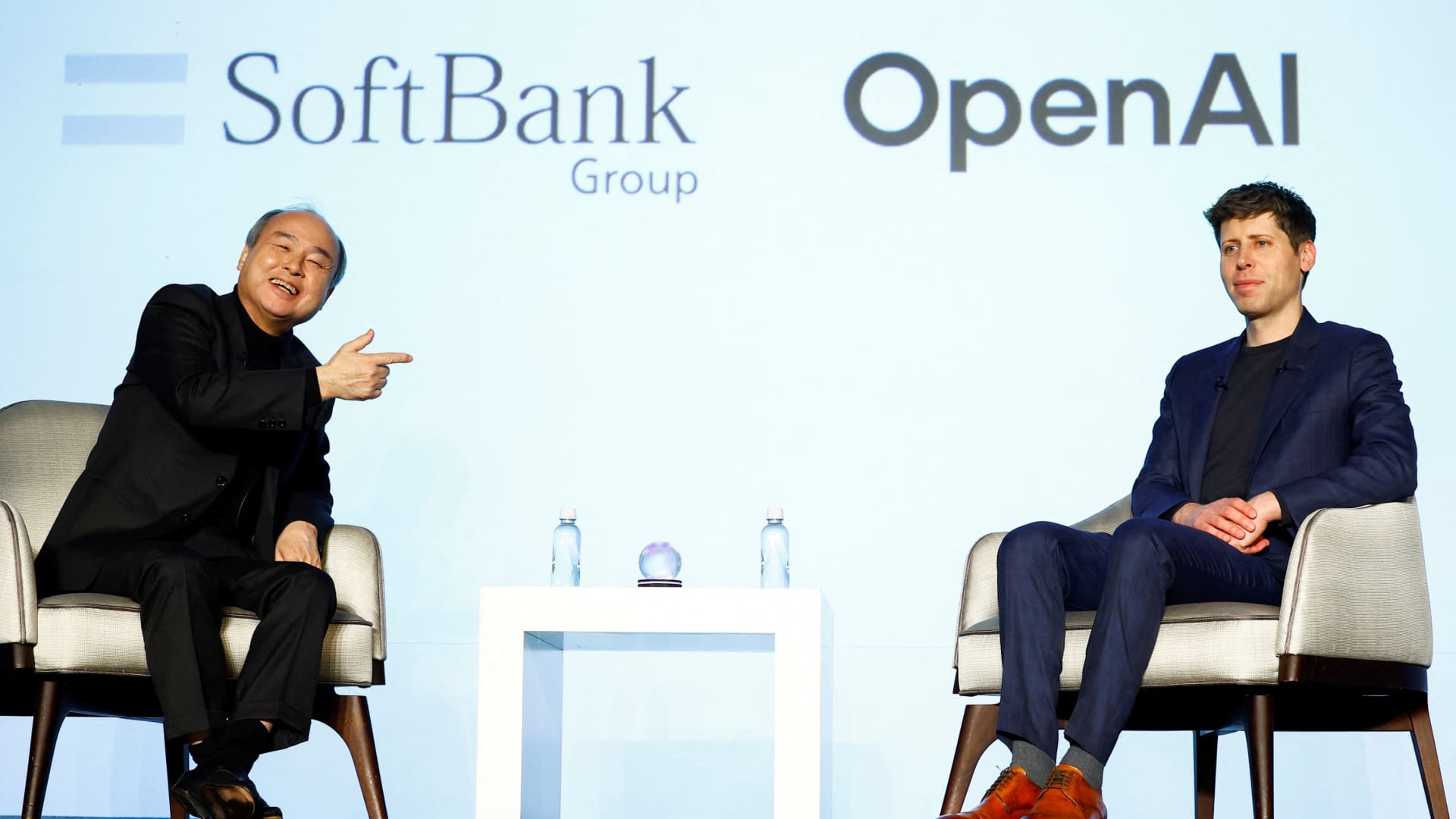
SoftBank's Vision Fund Gains $46 Billion Driven by OpenAI Investment


- Significant Investment Gains: SoftBank's Vision Fund reported a yearly gain of $46 billion for the fiscal year ending in March, primarily driven by its investment in OpenAI, which yielded $45 billion, highlighting the robust growth potential in the AI sector.
- Liquidity Risk Concerns: Despite OpenAI's valuation reaching $852 billion, the concentration of SoftBank's investments has raised concerns about its debt load, prompting S&P to downgrade its outlook from 'stable' to 'negative', which could impact its asset liquidity and financial capacity.
- Asset Sale Strategy: To fund its investment in OpenAI, SoftBank has begun selling stakes in companies like T-Mobile and Nvidia, expecting to generate 218.1 billion yen (approximately $1.4 billion) from these sales, aimed at alleviating financial pressure.
- Overall Financial Performance: Despite facing investment income losses, the SoftBank group achieved a net profit of 5 trillion yen for the fiscal year, primarily supported by the Vision Fund and its telecommunications division, demonstrating the resilience and diversification of its business.
See More

SoftBank Reports ¥1.9 Trillion Net Profit in Q1

- Strong Profitability: SoftBank Group reported a net profit of ¥1.9 trillion ($12.05 billion) for the January-March 2023 quarter, a significant increase from ¥517 billion in the same period last year, demonstrating a remarkable enhancement in profitability and achieving net profit for five consecutive quarters.
- Significant Investment Gains: The Vision Fund recorded an investment gain of ¥3.1 trillion this quarter, primarily driven by returns from its investment in OpenAI, indicating that its strategic positioning in the AI sector is yielding positive results and further solidifying its market position.
- Future Investment Commitment: SoftBank has pledged an additional $30 billion to OpenAI by 2026, bringing its total investment to $64.4 billion for a 13% stake, reflecting confidence in the AI industry and laying a foundation for future growth.
- Capital Management Strategy: To cover its expenditures, SoftBank has raised funds through selling stakes in T-Mobile and Nvidia, issuing bonds, and taking out loans, showcasing its flexibility in capital operations and ability to adapt to market changes, ensuring financial stability.
See More
T-Mobile Enhances Experience at 2026 PGA Championship
- 5G Technology Deployment: T-Mobile is deploying over 60 5G-connected phones at the 2026 PGA Championship, utilizing a 4D camera for real-time analysis, which enhances viewer immersion and engagement, likely attracting more high-end customers to the event.
- Smart Operations Command Center: The Smart Operations Command Center provides real-time monitoring for the event, optimizing the experience for 150,000 fans by ensuring quick entry and efficient services, thereby enhancing overall satisfaction and brand image.
- Exclusive Experience Space: At Club Magenta, T-Mobile customers enjoy a comfortable viewing environment and special events, which boosts customer loyalty and attracts new users, further solidifying T-Mobile's leadership in sports sponsorship.
- Enhanced Broadcast Technology: T-Mobile supports CBS Sports' high-definition broadcasts through a 5G private network, enabling real-time view switching that improves broadcast quality, which is expected to attract more viewers and drive advertising revenue growth.
See More

Cable TV Customer Losses Accelerate Amid Streaming Growth


- Customer Losses Intensify: Comcast's Xfinity lost 65,000 high-speed internet subscribers last quarter, while Charter's Spectrum shed 117,000 residential broadband customers, indicating a significant acceleration in the trend of customer attrition in the cable industry.
- Increased Competition: With T-Mobile and Verizon leveraging their 5G mobile broadband networks to offer fixed wireless access, existing broadband customers are migrating to these emerging competitors, resulting in a loss of over 1 million subscribers for Comcast and Charter since their peaks in 2023.
- Significant Revenue Impact: Internet services account for approximately 20% of Comcast's revenue and about 40% for Charter, making the weak performance in their high-speed internet businesses a critical factor in their declining EBITDA, which poses a serious concern for both companies.
- Market Outlook Cannot Be Ignored: As the trend of customer migration continues, shareholders must pay close attention to the long-term implications this shift may have on future performance, especially in an increasingly competitive market landscape.
See More

JEPQ ETF 52-Week Price Analysis

- Price Range Analysis: JEPQ ETF's 52-week low is $51.4663 per share, with a high of $60.14, and the latest trade at $59.45 indicates stability and potential investment appeal in the current market environment.
- Technical Analysis Tool: Comparing the latest share price to the 200-day moving average provides valuable insights for investors, aiding in the assessment of the ETF's long-term trends and market performance.
- Unit Trading Mechanism: ETFs trade like stocks, where investors buy and sell 'units' that can be created or destroyed based on investor demand, allowing for flexibility in responding to market changes.
- Liquidity Monitoring: Weekly monitoring of changes in shares outstanding helps identify significant inflows (new units created) or outflows (old units destroyed), which directly impacts the ETF's underlying holdings and its market performance.
See More
Deutsche Telekom Raises Full-Year Outlook Following T-Mobile Guidance
- Upgraded Outlook: Deutsche Telekom expects its adjusted EBITDAaL to reach €47.5 billion in 2026, up from the previous guidance of €47.4 billion, reflecting a positive outlook that may bolster investor confidence.
- Analyst Consensus Surpassed: The company's provided analyst consensus anticipated a full-year EBITDAaL of €46.6 billion, and the upgrade indicates strong performance in a competitive market, potentially attracting more investor interest.
- German Market Performance: While Deutsche Telekom reported a 2% year-on-year revenue increase in Germany, the loss of 83,000 fixed-network lines highlights persistent sluggish market conditions, which could impact future growth potential.
- Merger Transaction Focus: Deutsche Telekom is assessing a potential merger with T-Mobile, which would be the largest public merger to date, potentially reshaping the industry landscape and enhancing the company's market position.
See More
SoftBank's Vision Fund Gains $46 Billion Driven by OpenAI Investment
- Significant Investment Gains: SoftBank's Vision Fund reported a yearly gain of $46 billion for the fiscal year ending in March, primarily driven by its investment in OpenAI, which yielded $45 billion, highlighting the robust growth potential in the AI sector.
- Liquidity Risk Concerns: Despite OpenAI's valuation reaching $852 billion, the concentration of SoftBank's investments has raised concerns about its debt load, prompting S&P to downgrade its outlook from 'stable' to 'negative', which could impact its asset liquidity and financial capacity.
- Asset Sale Strategy: To fund its investment in OpenAI, SoftBank has begun selling stakes in companies like T-Mobile and Nvidia, expecting to generate 218.1 billion yen (approximately $1.4 billion) from these sales, aimed at alleviating financial pressure.
- Overall Financial Performance: Despite facing investment income losses, the SoftBank group achieved a net profit of 5 trillion yen for the fiscal year, primarily supported by the Vision Fund and its telecommunications division, demonstrating the resilience and diversification of its business.
See More
SoftBank Reports ¥1.9 Trillion Net Profit in Q1
- Strong Profitability: SoftBank Group reported a net profit of ¥1.9 trillion ($12.05 billion) for the January-March 2023 quarter, a significant increase from ¥517 billion in the same period last year, demonstrating a remarkable enhancement in profitability and achieving net profit for five consecutive quarters.
- Significant Investment Gains: The Vision Fund recorded an investment gain of ¥3.1 trillion this quarter, primarily driven by returns from its investment in OpenAI, indicating that its strategic positioning in the AI sector is yielding positive results and further solidifying its market position.
- Future Investment Commitment: SoftBank has pledged an additional $30 billion to OpenAI by 2026, bringing its total investment to $64.4 billion for a 13% stake, reflecting confidence in the AI industry and laying a foundation for future growth.
- Capital Management Strategy: To cover its expenditures, SoftBank has raised funds through selling stakes in T-Mobile and Nvidia, issuing bonds, and taking out loans, showcasing its flexibility in capital operations and ability to adapt to market changes, ensuring financial stability.
See More
T-Mobile Enhances Experience at 2026 PGA Championship
- 5G Technology Deployment: T-Mobile is deploying over 60 5G-connected phones at the 2026 PGA Championship, utilizing a 4D camera for real-time analysis, which enhances viewer immersion and engagement, likely attracting more high-end customers to the event.
- Smart Operations Command Center: The Smart Operations Command Center provides real-time monitoring for the event, optimizing the experience for 150,000 fans by ensuring quick entry and efficient services, thereby enhancing overall satisfaction and brand image.
- Exclusive Experience Space: At Club Magenta, T-Mobile customers enjoy a comfortable viewing environment and special events, which boosts customer loyalty and attracts new users, further solidifying T-Mobile's leadership in sports sponsorship.
- Enhanced Broadcast Technology: T-Mobile supports CBS Sports' high-definition broadcasts through a 5G private network, enabling real-time view switching that improves broadcast quality, which is expected to attract more viewers and drive advertising revenue growth.
See More
Cable TV Customer Losses Accelerate Amid Streaming Growth
- Customer Losses Intensify: Comcast's Xfinity lost 65,000 high-speed internet subscribers last quarter, while Charter's Spectrum shed 117,000 residential broadband customers, indicating a significant acceleration in the trend of customer attrition in the cable industry.
- Increased Competition: With T-Mobile and Verizon leveraging their 5G mobile broadband networks to offer fixed wireless access, existing broadband customers are migrating to these emerging competitors, resulting in a loss of over 1 million subscribers for Comcast and Charter since their peaks in 2023.
- Significant Revenue Impact: Internet services account for approximately 20% of Comcast's revenue and about 40% for Charter, making the weak performance in their high-speed internet businesses a critical factor in their declining EBITDA, which poses a serious concern for both companies.
- Market Outlook Cannot Be Ignored: As the trend of customer migration continues, shareholders must pay close attention to the long-term implications this shift may have on future performance, especially in an increasingly competitive market landscape.
See More
JEPQ ETF 52-Week Price Analysis
- Price Range Analysis: JEPQ ETF's 52-week low is $51.4663 per share, with a high of $60.14, and the latest trade at $59.45 indicates stability and potential investment appeal in the current market environment.
- Technical Analysis Tool: Comparing the latest share price to the 200-day moving average provides valuable insights for investors, aiding in the assessment of the ETF's long-term trends and market performance.
- Unit Trading Mechanism: ETFs trade like stocks, where investors buy and sell 'units' that can be created or destroyed based on investor demand, allowing for flexibility in responding to market changes.
- Liquidity Monitoring: Weekly monitoring of changes in shares outstanding helps identify significant inflows (new units created) or outflows (old units destroyed), which directly impacts the ETF's underlying holdings and its market performance.
See More