SK Hynix Surpasses Samsung to Become South Korea's Most Valuable Company
Written by Emily J. Thompson, Senior Investment Analyst
Updated: 55 minutes ago
0mins
Source: Newsfilter
- Strategic Transformation: SK Hynix's acquisition of Hynix Semiconductor in 2012, initially deemed financially irresponsible, ultimately positioned the company at the center of the global AI boom, becoming Nvidia's main HBM supplier and driving its market value to nearly 2.1 quadrillion won.
- Bet on High-Bandwidth Memory: By launching the world's first HBM product in 2014, SK Hynix faced technological setbacks in the late 2010s but successfully revamped its technology through an 880 billion won investment, aligning with the rapid growth of the AI market and significantly enhancing its competitive edge.
- Market Dynamics Reversal: Despite reporting an annual operating loss of 7.73 trillion won in 2023, SK Hynix is projected to achieve record operating profits in 2024, demonstrating its robust recovery capability in the global memory market and surpassing Samsung as the top DRAM manufacturer.
- Future Growth Targets: SK Hynix aims to increase its market capitalization to 1 quadrillion won in 2024 and eventually reach 2 quadrillion won, reflecting strong confidence in future market potential while invigorating the South Korean economy and stock market.
Trade with 70% Backtested Accuracy
Stop guessing "Should I Buy AMD?" and start using high-conviction signals backed by rigorous historical data.
Sign up today to access powerful investing tools and make smarter, data-driven decisions.
Analyst Views on AMD
Wall Street analysts forecast AMD stock price to fall
33 Analyst Rating
25 Buy
8 Hold
0 Sell
Strong Buy
Current: 551.630

Low
210.00
Averages
289.13
High
377.00
Current: 551.630
Low
210.00
Averages
289.13
High
377.00
About AMD
Advanced Micro Devices, Inc. is a global semiconductor company. The Company is focused on high-performance computing and artificial intelligence (AI). Its segments include Data Center, Client and Gaming, and Embedded. Data Center segment includes AI accelerators, microprocessors (CPUs) for servers, graphics processing units (GPUs), accelerated processing units (APUs), data processing units (DPUs), Field Programmable Gate Arrays (FPGAs), and Adaptive system-on-Chip (SoC) products for data centers. Client and Gaming segment includes CPUs, APUs, chipsets for desktops and notebooks, discrete GPUs, and semi-custom SoC products and development services. Embedded segment includes embedded CPUs, APUs, FPGAs, system on modules (SOMs), and Adaptive SoC products. It markets and sells its products under the AMD trademark. Its products include AMD EPYC, AMD Ryzen, AMD Ryzen PRO, Virtex UltraScale+, among others.
About the author

Emily J. Thompson
Emily J. Thompson, a Chartered Financial Analyst (CFA) with 12 years in investment research, graduated with honors from the Wharton School. Specializing in industrial and technology stocks, she provides in-depth analysis for Intellectia’s earnings and market brief reports.
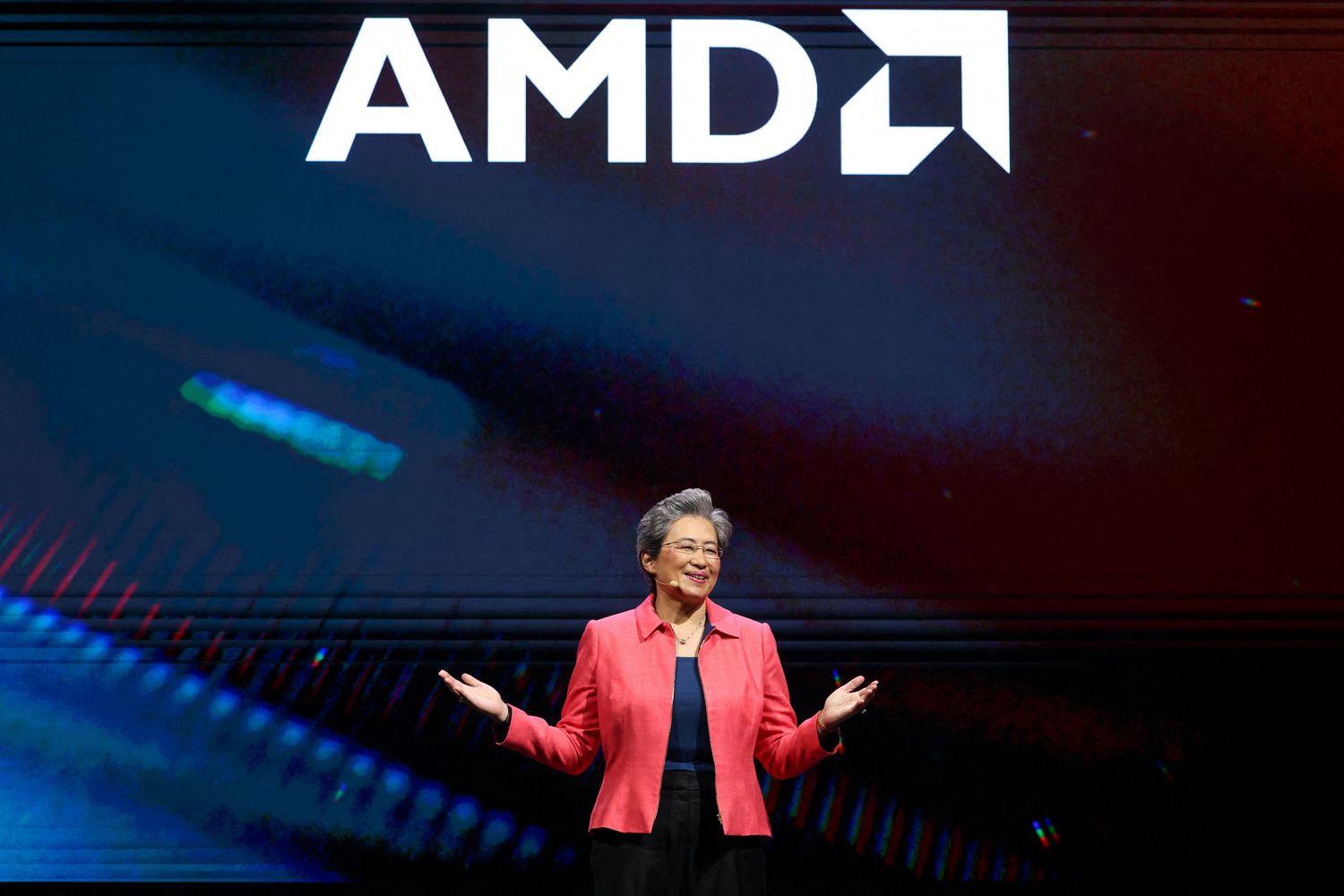
AMD Capitalizes on AI-Driven Data Center Growth

- Significant Revenue Growth: AMD has achieved a remarkable 57% revenue growth in its AI-driven data center business, indicating successful execution of its $120 billion long-term investment strategy, which boosts market confidence.
- Record Profits: The company reported record profits, reflecting its execution capabilities in a high-demand environment, although future margins and execution pace will be critical for maintaining the stock's current valuation.
- Market Performance Analysis: Despite AMD's strong performance, the analyst team has not included it in their list of top investment stocks, indicating a cautious market sentiment regarding its future growth potential.
- Investor Focus: In the current market environment, investors are advised to consider 10 other stocks believed to potentially yield substantial returns in the coming years, highlighting the challenges AMD faces in a competitive landscape.
See More

SK Hynix Surpasses Samsung to Become South Korea's Most Valuable Company

- Strategic Transformation: SK Hynix's acquisition of Hynix Semiconductor in 2012, initially deemed financially irresponsible, ultimately positioned the company at the center of the global AI boom, becoming Nvidia's main HBM supplier and driving its market value to nearly 2.1 quadrillion won.
- Bet on High-Bandwidth Memory: By launching the world's first HBM product in 2014, SK Hynix faced technological setbacks in the late 2010s but successfully revamped its technology through an 880 billion won investment, aligning with the rapid growth of the AI market and significantly enhancing its competitive edge.
- Market Dynamics Reversal: Despite reporting an annual operating loss of 7.73 trillion won in 2023, SK Hynix is projected to achieve record operating profits in 2024, demonstrating its robust recovery capability in the global memory market and surpassing Samsung as the top DRAM manufacturer.
- Future Growth Targets: SK Hynix aims to increase its market capitalization to 1 quadrillion won in 2024 and eventually reach 2 quadrillion won, reflecting strong confidence in future market potential while invigorating the South Korean economy and stock market.
See More

Asian Tech Stocks Rebound Led by Semiconductors


- Semiconductor Stocks Rebound: South Korea's semiconductor giants Samsung Electronics and SK Hynix saw their shares rise over 9% and 4% respectively, indicating a recovery after both experienced declines exceeding 12% on Tuesday, reflecting renewed investor confidence in the semiconductor sector.
- Market Index Recovery: The Kospi index in South Korea rebounded over 3% after a 10% drop, suggesting a reassessment of technology stocks by investors, which may indicate a short-term correction rather than a deterioration in fundamentals.
- Japanese Tech Stocks Follow Suit: Japan's technology sector also experienced gains, with Advantest rising 0.6%, SoftBank Group up 1.5%, and laser equipment manufacturer Lasertec increasing by 0.3%, demonstrating a broader recovery trend in regional tech stocks that enhances market optimism.
- Analyst Outlook Positive: Dan Ives from Wedbush Securities noted that recent channel checks indicated strong enterprise AI demand trends, arguing that the pullback in South Korean tech stocks is more likely a brief pause following nearly 100% gains in the Kospi this year, rather than a sign of weakening fundamentals.
See More
FedEx Reports Strong Quarter but Shares Slide Post Earnings


- Strong Earnings Report: FedEx reported $25 billion in revenue for Q4 FY2026, surpassing the $24.04 billion consensus forecast, with EPS rising 4% to $6.31, exceeding expectations of $5.96, indicating robust performance in both revenue and profitability.
- Margin Compression: Despite the strong revenue and earnings, the operating margin was reported at 8.35%, below the expected 8.44%, raising investor concerns about future earnings guidance, which contributed to the stock's decline in after-hours trading.
- Fuel Surcharge Dynamics: FedEx's strategy of passing fuel costs to customers through surcharges resulted in a 5% revenue increase, but since these surcharges carry a 0% profit margin, overall margins were compressed, highlighting the challenges the company faces in managing rising costs.
- Conservative Future Guidance: Management forecasts earnings between $16.90 and $18.10 per share, which some analysts may view as conservative; however, the projected 11% revenue growth remains solid, reflecting the company's ongoing potential for growth in premium markets.
See More

US Stocks Plunge Sharply, Tech Sector Hit Hard


- Market Sell-off: The S&P 500 fell 1.44%, the Dow Jones Industrial Average dipped 0.09%, and the Nasdaq 100 plummeted 3.29%, reflecting investor concerns over high valuations in tech stocks, leading to diminished market confidence.
- Asian Market Impact: Japan's Nikkei index dropped over 3%, while South Korea's Kospi index plummeted more than 10%, with foreign investors offloading over $2.5 billion in Kospi shares, indicating a global bearish sentiment towards tech stocks.
- Mixed Manufacturing Data: The US June manufacturing PMI unexpectedly rose to 55.7, surpassing expectations, indicating economic resilience; however, the Richmond Fed's manufacturing survey current conditions fell to 4, below the expected 8, suggesting uncertainty in economic recovery.
- Bond Market Reaction: Amid the stock sell-off, the 10-year T-note yield fell to 4.493%, while the 10-year breakeven inflation rate dropped to a 6-month low of 2.210%, reflecting increased demand for safe-haven assets.
See More

US Stock Futures Mixed as AI Trade Faces Challenges
- Cerebras Earnings Report: Cerebras reported its first earnings since going public, with shares dropping as investors expressed concerns about its ability to compete against chip giants like Nvidia, reflecting a cautious market outlook on the AI sector.
- FedEx Earnings Decline: FedEx's stock fell after reporting earnings, with the company citing shifting trade policies as a major headwind, indicating the impact of global economic uncertainty on its operations.
- Semiconductor Sector Volatility: On Tuesday, memory chipmakers saw widespread declines, led by Nvidia, Micron, and AMD, as worries about stretched AI valuations intensified, leading to a bearish sentiment among investors.
- Micron Earnings Anticipation: Micron is set to report earnings on Wednesday, and the market will closely watch its results to gauge investor confidence in the AI industry, despite its stock rising over 250% this year, it dipped 13% on Tuesday.
See More
AMD Capitalizes on AI-Driven Data Center Growth
- Significant Revenue Growth: AMD has achieved a remarkable 57% revenue growth in its AI-driven data center business, indicating successful execution of its $120 billion long-term investment strategy, which boosts market confidence.
- Record Profits: The company reported record profits, reflecting its execution capabilities in a high-demand environment, although future margins and execution pace will be critical for maintaining the stock's current valuation.
- Market Performance Analysis: Despite AMD's strong performance, the analyst team has not included it in their list of top investment stocks, indicating a cautious market sentiment regarding its future growth potential.
- Investor Focus: In the current market environment, investors are advised to consider 10 other stocks believed to potentially yield substantial returns in the coming years, highlighting the challenges AMD faces in a competitive landscape.
See More
SK Hynix Surpasses Samsung to Become South Korea's Most Valuable Company
- Strategic Transformation: SK Hynix's acquisition of Hynix Semiconductor in 2012, initially deemed financially irresponsible, ultimately positioned the company at the center of the global AI boom, becoming Nvidia's main HBM supplier and driving its market value to nearly 2.1 quadrillion won.
- Bet on High-Bandwidth Memory: By launching the world's first HBM product in 2014, SK Hynix faced technological setbacks in the late 2010s but successfully revamped its technology through an 880 billion won investment, aligning with the rapid growth of the AI market and significantly enhancing its competitive edge.
- Market Dynamics Reversal: Despite reporting an annual operating loss of 7.73 trillion won in 2023, SK Hynix is projected to achieve record operating profits in 2024, demonstrating its robust recovery capability in the global memory market and surpassing Samsung as the top DRAM manufacturer.
- Future Growth Targets: SK Hynix aims to increase its market capitalization to 1 quadrillion won in 2024 and eventually reach 2 quadrillion won, reflecting strong confidence in future market potential while invigorating the South Korean economy and stock market.
See More
Asian Tech Stocks Rebound Led by Semiconductors
- Semiconductor Stocks Rebound: South Korea's semiconductor giants Samsung Electronics and SK Hynix saw their shares rise over 9% and 4% respectively, indicating a recovery after both experienced declines exceeding 12% on Tuesday, reflecting renewed investor confidence in the semiconductor sector.
- Market Index Recovery: The Kospi index in South Korea rebounded over 3% after a 10% drop, suggesting a reassessment of technology stocks by investors, which may indicate a short-term correction rather than a deterioration in fundamentals.
- Japanese Tech Stocks Follow Suit: Japan's technology sector also experienced gains, with Advantest rising 0.6%, SoftBank Group up 1.5%, and laser equipment manufacturer Lasertec increasing by 0.3%, demonstrating a broader recovery trend in regional tech stocks that enhances market optimism.
- Analyst Outlook Positive: Dan Ives from Wedbush Securities noted that recent channel checks indicated strong enterprise AI demand trends, arguing that the pullback in South Korean tech stocks is more likely a brief pause following nearly 100% gains in the Kospi this year, rather than a sign of weakening fundamentals.
See More
FedEx Reports Strong Quarter but Shares Slide Post Earnings
- Strong Earnings Report: FedEx reported $25 billion in revenue for Q4 FY2026, surpassing the $24.04 billion consensus forecast, with EPS rising 4% to $6.31, exceeding expectations of $5.96, indicating robust performance in both revenue and profitability.
- Margin Compression: Despite the strong revenue and earnings, the operating margin was reported at 8.35%, below the expected 8.44%, raising investor concerns about future earnings guidance, which contributed to the stock's decline in after-hours trading.
- Fuel Surcharge Dynamics: FedEx's strategy of passing fuel costs to customers through surcharges resulted in a 5% revenue increase, but since these surcharges carry a 0% profit margin, overall margins were compressed, highlighting the challenges the company faces in managing rising costs.
- Conservative Future Guidance: Management forecasts earnings between $16.90 and $18.10 per share, which some analysts may view as conservative; however, the projected 11% revenue growth remains solid, reflecting the company's ongoing potential for growth in premium markets.
See More
US Stocks Plunge Sharply, Tech Sector Hit Hard
- Market Sell-off: The S&P 500 fell 1.44%, the Dow Jones Industrial Average dipped 0.09%, and the Nasdaq 100 plummeted 3.29%, reflecting investor concerns over high valuations in tech stocks, leading to diminished market confidence.
- Asian Market Impact: Japan's Nikkei index dropped over 3%, while South Korea's Kospi index plummeted more than 10%, with foreign investors offloading over $2.5 billion in Kospi shares, indicating a global bearish sentiment towards tech stocks.
- Mixed Manufacturing Data: The US June manufacturing PMI unexpectedly rose to 55.7, surpassing expectations, indicating economic resilience; however, the Richmond Fed's manufacturing survey current conditions fell to 4, below the expected 8, suggesting uncertainty in economic recovery.
- Bond Market Reaction: Amid the stock sell-off, the 10-year T-note yield fell to 4.493%, while the 10-year breakeven inflation rate dropped to a 6-month low of 2.210%, reflecting increased demand for safe-haven assets.
See More
US Stock Futures Mixed as AI Trade Faces Challenges
- Cerebras Earnings Report: Cerebras reported its first earnings since going public, with shares dropping as investors expressed concerns about its ability to compete against chip giants like Nvidia, reflecting a cautious market outlook on the AI sector.
- FedEx Earnings Decline: FedEx's stock fell after reporting earnings, with the company citing shifting trade policies as a major headwind, indicating the impact of global economic uncertainty on its operations.
- Semiconductor Sector Volatility: On Tuesday, memory chipmakers saw widespread declines, led by Nvidia, Micron, and AMD, as worries about stretched AI valuations intensified, leading to a bearish sentiment among investors.
- Micron Earnings Anticipation: Micron is set to report earnings on Wednesday, and the market will closely watch its results to gauge investor confidence in the AI industry, despite its stock rising over 250% this year, it dipped 13% on Tuesday.
See More