Significant Options Activity on Wednesday: SMR, CBRL, RIVN


Cracker Barrel Options Trading: Cracker Barrel Old Country Store Inc (CBRL) experienced options trading volume of 8,569 contracts, equating to about 44.9% of its average daily trading volume, with notable activity in the $22.50 strike put option expiring December 19, 2025.
Rivian Options Trading: Rivian Automotive Inc (RIVN) saw a significantly higher options trading volume of 192,044 contracts, representing approximately 41.9% of its average daily trading volume, with a focus on the $19 strike call option expiring December 19, 2025.
Trading Volume Insights: The trading volumes for both CBRL and RIVN indicate strong interest in specific options, highlighting investor sentiment and potential market movements.
Further Information: For additional details on available expirations for SMR, CBRL, or RIVN options, resources are available at StockOptionsChannel.com.
Trade with 70% Backtested Accuracy
Analyst Views on RIVN

About RIVN
About the author

Rivian Automotive Projects Strong Vehicle Deliveries for 2026

- Delivery Projections: Rivian anticipates delivering between 62,000 and 67,000 vehicles in 2026, a significant increase from 51,579 in 2024, driven by the introduction of the new R2 SUV priced around $50,000, which is expected to attract a broader consumer base.
- Declining Financial Performance: Despite reporting $1.3 billion in Q4 revenue, a 26% year-over-year decline, Rivian's software and service revenue doubled from $214 million to $447 million, highlighting the robust growth of its high-margin software business.
- Margin Goals: Rivian aims for a transitional automotive gross margin in 2026, targeting a 20% margin by 2027 and an overall gross margin above 25%, although its current gross margin stands at -276.59%.
- Cash Flow Challenges: The company reported a free cash outflow of $1.14 billion in Q4 and projects negative adjusted EBITDA between $1.8 billion and $2.1 billion for 2026, indicating ongoing cash burn pressures.

Elon Musk's Wealth Surges, Outpacing Rivals

- Wealth Surge: According to Bloomberg estimates, Musk's net worth reached $672 billion in 2026, increasing by $53 billion from the previous year, showcasing his dominant position on the global billionaire list.
- Market Comparison: Musk's wealth is equivalent to the combined market capitalization of four major automakers at $531 billion, leaving him with a surplus of $141 billion, highlighting Tesla's leading edge in the electric vehicle sector.
- Wealth History: Since January 2021, Musk has frequently topped the billionaire rankings, briefly losing the title to Bezos and Arnault in 2022 and 2024, yet maintaining a relatively stable position over the past two years.
- Future Outlook: With a potential SpaceX IPO in 2026 valued at $1.5 trillion, Musk could become the world's first trillionaire, further solidifying his wealth status.

U.S. Electric Vehicle Customer Satisfaction Reaches New Highs
- Impact of Tax Credit End: The end of federal EV tax credits in the U.S. may lead to fewer new customers, yet existing EV owners show increasing satisfaction, indicating potential market resilience.
- Rising Customer Satisfaction: The JD Power 2026 U.S. electric vehicle ownership study reveals that 96% of battery electric vehicle owners would consider buying or leasing another EV, reflecting significant improvements in performance and charging infrastructure.
- EV Model Rankings: Among premium electric vehicles, the Tesla Model 3 ranks highest at 804 points, with the overall average satisfaction for premium EVs rising from 756 to 786, underscoring Tesla's market leadership.
- Mass Market Performance: In the mass-market segment, the Ford Mustang Mach-e leads with 760 points, while some General Motors models like the Equinox and Blazer score below average, highlighting the competitive intensity in the market.
Rivian's Q4 Earnings Disappoint, Stock Declines
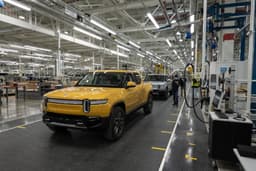
- Earnings Highlights: Rivian reported Q4 revenue of $1.29 billion, down from $1.73 billion year-over-year, with gross profit declining from $170 million to $120 million, indicating pressure on both revenue and profitability.
- Annual Performance Improvement: Despite the disappointing Q4 results, Rivian's full-year revenue rose 8% to $5.39 billion, with a full-year gross profit of $144 million, a significant recovery from a $1.2 billion gross loss in 2024, reflecting progress in software performance and cost management.
- Mixed Analyst Reactions: Following the earnings release, analysts had mixed reactions; Stifel reiterated a Buy rating with a price target of $20, UBS upgraded to Neutral with a $16 target, while DA Davidson downgraded to Underperform with a $14 target, indicating divergent views on Rivian's future prospects.
- Current Technical Analysis: Rivian's stock is currently trading 1.4% above its 20-day simple moving average but below its 50-day and 100-day averages, suggesting a mixed short-term trend, and while shares have increased by 11.13% over the past year, they remain closer to their 52-week lows, reflecting market uncertainty.
Rivian Automotive's 2026 Outlook Amid Uncertainty
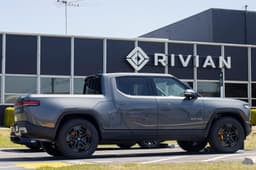
- Delivery Expectations Rise: Rivian anticipates delivering between 62,000 and 67,000 vehicles in 2026, representing a 53% increase from 2025's midpoint, indicating strong hopes for the new R2 model to capture a broader market.
- Financial Performance Beats Expectations: In its Q4 2025 report, Rivian posted $1.29 billion in revenue and a loss of $0.54 per share, both surpassing analyst expectations of a $0.68 loss and $1.26 billion in sales, showcasing the company's resilience in a volatile environment.
- Market Competition Pressure: Although the R2 model starts at $45,000, below the U.S. average new vehicle price of $49,000, uncertainty around EV demand may still impact its stock performance and market penetration.
- Increased Policy Risks: The shifting tariff policies and environmental regulations under the Trump administration create uncertainty for Rivian and other EV manufacturers, complicating supply chain management and potentially undermining future business strategies and investor confidence.

Rivian Automotive's 2026 Outlook and Challenges
- Stock Performance Analysis: In 2025, Rivian Automotive's stock experienced significant volatility, ending the year up 48%, which notably outperformed the S&P 500's 16% return, reflecting a mix of market optimism and uncertainty about its future.
- Market Environment Challenges: The uncertainty stemming from the Trump administration, including tariffs and changes to environmental regulations, poses significant challenges for Rivian and other EV manufacturers in managing their supply chains, potentially impacting their product roadmaps.
- 2026 Delivery Expectations: Rivian anticipates delivering between 62,000 and 67,000 vehicles in 2026, representing a 53% increase at the midpoint compared to 2025, indicating strong expectations tied to the launch of its new R2 model.
- R2 Model Market Potential: The new R2 model is priced starting at $45,000, below the average new vehicle price of $49,000 in the U.S., which is expected to attract a broader consumer base, although there remains a risk of low demand affecting its performance.
Rivian Automotive Projects Strong Vehicle Deliveries for 2026
- Delivery Projections: Rivian anticipates delivering between 62,000 and 67,000 vehicles in 2026, a significant increase from 51,579 in 2024, driven by the introduction of the new R2 SUV priced around $50,000, which is expected to attract a broader consumer base.
- Declining Financial Performance: Despite reporting $1.3 billion in Q4 revenue, a 26% year-over-year decline, Rivian's software and service revenue doubled from $214 million to $447 million, highlighting the robust growth of its high-margin software business.
- Margin Goals: Rivian aims for a transitional automotive gross margin in 2026, targeting a 20% margin by 2027 and an overall gross margin above 25%, although its current gross margin stands at -276.59%.
- Cash Flow Challenges: The company reported a free cash outflow of $1.14 billion in Q4 and projects negative adjusted EBITDA between $1.8 billion and $2.1 billion for 2026, indicating ongoing cash burn pressures.
Elon Musk's Wealth Surges, Outpacing Rivals
- Wealth Surge: According to Bloomberg estimates, Musk's net worth reached $672 billion in 2026, increasing by $53 billion from the previous year, showcasing his dominant position on the global billionaire list.
- Market Comparison: Musk's wealth is equivalent to the combined market capitalization of four major automakers at $531 billion, leaving him with a surplus of $141 billion, highlighting Tesla's leading edge in the electric vehicle sector.
- Wealth History: Since January 2021, Musk has frequently topped the billionaire rankings, briefly losing the title to Bezos and Arnault in 2022 and 2024, yet maintaining a relatively stable position over the past two years.
- Future Outlook: With a potential SpaceX IPO in 2026 valued at $1.5 trillion, Musk could become the world's first trillionaire, further solidifying his wealth status.
U.S. Electric Vehicle Customer Satisfaction Reaches New Highs
- Impact of Tax Credit End: The end of federal EV tax credits in the U.S. may lead to fewer new customers, yet existing EV owners show increasing satisfaction, indicating potential market resilience.
- Rising Customer Satisfaction: The JD Power 2026 U.S. electric vehicle ownership study reveals that 96% of battery electric vehicle owners would consider buying or leasing another EV, reflecting significant improvements in performance and charging infrastructure.
- EV Model Rankings: Among premium electric vehicles, the Tesla Model 3 ranks highest at 804 points, with the overall average satisfaction for premium EVs rising from 756 to 786, underscoring Tesla's market leadership.
- Mass Market Performance: In the mass-market segment, the Ford Mustang Mach-e leads with 760 points, while some General Motors models like the Equinox and Blazer score below average, highlighting the competitive intensity in the market.
Rivian's Q4 Earnings Disappoint, Stock Declines
- Earnings Highlights: Rivian reported Q4 revenue of $1.29 billion, down from $1.73 billion year-over-year, with gross profit declining from $170 million to $120 million, indicating pressure on both revenue and profitability.
- Annual Performance Improvement: Despite the disappointing Q4 results, Rivian's full-year revenue rose 8% to $5.39 billion, with a full-year gross profit of $144 million, a significant recovery from a $1.2 billion gross loss in 2024, reflecting progress in software performance and cost management.
- Mixed Analyst Reactions: Following the earnings release, analysts had mixed reactions; Stifel reiterated a Buy rating with a price target of $20, UBS upgraded to Neutral with a $16 target, while DA Davidson downgraded to Underperform with a $14 target, indicating divergent views on Rivian's future prospects.
- Current Technical Analysis: Rivian's stock is currently trading 1.4% above its 20-day simple moving average but below its 50-day and 100-day averages, suggesting a mixed short-term trend, and while shares have increased by 11.13% over the past year, they remain closer to their 52-week lows, reflecting market uncertainty.
Rivian Automotive's 2026 Outlook Amid Uncertainty
- Delivery Expectations Rise: Rivian anticipates delivering between 62,000 and 67,000 vehicles in 2026, representing a 53% increase from 2025's midpoint, indicating strong hopes for the new R2 model to capture a broader market.
- Financial Performance Beats Expectations: In its Q4 2025 report, Rivian posted $1.29 billion in revenue and a loss of $0.54 per share, both surpassing analyst expectations of a $0.68 loss and $1.26 billion in sales, showcasing the company's resilience in a volatile environment.
- Market Competition Pressure: Although the R2 model starts at $45,000, below the U.S. average new vehicle price of $49,000, uncertainty around EV demand may still impact its stock performance and market penetration.
- Increased Policy Risks: The shifting tariff policies and environmental regulations under the Trump administration create uncertainty for Rivian and other EV manufacturers, complicating supply chain management and potentially undermining future business strategies and investor confidence.
Rivian Automotive's 2026 Outlook and Challenges
- Stock Performance Analysis: In 2025, Rivian Automotive's stock experienced significant volatility, ending the year up 48%, which notably outperformed the S&P 500's 16% return, reflecting a mix of market optimism and uncertainty about its future.
- Market Environment Challenges: The uncertainty stemming from the Trump administration, including tariffs and changes to environmental regulations, poses significant challenges for Rivian and other EV manufacturers in managing their supply chains, potentially impacting their product roadmaps.
- 2026 Delivery Expectations: Rivian anticipates delivering between 62,000 and 67,000 vehicles in 2026, representing a 53% increase at the midpoint compared to 2025, indicating strong expectations tied to the launch of its new R2 model.
- R2 Model Market Potential: The new R2 model is priced starting at $45,000, below the average new vehicle price of $49,000 in the U.S., which is expected to attract a broader consumer base, although there remains a risk of low demand affecting its performance.