Raytheon Secures $2.01B Contract Modification
Written by Emily J. Thompson, Senior Investment Analyst
Updated: Mar 16 2026
0mins
Should l Buy RTX?
Source: seekingalpha
- Contract Value Increase: Raytheon has secured a modification contract worth approximately $2.01 billion for the U.S. Air Force's advanced extremely high-frequency terminal, raising the total contract value from $960 million to about $2.97 billion, indicating a significant increase in defense spending.
- Project Completion Timeline: The project is expected to be completed by August 9, 2031, demonstrating Raytheon's capability to meet long-term defense requirements and further solidifying its position in the defense industry.
- Funding Arrangement: No funds were set aside at the time of the award, reflecting the U.S. Air Force's trust in Raytheon, which may also impact future cash flow and project management strategies.
- Managing Agency: The contract is managed by the Air Force Nuclear Weapons Center, highlighting Raytheon's critical role in the U.S. defense framework and potentially paving the way for future contract opportunities.
Trade with 70% Backtested Accuracy
Stop guessing "Should I Buy RTX?" and start using high-conviction signals backed by rigorous historical data.
Sign up today to access powerful investing tools and make smarter, data-driven decisions.
Analyst Views on RTX
Wall Street analysts forecast RTX stock price to rise
14 Analyst Rating
9 Buy
5 Hold
0 Sell
Moderate Buy
Current: 175.950

Low
168.00
Averages
195.77
High
215.00
Current: 175.950
Low
168.00
Averages
195.77
High
215.00
About RTX
RTX Corporation is an aerospace and defense company, which provides advanced systems and services for commercial, military, and government customers worldwide. The Company operates through three segments: Collins Aerospace, Pratt & Whitney, and Raytheon. Collins Aerospace segment provides technologically advanced aerospace and defense products and aftermarket service solutions for civil and military aircraft manufacturers, commercial airlines, and regional, business and general aviation, as well as for defense and commercial space operations. The Pratt & Whitney segment supplies aircraft engines for commercial, military, business jet, and general aviation customers. The Raytheon segment provides defensive and offensive threat detection, tracking and mitigation capabilities for the United States and foreign government and commercial customers. The Raytheon designs, develops, and provides advanced capabilities in integrated air and missile defense, smart weapons, missiles and others.
About the author

Emily J. Thompson
Emily J. Thompson, a Chartered Financial Analyst (CFA) with 12 years in investment research, graduated with honors from the Wharton School. Specializing in industrial and technology stocks, she provides in-depth analysis for Intellectia’s earnings and market brief reports.

Raytheon Completes Landsat Next Design Review

- Successful Design Review: Raytheon has successfully completed the preliminary design review for NASA's Landsat Next Instrument Suite, validating the technical approach and engineering design of its multispectral imager and algorithms, ensuring the project remains on schedule and highly reliable.
- Significant Performance Enhancement: The new multispectral imager will more than double the current spatial resolution and capture twice the number of spectral bands, delivering higher quality data that supports various applications, including water quality assessment and crop production optimization.
- Long-term Support for Landsat Mission: Since the 1970s, Raytheon has supported the Landsat mission, including instruments for satellites 2 through 7, with the first LandIS sensor expected to be delivered in 2028, continuing the longest-running satellite record of Earth's land surface.
- High Technical Maturity: Jeff McCall, Raytheon's VP, stated that the instrument suite is built with a high level of technical maturity, ensuring it meets the mission's rigorous demands, thereby enhancing environmental monitoring capabilities and providing actionable data for users.
See More
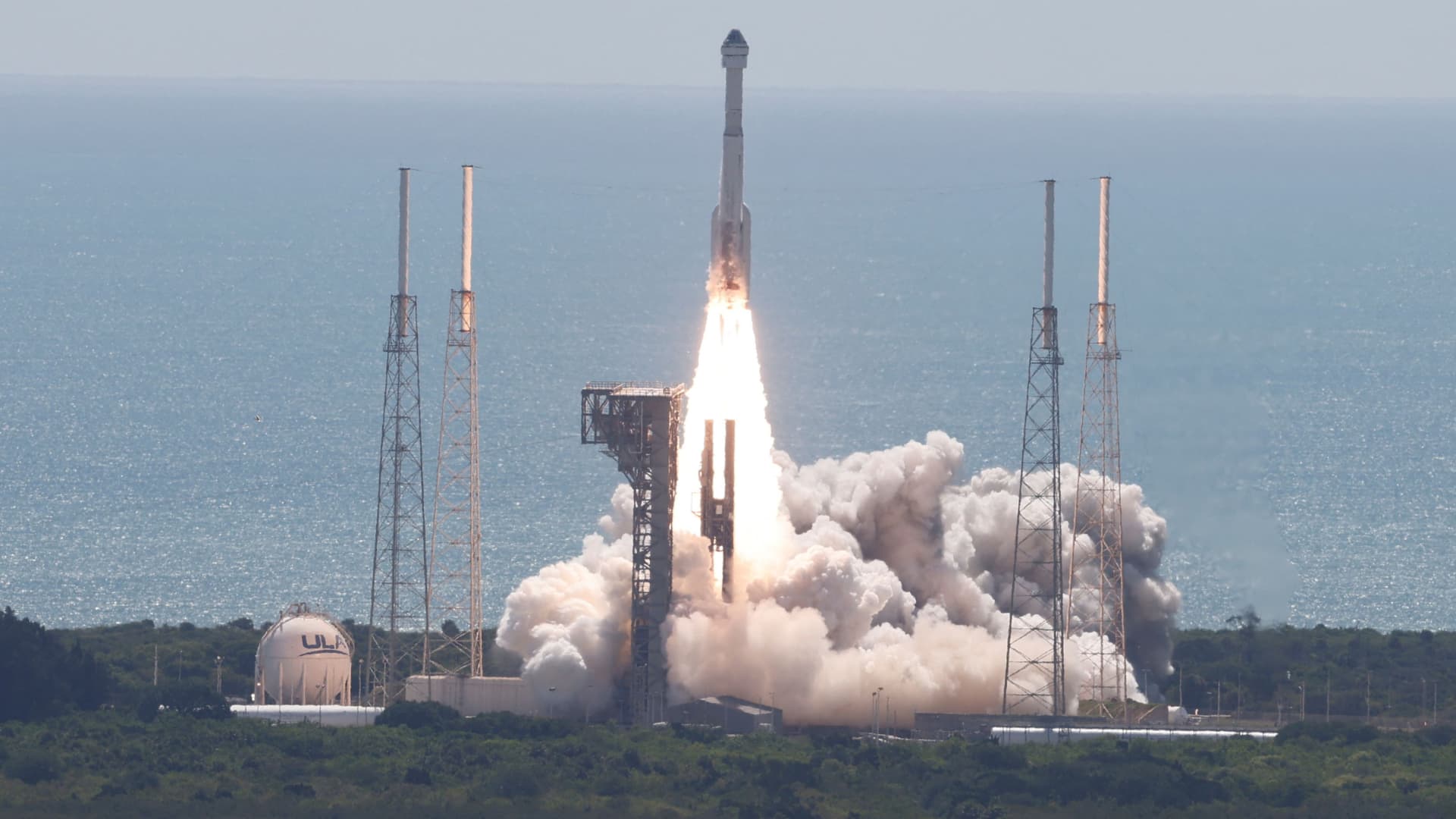
Pentagon Places Largest Drone Order in U.S. History


- Drone Order Scale: The Pentagon has placed the largest drone order in U.S. history, with plans to acquire 30,000 one-way attack drones and scale up to 300,000 by 2028, significantly enhancing U.S. competitiveness in unmanned warfare.
- Rare Earth Supply Chain Risk: Each drone relies on rare earth magnets, with approximately 98% of production controlled by China, posing a potential supply chain crisis that could impact U.S. defense capabilities.
- Strategic Position of REalloys: REalloys holds the only non-Chinese 'mine-to-magnet' heavy rare earth supply chain in North America, ensuring no reliance on Chinese inputs at any stage, and is expected to become the largest Western producer of heavy rare earths by 2027 to meet defense needs.
- Defense Budget Support: The 2026 defense budget allocates $13.6 billion for autonomous systems, reflecting the U.S. government's commitment to drones and related technologies; however, resolving the rare earth supply chain issue will require time and technological development, with REalloys positioned at a critical juncture in this transition.
See More

Pentagon Places Largest Drone Order in U.S. History
- Drone Order Scale: The Pentagon has placed the largest drone order in U.S. history, planning to acquire 30,000 one-way attack drones with an expansion target of 300,000 by 2028, significantly enhancing U.S. operational capabilities in drone warfare.
- Rare Earth Supply Chain Risk: Each drone relies on rare earth magnets, with China controlling approximately 98% of their manufacturing; any export restrictions from China could severely impact the military capabilities of the U.S. and its allies, highlighting vulnerabilities in the U.S. supply chain.
- Strategic Position of REalloys: REalloys has established the only fully non-Chinese
See More

Starfighters Space Advances STARLAUNCH Pathway with ILS Engagement


- Strategic Partnership: Starfighters Space has engaged Integrated Launch Solutions to enhance the engineering and technical integration capabilities of the STARLAUNCH pathway, leveraging a team with extensive experience to improve execution capacity for space launches, thereby accelerating the transition from design to actual launch services.
- Surging Market Demand: The defense and space market in 2026 presents unprecedented demand, and Starfighters Space is focused on addressing production capacity gaps, which is expected to drive the company's market share growth in both defense and commercial space sectors, particularly in collaboration with the Pentagon.
- Strengthened Leadership Team: The recent appointments of former Blue Origin executives Jose Arias and Catrina L. Medeiros to key positions enhance the team's technical capabilities, with Arias having previously reduced integration cycle times from 76 days to 13 days, demonstrating his effectiveness in aerospace projects.
- Industry Context Analysis: With RTX, L3Harris, and Boeing reporting record backlogs, Starfighters Space's strategic positioning aims to capitalize on this trend, enhancing its competitive edge and ensuring a favorable position in future defense spending.
See More

Starfighters Space Partners with ILS to Advance STARLAUNCH Pathway

- Strategic Partnership: Starfighters Space has engaged Integrated Launch Solutions to provide engineering and technical integration support for the STARLAUNCH project, leveraging expertise to expedite the transition from design to launch, thereby enhancing the company's competitiveness in the defense and commercial space markets.
- Market Demand: The defense and aerospace sectors are experiencing unprecedented demand in 2026, with Starfighters Space focusing on addressing production capacity bottlenecks to meet the Pentagon's funding and program authority, thereby improving hardware delivery capabilities.
- Executive Appointments: The company recently appointed Jose Arias and Catrina L. Medeiros as senior leaders, both from Blue Origin, bringing extensive project experience that is expected to further enhance STARLAUNCH's execution capacity and market responsiveness.
- Industry Context: In the context of a historically high spending environment in the defense industry, Starfighters Space's STARLAUNCH project is seen as a critical initiative to bridge the gap between market demand and delivery capacity, indicating significant growth potential in the coming years.
See More

Raytheon Completes Preliminary Design Review for NASA's Landsat Next Mission
- Design Review Completed: Raytheon has successfully completed the preliminary design review for NASA's Landsat Next mission, marking a significant milestone that allows the program to advance into further development and testing, potentially enhancing the company's market position in the aerospace sector.
- Multispectral Imaging System: The multispectral imaging system provided by Raytheon will more than double the spatial resolution of current Landsat sensors while capturing approximately twice the number of spectral bands, significantly improving the analysis of water quality, crop conditions, and climate patterns.
- Government Spending Reflection: This project reflects ongoing government investment in Earth observation systems and space-based environmental monitoring, highlighting the increasing importance of climate analysis and resource management, which could yield long-term benefits for Raytheon.
- Historical Participation: Raytheon has been involved in Landsat missions since the 1970s, supplying instruments for Landsat 2 through 7, with the first Landsat Next sensor expected to be delivered in 2028, further solidifying its leadership in the aerospace market.
See More
Raytheon Completes Landsat Next Design Review
- Successful Design Review: Raytheon has successfully completed the preliminary design review for NASA's Landsat Next Instrument Suite, validating the technical approach and engineering design of its multispectral imager and algorithms, ensuring the project remains on schedule and highly reliable.
- Significant Performance Enhancement: The new multispectral imager will more than double the current spatial resolution and capture twice the number of spectral bands, delivering higher quality data that supports various applications, including water quality assessment and crop production optimization.
- Long-term Support for Landsat Mission: Since the 1970s, Raytheon has supported the Landsat mission, including instruments for satellites 2 through 7, with the first LandIS sensor expected to be delivered in 2028, continuing the longest-running satellite record of Earth's land surface.
- High Technical Maturity: Jeff McCall, Raytheon's VP, stated that the instrument suite is built with a high level of technical maturity, ensuring it meets the mission's rigorous demands, thereby enhancing environmental monitoring capabilities and providing actionable data for users.
See More
Pentagon Places Largest Drone Order in U.S. History
- Drone Order Scale: The Pentagon has placed the largest drone order in U.S. history, with plans to acquire 30,000 one-way attack drones and scale up to 300,000 by 2028, significantly enhancing U.S. competitiveness in unmanned warfare.
- Rare Earth Supply Chain Risk: Each drone relies on rare earth magnets, with approximately 98% of production controlled by China, posing a potential supply chain crisis that could impact U.S. defense capabilities.
- Strategic Position of REalloys: REalloys holds the only non-Chinese 'mine-to-magnet' heavy rare earth supply chain in North America, ensuring no reliance on Chinese inputs at any stage, and is expected to become the largest Western producer of heavy rare earths by 2027 to meet defense needs.
- Defense Budget Support: The 2026 defense budget allocates $13.6 billion for autonomous systems, reflecting the U.S. government's commitment to drones and related technologies; however, resolving the rare earth supply chain issue will require time and technological development, with REalloys positioned at a critical juncture in this transition.
See More
Pentagon Places Largest Drone Order in U.S. History
- Drone Order Scale: The Pentagon has placed the largest drone order in U.S. history, planning to acquire 30,000 one-way attack drones with an expansion target of 300,000 by 2028, significantly enhancing U.S. operational capabilities in drone warfare.
- Rare Earth Supply Chain Risk: Each drone relies on rare earth magnets, with China controlling approximately 98% of their manufacturing; any export restrictions from China could severely impact the military capabilities of the U.S. and its allies, highlighting vulnerabilities in the U.S. supply chain.
- Strategic Position of REalloys: REalloys has established the only fully non-Chinese
See More
Starfighters Space Advances STARLAUNCH Pathway with ILS Engagement
- Strategic Partnership: Starfighters Space has engaged Integrated Launch Solutions to enhance the engineering and technical integration capabilities of the STARLAUNCH pathway, leveraging a team with extensive experience to improve execution capacity for space launches, thereby accelerating the transition from design to actual launch services.
- Surging Market Demand: The defense and space market in 2026 presents unprecedented demand, and Starfighters Space is focused on addressing production capacity gaps, which is expected to drive the company's market share growth in both defense and commercial space sectors, particularly in collaboration with the Pentagon.
- Strengthened Leadership Team: The recent appointments of former Blue Origin executives Jose Arias and Catrina L. Medeiros to key positions enhance the team's technical capabilities, with Arias having previously reduced integration cycle times from 76 days to 13 days, demonstrating his effectiveness in aerospace projects.
- Industry Context Analysis: With RTX, L3Harris, and Boeing reporting record backlogs, Starfighters Space's strategic positioning aims to capitalize on this trend, enhancing its competitive edge and ensuring a favorable position in future defense spending.
See More
Starfighters Space Partners with ILS to Advance STARLAUNCH Pathway
- Strategic Partnership: Starfighters Space has engaged Integrated Launch Solutions to provide engineering and technical integration support for the STARLAUNCH project, leveraging expertise to expedite the transition from design to launch, thereby enhancing the company's competitiveness in the defense and commercial space markets.
- Market Demand: The defense and aerospace sectors are experiencing unprecedented demand in 2026, with Starfighters Space focusing on addressing production capacity bottlenecks to meet the Pentagon's funding and program authority, thereby improving hardware delivery capabilities.
- Executive Appointments: The company recently appointed Jose Arias and Catrina L. Medeiros as senior leaders, both from Blue Origin, bringing extensive project experience that is expected to further enhance STARLAUNCH's execution capacity and market responsiveness.
- Industry Context: In the context of a historically high spending environment in the defense industry, Starfighters Space's STARLAUNCH project is seen as a critical initiative to bridge the gap between market demand and delivery capacity, indicating significant growth potential in the coming years.
See More
Raytheon Completes Preliminary Design Review for NASA's Landsat Next Mission
- Design Review Completed: Raytheon has successfully completed the preliminary design review for NASA's Landsat Next mission, marking a significant milestone that allows the program to advance into further development and testing, potentially enhancing the company's market position in the aerospace sector.
- Multispectral Imaging System: The multispectral imaging system provided by Raytheon will more than double the spatial resolution of current Landsat sensors while capturing approximately twice the number of spectral bands, significantly improving the analysis of water quality, crop conditions, and climate patterns.
- Government Spending Reflection: This project reflects ongoing government investment in Earth observation systems and space-based environmental monitoring, highlighting the increasing importance of climate analysis and resource management, which could yield long-term benefits for Raytheon.
- Historical Participation: Raytheon has been involved in Landsat missions since the 1970s, supplying instruments for Landsat 2 through 7, with the first Landsat Next sensor expected to be delivered in 2028, further solidifying its leadership in the aerospace market.
See More