OpenAI Invests $850 Billion in Data Center Expansion with Partners
Written by Emily J. Thompson, Senior Investment Analyst
Updated: Jan 01 2026
0mins


Source: CNBC
- Infrastructure Investment: OpenAI's Stargate project in Abilene, Texas, involves an estimated $850 billion investment in data centers, demonstrating the company's massive commitment to AI infrastructure that could drive overall industry growth.
- Power Demand: The data center is expected to exceed 1 gigawatt of power capacity, enough to supply 750,000 homes, indicating that the demand for electricity will drive the construction and investment in related infrastructure.
- Industry Competition: OpenAI's partnerships with giants like Nvidia and Oracle amount to $1.4 trillion in agreements, reflecting intensifying competition in the AI sector that could lead to significant shifts in market dynamics.
- Debt Surge: Tech companies are projected to incur up to $1.5 trillion in new debt for AI infrastructure buildouts, highlighting the industry's strong capital demand and potential financial risks.
Trade with 70% Backtested Accuracy
Stop guessing "Should I Buy NVDA?" and start using high-conviction signals backed by rigorous historical data.
Sign up today to access powerful investing tools and make smarter, data-driven decisions.
Analyst Views on NVDA
Wall Street analysts forecast NVDA stock price to rise
41 Analyst Rating
39 Buy
1 Hold
1 Sell
Strong Buy
Current: 208.650

Low
200.00
Averages
264.97
High
352.00
Current: 208.650
Low
200.00
Averages
264.97
High
352.00
About NVDA
NVIDIA Corporation is an artificial intelligence (AI) infrastructure company. The Company is engaged in accelerated computing to help solve the challenging computational problems. Its segments include Compute & Networking and Graphics. The Compute & Networking segment includes its Data Center accelerated computing and networking platforms and AI solutions and software, and automotive platforms and autonomous and electric vehicle solutions, including software. The Graphics segment includes GeForce GPUs for gaming and personal computers (PCs), and Quadro/NVIDIA RTX GPUs for enterprise workstation graphics. Its technology stack includes the foundational NVIDIA CUDA development platform that runs on all NVIDIA GPUs, as well as hundreds of domain-specific software libraries, frameworks, algorithms, software development kits (SDKs), and application programming interfaces (APIs). Its platforms address four markets, which include Data Center, Gaming, Professional Visualization, and Automotive.
About the author

Emily J. Thompson
Emily J. Thompson, a Chartered Financial Analyst (CFA) with 12 years in investment research, graduated with honors from the Wharton School. Specializing in industrial and technology stocks, she provides in-depth analysis for Intellectia’s earnings and market brief reports.
Nvidia's Future Valuation Could Reach $20 Trillion

- Valuation Advantage: Nvidia's forward P/E ratio is around 20 times, near its lowest in the past decade, with analysts believing the stock is significantly undervalued, projecting a 292% upside and an annual return of approximately 35% over the next four and a half years.
- Market Dominance: Nvidia holds about 90% of the AI accelerator market and has increased its share in AI inference workloads to 74%, demonstrating its strong competitive position and the ongoing demand in the AI sector.
- Full-Stack Strategy: By developing not only GPUs but also CPUs and networking equipment, Nvidia's full-stack strategy allows it to optimize data center performance and reduce total cost of ownership, providing a competitive edge over rivals.
- Strong Financial Performance: Nvidia reported an 85% year-over-year revenue increase to $81.6 billion in Q1, with non-GAAP net income rising 140% to $1.87 per share, establishing a solid foundation for future growth as the AI infrastructure market is expected to reach $4 trillion by 2030.
See More

Analysis of Investment Returns in SpaceX
- Investment Return Expectations: For a $10,000 investment in SpaceX to yield $1 million, the company would need to achieve a market cap of approximately $242 trillion, a target that far exceeds the current global GDP of $117 trillion, highlighting the extreme difficulty of this goal.
- Revenue Growth Potential: SpaceX's revenue grew by 33% last year to $18.7 billion, and if the company aims for $1 trillion in revenue by 2030, it would require a compound annual growth rate of 121.6% over the next five years, which would significantly boost stock prices.
- Market Valuation Analysis: Currently, SpaceX has a price-to-sales ratio of 129; if it reaches a market cap of $242 trillion, this ratio would drop to 121, indicating that substantial growth is necessary to maintain a reasonable market valuation.
- Investment Risk Advisory: While SpaceX has immense growth potential in the AI and space sectors, its current status as the sixth most valuable company globally makes the goal of turning a $10,000 investment into a millionaire's fortune unrealistic in the short term.
See More

SpaceX's New Agreements Propel Revenue Growth


- Revenue Growth Potential: SpaceX's revenue growth slowed to 15.4% in Q1 2026, reaching $4.7 billion with an operating loss of $1.9 billion; however, new computing infrastructure leasing agreements are expected to significantly boost revenue.
- Major Partnership Agreement: The deal with Anthropic will generate approximately $1.25 billion monthly for SpaceX, totaling around $15 billion by 2029, marking one of the largest AI cloud infrastructure deals to date.
- Collaboration with Alphabet: SpaceX's agreement with Alphabet will bring in $920 million monthly for 32 months, potentially generating nearly $30 billion in revenue, further solidifying its position in the AI market.
- Competitive Advantage Emerges: The leasing model of the Colossus supercomputers is projected to create over $2.5 billion in cash profit for SpaceX, showcasing its unique competitive advantage in AI infrastructure and laying the groundwork for future profitability growth.
See More
Comparing AI Investments: SpaceX vs Nvidia
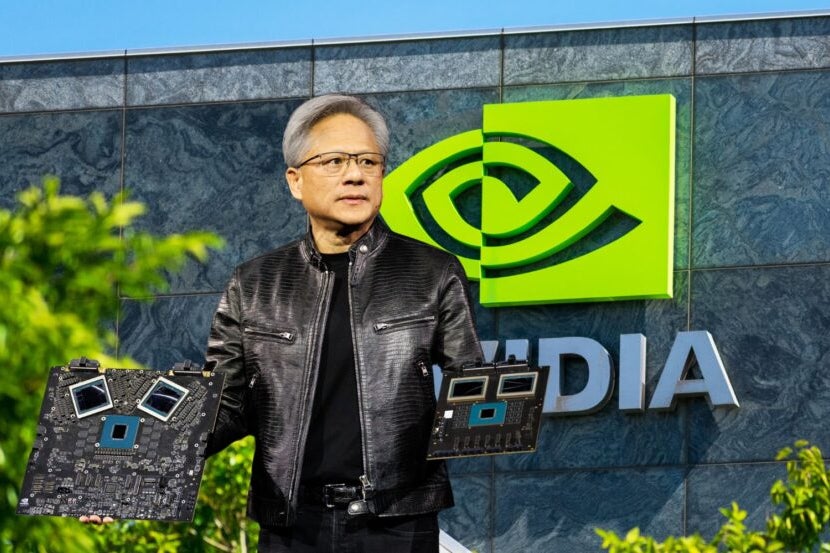
- SpaceX AI Revenue Growth: SpaceX's AI division generated $3.2 billion in revenue in 2025, growing at a 22% rate, which, while not impressive, indicates potential due to 50% of revenue coming from advertising in its social media platform.
- Nvidia's Strong Performance: Nvidia's revenue grew by 85% year-over-year in the latest quarter, with projections of 96% growth in the current quarter, demonstrating robust demand for its AI processors and solidifying its market leadership.
- Market Valuation Discrepancy: With a market cap of $5 trillion, Nvidia is 2.5 times larger than SpaceX, which reported only $20 billion in revenue for 2025, suggesting that SpaceX's stock price may be driven more by hype than by actual business performance.
- Diversification Advantage: Although SpaceX's AI performance lags behind Nvidia's, its strong growth in rocket launches and the Starlink satellite internet service could provide a competitive edge if market trends shift significantly.
See More

Dow Jones Index Undergoes Major Adjustment

- Historical Changes: The Dow Jones Industrial Average has undergone over 50 adjustments in its 130-year history, reflecting changes in market structure and economic evolution, underscoring its ongoing significance as an economic barometer.
- Telecom Giant Replacement: Verizon Communications will be removed from the Dow on June 29, replaced by Alphabet, a trillion-dollar company, indicating a market preference for companies with greater growth potential and enhancing the overall performance of the index.
- Price Influence Analysis: With a share price of $46.73, Verizon was the second lowest in the Dow, contributing only 287.7 points to the index, while Alphabet's share price of $346.13 will make it the sixth most influential component, significantly boosting the index's weight.
- Future Growth Potential: Following the integration of AI applications, Alphabet's cloud service sales are growing rapidly and are expected to continue driving company performance, further solidifying its position in the Dow and reflecting the market's emphasis on the convergence of technology and communications.
See More
Comparing AI Investments: Nvidia vs SpaceX
- Revenue Growth Comparison: Nvidia's latest quarter saw an 85% year-over-year revenue growth, indicating strong demand for its GPUs, while SpaceX's AI division generated only $2 billion in revenue in 2025 with a 22% growth rate, highlighting Nvidia's stronger position in the AI sector.
- Market Valuation Discrepancy: With a market cap of approximately $5 trillion, Nvidia significantly surpasses SpaceX's $2 trillion valuation, yet SpaceX's actual performance falls short of expectations, suggesting its stock price may be driven more by hype than by business fundamentals.
- Diversification Business Advantage: Although SpaceX's AI growth potential appears limited, its diversified operations in rocket launches and Starlink satellite internet services provide it with more growth opportunities, potentially offering resilience amid shifting market trends.
- Investment Recommendations: Despite Nvidia's strong performance in AI, analysts have noted that the current list of top recommended stocks does not include Nvidia, urging investors to carefully consider market dynamics when making investment decisions.
See More
Nvidia's Future Valuation Could Reach $20 Trillion
- Valuation Advantage: Nvidia's forward P/E ratio is around 20 times, near its lowest in the past decade, with analysts believing the stock is significantly undervalued, projecting a 292% upside and an annual return of approximately 35% over the next four and a half years.
- Market Dominance: Nvidia holds about 90% of the AI accelerator market and has increased its share in AI inference workloads to 74%, demonstrating its strong competitive position and the ongoing demand in the AI sector.
- Full-Stack Strategy: By developing not only GPUs but also CPUs and networking equipment, Nvidia's full-stack strategy allows it to optimize data center performance and reduce total cost of ownership, providing a competitive edge over rivals.
- Strong Financial Performance: Nvidia reported an 85% year-over-year revenue increase to $81.6 billion in Q1, with non-GAAP net income rising 140% to $1.87 per share, establishing a solid foundation for future growth as the AI infrastructure market is expected to reach $4 trillion by 2030.
See More
Analysis of Investment Returns in SpaceX
- Investment Return Expectations: For a $10,000 investment in SpaceX to yield $1 million, the company would need to achieve a market cap of approximately $242 trillion, a target that far exceeds the current global GDP of $117 trillion, highlighting the extreme difficulty of this goal.
- Revenue Growth Potential: SpaceX's revenue grew by 33% last year to $18.7 billion, and if the company aims for $1 trillion in revenue by 2030, it would require a compound annual growth rate of 121.6% over the next five years, which would significantly boost stock prices.
- Market Valuation Analysis: Currently, SpaceX has a price-to-sales ratio of 129; if it reaches a market cap of $242 trillion, this ratio would drop to 121, indicating that substantial growth is necessary to maintain a reasonable market valuation.
- Investment Risk Advisory: While SpaceX has immense growth potential in the AI and space sectors, its current status as the sixth most valuable company globally makes the goal of turning a $10,000 investment into a millionaire's fortune unrealistic in the short term.
See More
SpaceX's New Agreements Propel Revenue Growth
- Revenue Growth Potential: SpaceX's revenue growth slowed to 15.4% in Q1 2026, reaching $4.7 billion with an operating loss of $1.9 billion; however, new computing infrastructure leasing agreements are expected to significantly boost revenue.
- Major Partnership Agreement: The deal with Anthropic will generate approximately $1.25 billion monthly for SpaceX, totaling around $15 billion by 2029, marking one of the largest AI cloud infrastructure deals to date.
- Collaboration with Alphabet: SpaceX's agreement with Alphabet will bring in $920 million monthly for 32 months, potentially generating nearly $30 billion in revenue, further solidifying its position in the AI market.
- Competitive Advantage Emerges: The leasing model of the Colossus supercomputers is projected to create over $2.5 billion in cash profit for SpaceX, showcasing its unique competitive advantage in AI infrastructure and laying the groundwork for future profitability growth.
See More
Comparing AI Investments: SpaceX vs Nvidia
- SpaceX AI Revenue Growth: SpaceX's AI division generated $3.2 billion in revenue in 2025, growing at a 22% rate, which, while not impressive, indicates potential due to 50% of revenue coming from advertising in its social media platform.
- Nvidia's Strong Performance: Nvidia's revenue grew by 85% year-over-year in the latest quarter, with projections of 96% growth in the current quarter, demonstrating robust demand for its AI processors and solidifying its market leadership.
- Market Valuation Discrepancy: With a market cap of $5 trillion, Nvidia is 2.5 times larger than SpaceX, which reported only $20 billion in revenue for 2025, suggesting that SpaceX's stock price may be driven more by hype than by actual business performance.
- Diversification Advantage: Although SpaceX's AI performance lags behind Nvidia's, its strong growth in rocket launches and the Starlink satellite internet service could provide a competitive edge if market trends shift significantly.
See More
Dow Jones Index Undergoes Major Adjustment
- Historical Changes: The Dow Jones Industrial Average has undergone over 50 adjustments in its 130-year history, reflecting changes in market structure and economic evolution, underscoring its ongoing significance as an economic barometer.
- Telecom Giant Replacement: Verizon Communications will be removed from the Dow on June 29, replaced by Alphabet, a trillion-dollar company, indicating a market preference for companies with greater growth potential and enhancing the overall performance of the index.
- Price Influence Analysis: With a share price of $46.73, Verizon was the second lowest in the Dow, contributing only 287.7 points to the index, while Alphabet's share price of $346.13 will make it the sixth most influential component, significantly boosting the index's weight.
- Future Growth Potential: Following the integration of AI applications, Alphabet's cloud service sales are growing rapidly and are expected to continue driving company performance, further solidifying its position in the Dow and reflecting the market's emphasis on the convergence of technology and communications.
See More
Comparing AI Investments: Nvidia vs SpaceX
- Revenue Growth Comparison: Nvidia's latest quarter saw an 85% year-over-year revenue growth, indicating strong demand for its GPUs, while SpaceX's AI division generated only $2 billion in revenue in 2025 with a 22% growth rate, highlighting Nvidia's stronger position in the AI sector.
- Market Valuation Discrepancy: With a market cap of approximately $5 trillion, Nvidia significantly surpasses SpaceX's $2 trillion valuation, yet SpaceX's actual performance falls short of expectations, suggesting its stock price may be driven more by hype than by business fundamentals.
- Diversification Business Advantage: Although SpaceX's AI growth potential appears limited, its diversified operations in rocket launches and Starlink satellite internet services provide it with more growth opportunities, potentially offering resilience amid shifting market trends.
- Investment Recommendations: Despite Nvidia's strong performance in AI, analysts have noted that the current list of top recommended stocks does not include Nvidia, urging investors to carefully consider market dynamics when making investment decisions.
See More