

Nvidia's Rise Revives Cisco Comparisons Amid AI Boom
Written by Emily J. Thompson, Senior Investment Analyst
Updated: 2 days ago
0mins

Source: seekingalpha
- Surge in AI Investment: TS Lombard estimates that global AI capital expenditures will reach approximately $800 billion by 2026, with U.S. hyperscalers like Amazon, Microsoft, and Google expected to invest over $700 billion in data centers and related infrastructure, significantly driving industry growth.
- Historical Caution: Analyst Dario Perkins warns that while Nvidia excels in the AI sector, the experience of Cisco during the internet bubble serves as a reminder that inflated market expectations can lead to stock prices not reflecting actual profitability for extended periods, potentially undermining investor confidence.
- Risks of Technological Transformation: TS Lombard also references the Railway Mania of the 1840s in Britain, where despite the transformative impact of rail technology on commerce and transportation, excessive investment led to asset price collapses and financial losses for many investors, providing a cautionary tale for current AI investments.
- Sustainability Concerns: Although cloud revenues and datacenter investments continue to accelerate, TS Lombard raises questions about the sustainability of growth tied to spending within the AI ecosystem, particularly as capital expenditures may begin to slow, impacting the industry's long-term outlook.
Trade with 70% Backtested Accuracy
Stop guessing "Should I Buy NVDA?" and start using high-conviction signals backed by rigorous historical data.
Sign up today to access powerful investing tools and make smarter, data-driven decisions.
Analyst Views on NVDA
Wall Street analysts forecast NVDA stock price to rise
41 Analyst Rating
39 Buy
1 Hold
1 Sell
Strong Buy
Current: 218.660

Low
200.00
Averages
264.97
High
352.00
Current: 218.660
Low
200.00
Averages
264.97
High
352.00
About NVDA
NVIDIA Corporation is an artificial intelligence (AI) infrastructure company. The Company is engaged in accelerated computing to help solve the challenging computational problems. Its segments include Compute & Networking and Graphics. The Compute & Networking segment includes its Data Center accelerated computing and networking platforms and AI solutions and software, and automotive platforms and autonomous and electric vehicle solutions, including software. The Graphics segment includes GeForce GPUs for gaming and personal computers (PCs), and Quadro/NVIDIA RTX GPUs for enterprise workstation graphics. Its technology stack includes the foundational NVIDIA CUDA development platform that runs on all NVIDIA GPUs, as well as hundreds of domain-specific software libraries, frameworks, algorithms, software development kits (SDKs), and application programming interfaces (APIs). Its platforms address four markets, which include Data Center, Gaming, Professional Visualization, and Automotive.
About the author

Emily J. Thompson
Emily J. Thompson, a Chartered Financial Analyst (CFA) with 12 years in investment research, graduated with honors from the Wharton School. Specializing in industrial and technology stocks, she provides in-depth analysis for Intellectia’s earnings and market brief reports.

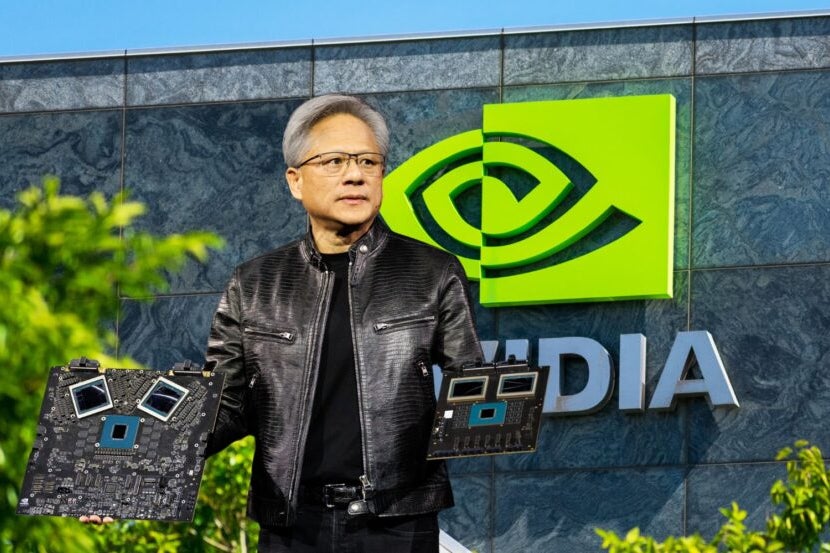
Nvidia Launches Vera CPU and Acquires Taylor Morrison

- Nvidia CPU Launch: Nvidia unveiled its Vera CPU in Taipei, aiming to enhance AI workload processing by integrating Blackwell GPUs with ARM architecture CPUs designed by Mediatech, challenging Intel and AMD's market dominance, although its current market share remains small.
- Market Competition Dynamics: The Vera CPU is designed for the high-end market, expected to enter at a price point of $2,500, potentially capturing only a single-digit share of the PC market, highlighting Nvidia's challenging positioning in the CPU sector.
- Berkshire Acquisition Strategy: Berkshire Hathaway's acquisition of Taylor Morrison for $8.5 billion marks the first major deal under CEO Greg Abel, reflecting confidence in long-term housing demand in the U.S., despite current pressures from high interest rates.
- Industry Outlook Analysis: Despite slow home sales, Berkshire's acquisition positions it favorably for future construction cycles, especially against the backdrop of a 4 million housing shortage in the U.S., showcasing its long-term value investment strategy.
See More
Anthropic Plans Initial Public Offering Amid AI Boom
- IPO Filing: Anthropic confidentially filed for an IPO with the SEC on June 1, indicating its rapid growth in the AI sector and positioning itself as a potential trillion-dollar company, likely to attract significant investor interest.
- Funding Background: Following a $65 billion Series H funding round, Anthropic's valuation reached $965 billion, surpassing OpenAI's $852 billion, reflecting strong competitive positioning and investor confidence in the AI market.
- Profitability Outlook: Anthropic expects to achieve nearly $50 billion in annualized revenue by the end of June and to turn an operating profit in the current quarter, making its IPO valuation potentially more attractive with a 20x forward revenue multiple compared to OpenAI's 40x.
- Market Sentiment: There is considerable anticipation for Anthropic's IPO, with investors assigning a 53% chance that its market cap will exceed $1.8 trillion on the first day of trading, indicating optimistic expectations for its future performance.
See More
Nvidia Could Reach $10 Trillion Market Cap in 18 Months
- Market Value Milestone: Nvidia has become the first company to reach a $5 trillion market cap, with a future target of $10 trillion, which is likely to attract investor attention and reflects its dominant position and market potential in the AI sector.
- Capital Expenditure Growth: The four major AI hyperscalers are expected to reach a combined capital expenditure of $650 billion by 2026, with analysts predicting it will exceed $1 trillion by 2027, positioning Nvidia as a key GPU supplier to benefit from this trend and further solidify its market share.
- Revenue Expectations Rise: Wall Street analysts estimate Nvidia will generate $391 billion in revenue for fiscal 2027, increasing to $548 billion in fiscal 2028, indicating strong growth potential in the data center and AI markets, which is expected to continue attracting investment.
- Profitability Analysis: With a current P/E ratio of 34, Nvidia is projected to achieve an EPS of $12.66 by 2028, and if it maintains this valuation, its market cap could exceed $10 trillion, highlighting the investment value and growth potential of its stock.
See More

Nvidia's Market Cap Could Reach $10 Trillion
- Strong Market Demand: Nvidia's GPUs are experiencing insatiable demand, with forecasts indicating that the combined capital expenditures of the four major AI hyperscalers will reach $650 billion by 2026, highlighting their reliance on Nvidia's products and further solidifying its market leadership.
- Rising Revenue Expectations: Wall Street analysts estimate Nvidia will generate $391 billion in revenue for fiscal 2027, with projections increasing to $548 billion by fiscal 2028, indicating the company's sustained growth potential and expanding market share in the AI sector.
- Improved Profitability: Nvidia's earnings per share (EPS) is expected to rise to $12.66 in fiscal 2028, a 94% increase from the $6.53 reported over the past 12 months, which could pave the way for its market cap to reach $10 trillion, reflecting significant improvements in profitability.
- Reasonable Valuation: Currently trading at a price-to-earnings ratio of 34, Nvidia's valuation is in line with its big tech peers, and given its dominance and growth rate in the AI market, this valuation is considered reasonable, potentially attracting more investor interest.
See More

XLK Outperforms SPY with 34% Year-to-Date Return


- Significant Investment Returns: As of June 4, 2026, a $10,000 investment in the Technology Select Sector SPDR Fund (XLK) has grown to $13,434, achieving a year-to-date return of 34%, which significantly outpaces the S&P 500's 11% return, highlighting the robust performance of tech stocks.
- Key Growth Drivers: NVIDIA and Apple reported revenue increases of 85% and 16.6%, respectively, with NVIDIA's quarterly revenue reaching $81.6 billion and Apple's hitting a record $111.2 billion, showcasing how these two companies are driving XLK's outperformance.
- Concentration Risk: XLK has 40% of its assets concentrated in NVIDIA, Apple, and Microsoft, with NVIDIA and Apple accounting for 14.93% and 13.23%, respectively, indicating a heightened investment risk due to this concentration, especially during market volatility.
- Future Outlook: To maintain the 3:1 return spread over the S&P 500, it is crucial to ensure continued growth in hyperscaler capital expenditures, reduced reliance on the Chinese market, and stable revenue growth from Apple, as these factors will directly influence XLK's future performance.
See More

Three Promising Cryptocurrencies to Consider
- Bittensor's Scarcity: Bittensor caps its total supply at 21 million TAO tokens and halves new issuance every four years, mimicking Bitcoin's successful model, aiming to attract capital by providing decentralized AI services, which could drive long-term price growth.
- Zcash's Privacy Edge: Zcash also has a 21 million supply cap and introduces privacy transaction features, with about 30% of its circulating supply held in shielded pools; as demand for financial privacy rises, Zcash may establish a decentralized finance ecosystem, enhancing its market value.
- Hyperliquid's Buyback Mechanism: Hyperliquid utilizes 99% of its trading fees to buy back its native Hype token, with cumulative buybacks exceeding $1.5 billion, a strategy that helps boost token demand, despite facing intense competition and regulatory risks.
- Market Competition and Risks: While these three cryptocurrencies have unique market positions and potential value, Bittensor and Zcash face risks related to product-market fit and regulatory pressure, while Hyperliquid must contend with a lack of competitive moat, necessitating cautious evaluation by investors.
See More
Nvidia Launches Vera CPU and Acquires Taylor Morrison
- Nvidia CPU Launch: Nvidia unveiled its Vera CPU in Taipei, aiming to enhance AI workload processing by integrating Blackwell GPUs with ARM architecture CPUs designed by Mediatech, challenging Intel and AMD's market dominance, although its current market share remains small.
- Market Competition Dynamics: The Vera CPU is designed for the high-end market, expected to enter at a price point of $2,500, potentially capturing only a single-digit share of the PC market, highlighting Nvidia's challenging positioning in the CPU sector.
- Berkshire Acquisition Strategy: Berkshire Hathaway's acquisition of Taylor Morrison for $8.5 billion marks the first major deal under CEO Greg Abel, reflecting confidence in long-term housing demand in the U.S., despite current pressures from high interest rates.
- Industry Outlook Analysis: Despite slow home sales, Berkshire's acquisition positions it favorably for future construction cycles, especially against the backdrop of a 4 million housing shortage in the U.S., showcasing its long-term value investment strategy.
See More
Anthropic Plans Initial Public Offering Amid AI Boom
- IPO Filing: Anthropic confidentially filed for an IPO with the SEC on June 1, indicating its rapid growth in the AI sector and positioning itself as a potential trillion-dollar company, likely to attract significant investor interest.
- Funding Background: Following a $65 billion Series H funding round, Anthropic's valuation reached $965 billion, surpassing OpenAI's $852 billion, reflecting strong competitive positioning and investor confidence in the AI market.
- Profitability Outlook: Anthropic expects to achieve nearly $50 billion in annualized revenue by the end of June and to turn an operating profit in the current quarter, making its IPO valuation potentially more attractive with a 20x forward revenue multiple compared to OpenAI's 40x.
- Market Sentiment: There is considerable anticipation for Anthropic's IPO, with investors assigning a 53% chance that its market cap will exceed $1.8 trillion on the first day of trading, indicating optimistic expectations for its future performance.
See More
Nvidia Could Reach $10 Trillion Market Cap in 18 Months
- Market Value Milestone: Nvidia has become the first company to reach a $5 trillion market cap, with a future target of $10 trillion, which is likely to attract investor attention and reflects its dominant position and market potential in the AI sector.
- Capital Expenditure Growth: The four major AI hyperscalers are expected to reach a combined capital expenditure of $650 billion by 2026, with analysts predicting it will exceed $1 trillion by 2027, positioning Nvidia as a key GPU supplier to benefit from this trend and further solidify its market share.
- Revenue Expectations Rise: Wall Street analysts estimate Nvidia will generate $391 billion in revenue for fiscal 2027, increasing to $548 billion in fiscal 2028, indicating strong growth potential in the data center and AI markets, which is expected to continue attracting investment.
- Profitability Analysis: With a current P/E ratio of 34, Nvidia is projected to achieve an EPS of $12.66 by 2028, and if it maintains this valuation, its market cap could exceed $10 trillion, highlighting the investment value and growth potential of its stock.
See More
Nvidia's Market Cap Could Reach $10 Trillion
- Strong Market Demand: Nvidia's GPUs are experiencing insatiable demand, with forecasts indicating that the combined capital expenditures of the four major AI hyperscalers will reach $650 billion by 2026, highlighting their reliance on Nvidia's products and further solidifying its market leadership.
- Rising Revenue Expectations: Wall Street analysts estimate Nvidia will generate $391 billion in revenue for fiscal 2027, with projections increasing to $548 billion by fiscal 2028, indicating the company's sustained growth potential and expanding market share in the AI sector.
- Improved Profitability: Nvidia's earnings per share (EPS) is expected to rise to $12.66 in fiscal 2028, a 94% increase from the $6.53 reported over the past 12 months, which could pave the way for its market cap to reach $10 trillion, reflecting significant improvements in profitability.
- Reasonable Valuation: Currently trading at a price-to-earnings ratio of 34, Nvidia's valuation is in line with its big tech peers, and given its dominance and growth rate in the AI market, this valuation is considered reasonable, potentially attracting more investor interest.
See More
XLK Outperforms SPY with 34% Year-to-Date Return
- Significant Investment Returns: As of June 4, 2026, a $10,000 investment in the Technology Select Sector SPDR Fund (XLK) has grown to $13,434, achieving a year-to-date return of 34%, which significantly outpaces the S&P 500's 11% return, highlighting the robust performance of tech stocks.
- Key Growth Drivers: NVIDIA and Apple reported revenue increases of 85% and 16.6%, respectively, with NVIDIA's quarterly revenue reaching $81.6 billion and Apple's hitting a record $111.2 billion, showcasing how these two companies are driving XLK's outperformance.
- Concentration Risk: XLK has 40% of its assets concentrated in NVIDIA, Apple, and Microsoft, with NVIDIA and Apple accounting for 14.93% and 13.23%, respectively, indicating a heightened investment risk due to this concentration, especially during market volatility.
- Future Outlook: To maintain the 3:1 return spread over the S&P 500, it is crucial to ensure continued growth in hyperscaler capital expenditures, reduced reliance on the Chinese market, and stable revenue growth from Apple, as these factors will directly influence XLK's future performance.
See More
Three Promising Cryptocurrencies to Consider
- Bittensor's Scarcity: Bittensor caps its total supply at 21 million TAO tokens and halves new issuance every four years, mimicking Bitcoin's successful model, aiming to attract capital by providing decentralized AI services, which could drive long-term price growth.
- Zcash's Privacy Edge: Zcash also has a 21 million supply cap and introduces privacy transaction features, with about 30% of its circulating supply held in shielded pools; as demand for financial privacy rises, Zcash may establish a decentralized finance ecosystem, enhancing its market value.
- Hyperliquid's Buyback Mechanism: Hyperliquid utilizes 99% of its trading fees to buy back its native Hype token, with cumulative buybacks exceeding $1.5 billion, a strategy that helps boost token demand, despite facing intense competition and regulatory risks.
- Market Competition and Risks: While these three cryptocurrencies have unique market positions and potential value, Bittensor and Zcash face risks related to product-market fit and regulatory pressure, while Hyperliquid must contend with a lack of competitive moat, necessitating cautious evaluation by investors.
See More




